Sea Turtle Myths vs Facts: 8 Common Misconceptions
Overview
Sea turtles have been around for over 100 million years, so it is no surprise that plenty of myths have grown up around them. Some are harmless fun, but others can lead people to treat these animals the wrong way. From the idea that a turtle can slip out of its shell to the belief that a basking turtle on the beach must be in trouble, there is a lot of misinformation out there. So let us set the record straight. Here are eight of the most common sea turtle myths, along with the real facts behind each one, so you can appreciate these amazing animals for what they truly are.
Myth 1: A Sea Turtle Can Crawl Out of Its Shell
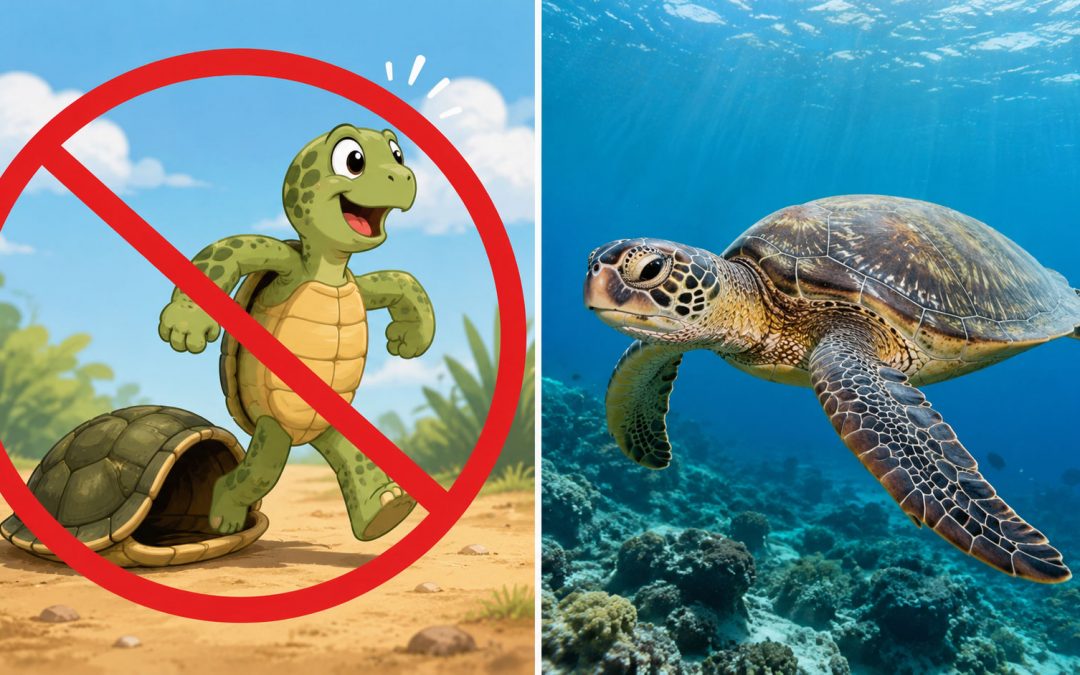
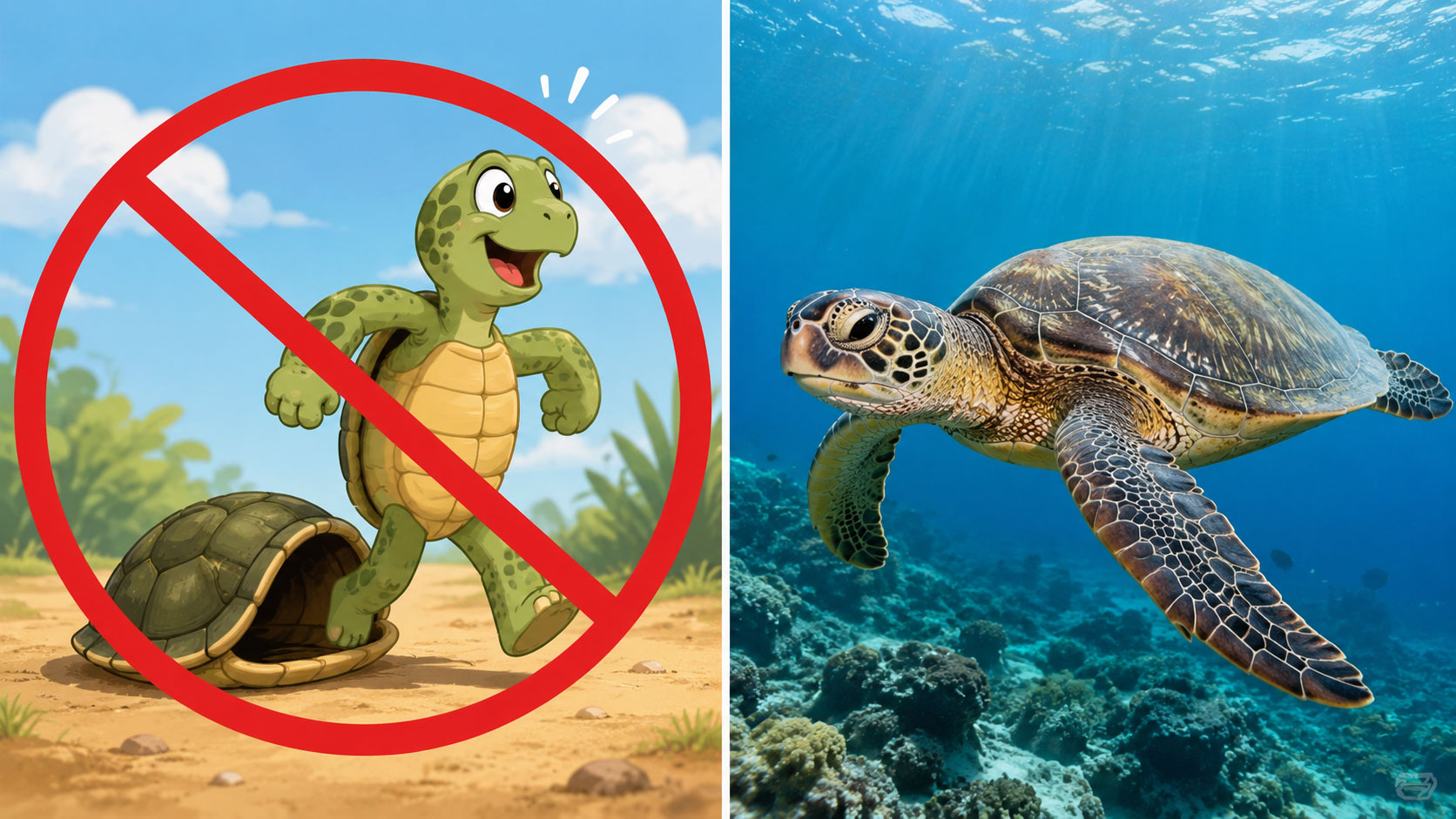
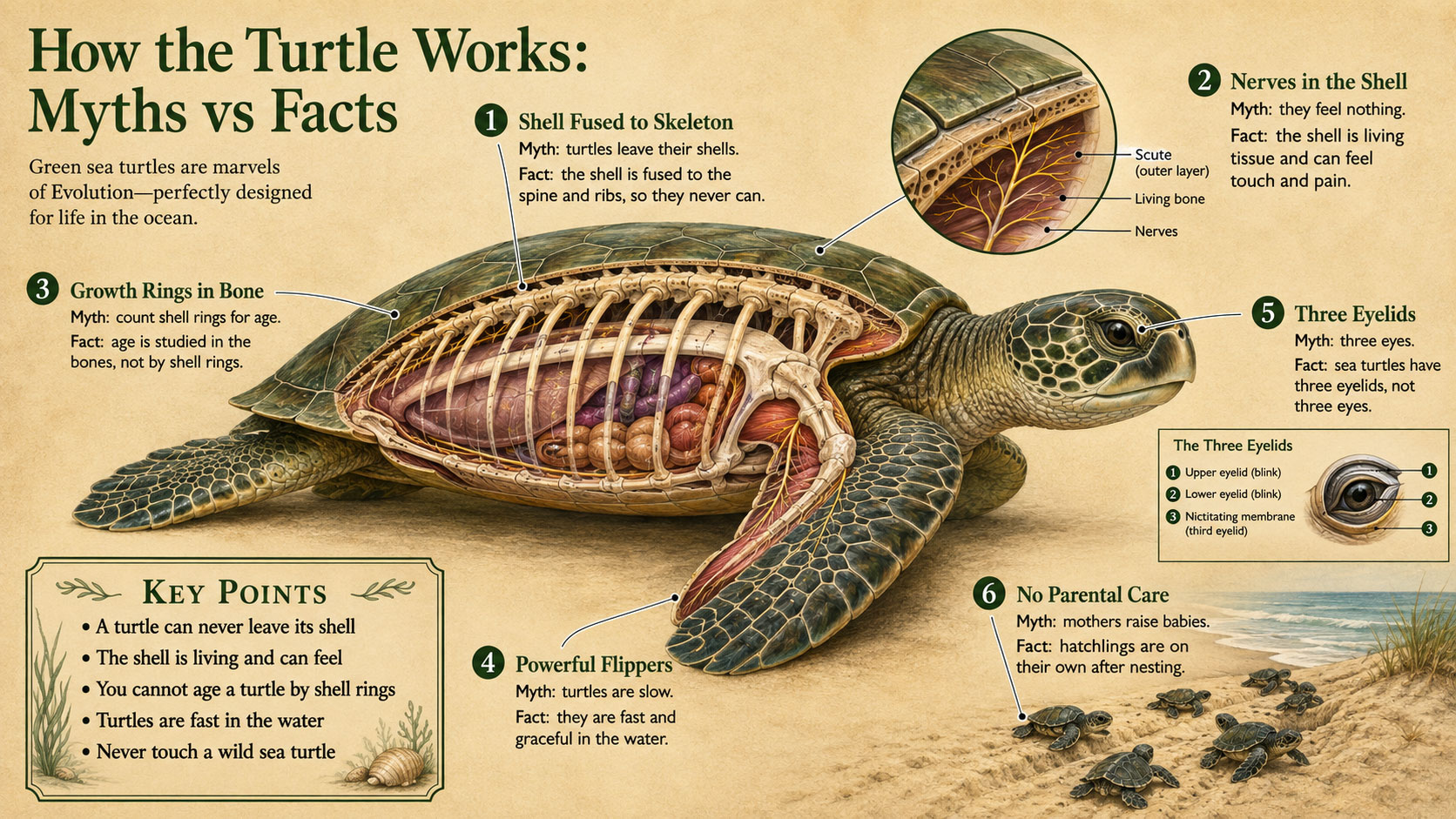
This is one of the most common turtle myths, fueled by cartoons showing turtles slipping out of their shells like a backpack. The truth is that a sea turtle can never leave its shell. The shell is not a separate house at all. It is part of the turtle’s skeleton, made of living bone that is fused to the spine and ribs. A turtle is born with its shell attached and stays that way for life. Learn more in our guide on what a turtle shell is made of.
Myth 2: You Can Tell a Turtle’s Age by Counting Rings on Its Shell
It seems logical, like counting rings on a tree, but it does not work for sea turtles. The plates on the shell wear down, get scratched, and change over time, so they do not form a reliable yearly record. To actually estimate a sea turtle’s age, scientists examine growth rings inside the bones, a technique that usually requires a bone sample. We dig into this in our guide on how old that sea turtle really is.

Myth 3: Turtles Cannot Feel Anything Through Their Shells
Because the shell is hard, many people assume it is like a lifeless suit of armor. Not true. A turtle’s shell is living tissue, full of blood vessels and nerve endings, which means a turtle can feel pressure, touch, and even pain through it. That is a big reason you should never touch or knock on a turtle’s shell. Our article on whether turtles feel pain in their shells explains the science.
Myth 4: Sea Turtles Are Slow
Watch a turtle lumber across the sand and this myth makes sense, but it only tells half the story. Sea turtles are slow and clumsy on land, yet in the water they are graceful and can be surprisingly fast. The leatherback, the largest sea turtle, can reach speeds of up to 22 miles per hour when it needs to. See the full breakdown in our post on the fastest turtle in the water.
Myth 5: Sea Turtles Have Three Eyes
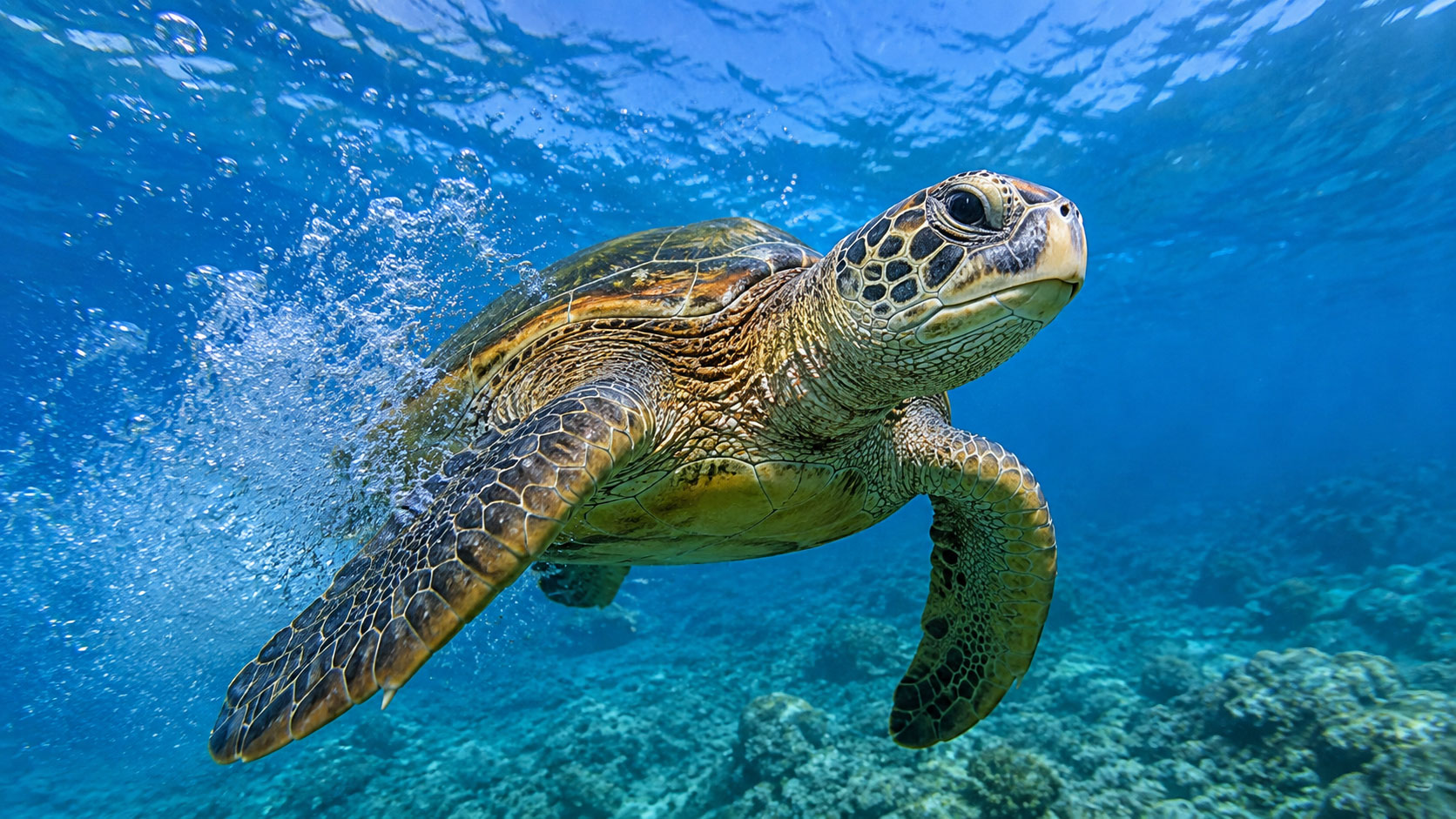
This one comes from a real feature that gets misunderstood. Sea turtles do not have three eyes, but each eye has three eyelids, including a clear third eyelid that works like built-in goggles to protect their sight underwater. It is a clever adaptation, not an extra eye. We clear up the confusion in our guide on whether sea turtles have three eyes.
Myth 6: Mother Sea Turtles Raise Their Babies
It is a sweet thought, but it is not how sea turtles work. A mother sea turtle lays her eggs, covers the nest, and returns to the sea, and that is the end of her involvement. Hatchlings dig their way out and race to the ocean completely on their own, with no parental care at all. From their very first moments they are independent, which is part of why the journey is so dangerous. See our guide on the hatchling run from nest to ocean.
Myth 7: A Basking Turtle on the Beach Is Sick or Stranded
Seeing a big turtle lying still on the sand worries a lot of well-meaning people, but in Hawaii it is usually perfectly normal. Hawaiian green sea turtles are famous for basking, hauling out to rest and warm up in the sun. A basking honu is not stuck or sick, it is simply relaxing, and the best thing you can do is keep your distance and leave it alone. Our article on why Hawaiian sea turtles bask explains this unusual behavior.
Myth 8: It Is Fine to Touch a Calm Sea Turtle
Since sea turtles seem so gentle and unbothered, people assume a quick touch is harmless. It is not, and it is against the law. Hawaiian green sea turtles are protected, so touching, chasing, or riding one can bring serious penalties, and it also stresses the animal and can spread disease. No matter how calm a turtle seems, always keep a respectful distance of at least 10 feet. Our guide on whether you can pet a turtle in Hawaii has the details.
The Takeaway
Once you strip away the myths, sea turtles are even more impressive than the tall tales suggest. They wear a living shell they can feel through and can never remove, they are graceful speedsters in the water, they see the reef in rich color, and they survive on their own from the moment they hatch. Knowing the real facts does two things. It deepens your appreciation for these ancient animals, and it helps you treat them the right way, with the respect and distance they deserve.
Watch: Meet the Sea Turtle
The Truth Is Better Than the Myth
So there you have it, eight common sea turtle myths cleared up with the real facts. No, a turtle cannot leave its shell, you cannot count rings to find its age, and it definitely feels that shell. Sea turtles are not slow in the water, they do not have three eyes, and their mothers do not raise them. A basking turtle is just fine, and touching a calm one is never okay. The reality of these animals is more remarkable than any myth, and understanding the truth is the first step to protecting them. The next time you meet a honu in Hawaii, you will see it clearly, myths and all set aside.