Can a Sea Turtle Regrow a Lost Flipper?
Overview
Sometimes a snorkeler or beachgoer spots a sea turtle that is missing part of a flipper, and it raises an obvious question. Will it grow back? We know some animals can regenerate lost body parts, so it seems possible that a turtle might too. Unfortunately, that is not how sea turtles work. A sea turtle cannot regrow a lost flipper, and the injury is permanent. But before that feels too sad, here is the amazing part. Sea turtles are astonishingly tough, and many go on to live full lives with only three flippers, or even fewer. This guide explains why a flipper cannot grow back, how turtles lose them in the first place, how they adapt, and how people sometimes step in to help.
The Short Answer: No, They Cannot Regrow a Flipper
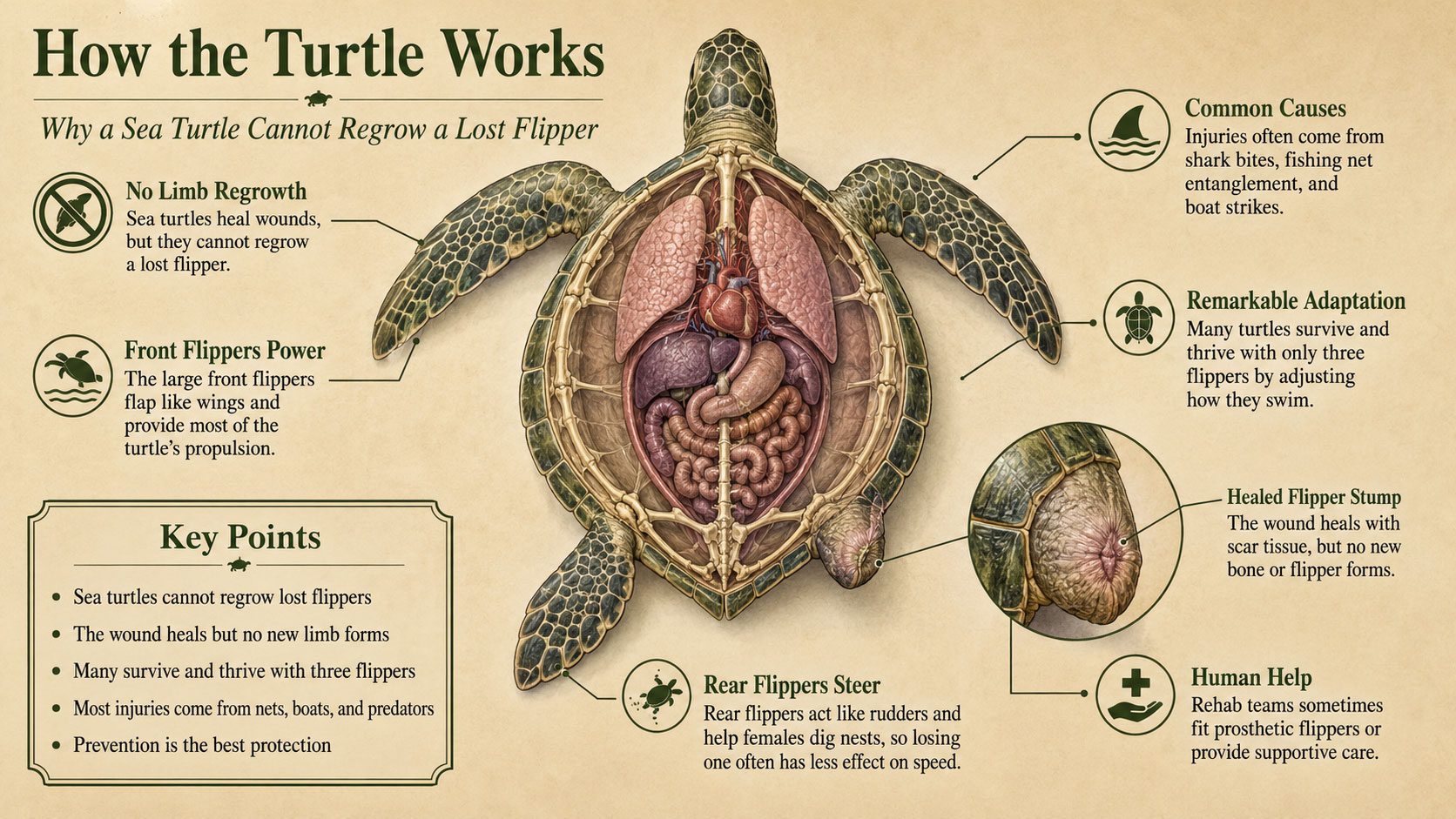
Let us clear it up right away. Sea turtles cannot regrow a lost flipper or any other limb. Once a flipper is gone, it is gone for good. Their bodies simply do not have the ability to regenerate limbs the way a few other creatures can. The wound will heal over, but no new flipper will form to replace the one that was lost. So a three-flippered turtle stays a three-flippered turtle. The good news, and there is plenty of it, is that a missing flipper is often far from a death sentence.
Why Can’t Turtles Regrow Limbs?
It comes down to biology. Only certain animals have the special cells and processes needed to regenerate a whole limb. A starfish can regrow an arm, and some lizards can regrow a lost tail, but sea turtles are not built that way. Turtles can heal impressively well, closing wounds and even mending cracks in their living shell over time, but healing a wound is very different from regrowing an entire limb with all its bones, muscles, and nerves. That kind of regeneration is beyond what a sea turtle’s body can do. So while a turtle recovers from the injury, the flipper itself never comes back.
How Do Sea Turtles Lose Flippers?
Sadly, flipper injuries are fairly common, and most come from a handful of causes. The most natural one is predators, since a shark bite can take off part of a flipper in an instant. But many injuries come from people. Entanglement in fishing nets, lines, and other marine debris can wrap around a flipper and cut off circulation until the limb is lost. Boat strikes and hooks can cause severe damage too. Whatever the cause, once the injury happens and heals, the turtle is left to carry on with what remains. It is a sobering reminder of how much our activities affect these animals.
Can a Turtle Survive With a Missing Flipper?
Yes, and this is the truly remarkable part. Sea turtles are incredibly resilient, and many survive and thrive with only three flippers. In fact, three-flippered turtles are seen fairly regularly in the wild, going about their lives, feeding, and swimming just like any other turtle. A turtle that loses a rear flipper is usually affected very little, since the front flippers do most of the work of swimming. Losing a front flipper is more of a challenge, but even then, turtles are astonishingly good at adjusting. Their toughness and adaptability let them keep going in situations that would stop many other animals.
How They Adapt Their Swimming
A sea turtle’s power in the water comes mostly from its two large front flippers, which it flaps like wings to fly through the ocean, while the rear flippers act more like rudders for steering. Because of this, a turtle missing a rear flipper barely slows down, simply steering a little differently. A turtle missing a front flipper has to work harder and may swim with a bit of a lopsided motion, but many learn to compensate well enough to hunt, migrate, and survive. It is a testament to how well built and adaptable these ancient animals really are, making the most of what they have left.
Prosthetic Flippers: When People Step In
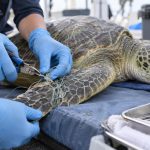
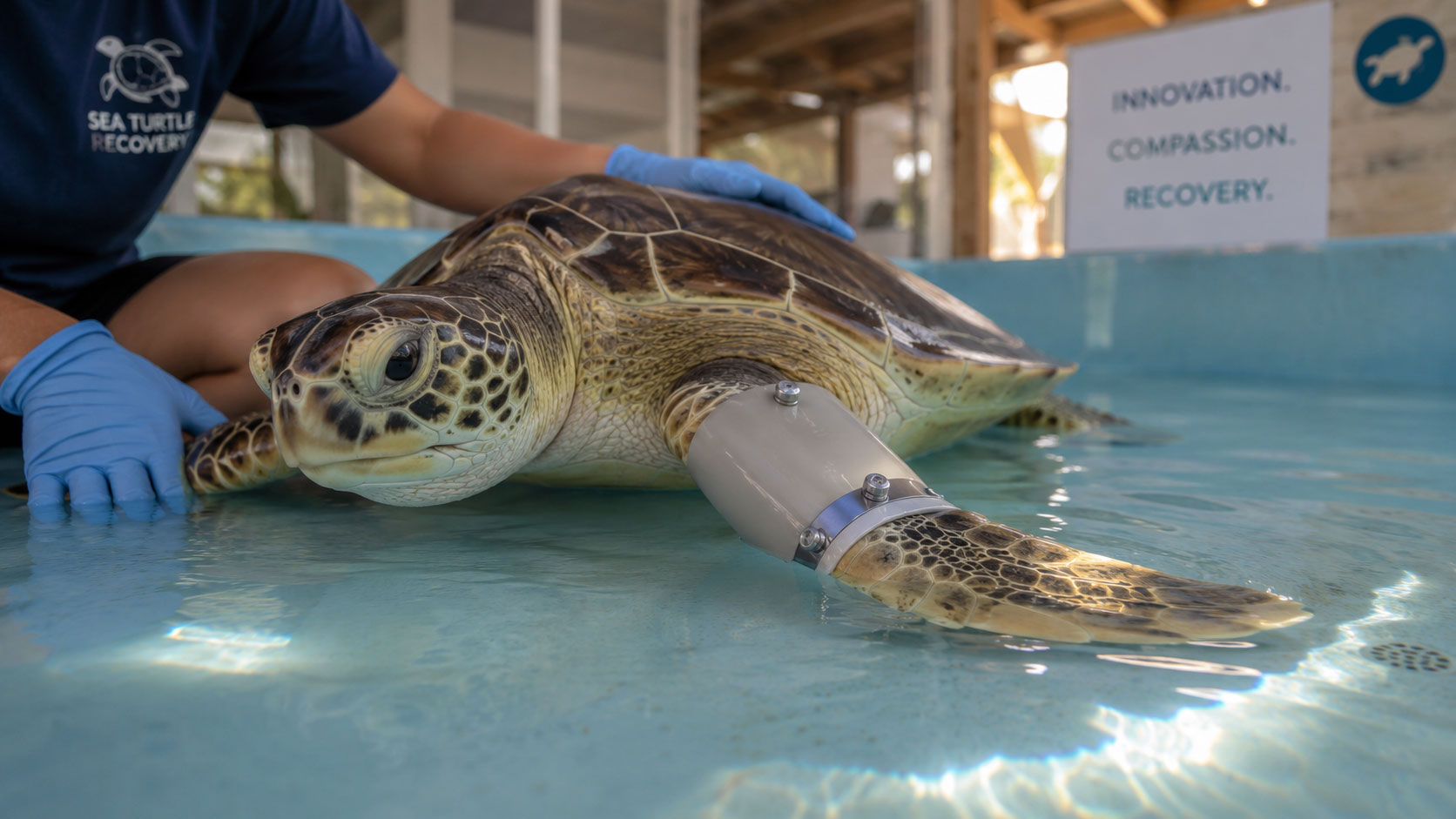
Here is a hopeful modern twist. In some cases, dedicated rehabilitation teams and veterinarians have helped injured turtles by fitting them with prosthetic flippers or specially designed harnesses. These custom devices can help a turtle that has lost a front flipper swim more evenly and balance better. It is delicate, creative work, and while it is not possible for every turtle, these stories show how far people will go to give an injured sea turtle a second chance. When a turtle cannot regrow a flipper on its own, a little human ingenuity can sometimes help fill the gap.
The Bigger Lesson: Prevention
Since so many flipper injuries come from human activity, the most important takeaway is prevention. Reducing the amount of fishing gear and plastic that ends up in the ocean cuts down on the entanglements that cost turtles their limbs. Boaters slowing down and watching for turtles near the surface helps prevent strikes. And if you ever find an injured turtle, the right move is never to handle it yourself but to contact trained wildlife responders who can help. Protecting turtles from these dangers in the first place is far better than hoping they can recover afterward.
What This Means for How We See Them
The next time you see a sea turtle with a missing or partial flipper, do not feel only sadness for it. Feel admiration. That turtle survived a serious injury, healed, adapted, and kept swimming, which is an incredible feat of resilience. It is a living reminder of both the dangers these animals face and their remarkable ability to endure. When you snorkel at a place like Turtle Canyon off Waikiki, every honu you see, whole or scarred, has a story of survival written on its body. Giving them space and protecting their ocean home is the best way to honor that toughness.
Watch: Hawaii’s Green Sea Turtles
No New Flipper, but Unstoppable
So, can a sea turtle regrow a lost flipper? No. Unlike a starfish or a lizard’s tail, a turtle’s flipper is gone for good once it is lost. But that is only half the story. Sea turtles are among the most resilient animals in the ocean, and many carry on with three flippers, adapting their swimming and living full, wild lives. With help from rehab teams and the occasional prosthetic, some get an extra boost too. A missing flipper does not define these animals. Their toughness does. The next time a three-flippered honu glides past you in Hawaii, tip your mask to a true survivor.