What Eats Sea Turtles in Hawaii? The Predators That Hunt the Honu
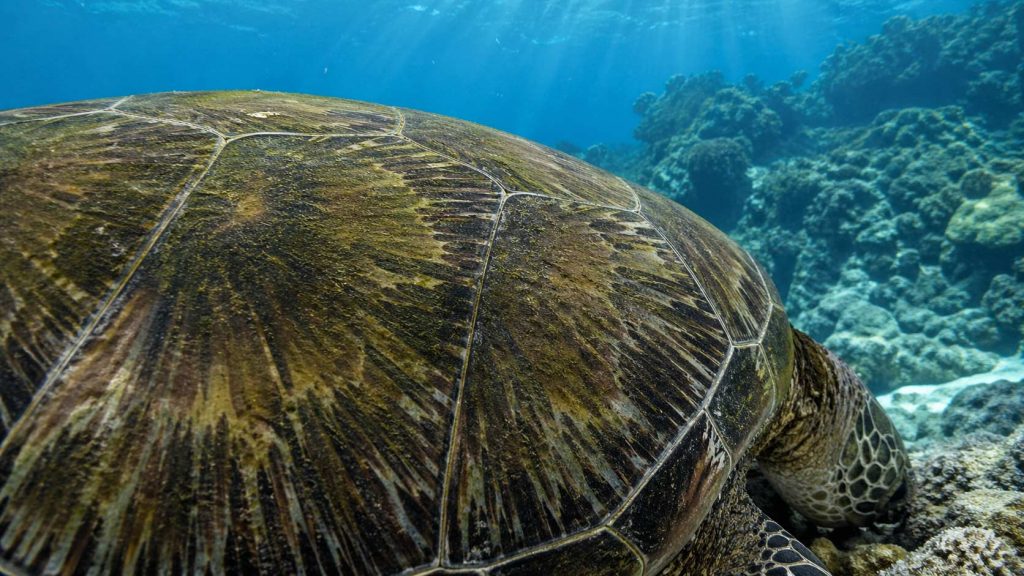
Hawaiian green sea turtles, or honu, seem untouchable as they drift through the warm water off Waikiki. They move at their own pace, surface to breathe without any apparent concern, and settle onto the reef like they own the place. But that calm exterior hides a survival story that begins the moment they crack out of a leathery egg on a dark beach and does not let up for the rest of their lives. Honu face predators at every stage, and understanding those threats helps explain how sea turtles have survived on Earth for more than 100 million years.
The Gauntlet Starts on the Beach
A sea turtle’s most dangerous hours happen before it ever reaches the water. When eggs are buried in the sand, they are fair game for a long list of predators. In Hawaii, the biggest nest raiders are mongooses, rats, and feral pigs, all of which arrived with humans and have no natural history on these islands. These animals dig up nests and eat the eggs before they have any chance to hatch. Feral dogs and feral cats raid nests as well, particularly on beaches where protective coastal vegetation is thin.
Even after the eggs survive to hatching, the hatchlings face a second test on the sand. Ghost crabs are fast, aggressive, and perfectly built for snatching small turtles the moment they emerge from the nest at night. Frigatebirds and other seabirds patrol beaches at dusk and dawn, picking off hatchlings that are slow to reach the surf. The scramble from nest to ocean may last only a few minutes, but for a turtle barely the size of your palm, every second of it is a high-stakes run.
- Mongooses are the most destructive introduced nest predator in Hawaii
- Ghost crabs can snatch a hatchling within seconds of it emerging from the sand
- Frigatebirds are capable of taking a hatchling mid-run across the beach
- Feral pigs, dogs, and cats add to nest losses on less protected beaches
Who Hunts Young Turtles in the Water
Once a hatchling reaches the ocean, it enters what researchers call the lost years, a span of roughly a decade when young turtles drift on open ocean currents and are rarely spotted by anyone. During this time, they are small enough to be taken by a wide range of predators. Large open-water fish, including tuna, can eat hatchlings that have barely made it past the surf. Various shark species, not just tiger sharks, will go after a young turtle that is not much bigger than a dinner plate.
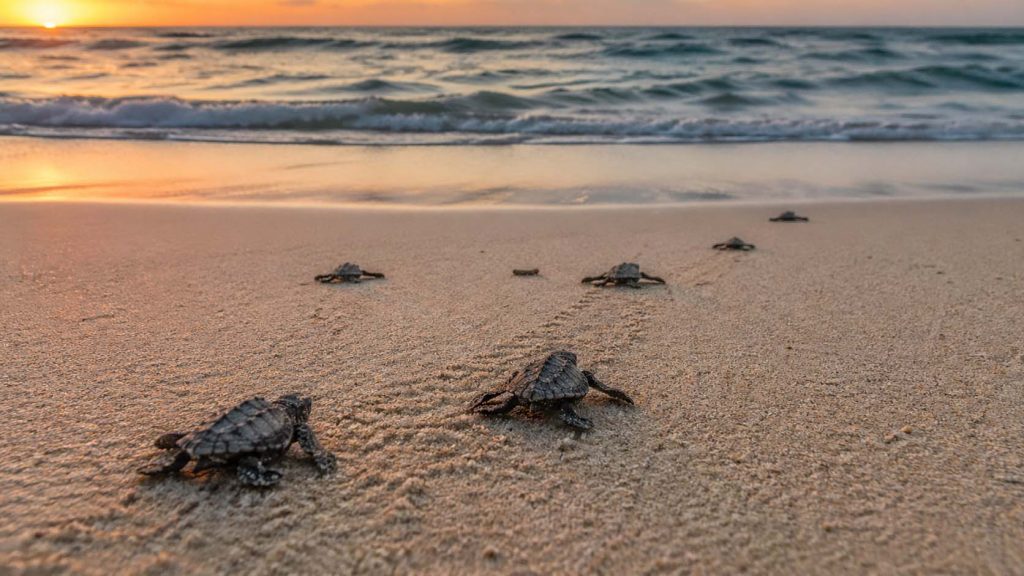
This is when survival is most uncertain. The shell has not yet hardened into full protective armor. The turtle is not strong enough to dive deep or outswim a fast predator. And there is no reef nearby to offer cover. Most sea turtles that die do so in these early years, which is why so few of the roughly 1,000 hatchlings from a single large nesting beach ever grow to adulthood.
The Tiger Shark: The One That Counts
Among all the animals that prey on sea turtles in Hawaiian waters, the tiger shark stands alone as the primary predator of adult honu. Tiger sharks are not just powerful animals. They are built by evolution to handle prey with hard shells. Their teeth are serrated and triangular, shaped almost like a saw blade, and designed to cut through the leathery flippers and thick carapace of a large turtle. A tiger shark can bite off a flipper in a single strike. Many adult sea turtles in Hawaii carry healed bite marks and chipped shell edges that hint at exactly that kind of close call.
The relationship between tiger sharks and sea turtles in Hawaii stretches back millions of years. Scientists believe tiger sharks may have developed some of their physical traits specifically to give them an edge over shelled prey. The two species have shared these waters as predator and prey for a very long time, and it shows in both of them.
That said, an adult green sea turtle is not easy prey. When a tiger shark moves in, a healthy adult has real options. It can dive toward the reef and wedge itself under a coral ledge where a shark cannot follow. It can angle its shell toward the attacker to present the hardest possible surface. And it can move surprisingly fast when it needs to. Tiger shark attacks on large adult honu happen, but a healthy adult that knows its reef stands a solid chance of getting away.
Why the Shell Is Such an Effective Defense
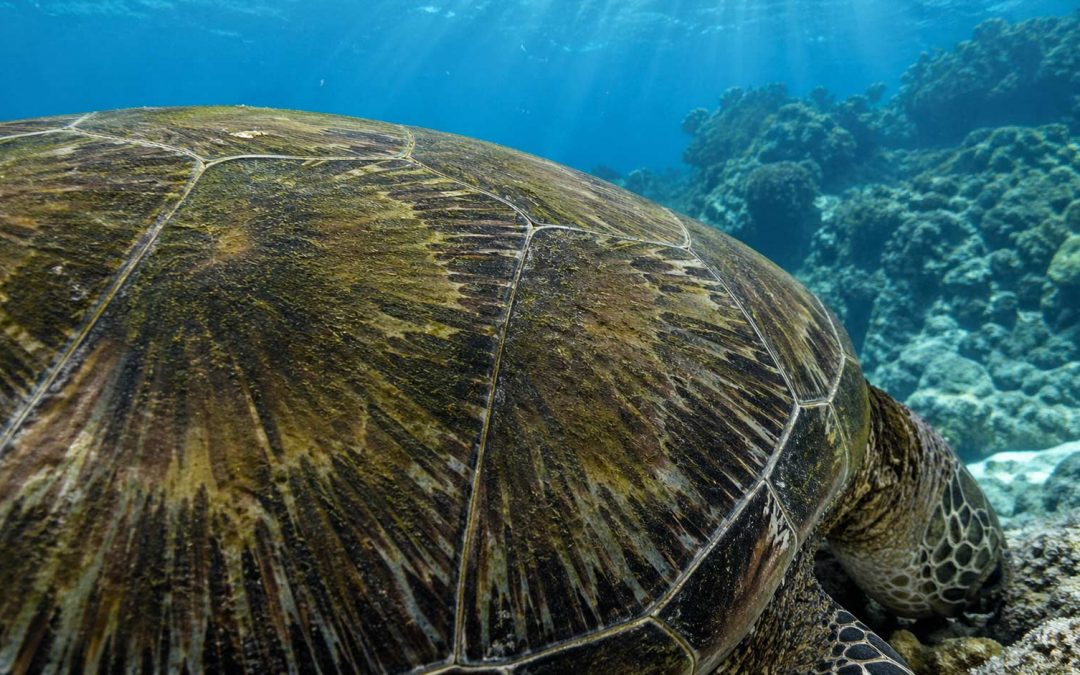
The shell of a green sea turtle is not a separate object the turtle carries around. It is part of its skeleton. The scutes are fused directly to the turtle’s spine and ribcage, making the shell both rigid and part of a living structure. That gives it some flex, which means it can absorb blows better than a completely solid surface. A tiger shark has to find a gap, a flipper, the neck, or the soft underside, to do meaningful damage. A turtle that keeps its shell facing an attacker presents a surface that is genuinely hard to get a solid grip on.
Over millions of years, green sea turtles have drifted toward larger, more dome-shaped shells. The dome matters because it makes it harder for a predator to clamp down before the turtle can twist away. This is one reason Hawaiian green sea turtles often have noticeably high-domed shells compared to populations elsewhere in the Pacific. What looks like a graceful design detail is actually the result of millions of years of pressure from predators exactly like the tiger shark.
The Threats That Matter Most Today
Here is the uncomfortable part of the story: natural predators like tiger sharks are no longer the biggest danger to honu. The threats that matter most in 2026 are human in origin.
Longline fishing gear and gillnets entangle and drown thousands of sea turtles globally every year. In Hawaiian waters, accidental bycatch has been one of the most consistently documented causes of turtle injury and death. Plastic ingestion is another serious problem. Sea turtles mistake floating plastic bags for jellyfish, and the debris blocks their digestive systems with material the body cannot process. Boat strikes are a constant hazard in busy coastal zones near active harbors. And fibropapillomatosis, a disease linked to pollution-stressed reef environments and warming water, causes tumors that can cover a turtle’s eyes and prevent it from feeding normally.
- Longline gear and gillnets entangle turtles and cause drowning in commercial fishing areas
- Plastic bags and debris block sea turtle digestive systems when mistaken for jellyfish
- Boat strikes injure and kill turtles in high-traffic coastal zones
- Fibropapillomatosis tumors are found at high rates in Hawaiian green sea turtles
The honu has shared the ocean with tiger sharks for tens of millions of years. It has had less than a century to adapt to plastic shopping bags and fishing longlines. That gap tells you something important about where the real pressure is coming from.
What This Means When You Snorkel at Turtle Canyon
When guests book a tour with Turtles and You at Turtle Canyon off Waikiki, a question that sometimes comes up is whether there are sharks in the water. The honest answer is that Hawaii has sharks, and tiger sharks do live in Hawaiian waters. But Turtle Canyon is a shallow, busy coastal reef where large tiger sharks are rarely found. The honu that feed and rest on this reef have spent years learning their territory, and they do not show signs of active predation pressure.
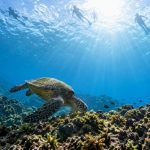
What you are far more likely to see are turtles that look settled and calm on the reef, ancient-looking animals moving at their own pace. Many of them carry small healed marks or slightly chipped shell edges that hint at a long history in these waters. They are not naive. They are survivors with a very old set of instincts backing them up.
The Turtles and You tour leaves from Kewalo Basin Harbor, just a short trolley ride from Waikiki hotels, and gets you into the water at Turtle Canyon with all snorkel gear provided. You will swim with real wild honu in the ocean, not a tank or a feeding area. If you want to see these ancient survivors up close, this is the place to do it.
Built to Last
Sea turtles have outlasted the dinosaurs. They have shared the ocean with some of the most effective predators in the history of life on Earth and come out the other side. The natural predators they face, from ghost crabs on the beach to tiger sharks in open water, have shaped every physical trait that makes a honu a honu. The dome-shaped shell, the ability to wedge under a ledge, the speed when it really counts: all of it was built by millions of years of real pressure.
The threats they face today are real too, but they are newer and harder to adapt to. Every turtle you see gliding across the reef at Turtle Canyon has already beaten long odds just to be there. That is worth thinking about the next time one comes drifting toward you out of the blue.