Are Sea Turtles Reptiles? What Makes A Honu A Reptile
It is one of those questions that sounds simple until you actually stop and think about it. A sea turtle lives in the ocean, swims as smoothly as any fish, and only crawls onto land to lay its eggs. So what kind of animal is it really? People guess fish, because of where it lives. Some guess amphibian, because it moves between water and land. The real answer is that a sea turtle is a reptile, and not a borderline case but a textbook one. The Hawaiian green sea turtle, or honu, ticks every single box that scientists use to define a reptile. Understanding why turns a familiar animal into something even more impressive, because it means you are looking at an ancient land reptile lineage that figured out how to conquer the sea. This guide explains what makes a reptile a reptile, how the honu fits the definition perfectly, and why the confusion happens in the first place.
The Short Answer: Yes, Sea Turtles Are Reptiles
Let us settle it right away. Sea turtles are reptiles, members of the same broad group that includes snakes, lizards, crocodiles, and tortoises. They are not fish, they are not amphibians, and they are not mammals. They belong to the reptile class, and within it they sit in the turtle group alongside their land living cousins. Living in the ocean does not change that classification at all. What an animal is depends on its body and its biology, not simply on where it happens to live. And when you line a sea turtle up against the checklist of reptile traits, it matches every one. Let us go through that checklist and see exactly why.
What Makes An Animal A Reptile?
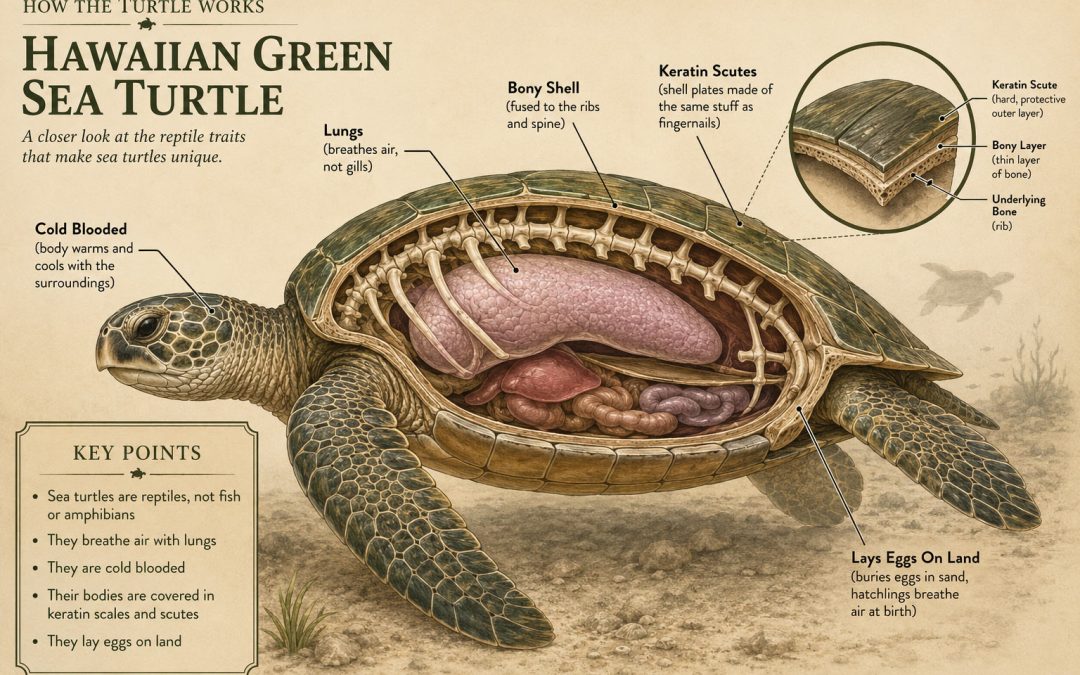
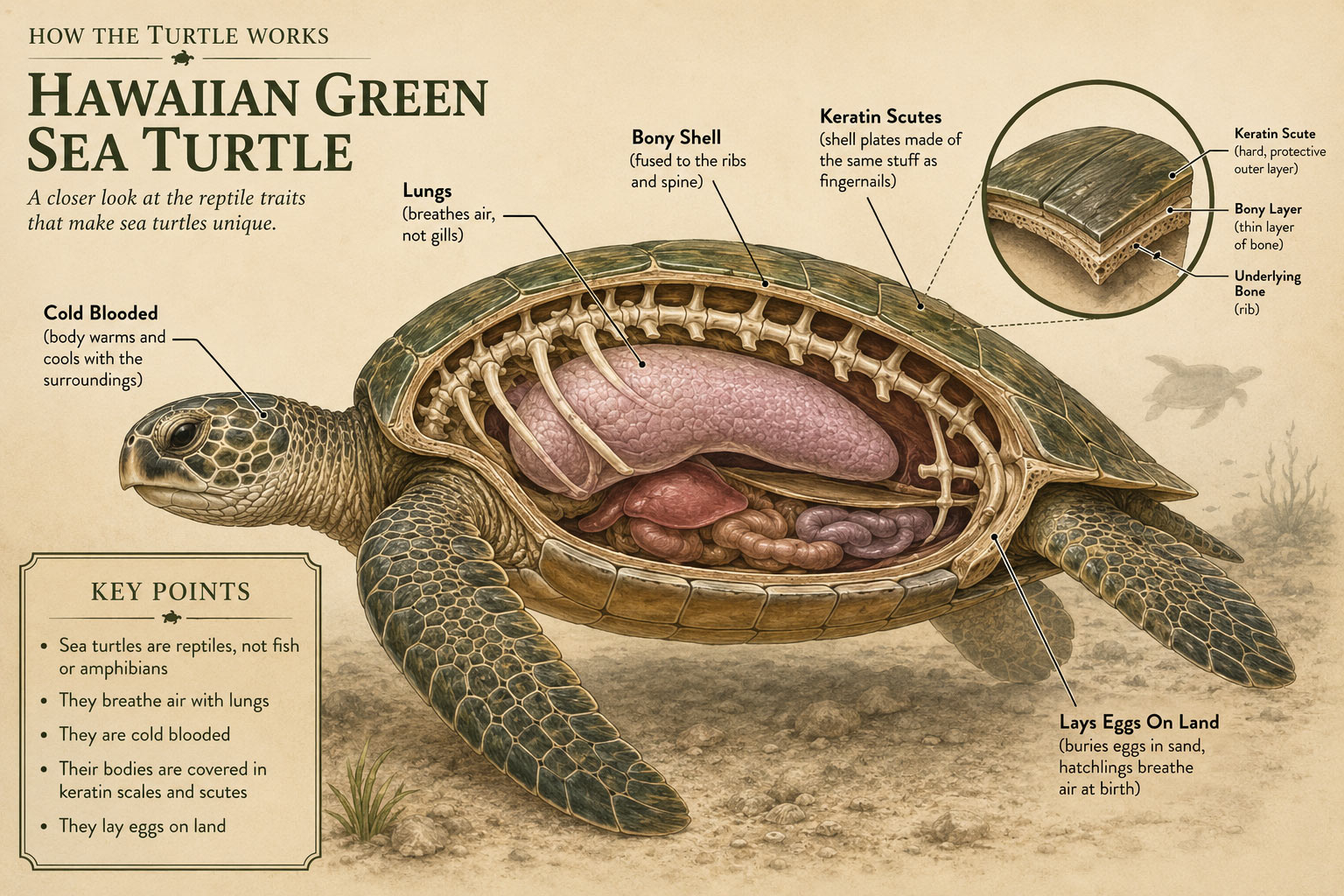
Before we can call a sea turtle a reptile, it helps to know what that word actually means. Reptiles are a class of animals that share a handful of key traits. They have a backbone, which makes them vertebrates. They breathe air using lungs, even the ones that live in water. They are cold blooded, meaning they rely on their surroundings to control their body temperature rather than generating steady heat from within. Their bodies are covered in scales or hard plates made of keratin, the same material as your fingernails. And most of them, including all turtles, reproduce by laying eggs on land. An animal that checks all of these boxes is a reptile, and a sea turtle checks every one. Here are the core reptile traits in a nutshell:
- A backbone, making them vertebrates
- Air breathing lungs, even in water living species
- Cold blooded bodies that depend on outside temperature
- Skin covered in scales or hard keratin plates
- Eggs laid on land rather than in water
Reptile Trait One: They Breathe Air With Lungs
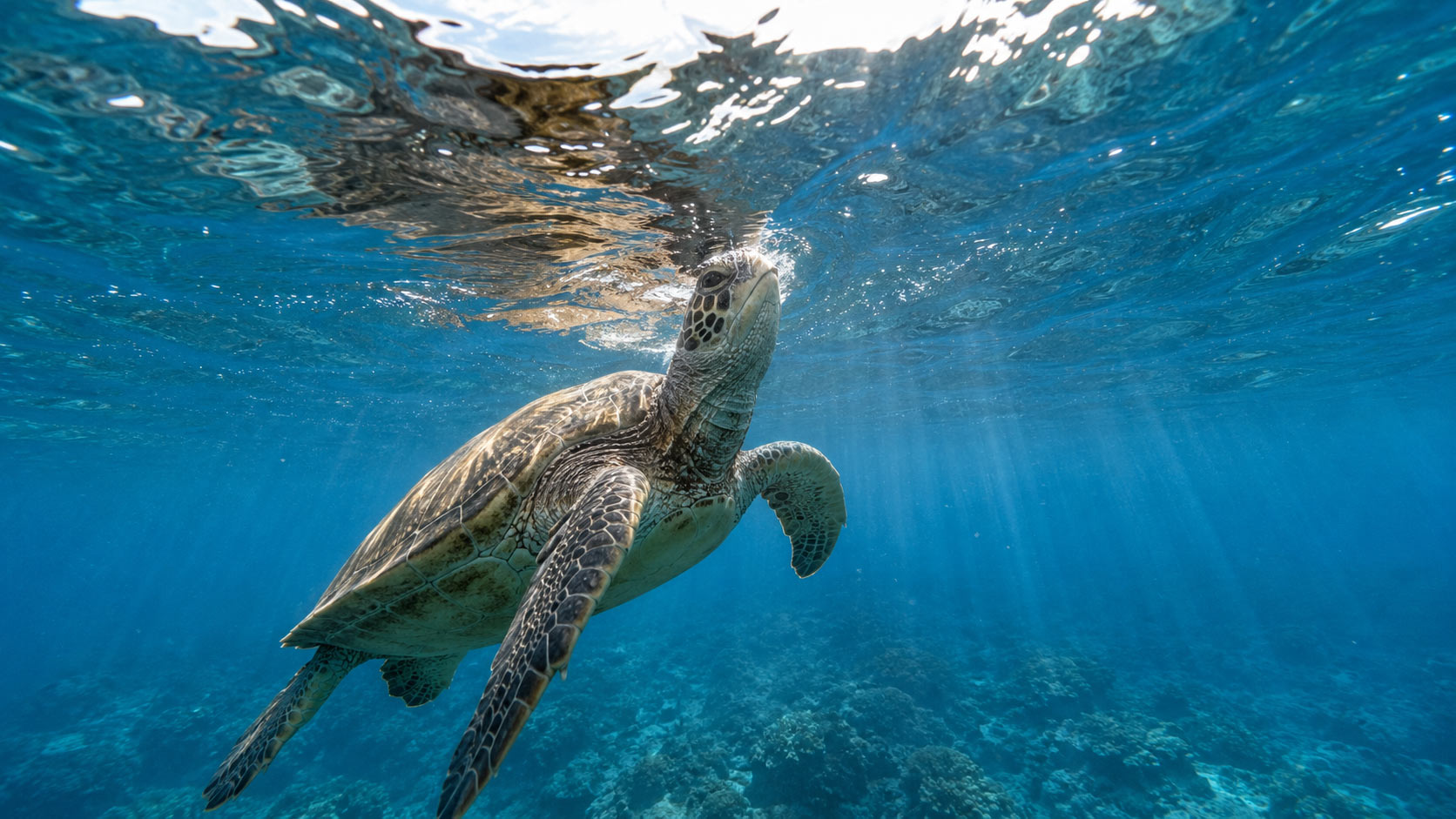
The first big clue is how a sea turtle breathes. Despite spending nearly its entire life underwater, a sea turtle does not have gills like a fish. It breathes air using lungs, and it must rise to the surface to take a breath of air. This is one of the clearest signs that a sea turtle is a reptile and not a fish. Fish pull oxygen straight from the water through their gills, while reptiles, including the honu, must breathe air just like we do. A sea turtle can hold that breath for a remarkably long time, but eventually it has to surface, which is exactly what you see when a turtle pops its head up during a snorkel trip. That single breath of air is a quiet reminder that you are watching an air breathing reptile, not a fish.
Reptile Trait Two: They Are Cold Blooded
Another defining reptile trait is being cold blooded, which scientists call being ectothermic. This means a sea turtle does not produce a steady supply of its own body heat the way mammals and birds do. Instead, its body temperature rises and falls with the temperature of the water and air around it. To stay comfortable, a sea turtle moves between warmer and cooler water, and Hawaii’s green sea turtles are even known to haul out and bask in the sun on the beach to warm up. This dependence on the environment for warmth is pure reptile behavior. A fish is generally cold blooded too, but combined with the other traits, being ectothermic is one more piece of the puzzle that places the honu firmly in the reptile camp.
Reptile Trait Three: Scales, Plates, And A Shell Of Bone
Run your eyes over a sea turtle and you will see classic reptile skin. The flippers, neck, and head are covered in scales, and the shell is topped with large plates called scutes, all made of keratin, the same tough material found in fingernails and snake scales. Underneath those scutes, a sea turtle’s shell is built from bone that is actually fused to its ribs and spine, which is why a turtle can never crawl out of its shell. This scaly, plated, armored body is a hallmark of reptiles. You will not find this kind of keratin scale covering on a fish, which has very different scales, or on a smooth skinned amphibian like a frog. The honu’s tough, scaly hide is one of the most visible signs of its reptile identity.
Reptile Trait Four: They Lay Eggs On Land
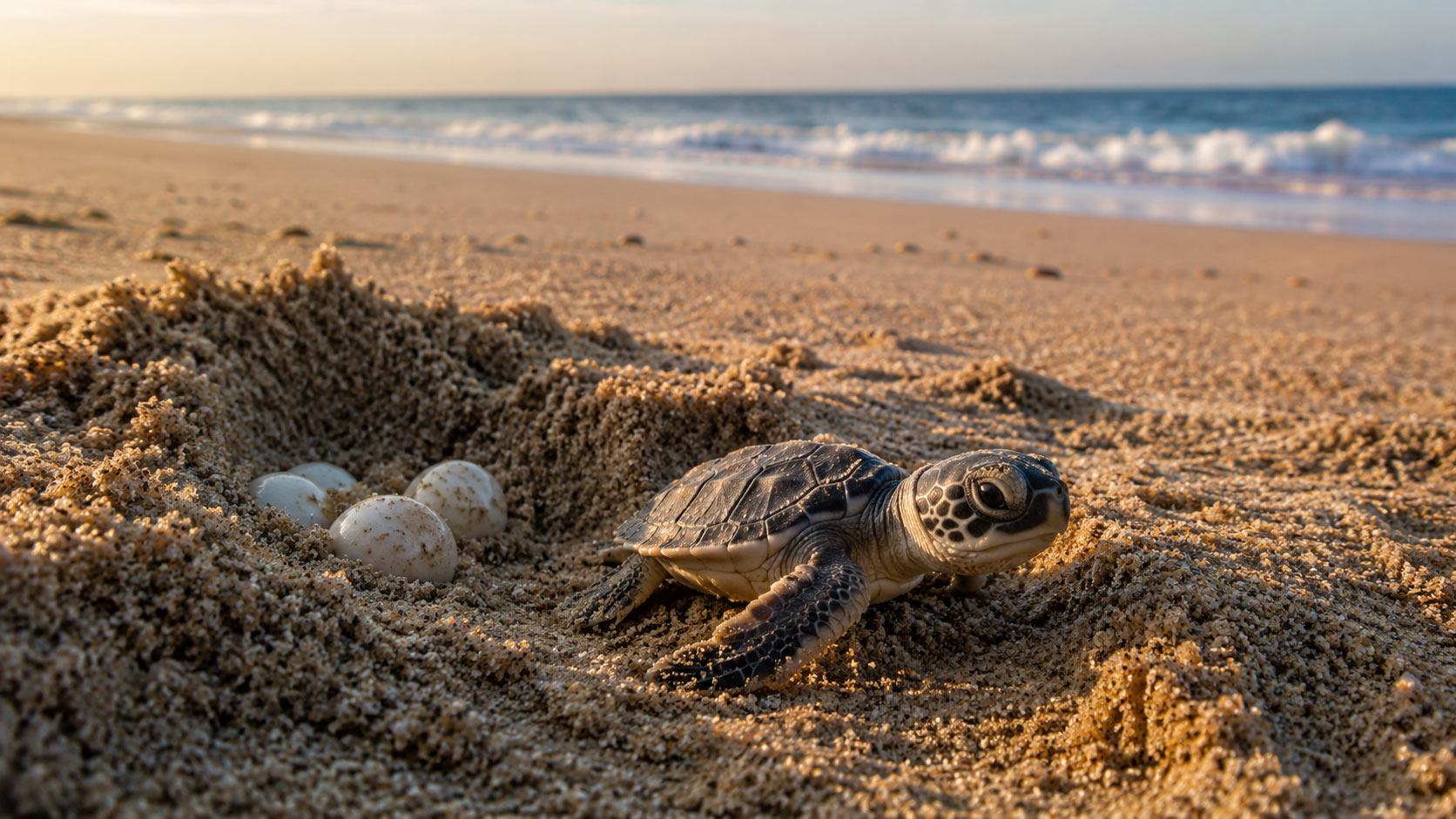
Perhaps the most telling trait of all is how sea turtles reproduce. Even though they live in the ocean, female sea turtles must crawl onto a sandy beach to lay their eggs, burying a clutch of roughly 100 leathery eggs in the warm sand. They cannot lay their eggs in the water. This is a deeply reptilian behavior and a major reason sea turtles are not amphibians. Amphibians like frogs typically lay soft eggs in water, and their young often start life with gills before changing form. Reptiles lay their eggs on land, and the young hatch as miniature versions of the adults, ready to breathe air from the start. A baby sea turtle digs out of its sandy nest already equipped with lungs and a tiny shell, looking just like a small adult. That is the reptile way, through and through.
So Why Do People Think They Might Be Fish Or Amphibians?
Given all of this, why does the question even come up? The confusion is understandable. Sea turtles live in the ocean and swim gracefully, so it is natural to lump them in with fish at first glance. They also move between water and land, which makes some people think of amphibians, who famously live double lives in both worlds. But the differences are clear once you look closer. Unlike fish, sea turtles breathe air and lay eggs on land. Unlike amphibians, they have dry scaly skin, lay their eggs on land rather than in water, and hatch as fully formed little reptiles instead of gilled larvae. Where an animal lives can be misleading. What matters is how its body works, and a sea turtle’s body is reptilian from its lungs to its scutes.
What Kind Of Reptile Is A Sea Turtle?
Within the reptile class, sea turtles belong to the turtle group, an ancient order of shelled reptiles that scientists call the Testudines. This is the same group that includes land tortoises and freshwater turtles, all sharing that signature shell. What makes sea turtles especially remarkable is how old the turtle lineage is. Turtles have been around since the age of the dinosaurs, paddling through ancient seas for well over 100 million years and surviving events that wiped out countless other creatures. When you watch a honu glide past, you are looking at the modern face of one of the oldest reptile designs still swimming the planet. It is a living link to a world most animals never made it out of.
Reptiles Built For The Ocean
The truly amazing part of the sea turtle story is that this land reptile blueprint got completely remodeled for life at sea. Sea turtles descended from reptiles that lived on land, and over millions of years they evolved a set of tools for the ocean while keeping their core reptile identity. Their legs became long, flat flippers for swimming. Their shells grew flatter and more streamlined to glide through water. They even developed special salt glands near their eyes to shed the extra salt that comes with living in the sea, which is the source of the salty tears people sometimes notice on a nesting turtle. None of these ocean upgrades changed what a sea turtle fundamentally is. They simply made it a reptile superbly adapted to a watery world.
What This Means For Snorkelers
Knowing that a sea turtle is a reptile gives every encounter a little more meaning. When you float above a honu at a place like Turtle Canyon off Waikiki and watch it rise for a breath of air, you are witnessing reptile biology in action, an ancient air breathing animal perfectly at home in the sea. It also helps explain the behaviors you see, like a turtle basking in the sun to warm its cold blooded body, or surfacing on its own schedule to breathe. You are not sharing the water with a big fish. You are sharing it with a reptile whose ancestors watched the dinosaurs come and go, an animal that carries a piece of deep history in every slow, graceful stroke of its flippers.
Watch: Sea Turtles 101
An Ancient Reptile In Modern Seas
So are sea turtles reptiles? Absolutely, and without any asterisk. The Hawaiian honu breathes air with lungs, runs on a cold blooded body that depends on the warmth around it, wears a coat of keratin scales and bony shell plates, and lays its eggs on a sandy beach, hitting every mark on the reptile checklist. It is not a fish and not an amphibian, just a reptile that happens to have mastered the ocean better than almost any other. That ocean life, with its flippers and salt glands and streamlined shell, is simply a brilliant set of adaptations layered onto an ancient reptile foundation. The next time a sea turtle glides past you in the blue, remember what you are really seeing. A reptile older than the dinosaurs’ last days, still gracefully ruling the reef.