Can Sea Turtles Drown? The Surprising Truth About How Honu Breathe
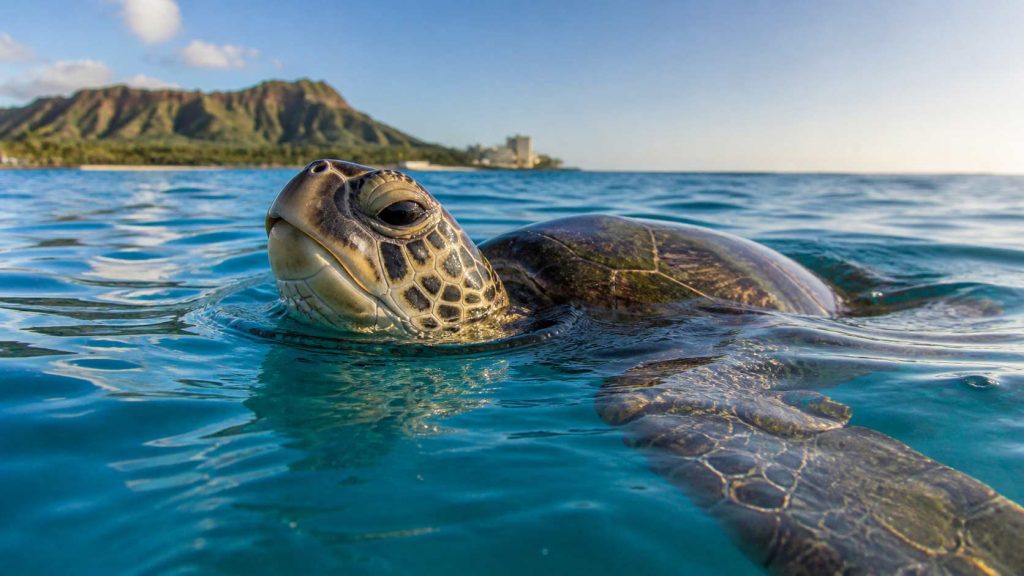
Sea turtles have been swimming Hawaii’s reefs for more than 100 million years, but there is one thing they have never been able to escape: the need to breathe air. These ancient reptiles are not fish. They do not have gills. Every dive is a race against the clock, and the biology they have developed to win that race is one of the most impressive systems in the animal kingdom. The next time you watch a honu surface right next to your boat at Turtle Canyon, you are watching that system in action.
Reptiles First, Ocean Second
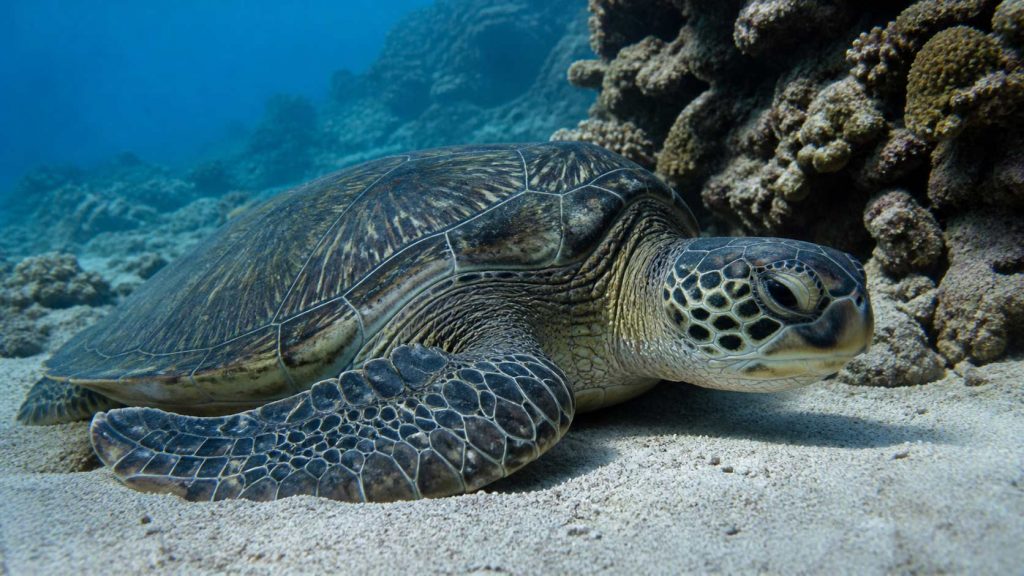
The Hawaiian green sea turtle breathes the same way you do. When it needs air, it has to surface and get it. Sea turtles evolved from land-dwelling reptile ancestors and have been in the ocean for roughly 110 million years without ever replacing their lungs with gills. That single fact explains almost everything else about how they live.
What makes sea turtles remarkable is not that they breathe air, but how long they can make a single breath last. A healthy honu surfacing in the waters off Waikiki will exhale stale air and pull in a fresh lungful in just a few seconds. That one breath can carry a turtle through a dive of four to seven minutes while it actively swims and feeds along the reef. When the same turtle settles onto the bottom to rest, that same breath can last much longer, sometimes stretching close to seven hours before the animal needs to surface again.
What Happens Inside During a Dive
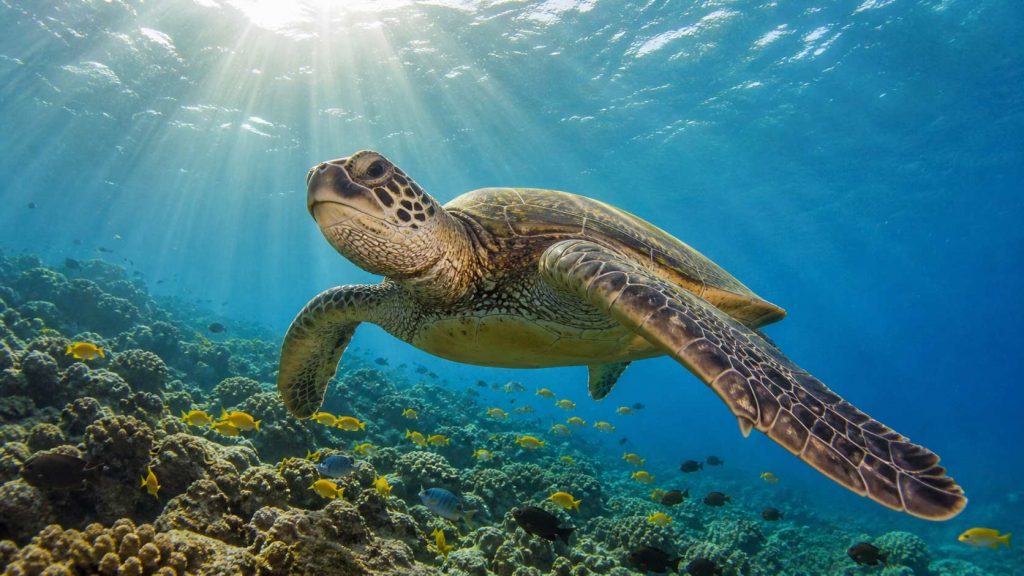
The difference between a four-minute dive and a seven-hour dive comes down to how a turtle manages the oxygen it took in. Sea turtles are built to ration their air supply with a precision that most animals cannot match.
One of the most striking examples is their heart rate. At the surface, a Hawaiian green sea turtle’s heart beats around 25 to 30 times per minute. During a long resting dive, that number can fall to just one or two beats per minute. Scientists call this response diving bradycardia, and it is a shared trait across the ocean’s long-diving animals, including seals and sperm whales. A slower heart means less oxygen consumed per minute, which means the same lungful of air can stretch much further.
At the same time, blood gets redirected. Sea turtles can shunt blood flow away from muscles and organs that can temporarily run on very little oxygen, keeping the supply concentrated in the heart and brain where it cannot be interrupted. Before going under, they take a full breath that loads the lungs to capacity. The body does the rest.
What About Breathing Through Their Cloaca?
Some turtles can absorb oxygen through a different route, and it is worth explaining what that actually means and why it does not apply to Hawaiian sea turtles.
Certain freshwater turtle species, like the painted turtle, spend their winters hibernating on the floor of ice-covered ponds. Because they cannot surface to breathe for months at a time, they have developed the ability to absorb small amounts of oxygen from the water through highly vascularized tissue near the cloaca. This process is called cloacal bursae respiration, and it allows those turtles to survive a frozen winter without surfacing at all.
Hawaiian green sea turtles do not have this adaptation. They live in warm, open ocean year-round and have never needed to hibernate under ice. Their breathing is entirely lung-based, and they depend on regular access to the surface the way all air-breathing animals do. If a honu cannot reach the surface, the clock simply runs out.
Yes, Sea Turtles Can Drown
This is the part that surprises most people. Sea turtles can drown, and it happens more often than it should.
The most common cause is entanglement in fishing gear. When a sea turtle gets caught in a longline, trawl net, or piece of abandoned ghost gear, it cannot swim to the surface to breathe. If it is not found and freed quickly enough, it drowns. This is one of the most serious threats facing Hawaiian green sea turtles today, and it is why organizations like NOAA and the Hawaii Wildlife Fund work closely with commercial fishing fleets to modify gear and reduce bycatch. Changes in gear design over the past few decades have made a meaningful difference in survival rates.
Boat strikes are another serious hazard. A turtle that has been hit by a propeller may be disoriented or injured to the point where it cannot surface consistently. Young turtles and those weakened by illness are also at greater risk, since the same diving and breath-holding capabilities that protect a healthy adult are reduced when an animal is not in peak condition.
What You See at Turtle Canyon
When you are in the water at Turtle Canyon off the coast of Waikiki and a honu rises to the surface a few feet from your mask, you are watching the whole system play out in real time. That turtle is not surfacing because it noticed you, though it may be doing that too. It is surfacing because it has to. The air break is as essential to it as the reef below.
What makes Turtle Canyon special is the density of healthy, active animals using that particular stretch of reef. The turtles there are well-fed on limu and algae that grow across the canyon floor, and they follow a natural routine of feeding, resting, and surfacing that you can observe up close from the water. Seeing a turtle take a breath at arm’s length and disappear back into the blue is one of those moments that stays with people long after the tour ends.
The Turtles and You tour departs from Waikiki twice daily at 10 AM and 1 PM, with about 45 minutes of guided snorkeling time in the water at Turtle Canyon. All snorkeling gear is included, the crew is CPR-certified and experienced, and the boat comes with live Hawaiian cultural performances and a complimentary snack on deck.
Watch: Sea Turtles 101
The video below from National Geographic covers sea turtle biology, behavior, and what makes these animals so well adapted to ocean life. It is a solid introduction before your first time in the water with them.
Every Breath, Every Dive, Every Surface
A sea turtle has been diving these waters since long before there was a Waikiki. It takes one breath at a time, slows its heart to almost nothing, and finds its way back to the surface on the same schedule it has followed for millions of years. There is a lot happening inside that shell on every single dive. Watching a honu surface for air, even briefly, even from a short distance, puts you in touch with something that ancient and that perfectly built for where it lives.