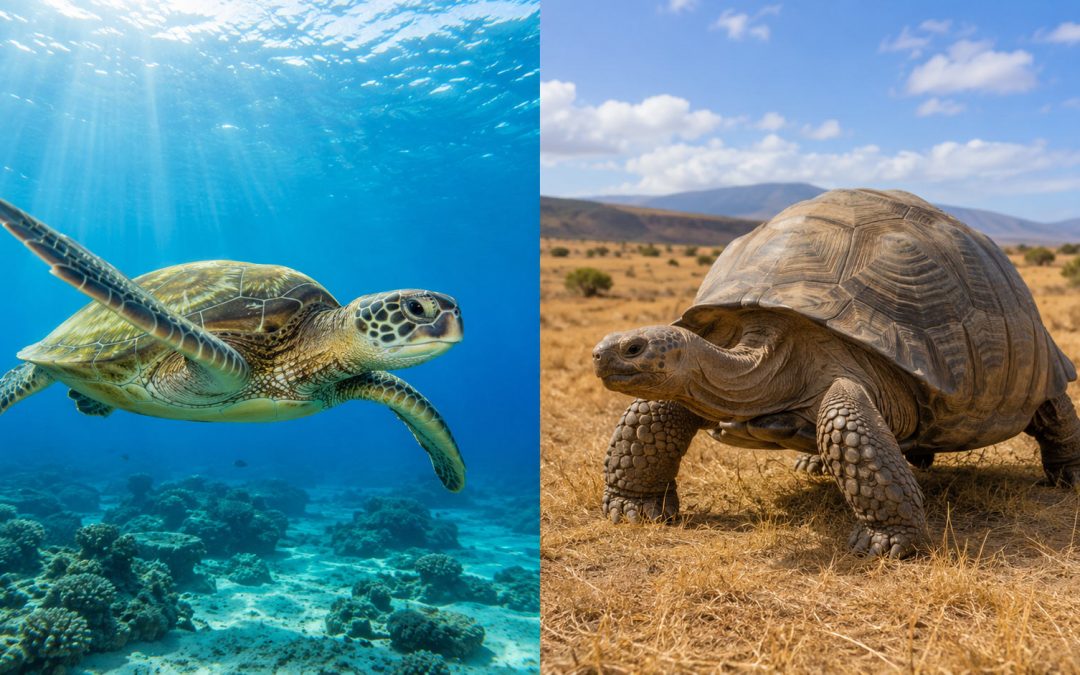
Sea Turtle vs Tortoise: What Is The Real Difference?
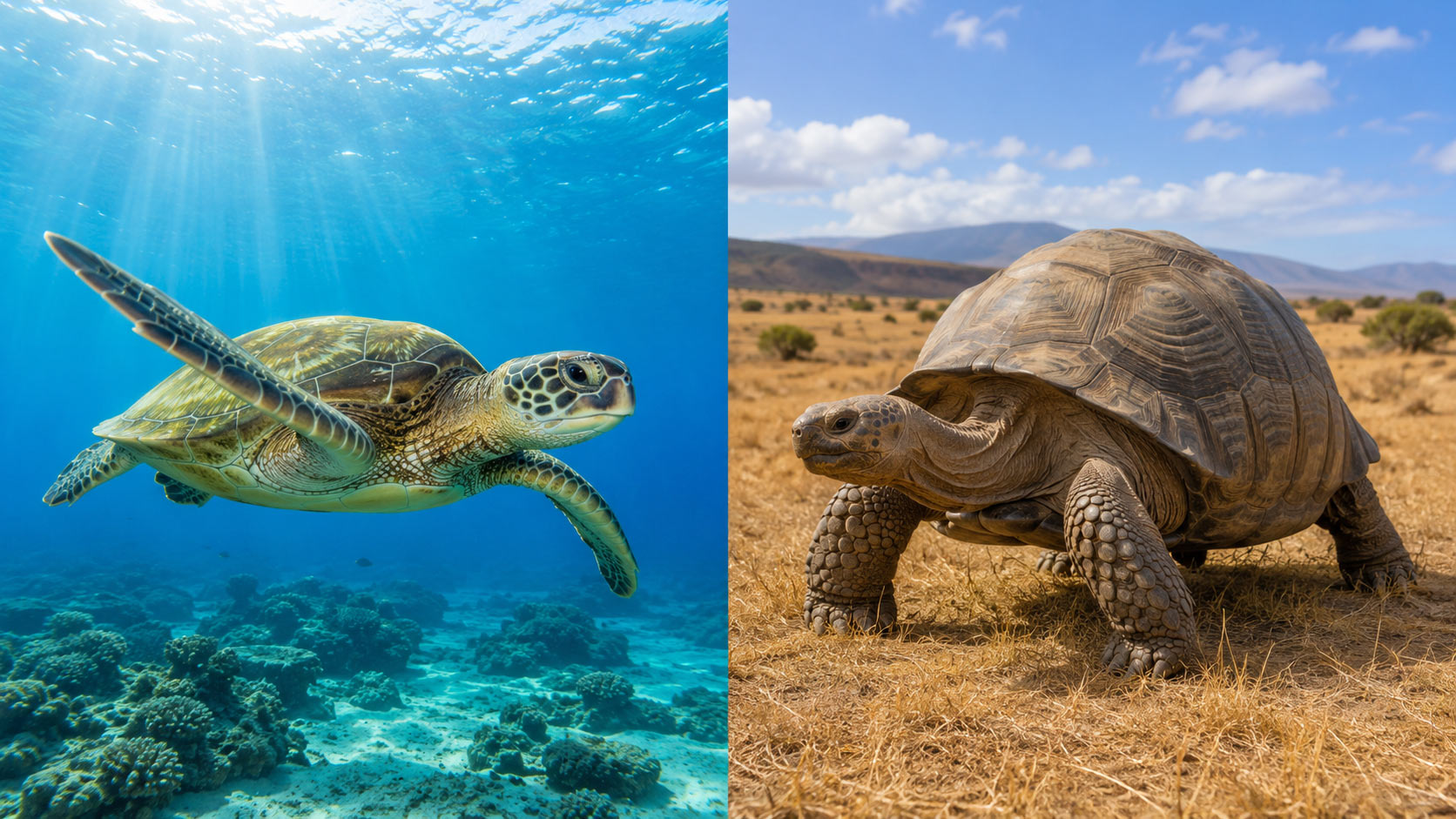
Walk along a Hawaiian beach and someone is bound to point at a honu resting in the sand and call it a tortoise. It happens all the time, and it is an honest mistake. Turtles and tortoises look alike at a glance, they are closely related, and people swap the two words without thinking twice. But these animals are not the same, and the differences between them are bigger than most people realize. A sea turtle is built for a life spent gliding through the open ocean, while a tortoise is built for slow, steady travel across dry land. Once you understand the few key features that set them apart, you will never confuse the two again. This guide explains the real differences in simple terms, sorts out the often confusing word terrapin, and shows exactly where Hawaii’s green sea turtle fits into the picture.
The Short Answer: All Tortoises Are Turtles, But Not All Turtles Are Tortoises
Here is the part that surprises people. A tortoise is actually a type of turtle. Scientists group all of these shelled reptiles, sea turtles, tortoises, and pond turtles alike, into one big order called the Testudines. So in the broadest sense, a tortoise is a turtle, the same way a poodle is a dog. The word turtle is the giant umbrella that covers the whole family. Tortoise is a smaller word inside that umbrella, used only for the land dwelling members that live entirely on solid ground. That means you can correctly call a tortoise a turtle, but you cannot call a sea turtle a tortoise, because a sea turtle never lives on land the way a tortoise does. Keeping that one idea in mind clears up most of the confusion right away.
Where They Live Is The Biggest Clue
The single most important difference between a sea turtle and a tortoise is where each one spends its life. Sea turtles are ocean animals through and through. A green sea turtle is born on a beach, scrambles into the waves as a hatchling, and then spends almost its entire life in saltwater, coming ashore only when a female crawls up to lay her eggs. Tortoises are the opposite. They are land animals that live in deserts, grasslands, and forests, and most of them would actually drown if they were dropped into deep water, since they cannot swim. So if you see a shelled reptile cruising through the ocean or resting on a reef, it is a sea turtle. If you see one trudging across dry dirt far from the water, it is a tortoise. Their whole bodies are shaped by these two very different homes.
Flippers Versus Feet
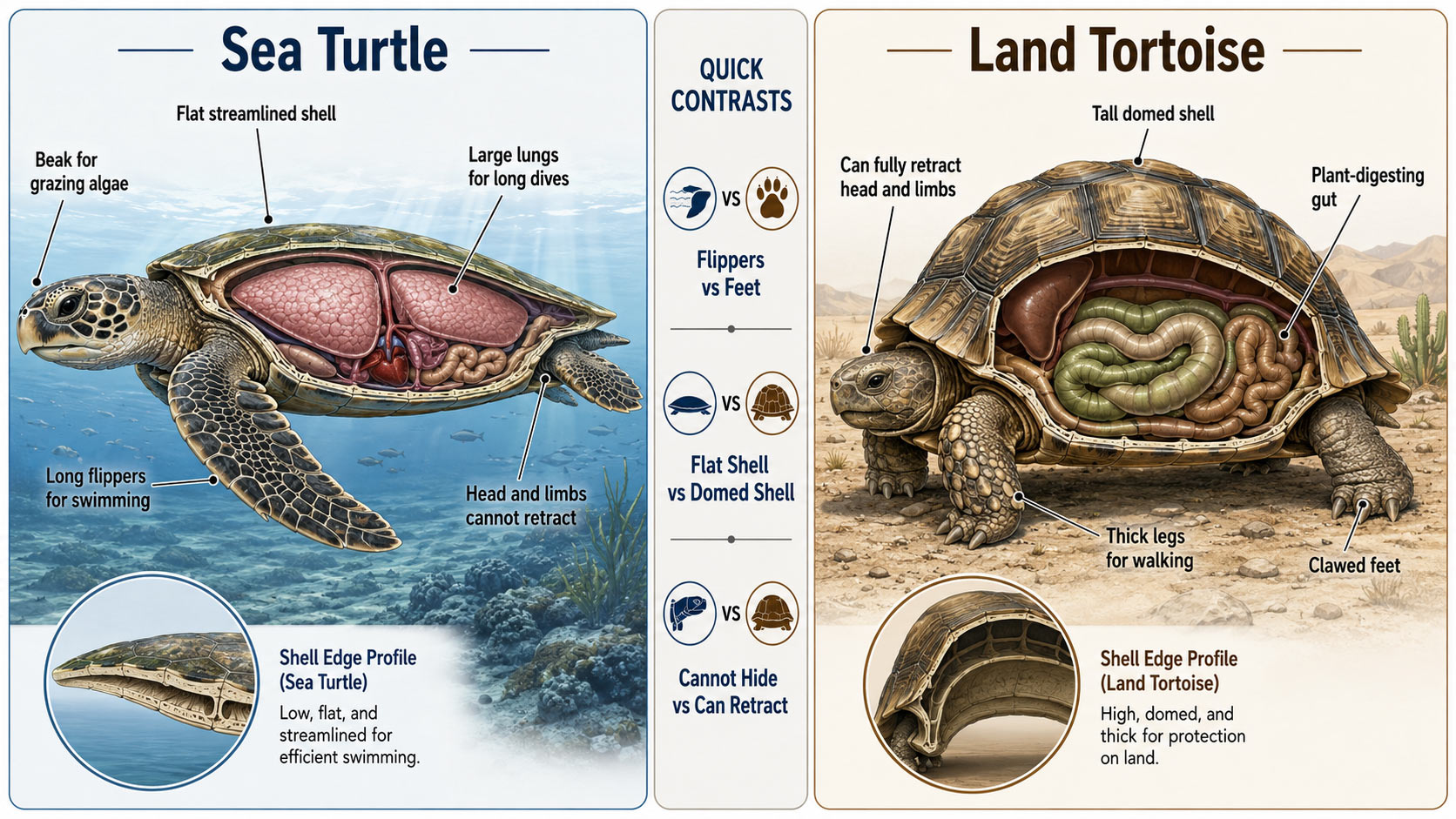
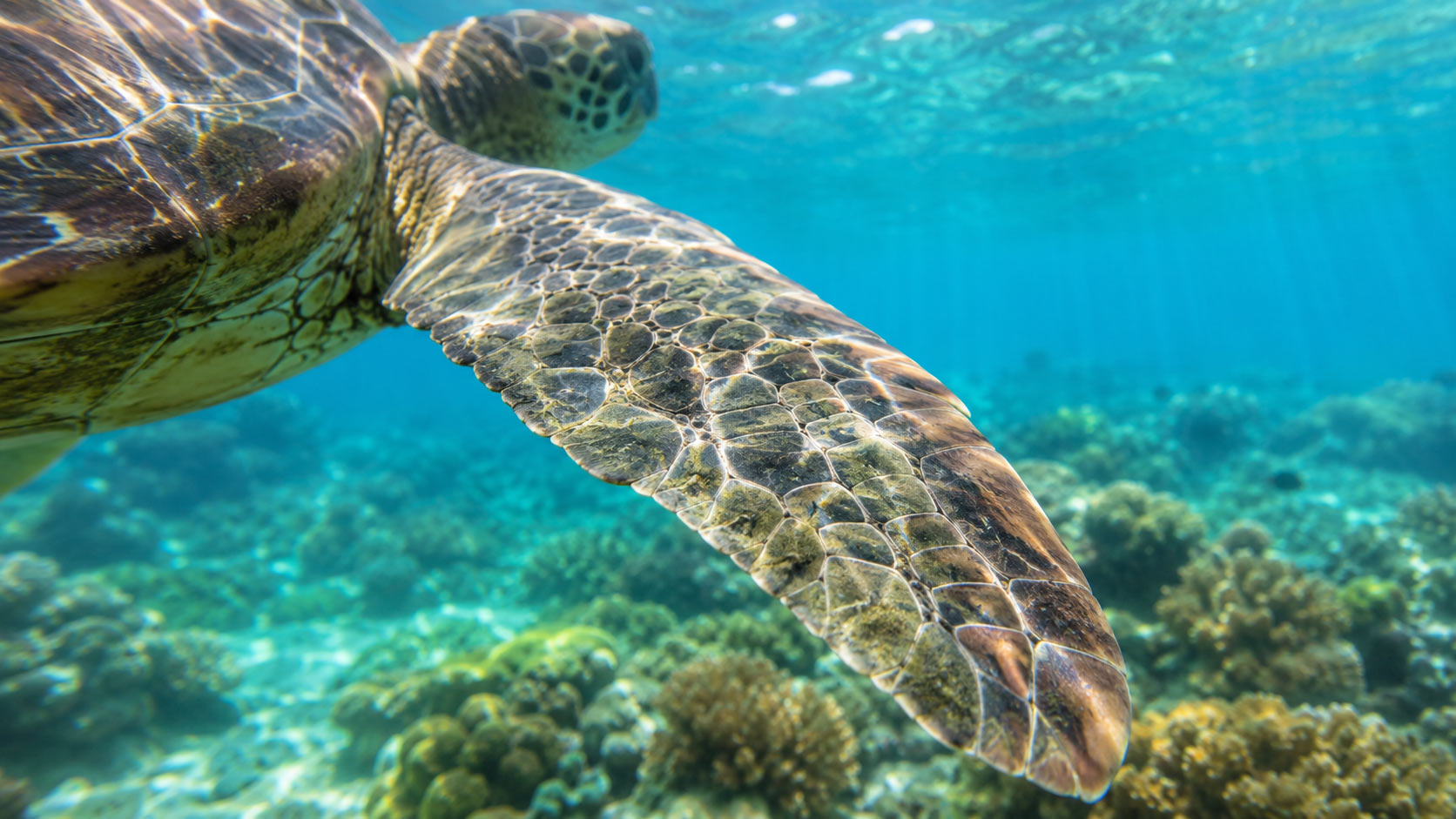
Look at the limbs and the difference jumps right out. A sea turtle has long, flat flippers, almost like a pair of underwater wings. The front flippers sweep up and down to power the turtle forward, while the back flippers act like rudders for steering. These flippers are wonderful in the water but clumsy on land, which is why a nesting sea turtle drags itself up the beach so slowly and with such effort. A tortoise has nothing like flippers. Instead it has thick, round, sturdy legs that look a bit like tiny elephant feet, perfect for carrying a heavy body over rough ground. Those stumpy legs would be useless for swimming, but they are exactly what a land animal needs to walk, dig, and climb. The contrast between graceful flippers and solid, padded feet is one of the quickest ways to tell these cousins apart.
Shell Shape Tells A Story
The shell is another giveaway, because each animal’s shell is shaped by the world it moves through. A sea turtle has a flatter, smoother, more streamlined shell, often described as teardrop shaped. That low, sleek design slips through the water with very little drag, helping the turtle glide for miles without wasting energy. A tortoise carries a tall, heavy, dome shaped shell instead. That high domed shape offers serious protection on land, making it harder for a predator to bite down or crack the shell open. A streamlined shell would be a burden on land, and a heavy domed shell would be an anchor in the sea, so each animal ended up with the design that suits its life. When you see a low, flat, polished looking shell, think ocean. When you see a tall, bumpy dome, think land.
Can They Hide In Their Shell?
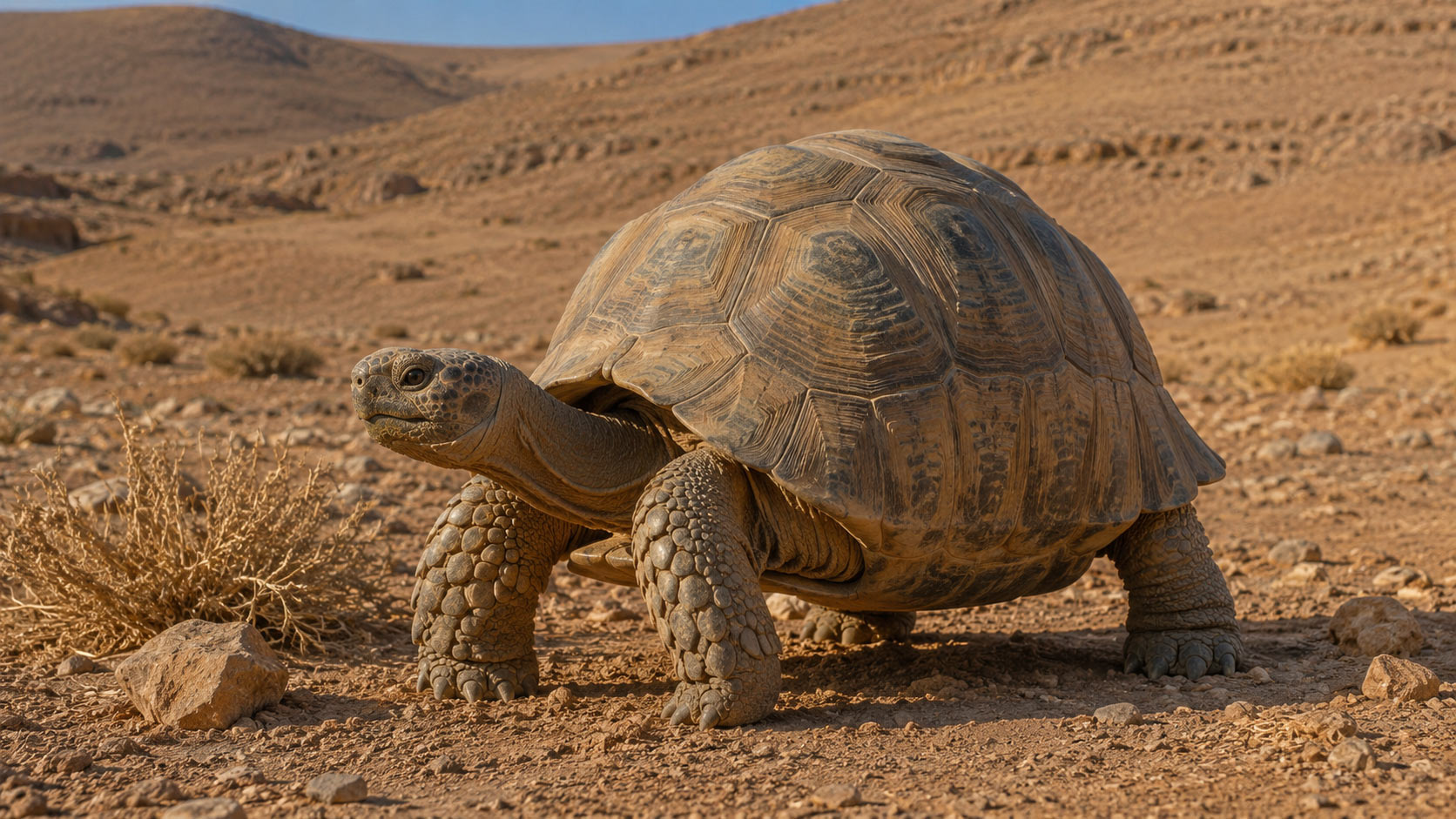
Here is a difference that catches many people off guard. A tortoise can usually pull its head and legs inside its shell when it feels threatened, sealing itself up like a living strongbox. A sea turtle cannot do this at all. Because their flippers are so large and their bodies are built for swimming, sea turtles are unable to tuck their heads or limbs inside their shells. They have traded that hiding trick for speed and agility in the water, relying on the ability to swim away from danger rather than hide from it. So if a shelled reptile can disappear into its shell, it is not a sea turtle. This is also a good reminder of why sea turtles are so vulnerable when they are on the beach or near the surface, since they have no way to hide and must depend on staying alert and reaching safe water.
What Each One Eats
Diet is another place where these animals part ways, though there is some overlap. Most tortoises are plant eaters, munching their way through grasses, leaves, flowers, and fruit they find on land. Sea turtles are a more varied bunch depending on the species. Hawaii’s adult green sea turtle is mostly a vegetarian of the sea, grazing on algae and seagrass across the reef, which is part of how it earned its name. Younger green sea turtles and other species are more omnivorous, eating a mix that can include jellyfish, sponges, and small drifting creatures. So while a tortoise sticks to a land based salad and a green sea turtle favors marine plants, the key point is that each animal eats what its particular habitat provides. The reef is the green sea turtle’s garden, and the land is the tortoise’s pantry.
Size And Lifespan
Both groups include some real giants and some champion agers. Among tortoises, the famous Galapagos tortoise can weigh more than 500 pounds and is known for living well over 100 years, with some individuals passing 150. Sea turtles get impressively large too. The Hawaiian green sea turtle can grow to a couple hundred pounds, and the leatherback, the largest sea turtle of all, can top 1,000 pounds. Sea turtles are also long lived animals, with green sea turtles often reaching 60 to 70 years or more in the wild. So neither group wins the size or age contest outright. Both tortoises and sea turtles include some of the longest living and most ancient looking creatures on the planet, a reminder that this whole shelled family has been quietly succeeding for a very long time.
So What Is A Terrapin?
If turtle and tortoise were not confusing enough, there is a third word that gets thrown around, and that is terrapin. A terrapin is simply a specific kind of turtle that lives in or near brackish water, which is a mix of fresh and salt water like you find in marshes and coastal ponds. Terrapins spend time both in the water and on land, sitting somewhere between the fully aquatic sea turtles and the fully terrestrial tortoises. The word is used differently in different parts of the world, which adds to the muddle, but the simplest way to remember it is this. Sea turtles live in the ocean, tortoises live on land, and terrapins hang around the in between zones of brackish water. All three are turtles in the big picture sense, just adapted to three different kinds of homes.
Where The Hawaiian Honu Fits In
With all of that sorted out, the honu’s place is clear. The Hawaiian green sea turtle is a true sea turtle, not a tortoise and not a terrapin. It has the long flippers, the flat streamlined shell, and the salt water lifestyle that define ocean going turtles, and it cannot pull its head or limbs inside its shell. The only time a honu touches land is when a female comes ashore to nest, or when a turtle hauls out on a Hawaiian beach to bask in the sun, which is a special behavior that green sea turtles are known for in the islands. So the next time you hear someone call a basking honu a tortoise, you will know the gentle correction. It is a sea turtle, beautifully built for a life in the water, just taking a quiet rest on the sand.
What This Means For Snorkelers
Knowing the difference adds a little extra wonder to a day on the water. When you float above a green sea turtle at a spot like Turtle Canyon off Waikiki, you are watching an animal whose entire body, from its wing like flippers to its sleek shell, is shaped for the exact world you are seeing it in. It is not a clumsy land animal that wandered into the sea. It is an ocean specialist that has spent millions of years perfecting the art of underwater flight. That understanding tends to make the encounter feel even more remarkable. You are not just looking at a turtle. You are looking at the saltwater branch of an ancient family, an animal so at home in the ocean that the land has become a place it visits only briefly, for the most important moments of its life.
Watch: Turtle Versus Tortoise Explained
Same Family, Two Very Different Lives
Sea turtles and tortoises are cousins cut from the same ancient cloth, both wearing the famous shell that has protected their kind for ages. But a sea turtle is an ocean traveler with flippers, a sleek shell, and a saltwater home, while a tortoise is a land walker with stumpy feet, a high domed shell, and a life spent on solid ground. Tortoises can hide inside their shells and sea turtles cannot, and the often misused word terrapin simply describes the turtles that live in the brackish space in between. Hawaii’s honu sits firmly on the sea turtle side of the family, perfectly designed for the reefs where snorkelers love to find it. Learn these few simple differences and you will never mix up a turtle and a tortoise again, and you will see that gentle honu gliding past you with a whole new appreciation for what it really is.