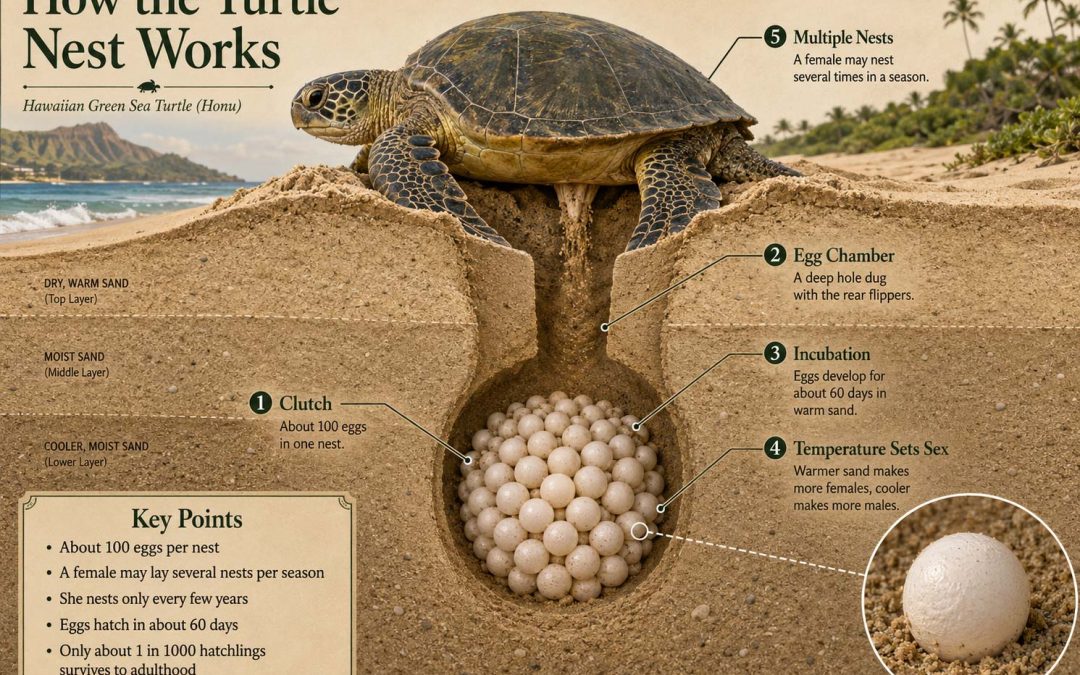
How Many Eggs Do Sea Turtles Lay? Inside A Honu Nest
Few moments in the ocean world are as dramatic as a sea turtle laying her eggs. Under the cover of darkness, a female green sea turtle drags herself out of the water and up a sandy beach, a slow and exhausting journey for an animal built for swimming, not walking. She digs a deep hole with her rear flippers, settles in, and lays a large batch of round, leathery eggs before carefully covering them and returning to the sea, never to see her babies. It is one of the most important and vulnerable events in a turtle’s entire life. So how many eggs does she actually lay? The short version is about 100 in a single nest, but the full story involves multiple nests, hundreds of eggs, long gaps between nesting years, and a survival rate that helps explain why turtles lay so many in the first place. Here is everything you need to know about the numbers behind a honu nest.
The Short Answer: About 100 Eggs Per Nest
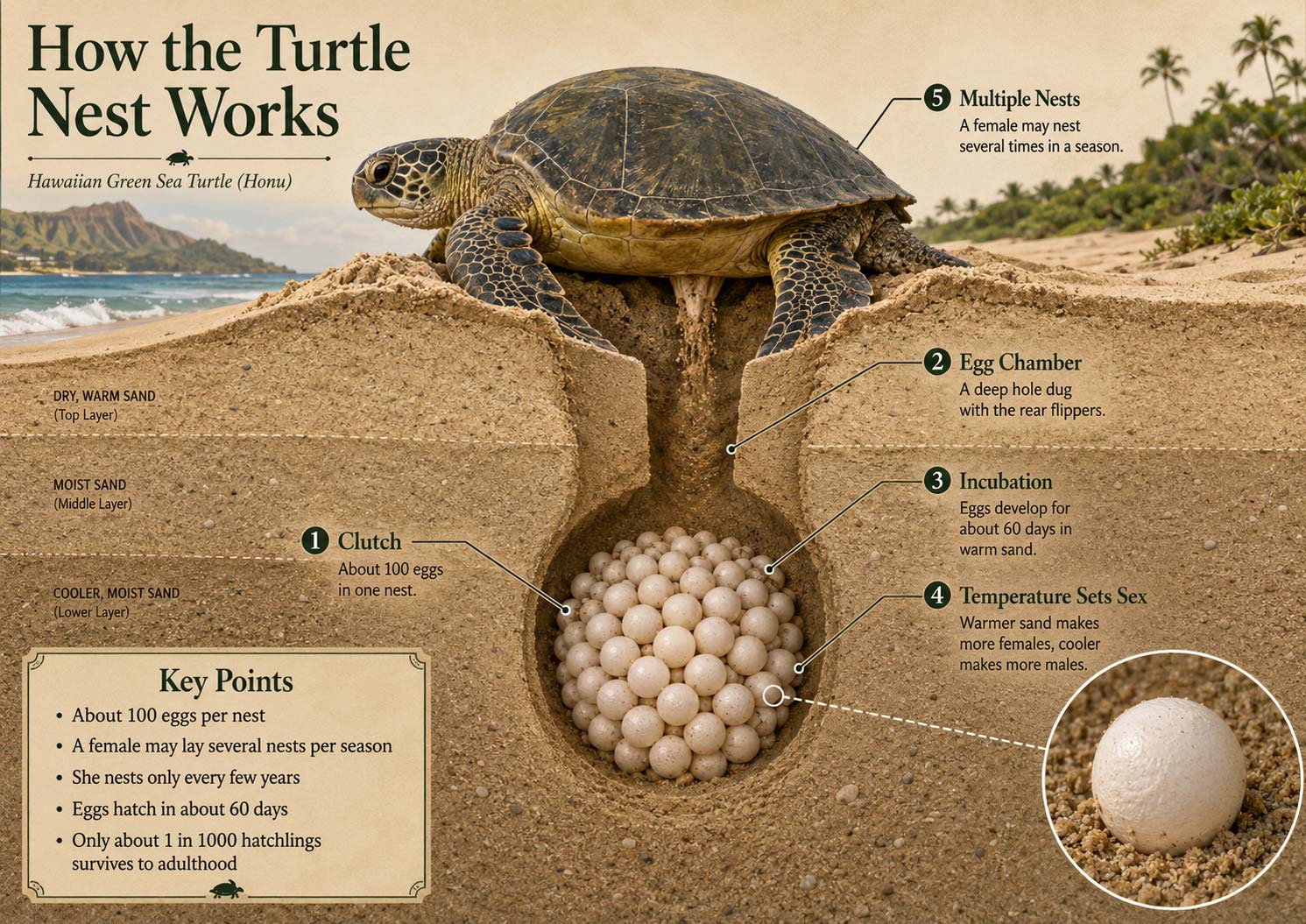
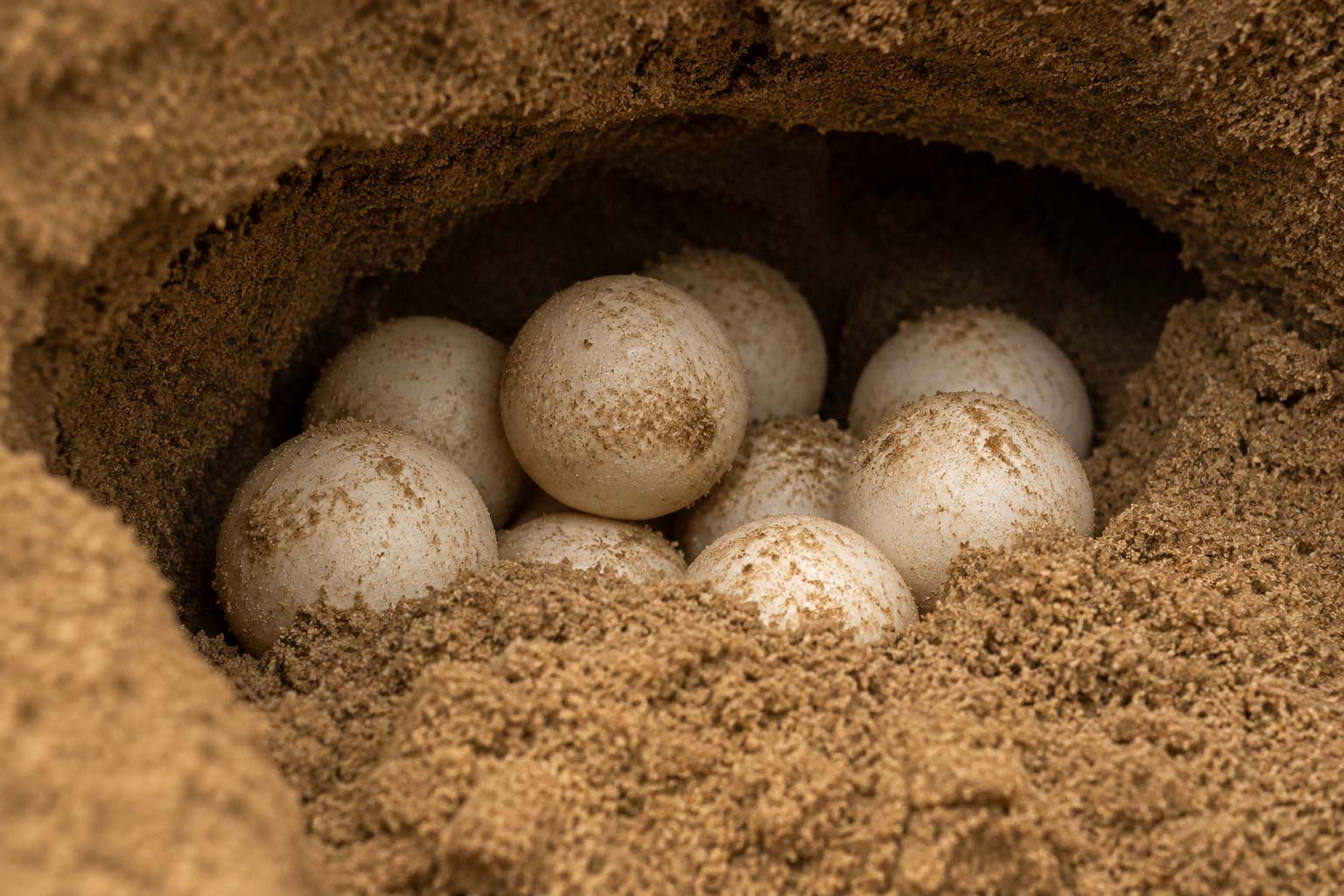
For a Hawaiian green sea turtle, a single nest usually holds somewhere around 100 eggs, give or take. Some nests hold a bit fewer and some hold well over 100, but that number is a solid average to keep in mind. The eggs themselves are soft and leathery rather than hard like a chicken egg, and they are roughly the size and shape of a ping pong ball. The female drops them gently into the sandy chamber she has dug, where they will stay buried and hidden for about two months. That batch of eggs laid in one nesting session has a special name, and understanding it makes the rest of the numbers a lot easier to follow.
What Is A Clutch?
When scientists talk about the group of eggs a turtle lays in one nest, they call it a clutch. So a single clutch of green sea turtle eggs is that batch of roughly 100. The word is handy because a female does not lay just one clutch and call it a season. She often comes back to the beach to lay several clutches over the following weeks, which is how the total number of eggs adds up so quickly. Thinking in terms of clutches helps separate two different questions that people often mix up. One is how many eggs are in a single nest, and the other is how many eggs a female lays across an entire season. The answers are very different, and both are worth knowing.
How Many Times Does A Female Nest In One Season?
Here is where the numbers really climb. A female green sea turtle does not nest just once. During a single nesting season she may haul out and lay a new clutch several times, often returning to the beach every two weeks or so. A green sea turtle can lay multiple clutches in a season, and when you multiply roughly 100 eggs by several nests, a single female can lay many hundreds of eggs in just a few months. That is an enormous investment of energy for one animal, especially since she eats little or nothing during this demanding stretch. By the end of the season she is worn out and ready to head back to her feeding grounds to recover, having given everything she has to the next generation.
But She Does Not Nest Every Year
One of the most surprising facts about sea turtle nesting is that a female does not do it every single year. Producing all those eggs takes a tremendous amount of energy, so a green sea turtle typically skips one or more years between nesting seasons. The gap between nesting years is called the remigration interval, and for green sea turtles it is often somewhere in the range of two to five years. During those off years she stays at her regular feeding areas, eating and building up the reserves she will need for the next big nesting effort. This is part of why protecting adult turtles matters so much. A single breeding female represents years of stored energy and many future nests, and losing even one is a real blow to the population.
How She Builds The Nest And Lays Her Eggs
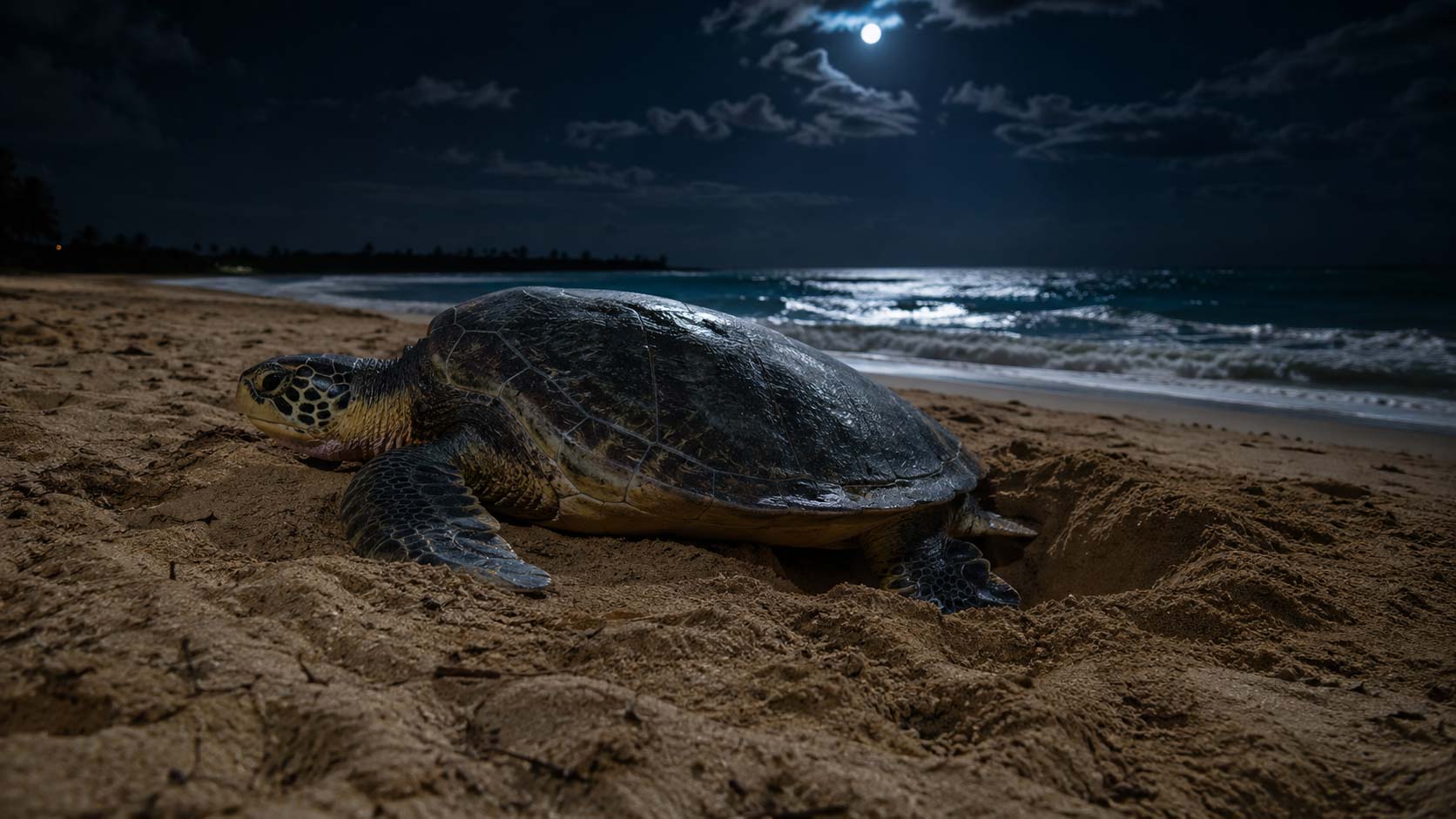
The nesting process itself is a careful, instinct driven routine. After crawling up the beach to a spot above the high tide line, the female first sweeps out a wide body pit with her flippers. Then, using her rear flippers like a pair of cupped hands, she digs a narrow, deeper hole called the egg chamber. Into that chamber she lays her clutch, dropping the eggs in small groups. When she is finished, she uses those same rear flippers to fill the chamber back in, then flings sand over the whole area to disguise the nest from predators. The entire job can take one to three hours, and it leaves her exhausted. Once she is satisfied the nest is hidden, she turns and makes the slow trip back to the water, her part of the work complete.
Why Do Sea Turtles Lay So Many Eggs?
Laying around 100 eggs at a time, several times a season, may seem like a lot, and there is a sobering reason behind it. The journey from egg to adult sea turtle is brutally dangerous, and only a tiny fraction of hatchlings ever survive to grow up. It is often said that only about one in a thousand sea turtles makes it to adulthood. Eggs and hatchlings face a gauntlet of threats, from crabs and birds to fish and the simple challenge of reaching the water and surviving the open ocean. By laying huge numbers of eggs, a female plays a numbers game, betting that out of all those hundreds, at least a few will beat the odds and carry on the species. It is nature’s way of balancing terrible loss with the promise of a future.
How Long Until The Eggs Hatch?
Once the eggs are buried, the warm sand becomes a natural incubator. Green sea turtle eggs usually take about 60 days to develop, though the exact timing depends on how warm the sand is. Warmer sand speeds things up, while cooler sand slows them down. Temperature does something else remarkable too. It actually determines whether the hatchlings become male or female, a process known as temperature dependent sex determination. Warmer nests tend to produce more females, while cooler nests produce more males. When the little turtles are finally ready, they break out of their shells and dig upward together, usually emerging at night and scrambling toward the brightness of the open horizon over the sea. That mad dash to the water is one of the most perilous moments of their entire lives.
Different Species, Different Numbers
While the green sea turtle averages around 100 eggs per nest, other species have their own patterns. The giant leatherback lays clutches that often run a bit smaller in egg count, while species like the olive ridley are famous for an astonishing mass nesting event called an arribada, where tens of thousands of females come ashore on the same beach over just a few days. The total number of eggs laid in a single arribada is almost impossible to imagine. Each species has tuned its nesting strategy to its own biology and environment, but the basic theme is the same across all sea turtles. Lay many eggs, hide them in the sand, and let the warmth of the beach do the rest, all in the hope that a few will survive.
Why This Matters For Hawaii’s Honu
For Hawaii’s green sea turtles, almost all nesting happens far from the main islands, out in the remote, protected sands of the Northwestern Hawaiian Islands, especially a place called Lalo, also known as French Frigate Shoals. The vast majority of the entire Hawaiian green sea turtle population traces its beginnings to those distant beaches. That is a big reason the honu you see snorkeling off Oahu are so precious. Each one survived against staggering odds, beginning life as one egg among roughly 100 in a nest, on a beach hundreds of miles away. Protecting both the nesting beaches and the adult turtles that return to them is what keeps this remarkable cycle going, season after season.
What This Means For Visitors
While you are very unlikely to see a turtle nesting on a busy Oahu beach, it is still good to know how to act if you ever come across a nesting female, a fresh nest, or hatchlings making their way to the sea. The golden rule is to keep your distance and never interfere. Bright lights, noise, and crowds can frighten a nesting female back into the water before she finishes, or disorient hatchlings trying to find the ocean. If you spot any of this, give the animals plenty of room, keep lights off, and report it to local wildlife officials if anything seems wrong. Respecting these moments from afar is one of the most meaningful ways visitors can help protect the next generation of honu.
Watch: A Turtle Mother Lays Her Eggs
A Hundred Tiny Bets On The Future
So how many eggs do sea turtles lay? A Hawaiian green sea turtle lays around 100 eggs in a single nest, and she may return to nest several times in a season, laying many hundreds of eggs in just a few months, though she takes years off in between to recover. She buries each clutch in the warm sand, where the eggs incubate for about two months before the hatchlings emerge and race for the sea. The reason for all those eggs is heartbreaking and hopeful at the same time, since only a tiny few will ever survive to adulthood. Every honu gliding peacefully over a Hawaiian reef started as one egg in a sandy nest, a single tiny bet that paid off. Knowing that makes each turtle you meet in the water feel even more like the small miracle it truly is.