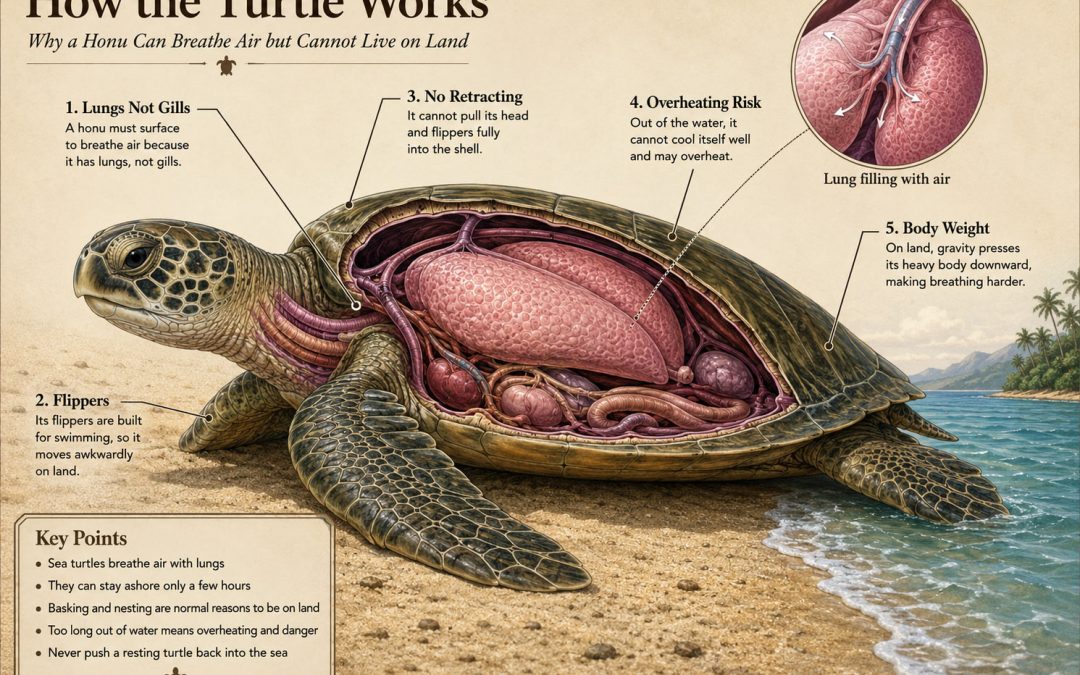
Can Sea Turtles Live Out Of Water? How Long A Honu Can Stay On Land
If you spend any time on a Hawaiian beach, sooner or later you will see it. A large green sea turtle hauls itself out of the waves, drags its body up onto the warm sand, and settles in for a long, motionless rest in the sun. To anyone watching, it raises an obvious question. Is the turtle okay out of the water, and how long can it stay there? The answer is more interesting than most people expect. Sea turtles breathe air with lungs, so they are in no danger of drowning on land, and a resting turtle on the beach is usually doing something completely normal and healthy. At the same time, sea turtles cannot truly live on land, because every part of their body is designed for the ocean. This guide breaks down how long a honu can safely stay ashore, why they come out of the water in the first place, and how you should act if you are lucky enough to find one resting on the sand.
The Short Answer: They Breathe Air, But They Cannot Live On Land
Here is the heart of it. A sea turtle can survive out of the water for a surprisingly long stretch, often several hours, because it breathes air rather than water. But it cannot live on land in any lasting way. The ocean is where a turtle feeds, moves, cools off, escapes danger, and spends almost its entire life. Time on land is always temporary, limited to specific reasons like basking in the sun or, for females, laying eggs. Think of the beach as a place a sea turtle visits, never a place it stays. The moment a turtle is forced to remain on land too long, the very body that makes it a master of the sea starts to work against it.
Wait, Sea Turtles Breathe Air?
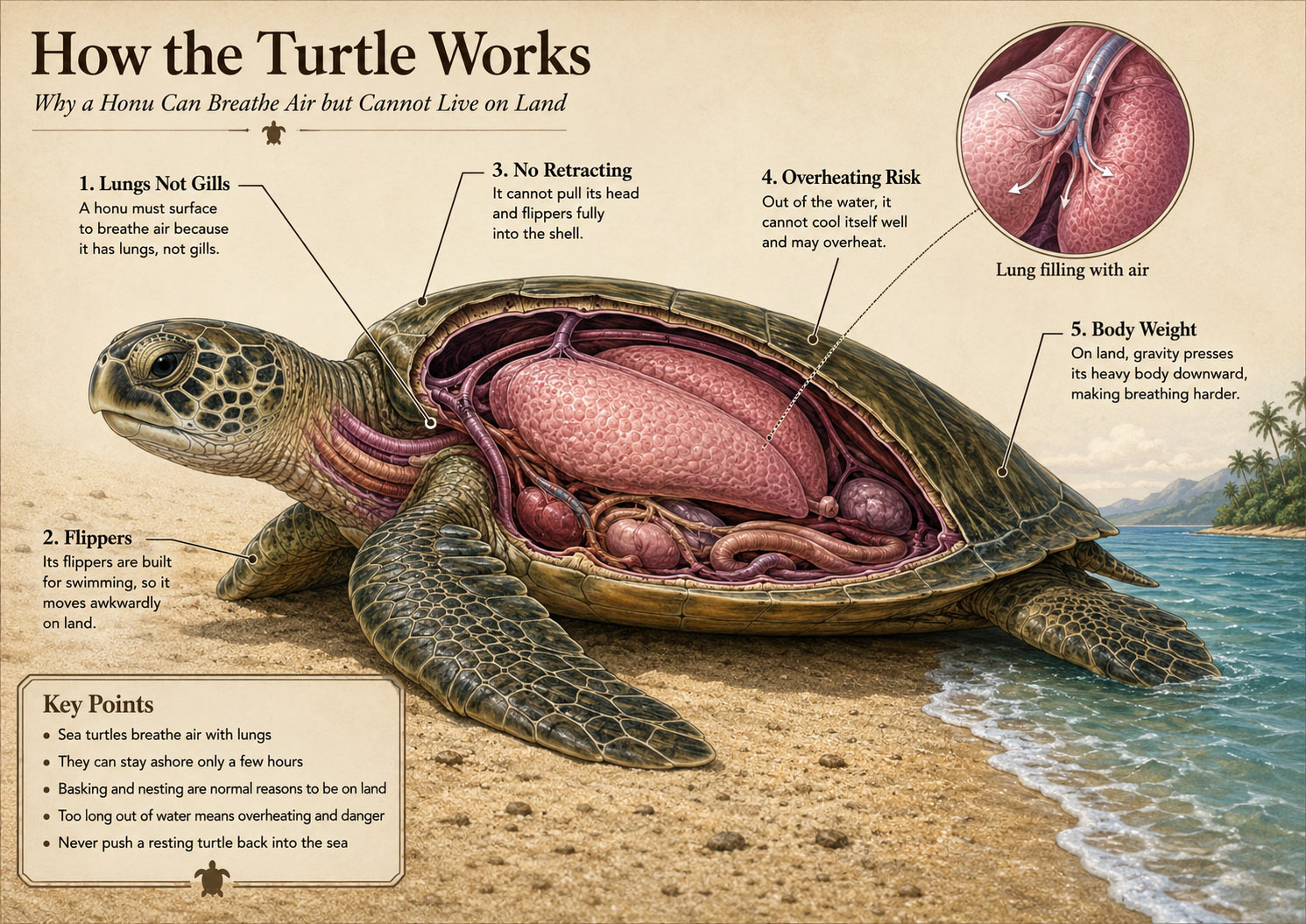
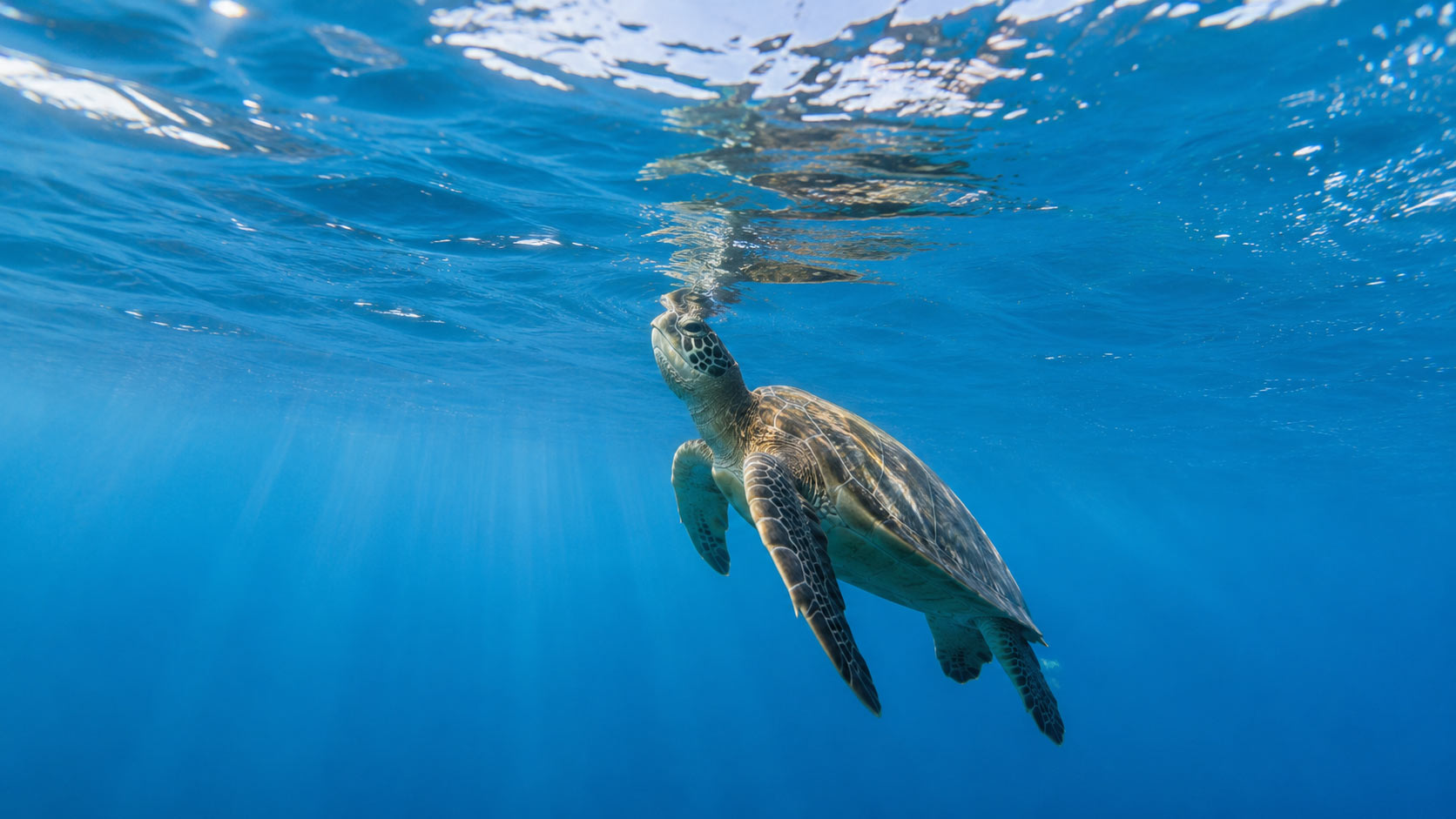
Yes, and this surprises a lot of people. Despite spending nearly their whole lives underwater, sea turtles do not have gills like fish. They breathe air with lungs, and they must come to the surface to breathe, just as we do. Sea turtles evolved from land living reptile ancestors long ago, and even after millions of years in the ocean they never traded their lungs for gills. This is why you sometimes see a turtle pop its head above the surface for a quick breath while snorkeling. Because they breathe air, being out of the water does not suffocate them at all. A turtle resting on the beach is breathing perfectly well. Its problem on land is never a lack of air. It is everything else.
So Why Can They Not Just Live On Land?
If they breathe air, why can sea turtles not simply live on the beach? The answer is that their entire body is built for water, not for ground. Out of the ocean, several problems stack up quickly. A sea turtle’s limbs are long, flat flippers made for swimming, not legs made for walking, so moving on land is slow, clumsy, and exhausting. In the water a turtle is weightless and graceful, but on land gravity presses its heavy body down, making it hard to move and even straining its lungs over time. Sea turtles also cannot pull their head and flippers inside their shells like a land tortoise can, leaving them exposed. On top of that, a turtle out of water slowly dries out and can quickly overheat in the tropical sun. Here is why the land is such a hard place for a honu:
- Flippers are built for swimming, not walking, so movement is slow and tiring
- Out of water, gravity presses down on the heavy body and strains the lungs
- They cannot hide in their shells, so they are exposed to danger
- They dry out and can overheat fast in direct sun
How Long Can A Sea Turtle Stay Out Of Water?
There is no single exact number, because it depends on the turtle and the conditions, but in general a healthy adult sea turtle can stay out of the water for a few hours without harm. Basking green sea turtles in Hawaii routinely rest on the beach for several hours at a time before returning to the sea. Nesting females may spend one to three hours ashore while they dig and lay their eggs. Larger adults with more body mass tend to handle time on land better than small turtles, and cooler, shadier conditions are far easier on them than blazing midday heat. Beyond that natural window, though, the risks climb steadily. A turtle stuck on land for many hours, especially in hot sun, moves from resting to real danger. The key idea is that a few hours is normal, but a sea turtle is never meant to stay out of the water for a full day or more.
Basking: Hawaii’s Famous Sun Lounging Honu
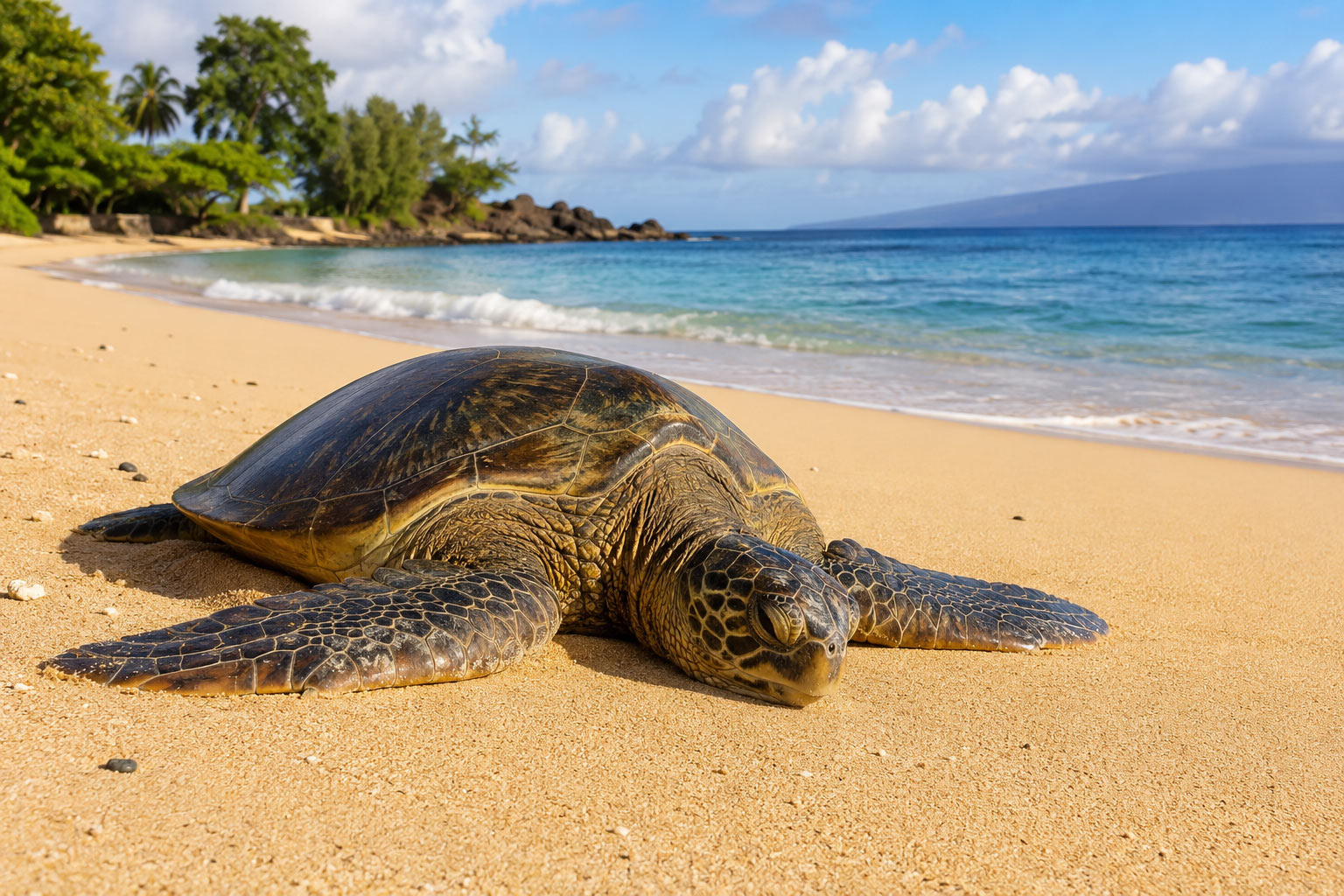
One of the most beloved sights in Hawaii is a green sea turtle basking on the sand, lying still in the sun like a contented beachgoer. This behavior is special, because most sea turtles around the world almost never come ashore except to nest. Hawaii’s green sea turtles are one of the few populations that regularly haul out to bask in broad daylight. Scientists believe they do it for several reasons. The warmth helps raise their body temperature, since turtles are cold blooded and rely on their surroundings for heat. Resting on land also gives them a safe break from the water, away from predators like sharks, and may help with digestion and overall health. So when you see a honu basking, you are not looking at a turtle in trouble. You are looking at one doing something perfectly natural that only a lucky few populations get to enjoy.
Nesting: The One Time Females Must Come Ashore
The other major reason a sea turtle leaves the water is nesting, and this applies only to females. When a female is ready to lay her eggs, she has no choice but to come ashore, because eggs buried in warm sand are how the next generation begins. She drags herself above the high tide line, digs a chamber with her rear flippers, lays her clutch, covers it, and then makes the slow journey back to the sea. This whole process can take one to three hours and leaves her exhausted. It is one of the few moments in a sea turtle’s life when staying out of the water for an extended time is not just normal but necessary. Even so, it is brief, and she returns to the ocean as soon as her work is done.
The Dangers Of Being Out Of Water Too Long
While a few hours ashore is fine, a sea turtle that cannot get back to the water faces real trouble. The biggest threats are overheating and drying out, especially under the strong tropical sun, since a turtle has no way to cool itself except by returning to the sea. The weight of its own body, so effortless in water, begins to press on its lungs and organs when it is stuck on land for too long. A turtle that is sick, injured, or tangled in debris may strand itself on the beach and be unable to get back, which is a genuine emergency. This is why a turtle that has been in the same spot for many hours, looks distressed, is bleeding, or is caught in fishing line is very different from a healthy turtle calmly basking. The first needs help. The second simply needs to be left alone.
What To Do If You See A Turtle On The Beach
Finding a sea turtle resting on the sand is a special moment, and the right response is almost always to do nothing except admire it from a distance. Never push or drag a basking turtle back into the water, even though it might seem helpful, because the turtle came ashore on purpose and is resting exactly as it should. Getting too close or crowding it only adds stress and can force it back into the sea before it is ready. A few simple guidelines keep both you and the honu safe:
- Keep a respectful distance of at least 10 feet and never touch the turtle
- Do not pour water on it, push it, or try to move it back into the ocean
- Keep dogs, noise, and crowds away so the turtle can rest in peace
- If the turtle looks injured, tangled, or stranded, contact local wildlife officials rather than handling it yourself
Why This Matters For Snorkelers And Beachgoers
Understanding life out of the water makes every turtle encounter richer, whether you meet a honu in the sea or resting on the sand. When you are snorkeling at a spot like Turtle Canyon off Waikiki and a turtle rises to the surface for a breath, you will know you are watching an air breathing reptile doing exactly what it needs to do. And when you spot one basking on a beach afterward, you will understand that it is taking a normal, healthy rest, not struggling or stuck. Knowing the difference between a basking turtle and a stranded one, and knowing to keep your distance either way, makes you a better guest in their world. The honu has spent millions of years perfecting a life split between the deep blue and the occasional sunny beach, and getting to witness either side of that life is a privilege.
Watch: Meet The Hawaiian Green Sea Turtle
Built For The Sea, Visiting The Sand
So can sea turtles live out of water? Not really, even though they breathe air with lungs and can stay ashore for several hours at a time. The ocean is where a honu belongs, the place it feeds, moves, cools off, and spends nearly its entire life. Land is only ever a short visit, whether for a green sea turtle soaking up the Hawaiian sun or a female hauling out to lay her eggs. Out of the water too long, a turtle overheats, dries out, and struggles under its own weight, which is why a resting turtle should always be left in peace and a stranded one should be reported to the experts. The next time you see a honu basking on the beach or surfacing for a breath on a snorkel trip, you will know exactly what you are looking at. An ocean animal through and through, simply enjoying a moment on the sand before slipping back home into the sea.