Do Sea Turtles Bite? What Snorkelers Really Need To Know
If you are getting ready to snorkel with sea turtles for the first time, a small voice in the back of your mind might be asking a very fair question. Do sea turtles bite, and is there any chance one could bite me? It is a smart thing to wonder about before climbing into the ocean with a large wild animal, and you deserve a straight answer. Yes, sea turtles can bite. They have a powerful beak designed to tear and crush food, and like almost any animal, they are capable of using it to defend themselves. But here is the part that should put your mind at ease. Sea turtles, and especially the gentle Hawaiian green sea turtle, almost never bite people. The handful of bites that do occur are nearly always caused by humans doing something they should not, like crowding, grabbing, or feeding a honu. This guide walks through exactly how a turtle’s beak works, when a bite could realistically happen, and the simple habits that keep both you and the honu safe and happy.
The Short Answer: Yes, But Almost Never At People
Let us clear up the big question right away. Sea turtles are physically able to bite, and they will bite food, objects, and occasionally each other. What they do not do, in any normal situation, is bite snorkelers. A wild honu sees a swimmer as something to be mildly curious about or, more often, something to politely ignore while it goes about grazing and resting. It does not view a person as food, as a rival, or as a threat worth attacking. In the rare cases where a sea turtle has bitten a human, you can almost always trace it back to a person getting far too close, reaching out to touch the animal, or trying to hand feed it. Leave a turtle in peace and give it room, and the odds of being bitten are about as close to zero as wildlife gets.
What A Sea Turtle’s Beak Is Actually For
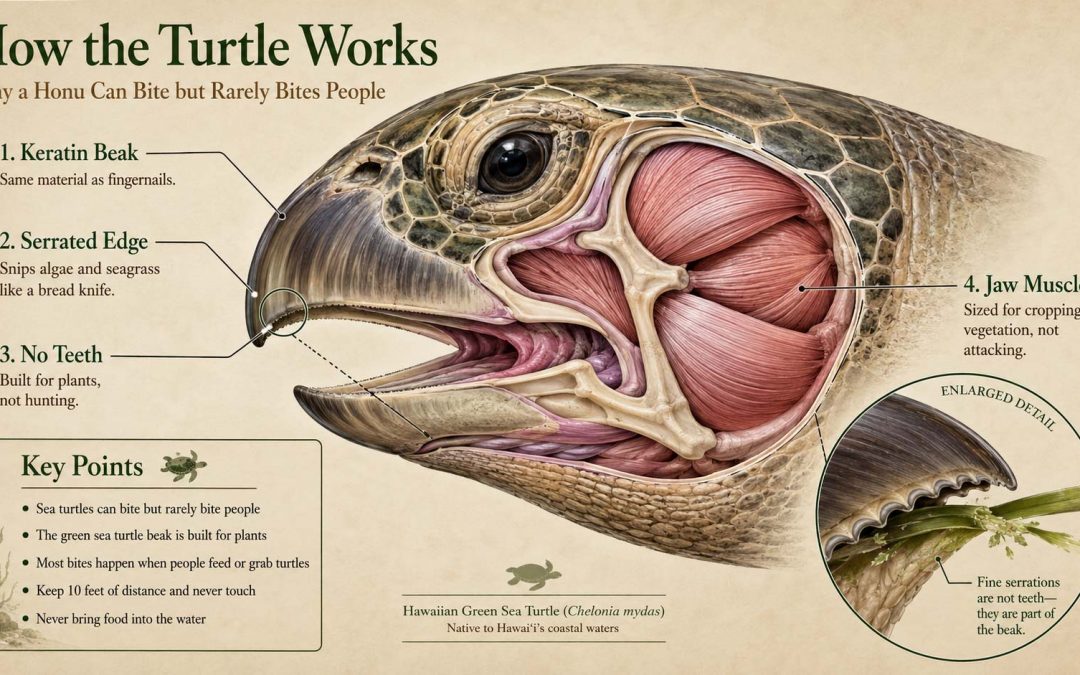
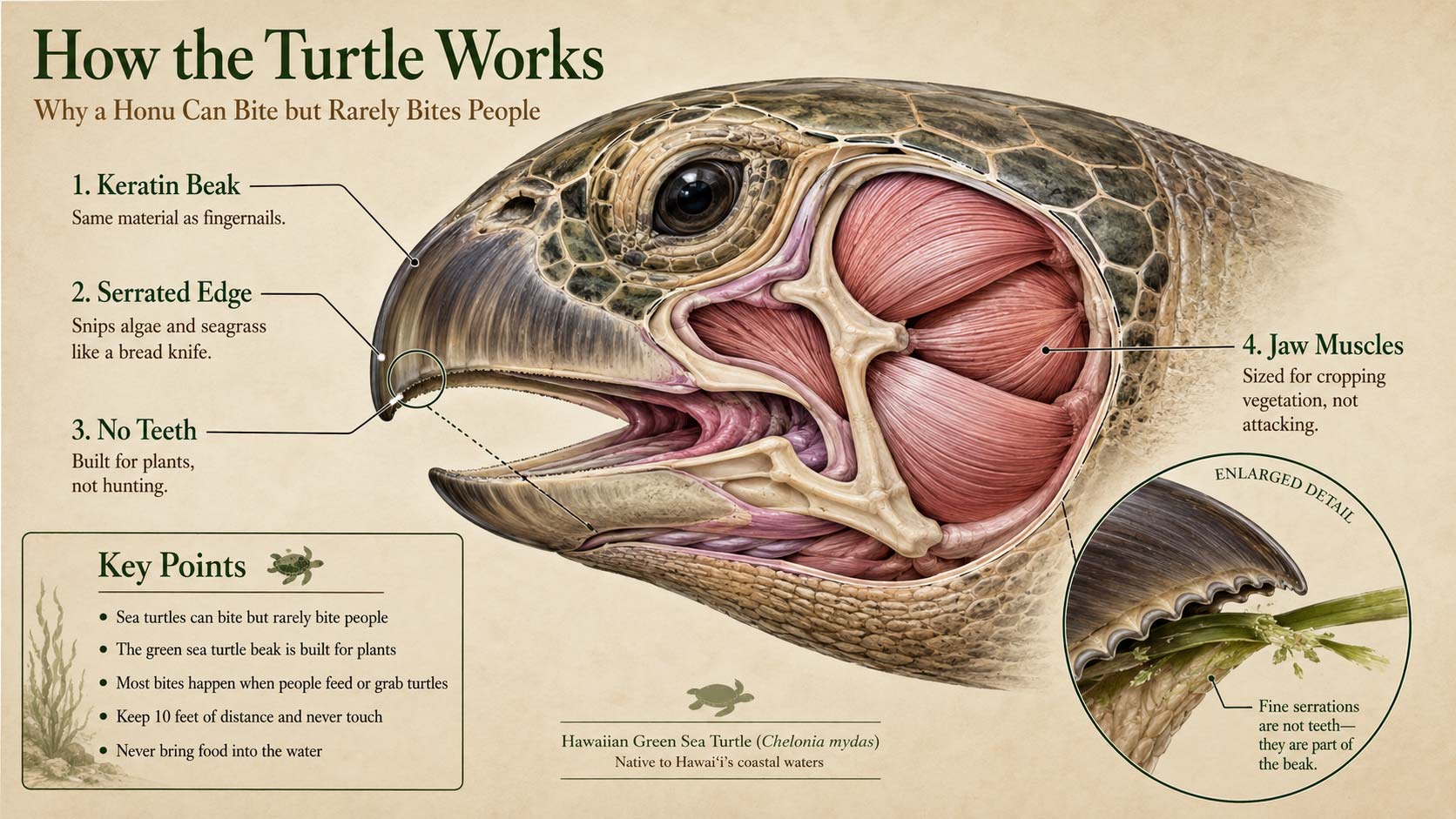
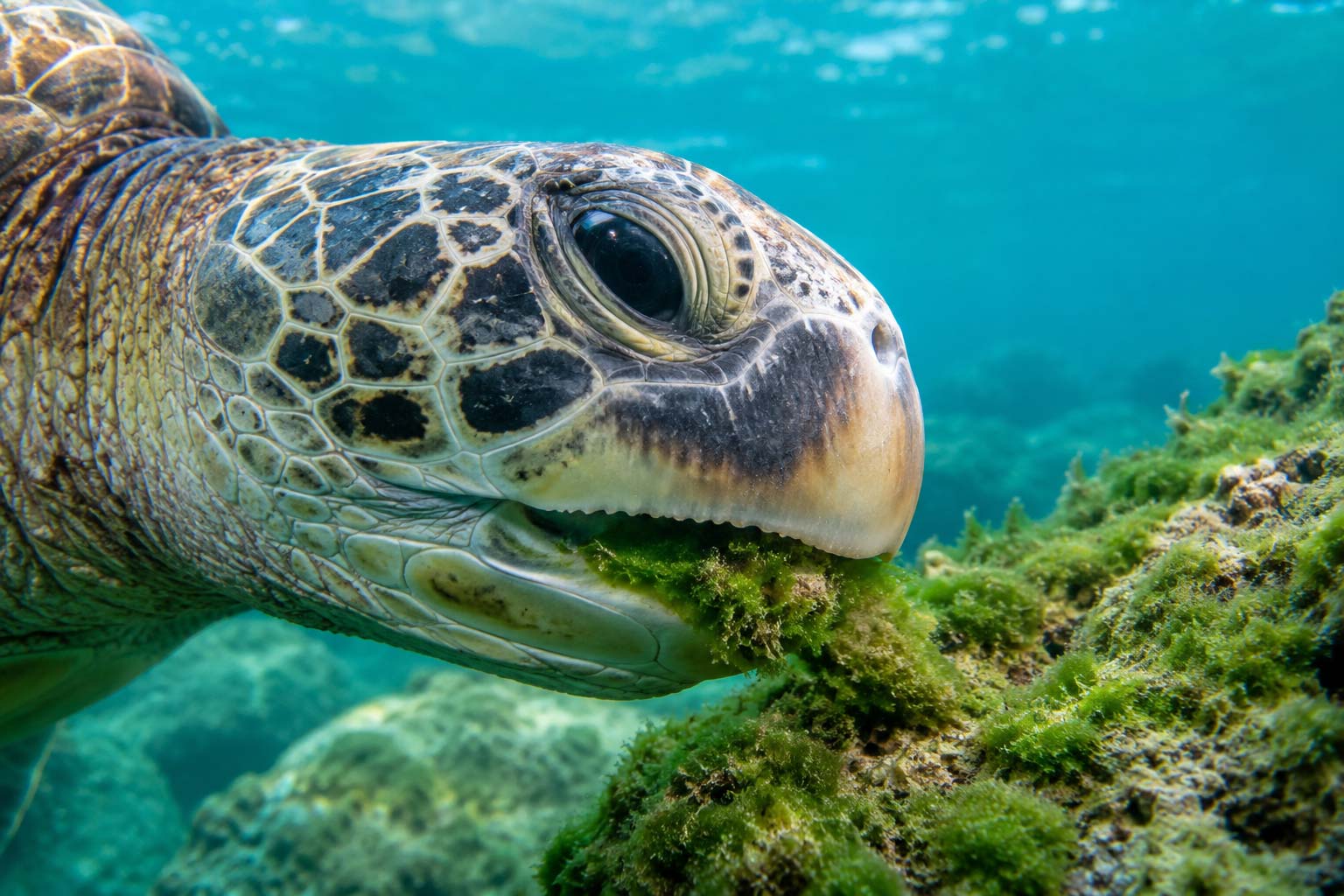
To understand turtle bites, it helps to know that sea turtles do not have teeth at all. Instead, they have a hard, sharp beak made of the same tough material as your fingernails, a substance called keratin. This beak is a feeding tool, shaped by millions of years of evolution to handle whatever each species likes to eat. A Hawaiian green sea turtle has a beak with finely serrated edges, almost like a bread knife, which is perfect for snipping and tearing the algae and seagrass it grazes on across the reef. The beak is built for plants, not for hunting, and certainly not for biting swimmers. When you watch a honu dip its head to the reef and crop a mouthful of algae, you are seeing exactly what that beak was made to do.
Different Turtles, Different Bites
Not every sea turtle has the same kind of beak, and that matters when people ask how dangerous a bite could be. The green sea turtle you meet in Hawaii is a gentle grazer with a beak suited to plants. Other species are built differently. The loggerhead has incredibly powerful jaws designed to crush hard shelled prey like crabs and conch, giving it one of the strongest bites in the turtle world. The hawksbill has a narrow, pointed beak shaped like a bird of prey’s, which it uses to pull sponges out of tight spaces in the reef. These specialized tools tell you what each turtle eats, and none of them evolved for biting humans. Still, it is a useful reminder that a big loggerhead deserves the same respectful distance as any other wild animal, simply because it has the equipment to do damage if it felt cornered.
Do Sea Turtles Bite Humans?
In the real world, documented sea turtle bites on people are very rare, and they share an obvious pattern. They tend to happen when a person ignores the basic rule of leaving wildlife alone. The classic scenario is someone trying to feed a turtle by hand, dangling food in the water and then being surprised when the turtle, unable to tell fingers from a snack, closes its beak on a hand. Other cases involve people grabbing, riding, or cornering a turtle, which can push even a calm animal to defend itself. A turtle that feels trapped, with no clear path to swim away, may snap as a last resort. The lesson is simple and reassuring. A bite is not something a turtle does out of aggression toward people. It is almost always a reaction to being handled or fed, both of which are things you should never do anyway.
How Strong Is A Sea Turtle Bite?
The honest answer depends on the species. For a Hawaiian green sea turtle, the beak is sharp enough to give a painful pinch or nip, but it is not the bone crushing weapon some people imagine, since the animal is built to slice soft plants rather than crack shells. A loggerhead is a different story, with jaws strong enough to crush a hard shelled crab, which means a serious bite from a large one could cause real injury. Either way, the practical takeaway is the same for snorkelers. You are extremely unlikely to ever feel a turtle’s beak, because you are going to keep a respectful distance and keep your hands to yourself. The strength of the bite is mostly a fun fact about turtle biology rather than a real risk on a snorkel trip.
Are Sea Turtles Dangerous To Snorkelers?
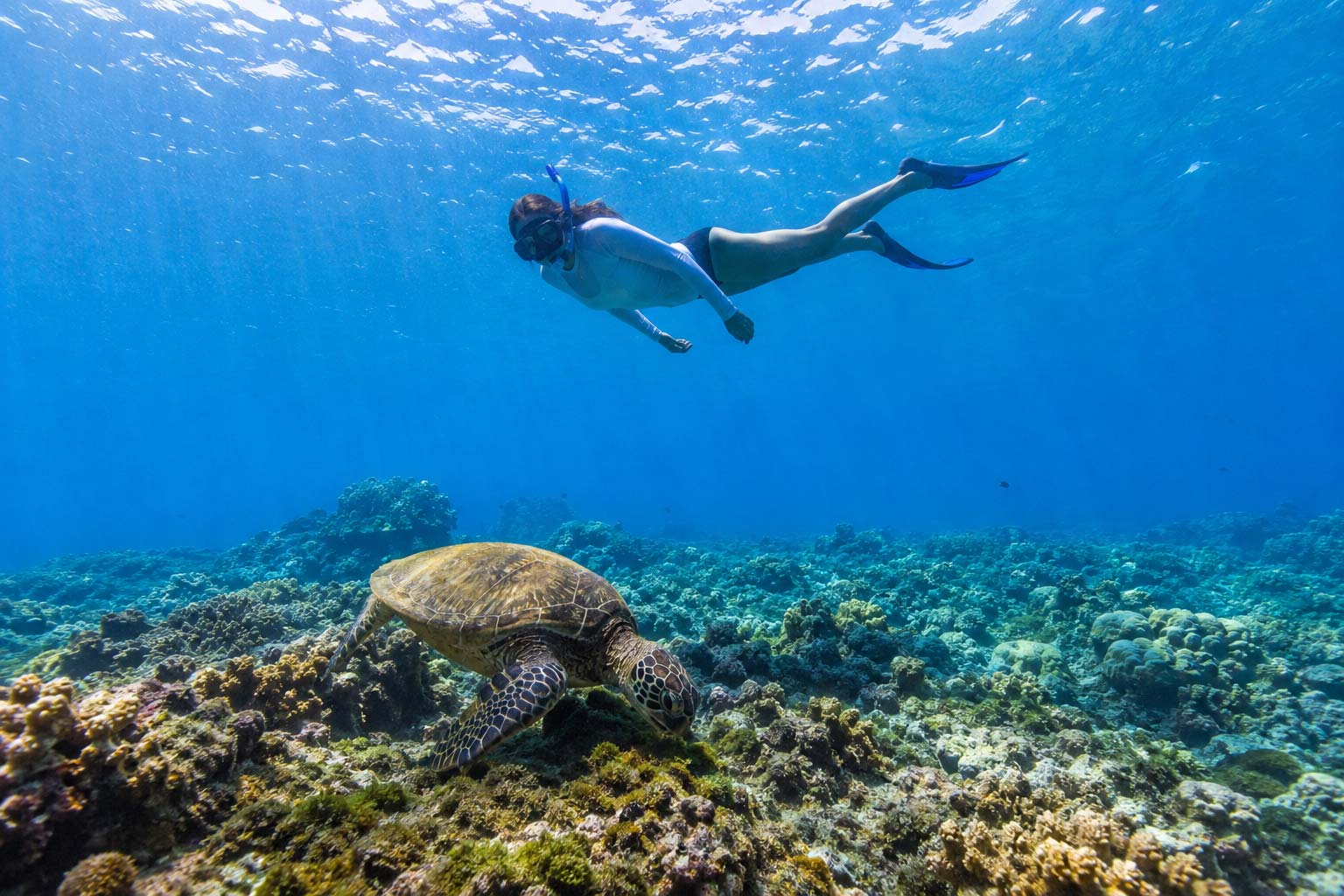
For all practical purposes, no. Sea turtles are among the most peaceful large animals you can encounter in the ocean. They have no interest in chasing, attacking, or harming people, and most encounters involve a turtle calmly cruising past or grazing on the reef while you watch in quiet amazement. The real danger in a turtle encounter is almost never to the human. It is to the turtle, which can be stressed, injured, or pushed into risky behavior by people who crowd it, chase it, or try to touch it. So when you ask whether sea turtles are dangerous, the more useful question is how to make sure you are not a danger to the turtle. Get that part right, and there is essentially nothing to fear.
How To Make Sure You Never Get Bitten
The good news is that avoiding a turtle bite is incredibly easy, because it overlaps perfectly with simply being a respectful guest in the ocean. A few simple habits remove almost all risk:
- Never feed a sea turtle or bring food into the water, which is both harmful and illegal in Hawaii
- Keep a respectful distance of at least 10 feet and let the turtle decide how close it wants to come
- Never touch, grab, chase, or try to ride a turtle, no matter how calm it seems
- Never corner a turtle against a reef or the surface, and always leave it a clear path to swim away
Follow those four rules and you will not only avoid any chance of a bite, you will also have a far better and more natural encounter, the kind where a relaxed turtle goes about its day right in front of you.
What To Do In The Very Unlikely Event Of A Bite
Because real bites are so rare, this is more of a just in case note than a likely scenario. If a turtle ever did nip you, the first step is to stay calm and move slowly away to give the animal space. A minor pinch may not even break the skin, but any bite that does should be treated like any other ocean wound. Rinse it with clean water, wash it well, and watch for signs of infection, since ocean bacteria can be a concern. For anything more than a superficial nick, it is wise to see a medical professional. Again, this is extremely unlikely to ever come up if you keep your distance and never feed or touch a turtle, but it never hurts to know the basics.
Why The Honu Is So Gentle
Part of what makes Hawaiian green sea turtles such a joy to snorkel with is their famously mellow nature. As adults they are herbivores with no need to hunt, no sharp predator instincts aimed at large animals, and a slow, unhurried way of moving through the world. They spend their days grazing, resting at cleaning stations, and basking in the sun, a lifestyle that simply does not involve biting things that are not food. Even when males bite each other during the breeding season, that behavior is aimed at other turtles, not at people. This calm temperament, combined with their size and beauty, is exactly why people travel from around the world to float beside them. The honu is not a creature you need to fear. It is one you get to admire, as long as you give it the respect and space it deserves.
What This Means For Snorkelers At Turtle Canyon
When you head out to a spot like Turtle Canyon off Waikiki, you can leave the worry about bites on the boat. The green sea turtles that gather there to feed and get cleaned are gentle grazers going about their daily routine, and they have no reason to bite a calm, respectful snorkeler watching from a few feet away. The very things that protect you from a bite, keeping your distance, never feeding, and never touching, are the same things that lead to the most magical encounters, where a curious honu glides by on its own terms. So slip into the water with confidence. You are not entering a danger zone. You are being welcomed into the peaceful daily life of one of the ocean’s gentlest giants.
Watch: Caring For Green Sea Turtles
Gentle Giants, Not Biters
So do sea turtles bite? Technically yes, since they carry a strong beak built for tearing and cropping their food. But do they bite people? Almost never, and when it happens it is nearly always because a human broke the cardinal rules of feeding, grabbing, or crowding a wild animal. The Hawaiian green sea turtle in particular is a calm, plant eating gentle giant with zero interest in nipping a snorkeler. Keep your distance, keep your hands to yourself, and never offer food, and you remove what little risk exists while giving the turtle the respect it deserves. Far from something to fear, the honu is one of the most peaceful animals you will ever meet in the water, and a respectful encounter with one is a memory you will treasure long after you dry off.