Do Sea Turtles Actually Cry? The Science Behind Their Salty Tears
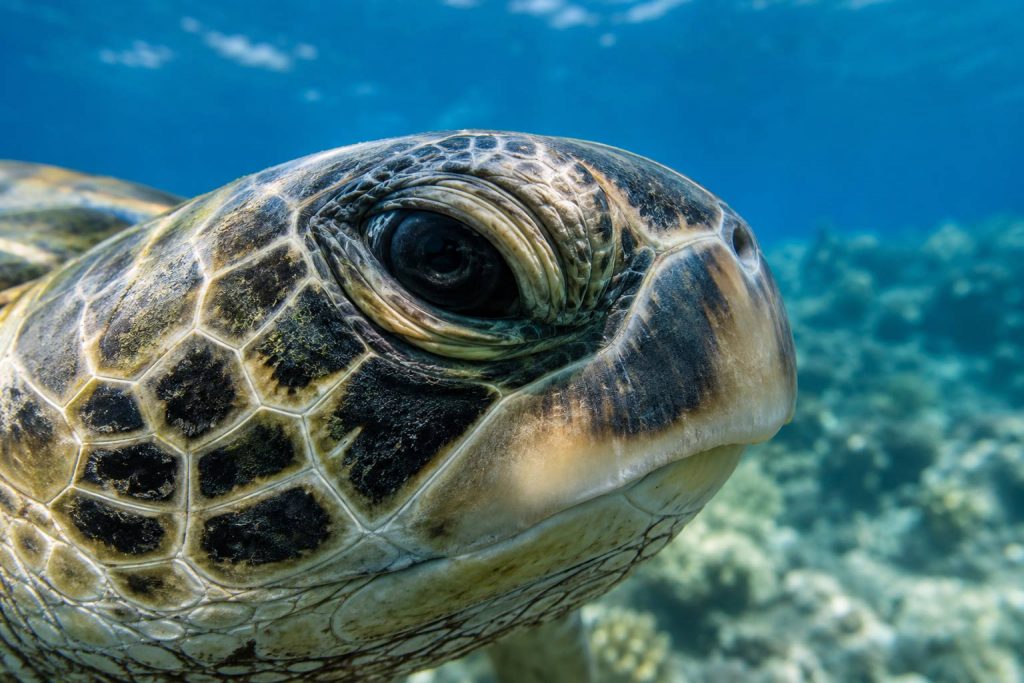
If you have ever watched a video of a sea turtle crawling up a beach to lay her eggs, you may have noticed what looks like tears running down her face. It is one of those images that stays with people. The assumption is usually that she is exhausted, frightened, or in pain. The truth is something far more remarkable, and it has nothing to do with how she feels in the moment.
Sea turtles have a built-in salt filtration system that operates continuously throughout their lives. It works through a pair of specialized glands located just behind their eyes, and the fluid those glands produce is what people commonly mistake for tears. Understanding how this system works is one of the most compelling examples in all of nature of a creature perfectly matched to its environment.
How Sea Turtles Handle a Salty World
Living in the ocean presents a chemical problem that most land animals never face. Seawater is loaded with salt, and every time a sea turtle takes a drink or swallows a bite of food, that salt enters its bloodstream. Left unchecked, high salt levels in the blood would damage organs and become life-threatening over time.
Land animals manage this problem through their kidneys, which filter the blood and expel excess salt in urine. Sea turtles have kidneys too, but those kidneys are not capable of producing urine concentrated enough to keep up with the salt load that comes from living in the ocean. So over tens of millions of years, sea turtles evolved a different solution entirely.
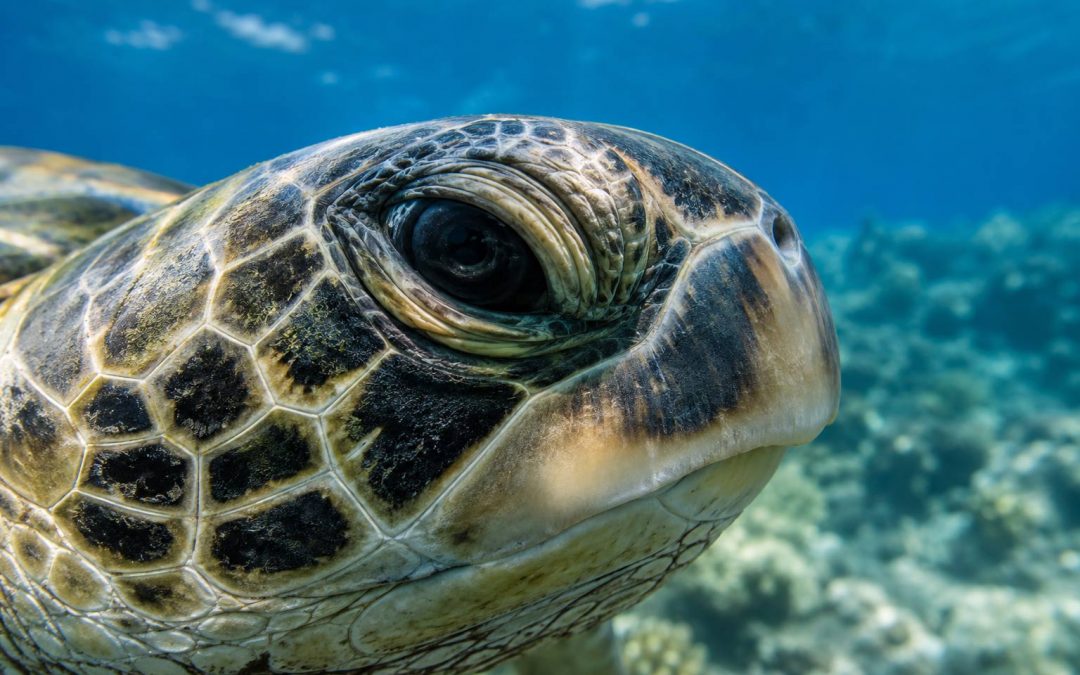
That solution is a pair of lachrymal glands, also called salt glands, housed in the orbital cavity just behind each eye. In most sea turtle species, these glands are actually larger than the animal’s brain. Their entire job is to pull excess salt out of the bloodstream and push it out through narrow ducts at the inner corners of the eyes. The result is a thick, highly concentrated fluid that runs down the face. To anyone watching from shore, it looks exactly like crying.
What the Salt Glands Actually Produce
The secretions from these glands are nothing like human tears. They carry roughly twice the salt concentration of the surrounding ocean water. Scientists have measured sodium concentrations of up to about 950 millimoles per liter in sea turtle secretions, compared to around 480 millimoles per liter in average seawater. That level of concentration matters because it allows the turtle to come out ahead. For every liter of seawater it takes in, the turtle can excrete just half a liter of this concentrated fluid and still gain net usable freshwater in the process. It is a precise and efficient piece of biological engineering.
This process runs whether the turtle is in the water or out of it. When submerged, the secretions wash away immediately and are invisible. But on land, where a female might spend more than an hour digging her nest and depositing eggs, the fluid builds up around the eyes and runs visibly down her face. That is the moment that gets captured on film and shared widely, often with well-meaning but incorrect captions about suffering.
She is not suffering. She is doing exactly what her species has done for more than 100 million years.
Every Sea Turtle Has These Glands
It is worth making clear that lachrymal salt glands are not unique to females or to nesting animals. Every sea turtle of every species has them from birth. Hatchlings emerge from their eggs with fully functioning salt glands and begin using them immediately as they make their way into the sea. Males use them continuously throughout their lives in the open ocean. The glands are a constant, essential part of sea turtle physiology for every individual, regardless of age, sex, or species.
There are notable differences between species, though. The leatherback sea turtle, the largest sea turtle in the world, feeds primarily on jellyfish. Jellyfish tissue contains almost exactly as much salt as seawater itself, meaning every meal floods the leatherback’s system with a heavy salt load. To manage this, leatherbacks have evolved significantly larger lachrymal glands compared to other sea turtle species, giving them greater capacity to handle the extra burden that comes with their diet.
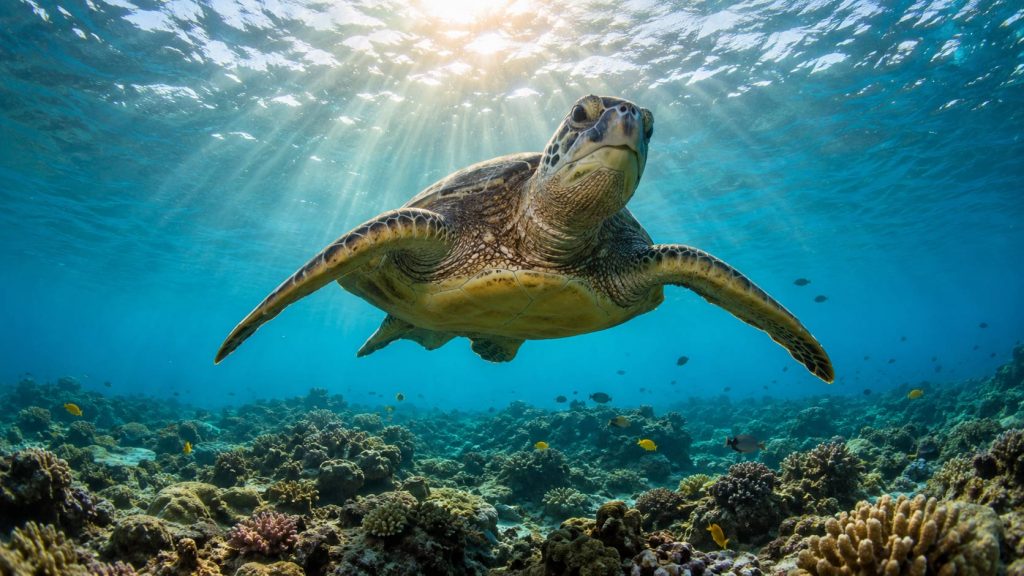
The green sea turtles you encounter while snorkeling at Turtle Canyon here in Oahu are grazers, feeding on algae and sea grass along the reef throughout the day. Their salt glands are quietly working the entire time you are swimming alongside them, maintaining the chemical balance their bodies need to function. You would never know it from looking at them, but the system is running constantly. The honu you swim with at Turtle Canyon are living proof that this ancient system works exactly as it should.
Why Nesting Brings It Into View
The most visible moments of apparent crying happen when females come ashore to lay eggs. On land, the normal washaway that happens in the ocean does not occur. The secretions accumulate visibly around the eyes over the course of a long nesting session that can last well over an hour. Some researchers have also noted that the moisture may help protect the turtle’s eyes from sand while she is digging, though whether that is a primary function or a convenient secondary benefit remains an open question in the scientific literature. Either way, what you are seeing is normal biological function, not emotional expression.
What This Looks Like When You Snorkel With Them
During a tour at Turtle Canyon, you spend around 45 minutes in the water with the green sea turtles. They go about their daily routine, surfacing to breathe, grazing along the reef, and resting on the sandy bottom. The salt gland secretions wash away invisibly in the surrounding ocean the entire time. What you can observe is a calm, self-sufficient animal that has been mastering ocean life since before the age of dinosaurs.
The Turtle Canyon tour includes everything you need for a great experience on the water.
- All snorkeling gear including masks and life vests
- Crew safety briefing and in-water guidance from CPR-certified staff
- Complimentary snacks and beverages onboard
- Waikiki hotel trolley pickup and return
- A traditional Hawaiian hula performance
Tours depart from Kewalo Basin Harbor at Pier D in Waikiki, with morning departures at 10:00 AM and afternoon departures at 1:00 PM. The entire experience runs about two hours, putting you directly above the reef where these turtles live and feed every single day.
A System Worth Appreciating
The lachrymal salt gland is one of those biological features that reveals more depth the closer you look. The gland tissue itself is highly specialized, the duct structure is precise, and the salt concentration of the secretions adjusts in real time based on the turtle’s current salt load. It is not a constant drip. It is a calibrated, responsive system that has been refined over an almost incomprehensible span of evolutionary time.
That sophistication is part of what makes sea turtles worth protecting. The green sea turtle population in Hawaii has made a real recovery since federal protections under the Endangered Species Act were put in place decades ago, but challenges remain. Ocean temperature changes, pollution, and development along nesting beaches all still affect the species. Every honu you see at Turtle Canyon carries that full history on its back.
Watching one glide effortlessly across the reef, running systems that researchers are still working to fully understand, is one of the more grounding experiences available to anyone visiting Oahu.
More Than Just Tears: A Living Masterpiece in the Water
Sea turtles do not cry because they are sad. They produce that fluid because they are extraordinary. Their lachrymal salt glands represent tens of millions of years of biological refinement, allowing these ancient animals to thrive indefinitely in an environment that would be dangerous to most other creatures on earth. The next time you see a sea turtle on a beach or in a nature film and notice that moisture near its eyes, you will know exactly what you are looking at. It is not grief. It is genius.
If you want to see that genius up close, the green sea turtles at Turtle Canyon are ready to share the water with you.