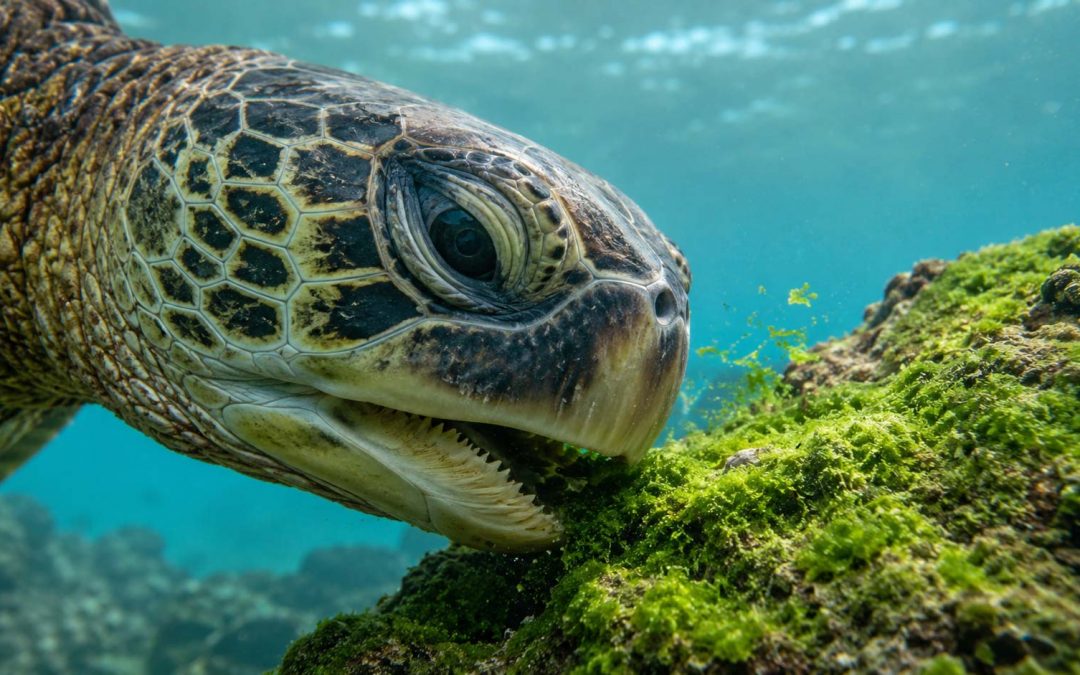
Do Sea Turtles Have Teeth? Inside The Beak Of A Hawaiian Honu
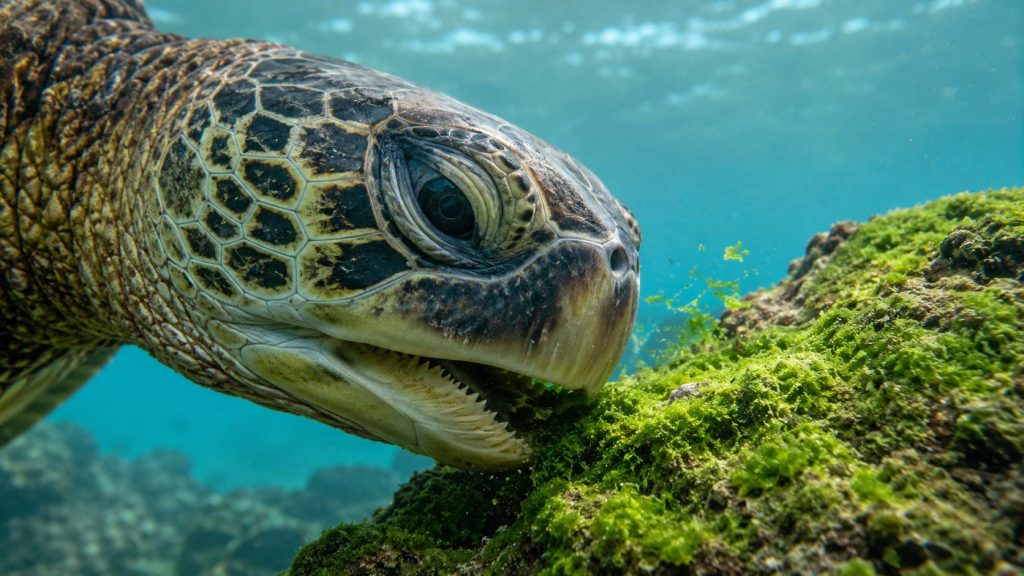
Almost every guest on an Oahu turtle snorkel tour asks the same question at some point during the day. “Do sea turtles have teeth?” The short answer is no. Sea turtles, including the Hawaiian green sea turtle, have never grown true teeth at any point in their lives. What they have instead is a tough, sculpted beak made of the same material as your fingernails, paired with a small, soft tongue and a surprisingly muscular jaw. It is a simple piece of equipment that does an enormous amount of work, from grazing algae off lava rock to crushing crabs, slurping jellyfish, or biting through the tough stem of a turtle grass blade. Once you understand how a sea turtle beak is built and what each species uses it for, the way a honu feeds at Turtle Canyon starts to make a lot more sense.
Why Sea Turtles Never Grew Teeth
Sea turtles belong to an ancient family of reptiles that gave up teeth more than a hundred million years ago. Early turtle ancestors did have small teeth, but as their bodies evolved into the protected, shelled, water-loving forms we see today, those teeth slowly disappeared. In their place, the upper and lower jaws developed a tough sheath of keratin, the same protein that makes up hair, nails, claws, and even rhino horn. This keratin sheath grows continuously, much like a fingernail, and the constant wear of feeding keeps the edges sharp and effective. Losing teeth turned out to be a great trade for sea turtles. A solid beak almost never breaks, never rots, and is easy for the body to maintain without the constant care that mammal teeth need.
What A Sea Turtle Beak Is Actually Made Of
A honu beak is shaped by two parts working together. Underneath the keratin is the underlying jawbone, which gives the beak its strength and overall shape. On top of that bone sits a thick, hard outer layer of keratin called the rhamphotheca. That outer layer is what you see when a turtle opens its mouth, and it is the part that does the cutting, gripping, and crushing. The rhamphotheca slowly grows outward from the base of the jaw and wears down at the edge with use, similar to the way a rodent’s front teeth or a bird’s beak stay sharp over a lifetime. Inside the mouth, the tongue is small, thick, and fixed in place. It cannot be flicked out to grab food the way a lizard’s tongue can. Instead, the beak does the catching and the throat does the swallowing.
The Green Sea Turtle Beak Is Built For Plants
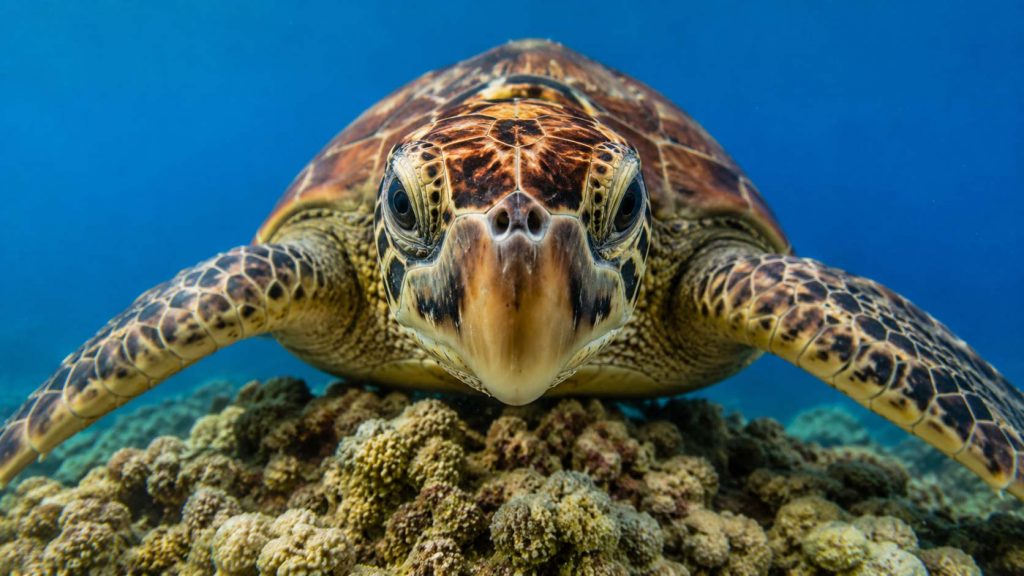
The Hawaiian green sea turtle has one of the most distinctive beaks in the ocean, and it is shaped almost entirely around its love of plants. Adult green sea turtles are mainly herbivores, and they spend much of their day grazing on algae growing across the reef. Their lower jaw has a finely serrated edge, almost like a tiny saw, that allows them to cleanly snip through tough algae fibers and turtle grass without tearing or shredding. The upper jaw works as a stable surface that the lower jaw bites against, the same way a pair of pruning shears works. Snorkelers at Turtle Canyon can often see honu working slowly along a rocky ledge, taking small, neat bites and leaving behind a freshly trimmed patch of green. That tidy, almost mower-like grazing pattern is only possible because of those serrations.
The Hawksbill Beak Is Shaped Like Its Name
The hawksbill sea turtle gets its name from the dramatic curve of its beak, which looks a lot like the hooked beak of a hawk or a falcon. That sharp, narrow point is not just for show. Hawksbills feed mainly on sponges that grow in tight cracks and crevices of coral reefs, and their pointed beak lets them reach into spaces that other turtles cannot. The shape is also strong enough to bite through the tough, glasslike spicules that many sponges use as a defense. When a hawksbill turns up on a Hawaiian reef, you can almost always identify it by that distinctive narrow beak before you even notice the rest of its body.
The Loggerhead Beak Is A Crusher
The loggerhead sea turtle has a thick, blocky head with a wide, powerful beak built for crushing hard-shelled prey. Loggerheads feed heavily on crabs, lobsters, conchs, and other animals with tough armor, and their jaws can generate enough force to break open shells that would defeat most other reef predators. When you compare a green sea turtle’s neat serrated beak with a loggerhead’s heavy crushing jaws, it becomes obvious that sea turtle beaks are not one-size-fits-all. Each species has a beak shaped by what it eats and how it lives.
The Leatherback Beak Is Built For Jellies
The leatherback sea turtle has the strangest mouth of all. Its beak is more delicate looking than the others, with a pair of sharp, hooked cusps at the front that look almost like fangs. Inside its throat are rows of backward-pointing spines called papillae that line the esophagus from front to back. The combination is built for one specific food, and that food is jellyfish. The hooked cusps catch and pierce slippery jelly bodies. The throat spines keep the jellyfish moving downward and prevent them from sliding back out as the leatherback gulps and swallows. It is one of the most specialized feeding systems in the reptile world, and it is the reason leatherbacks can survive on a diet that almost no other large animal can tolerate.
How Hatchlings Use Their Beak Right Out Of The Egg
A sea turtle beak goes to work from the very first day of life. Each hatchling is born with a small, temporary bump on the tip of its upper beak called the caruncle, or egg tooth. It is not a real tooth, just a hardened point of keratin, and its only job is to break through the leathery shell of the egg when it is time to hatch. Once the hatchling makes it out and starts the long crawl to the sea, that little caruncle slowly falls off and is not replaced. From there on, the hatchling uses the same general beak shape it will keep for life, only in miniature, snapping up tiny floating prey near the surface as it begins its first years of open-ocean life.
What A Sea Turtle Beak Cannot Do
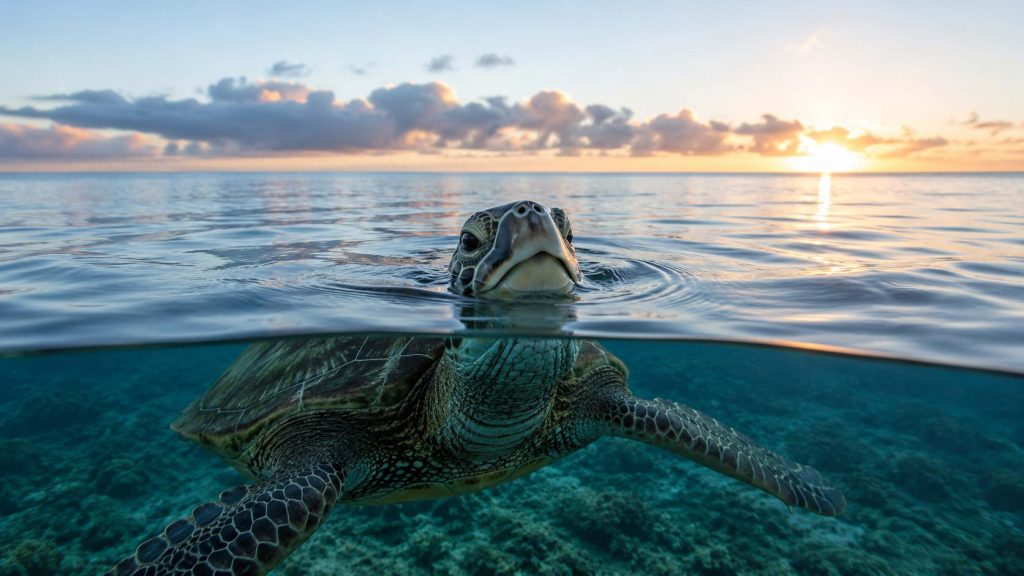
A beak is a powerful tool, but it has limits, and those limits are important for snorkelers and beachgoers to understand. A sea turtle cannot chew. The beak cuts food into rough pieces, and then the throat and stomach handle most of the breakdown. A turtle also cannot easily release something once it has bitten down hard, because the curved shape of the beak helps it grip. This is one of the reasons it is so important not to feed sea turtles or to hold food near them. A honu that mistakes a finger or a piece of plastic for food can bite quickly and without warning, and a tight bite from a fully grown turtle is a serious injury. Watching them feed naturally on algae, from a respectful distance, is by far the safest and most rewarding way to enjoy them.
How A Honu Beak Holds Up Over A Long Life
Hawaiian green sea turtles can live for many decades, and that beak has to keep working for the entire ride. The keratin layer grows steadily throughout life, replacing what wears off at the edge. As long as a turtle stays healthy and continues feeding regularly, the beak stays sharp and the bite stays clean. Beak injuries from boat strikes, fishing gear, or fights can be a serious problem, because a damaged beak makes feeding harder and slower. Marine rehabilitation centers in Hawaii sometimes treat turtles with broken or chipped beaks, smoothing rough edges and supporting the animal until the keratin grows back into shape. A healthy beak, like a healthy set of flippers, is one of the quiet foundations of a long honu life.
Watching The Beak In Action At Turtle Canyon
On a calm day at Turtle Canyon, you can often watch a honu feeding from just a few yards above. The body hangs almost weightless above the reef while the head dips down again and again, taking small precise bites of algae. With each bite you can see the lower jaw close cleanly against the upper jaw, sometimes with a tiny puff of green fragments drifting away in the current. The motion is slow, calm, and almost peaceful. There is no chewing, no tearing, no dramatic show. Just the steady rhythm of a beak that has been quietly perfected by millions of years of evolution, doing exactly what it was built to do.
Why The Beak Story Matters
The next time someone on your snorkel boat asks if sea turtles have teeth, you can give them the short answer and the long one. No, they do not have teeth, and they never will. They have something better suited to ocean life. A keratin beak that never decays, never falls out, sharpens itself with use, and comes in a different shape for every species depending on what it eats. The Hawaiian green sea turtle has a beak built for plants. The hawksbill has a beak built for sponges. The loggerhead has a beak built for crushing shells. The leatherback has a beak built for jellies. Together, those four designs tell the story of how one ancient family of reptiles spread across every warm ocean on Earth, all with the same simple piece of equipment.
Watch: Sea Turtles 101
The Quiet Power Of A Beak Without Teeth
Sea turtles never grew teeth because they never needed them. A strong keratin beak, paired with a muscular jaw and a small fixed tongue, has carried them through more than a hundred million years of ocean life. Hawaiian green sea turtles use a finely serrated beak to graze algae. Hawksbills use a hooked tip to pry sponges from coral. Loggerheads crush hard shells. Leatherbacks gulp jellyfish with backward-pointing throat spines. The next time a honu drifts past you at Turtle Canyon and dips down to take a quiet bite of reef algae, take a closer look at that beak. It is one of the most successful tools in the natural world, and you are watching it work in real time.