Can You Keep a Sea Turtle as a Pet?
Overview
Sea turtles are so gentle and captivating that after a close encounter, plenty of people quietly wonder the same thing. Could I keep one as a pet? It is an understandable thought, but the answer is a clear and firm no. Keeping a sea turtle as a pet is not just impractical, it is illegal, and for very good reasons. These animals are protected by some of the strongest wildlife laws on the books, and even holding one can carry serious consequences. On top of that, a sea turtle could never truly live in a home or backyard pond. This guide explains the laws that protect sea turtles, why you cannot keep one, and the wonderful, legal ways to enjoy these ancient animals instead.
The Short Answer: No, and It Is Against the Law
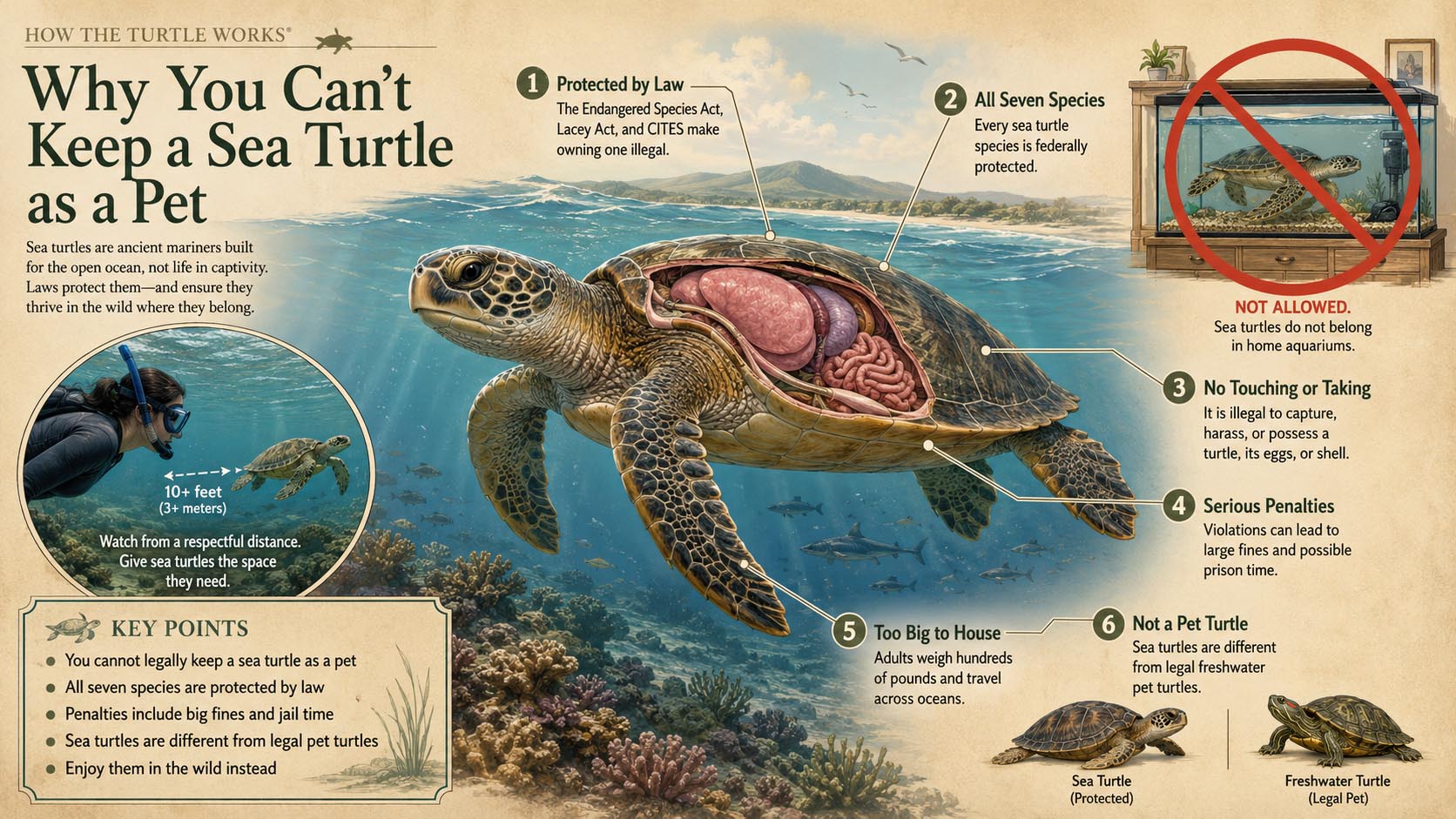
You cannot keep a sea turtle as a pet, full stop. All seven species of sea turtle are protected under law, and it is illegal to capture, own, harm, harass, or trade a sea turtle, its eggs, or even its shell. This is not a gray area or a minor rule. It is a serious matter backed by powerful federal and international laws, and violating it can lead to heavy fines and even jail time. So no matter how much you might love the idea, a sea turtle is one animal that is completely off limits as a pet.
The Laws That Protect Sea Turtles
Several strong laws work together to keep sea turtles safe. In the United States, the biggest is the Endangered Species Act, which makes it illegal to take, harm, or possess any protected species like a sea turtle. Another, the Lacey Act, bans trading wildlife that was taken illegally. On top of those, an international agreement known as CITES restricts the trade of endangered animals across borders, and many coastal states and countries add their own protections. Together, this web of laws covers sea turtles almost completely, which is exactly the point. It leaves no legal path to owning one.
What Counts as Breaking the Law
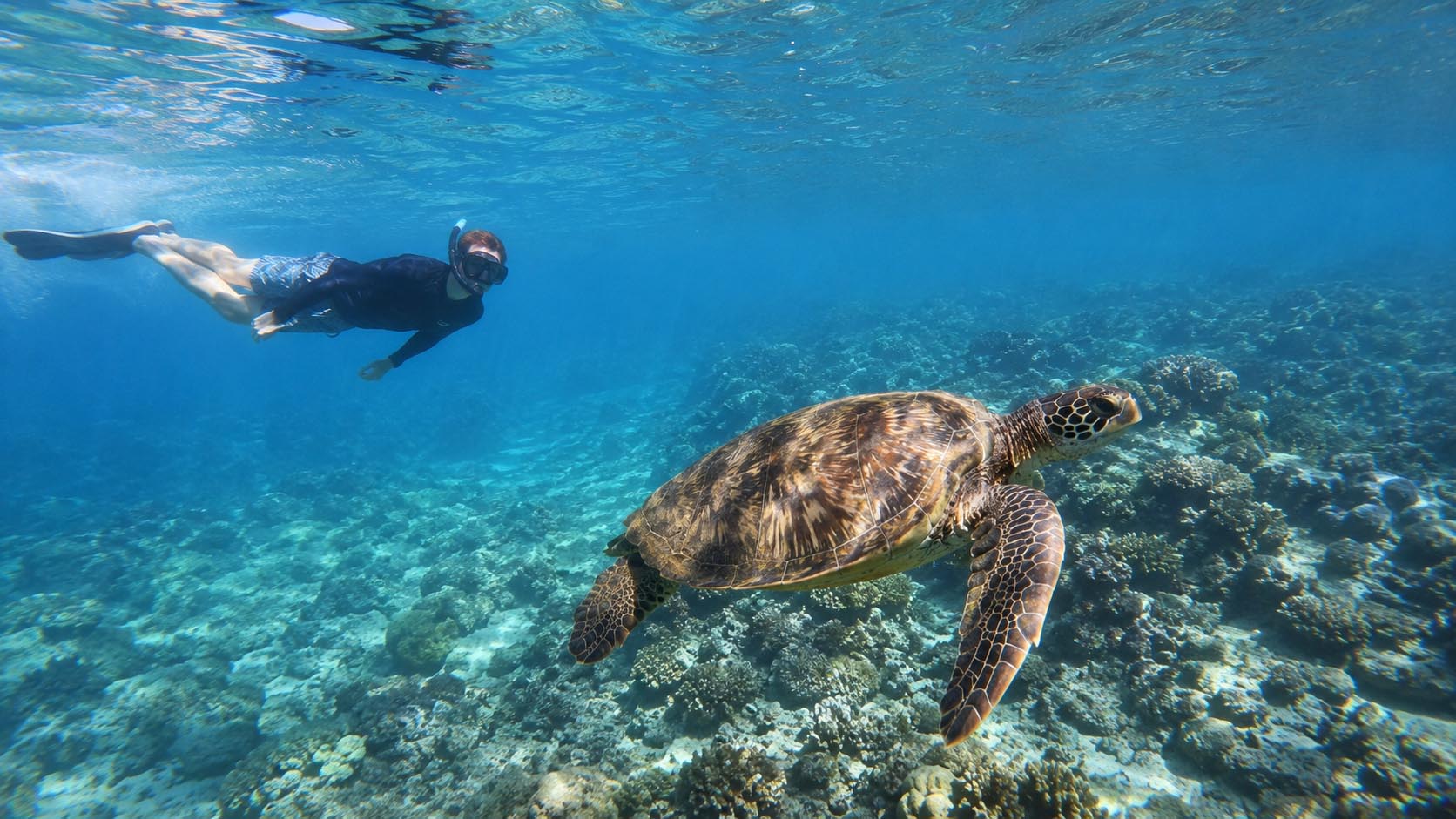
People are sometimes surprised by how much these laws cover. It is not only about capturing a turtle to keep it. Under these protections, it is illegal to touch, harass, harm, or chase a sea turtle, to collect or disturb its eggs or nest, to buy or sell a live turtle, and even to possess turtle parts like a shell. In other words, the law protects sea turtles at every stage and in every form. That is why responsible tour guides insist on keeping a respectful distance and never touching the animals, since even well-meaning contact can cross a legal line and stress the turtle.
The Penalties Are Serious
These are not laws with a slap-on-the-wrist penalty. Violating the Endangered Species Act can bring significant fines, reaching many thousands of dollars, along with the possibility of jail time for serious offenses. Real people have been sentenced to prison for crimes like collecting sea turtle eggs. The message from lawmakers is unmistakable. Sea turtles are threatened animals in need of protection, and harming them or trying to keep one is treated as a genuine crime, not a harmless mistake.
Wait, Aren’t Some Turtles Legal Pets?
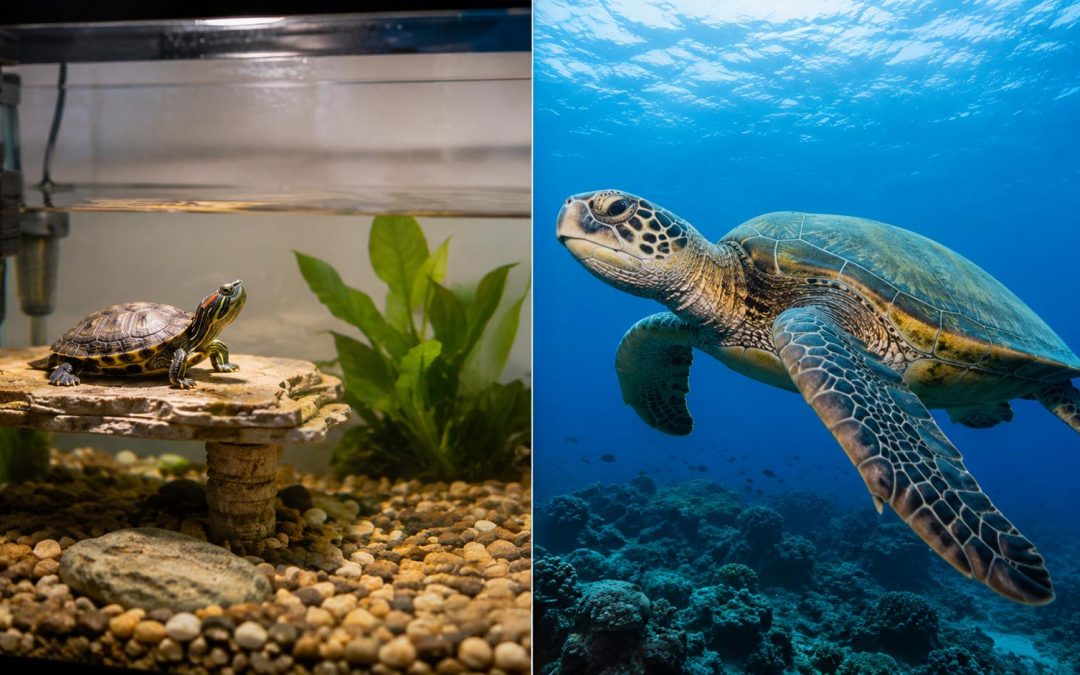
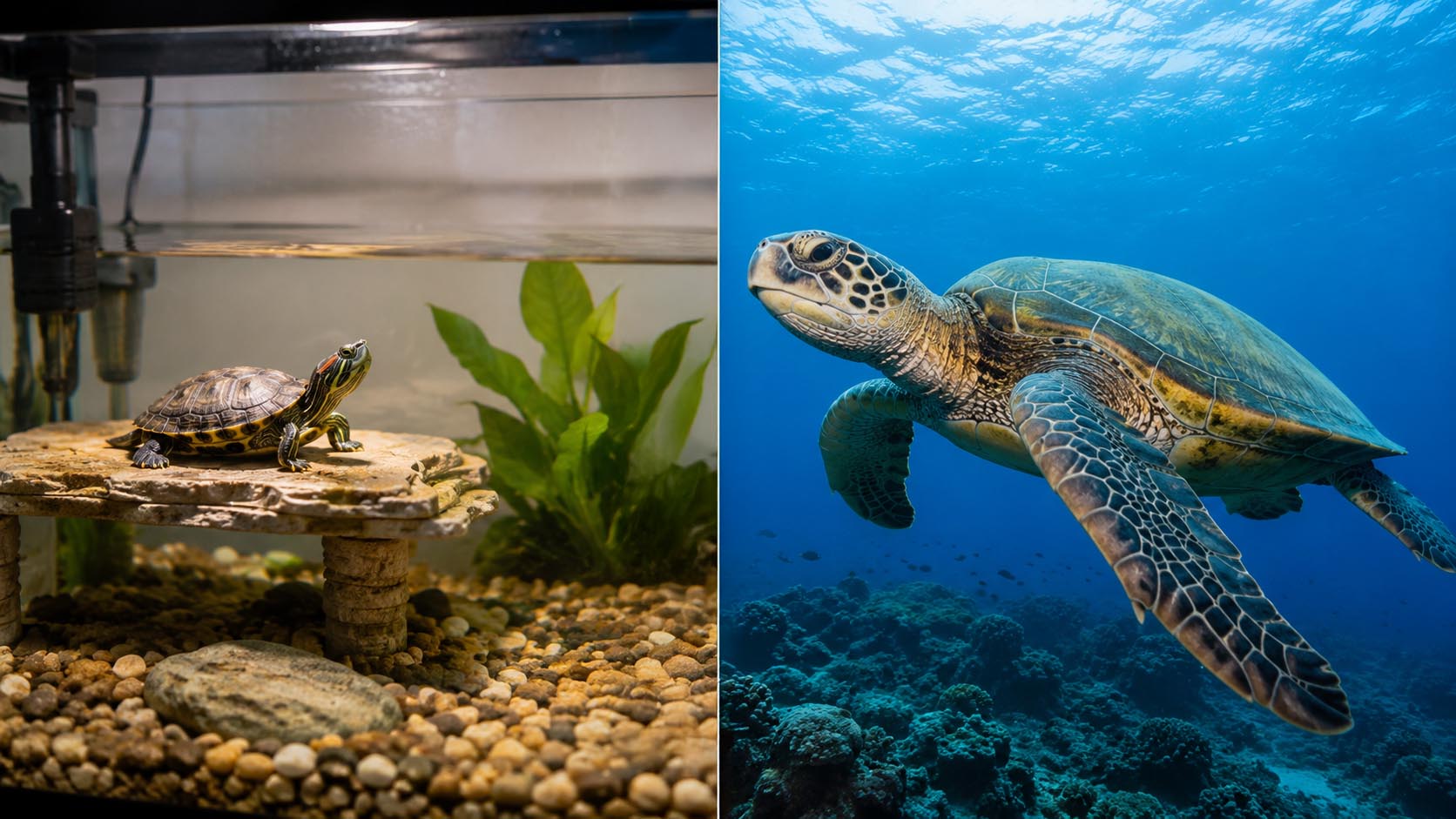
This is where a lot of confusion comes from. Yes, some turtles can be kept legally, but sea turtles are not among them. The small aquatic turtles you might see in pet stores, like certain sliders and other freshwater species, are completely different animals from ocean-dwelling sea turtles. Even those pet turtles come with their own rules, since in the United States it is illegal to sell turtles with shells under four inches long, a rule created to reduce the spread of salmonella. So while a properly obtained pet turtle can be legal, a sea turtle never is. The two should not be confused.
Even if It Were Legal, You Couldn’t
Set the laws aside for a moment, and there is still a simple truth. A sea turtle cannot live in a home. These are large, wide-ranging ocean animals. Adults can weigh hundreds of pounds, they travel across entire oceans, and they can live for many decades. They need vast amounts of clean saltwater, specific natural diets, and room to swim great distances, none of which any home aquarium or backyard could ever provide. Trying to confine a sea turtle would be cruel and would quickly make it sick. They are wild ocean travelers, built for a life no household could ever match.
Why These Laws Exist
The strict protections are not about spoiling anyone’s fun. They exist because sea turtles genuinely need help. Several species are still endangered or recovering, and for a long time turtles were hunted for their meat, eggs, and shells, pushing some populations to the brink. Slow to mature and facing many natural dangers, sea turtles cannot afford extra pressure from people. By making it illegal to capture, keep, or trade them, these laws remove a major threat and give the animals a real chance to recover. In Hawaii, that protection is a big reason the green sea turtle, or honu, has made such a strong comeback.
Do Not Buy Turtle Products Either
There is one more important part of this. Just as you cannot keep a sea turtle, you should never buy products made from one. Beautiful jewelry, combs, and trinkets made from tortoiseshell come from the shells of hawksbill sea turtles, a critically endangered species, and buying these items is both illegal and directly harmful. If you are traveling and see turtle-shell souvenirs for sale, the right move is to walk away and never purchase them. Refusing to buy turtle products helps shut down the trade that threatens these animals in the first place.
What to Do Instead
The good news is that you can absolutely enjoy sea turtles, just not by owning one. The best way is to see them in the wild, gliding freely through the ocean where they belong. Snorkeling at a spot like Turtle Canyon off Waikiki lets you swim near wild Hawaiian green sea turtles while respecting their space and the law. You can also visit accredited aquariums and sea turtle rescue centers, where you can learn about the animals and even see rehabilitated turtles up close. And you can help by supporting conservation groups, keeping beaches clean, and spreading the word. Loving sea turtles means letting them stay wild and free.
Watch: Hawaii’s Green Sea Turtles
Love Them, Leave Them Wild
So, can you keep a sea turtle as a pet? No, and it is important that you cannot. Sea turtles are protected by strong laws that make owning, capturing, or trading one illegal, with penalties serious enough to include heavy fines and prison. Beyond the law, these ocean giants simply cannot live in captivity, since they are built for a wild life across the open sea. The kindest and most rewarding way to enjoy them is to meet them where they belong, in the ocean, from a respectful distance. Love sea turtles by keeping them wild, and you help make sure they will still be gliding through Hawaii’s waters for generations to come.