What Do Hawaiian Green Sea Turtles Actually Eat?
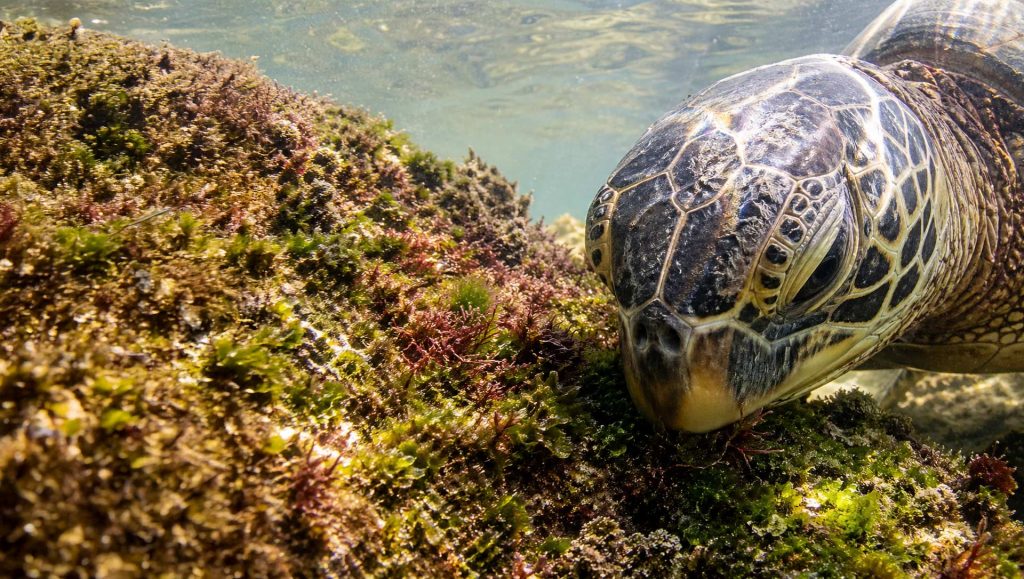
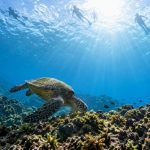
If you have ever watched a Hawaiian green sea turtle glide along the reef at Turtle Canyon, you have probably noticed them slowing down near the rocks, dipping their heads, and grazing like cows in a field. What are they eating? Most people assume it is seaweed and call it a day, but the full story of what honu eat is a lot more interesting than that. Their diet changes completely as they grow, and what adult turtles eat every day plays a direct role in keeping Hawaiian reefs alive.
The Diet That Changes With Age
Green sea turtles do not eat the same things their whole lives. When they first hatch and scramble into the open ocean, they are tiny carnivores. Baby turtles spend their early years drifting in deep water, eating jellyfish, small crustaceans, fish eggs, and whatever else they find floating in the current. This period is sometimes called the “lost years” because hatchlings disappear far offshore and are rarely seen. During this phase, they need protein to grow fast.
Everything changes as they mature. By the time a green sea turtle reaches about eight to ten inches in shell length, it shifts almost entirely to a plant-based diet. Adult green sea turtles are herbivores, which is unusual among sea turtle species. Most other sea turtles remain omnivores for life. The green sea turtle makes this dramatic switch, and it has a big impact on every reef it calls home.
What Adult Hawaiian Green Sea Turtles Eat
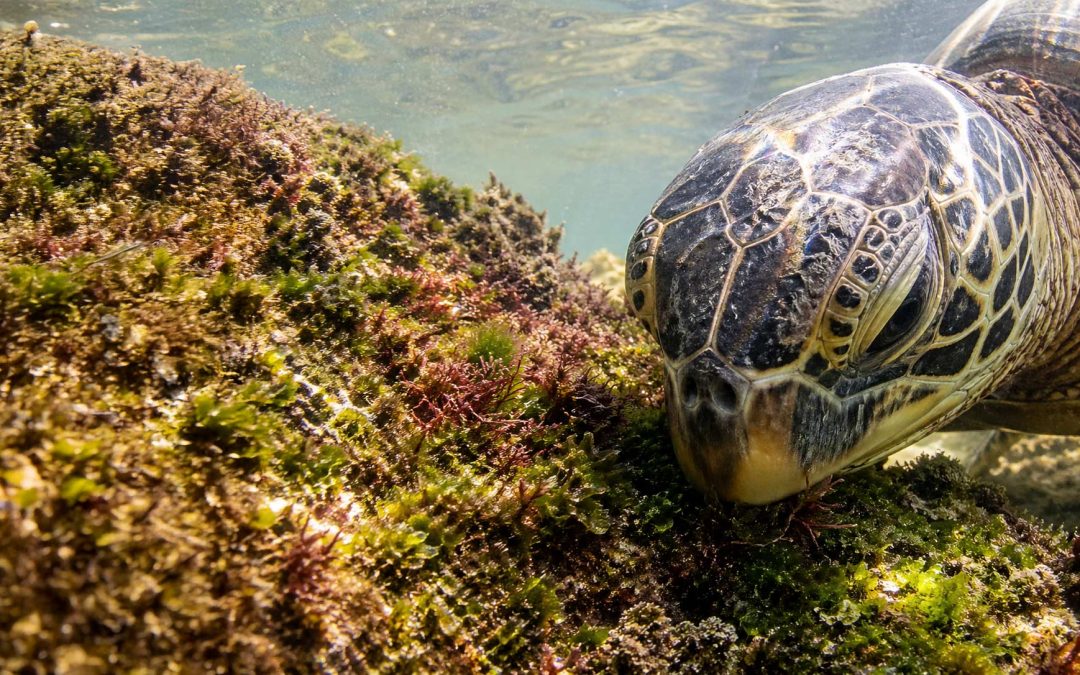
In Hawaiian waters, adult honu eat primarily limu, the Hawaiian word for algae. Hawaii has hundreds of algae species growing on reefs, rocks, and sandy seafloors, and green sea turtles work their way through it steadily throughout the day. They graze on red, green, and brown varieties depending on what is available in a given spot.
Seagrass is another important food when it can be found. Turtles in areas with healthy seagrass beds can consume large amounts of it daily. In Hawaii, seagrass is less widespread than in other parts of the Pacific, so honu here rely more heavily on reef algae as their primary food source.
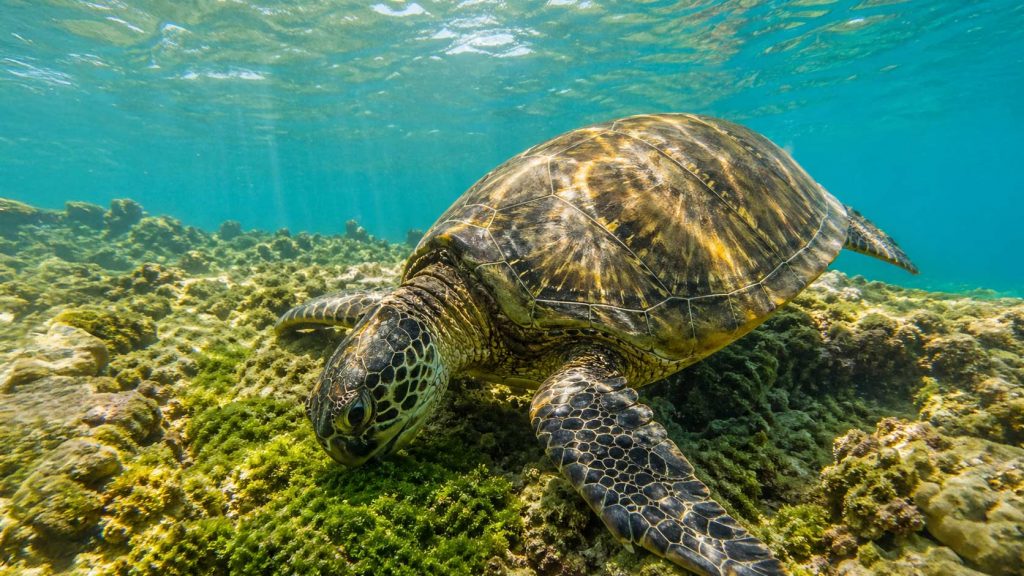
Here is something that surprises a lot of people: Hawaiian green sea turtles actively help control invasive algae on local reefs. Certain non-native algae species have spread across Hawaiian reef systems and can smother coral by blocking the light and nutrients it needs to survive. Honu eat these invasive species, giving them an unexpected role in reef recovery. They are not just beautiful animals to watch. They are doing real ecological work every time they feed.
Occasionally, adult green sea turtles will eat jellyfish, sponges, or soft invertebrates, especially when algae is scarce. But in a healthy Hawaiian reef, plant matter makes up nearly all of what they consume.
How They Actually Eat
Green sea turtles have a sharp, slightly serrated beak that is built for biting and tearing algae from rock surfaces. Their jaws are strong and precise. If you watch one feeding, you will notice them bobbing their head quickly against a surface to tear off a mouthful, then chewing slowly before going in again. They have no teeth, but the ridges along the inside of their jaws grip and process food efficiently.
Their digestive system is designed for plant matter. Like grazing animals on land, they have a long gut that ferments and breaks down tough plant fibers over time. This is part of how adult green sea turtles extract enough energy from low-calorie algae to maintain a body that can weigh over 300 pounds.
Why Their Fat Is Green
Here is the detail that actually gave green sea turtles their name. Their fat is green. Not their shells or their outer skin, which are usually brown or olive in color. Their internal fat has a distinct green tint caused by chlorophyll and other plant pigments that build up from all the algae they eat. Early naturalists and sailors noticed this characteristic and named the species accordingly. It is one of those facts that sounds too strange to be true but is completely real.
What They Do for the Reef
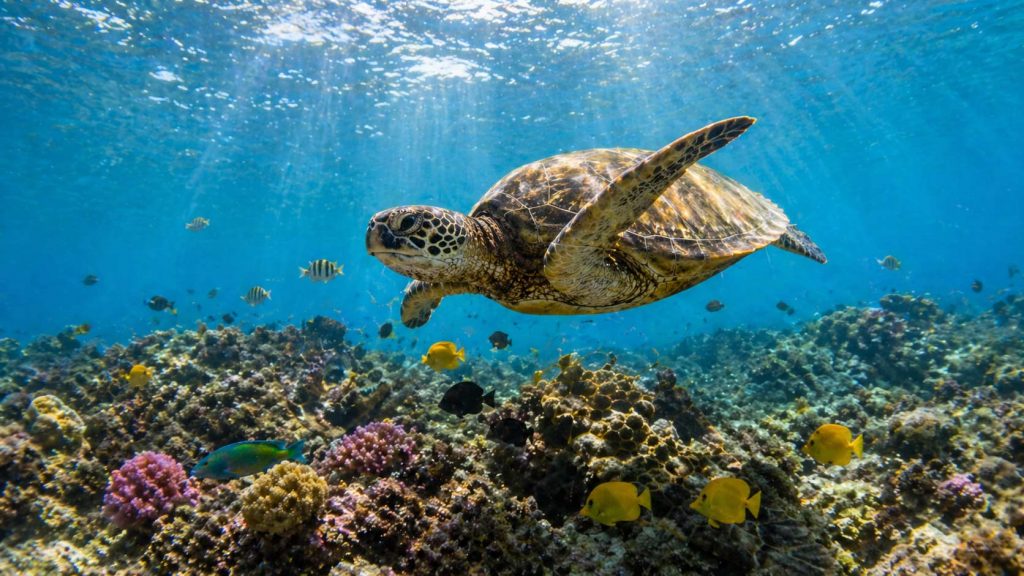
Think of honu as ocean landscapers. By grazing on algae, they keep reef surfaces open so coral polyps have room to grow and spread. When algae overgrows a reef unchecked, it can block sunlight and crowd out coral, eventually killing large sections of the reef. Sea turtles help prevent that. Their feeding patterns have shaped Hawaiian reefs for millions of years, and their presence is considered a sign of reef health by marine biologists who study these ecosystems.
This is one of the reasons protecting honu matters beyond simply preserving a beautiful species. Remove them from the equation and the balance shifts. Algae blooms, coral suffers, and the entire reef community changes around it. A grazing turtle is a reef doing its job.
- Honu can consume several pounds of algae per day
- They help keep invasive algae from smothering coral
- Their grazing creates open space where new coral can attach and grow
- Healthy turtle populations are often linked to healthier reef systems overall
What You Might See at Turtle Canyon
On the Turtles and You snorkeling tour at Kewalo Basin Harbor, guests snorkel above the same reef where honu come to feed and rest every day. If you watch a turtle closely during your time in the water, there is a real chance you will catch it grazing. They often slow to a near hover near rocky patches, reaching down to bite at algae with that quick, deliberate head bob. It is one of the more peaceful behaviors you will see underwater.
The turtles at Turtle Canyon are completely wild. They are not fed by the crew and do not rely on visitors for food. When you see one eating, you are watching a natural routine that plays out here whether people are in the water or not. That is what makes it worth watching.
More Than Meets the Eye
Green sea turtles are easy to appreciate for how they move through the water. But knowing what they eat and why it matters adds a whole new layer to the experience. From the dramatic shift in diet as they grow, to the green fat that gave them their name, to the quiet but essential work they do on every reef they visit, honu are far more than a highlight of a snorkeling trip. They are a cornerstone of the ocean around them.
The next time you spot one nosing along the coral at Turtle Canyon, you will know exactly what it is doing, and why that simple act of grazing has kept Hawaiian reefs healthy for longer than humans have been around to see it.