Do Baby Sea Turtles Stay With Their Mothers?
Overview
We are used to animal parents caring for their young, so it comes as a shock to learn that baby sea turtles are raised by no one at all. Do baby sea turtles stay with their mothers? The answer is a clear and surprising no. In the world of sea turtles, there is no family unit, no mother teaching her babies, no protection during those first dangerous days. A hatchling breaks out of its egg, digs to the surface, and races into the ocean entirely alone, guided only by instinct. It is one of the most remarkable survival stories in nature. This guide explains exactly how it works, why sea turtles get no parental care, and how these tiny animals manage to survive against staggering odds.
The Short Answer: No, They Are on Their Own From Day One
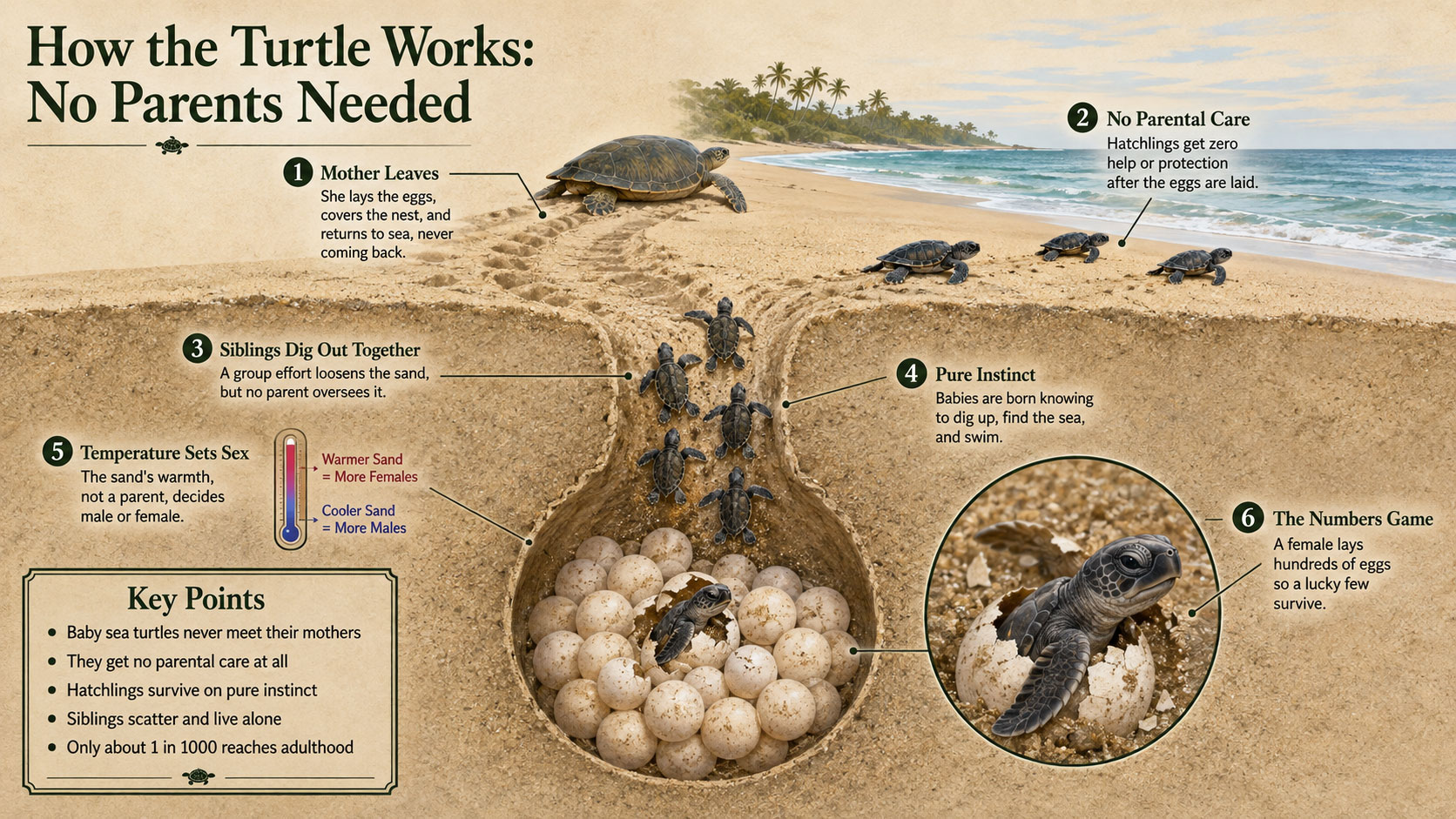
Baby sea turtles do not stay with their mothers, and in fact they never even meet them. Sea turtles give their offspring no parental care whatsoever. The mother’s entire contribution is laying the eggs in a safe spot and covering them with sand. After that, she is gone, and the hatchlings are completely independent from the moment they emerge. Everything a baby turtle does, from digging out of the nest to finding the sea to surviving in the open ocean, it does alone, driven by pure instinct rather than anything a parent taught it.
The Mother’s Role Ends at the Nest
A mother sea turtle works hard, but only for one night per nest. She hauls herself onto the beach, digs a deep chamber with her back flippers, lays around 100 eggs, carefully covers them to hide and protect them, and then makes her way back to the sea. And that is it. She never returns to check on the nest, and she is long gone by the time her babies hatch weeks later. She will never see a single one of her offspring. For a closer look at this process, see our guides on where Hawaii’s green sea turtles lay their eggs and how many eggs they lay.
Hatchlings Dig Out and Race to the Sea Alone
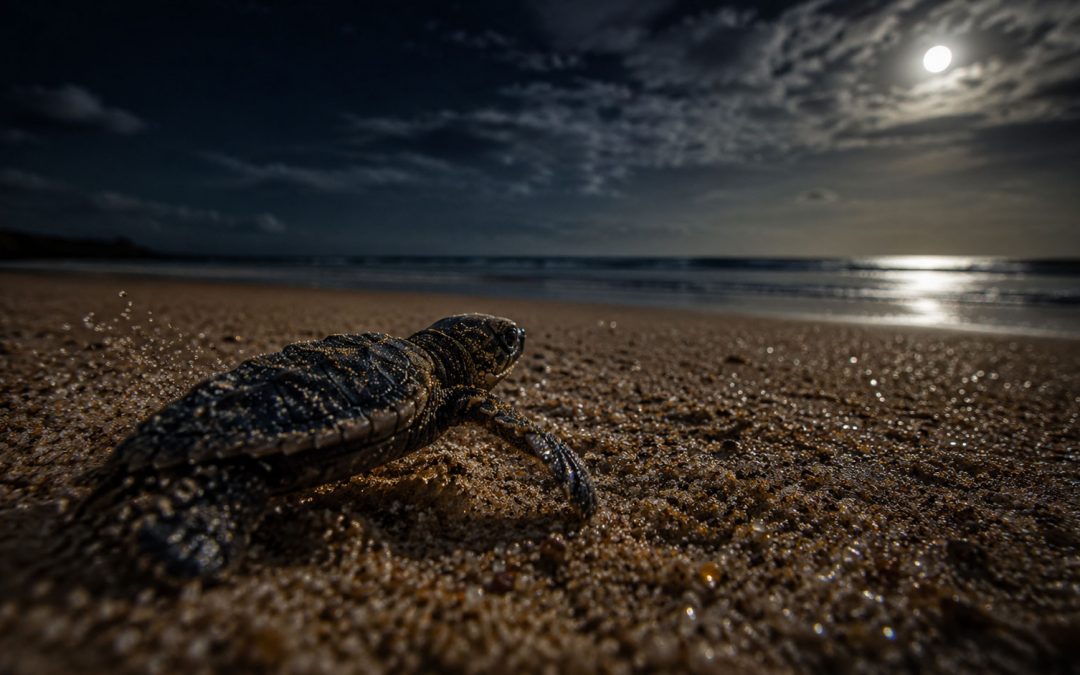
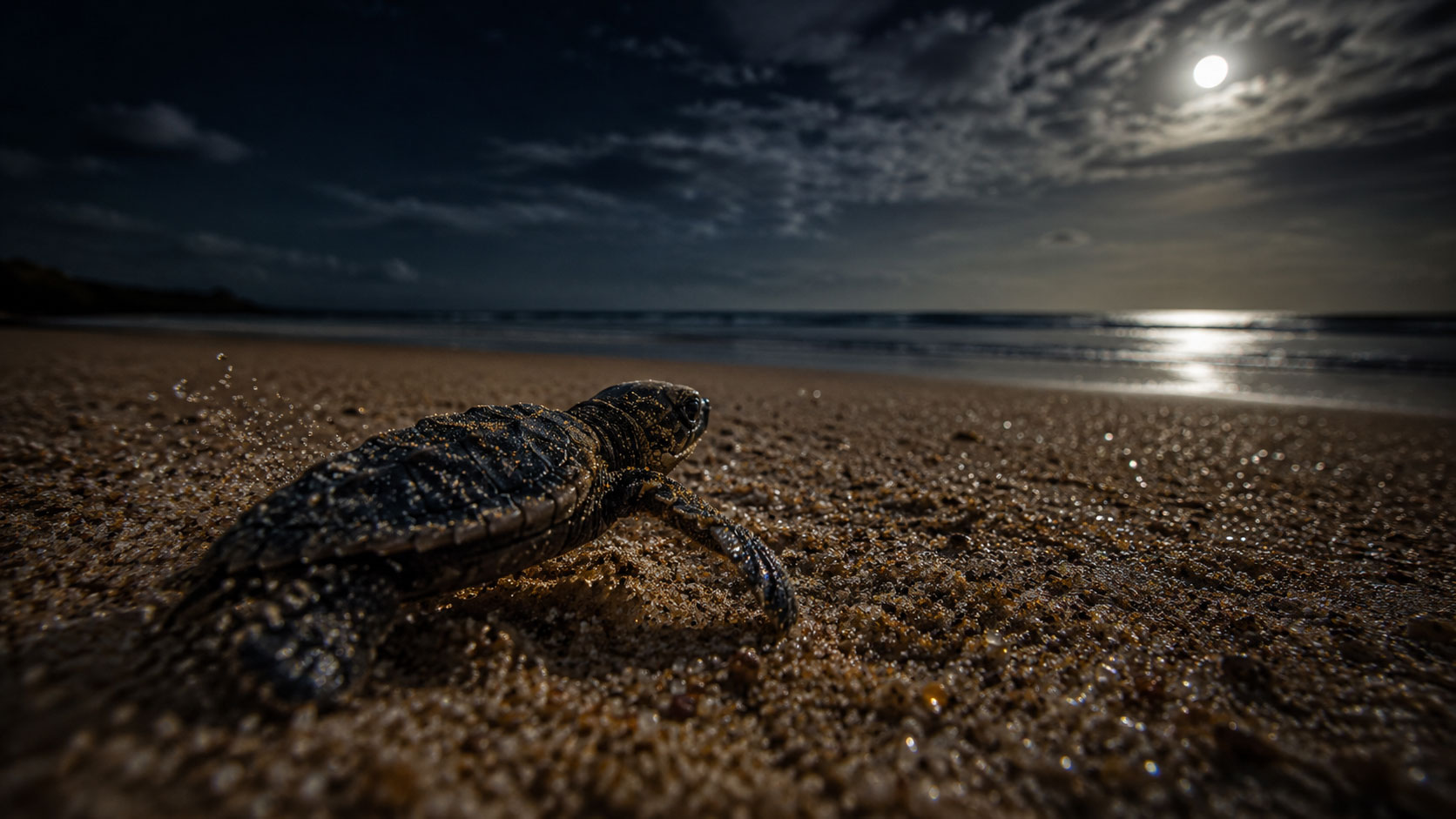
About two months after the eggs are laid, the hatchlings begin to break free of their shells deep under the sand. Here is a beautiful detail. The siblings work together, wriggling and stirring as a group to loosen the sand and push their way up toward the surface, a team effort that no parent oversees. They usually emerge at night, when it is cooler and safer, then scramble across the beach toward the brightest horizon over the water. This dash is one of the most dangerous moments of their lives, with crabs, birds, and other predators waiting. And they face it with no mother to guide or protect them. Our guide on the hatchling run from nest to ocean covers this journey in detail.
Born Knowing What to Do
If no parent teaches them, how do baby sea turtles know what to do? The answer is instinct. Everything a hatchling needs is hardwired from birth. It instinctively knows to dig upward, to head for the light of the open horizon, to swim hard away from shore, and eventually to find food in the open ocean. Even the sex of the hatchlings is set by the temperature of the sand, not by any parent. This deep, built-in knowledge is what makes independence possible. A baby turtle is not lost without its mother, because it was never meant to have one in the first place.
Why Do Sea Turtles Get No Parental Care?
It might sound harsh, but this strategy has worked for over 100 million years. Instead of raising a few babies carefully like many mammals do, sea turtles play a numbers game. A single female can lay hundreds of eggs in a season across several nests, flooding the odds with offspring. The trade-off is that most will not survive, and it is often said that only about one in a thousand hatchlings lives to adulthood. By producing so many young and letting them fend for themselves, sea turtles ensure that at least a few make it through. Nature is betting on quantity, and over millions of years, that bet has paid off.
The Lost Years: Growing Up Alone
The independence does not end at the beach. Once hatchlings reach the water, they swim out into the open ocean and vanish into a mysterious phase of life that scientists call the lost years. For years, young turtles drift far from shore, often sheltering among floating seaweed, growing up entirely on their own before eventually returning to coastal waters as juveniles. Throughout this whole stretch, there is still no parent, no pod, and no family. Each turtle survives by instinct and luck alone. We explore this fascinating chapter in our guide on the lost years of juvenile sea turtles.
Do Siblings Stay Together?
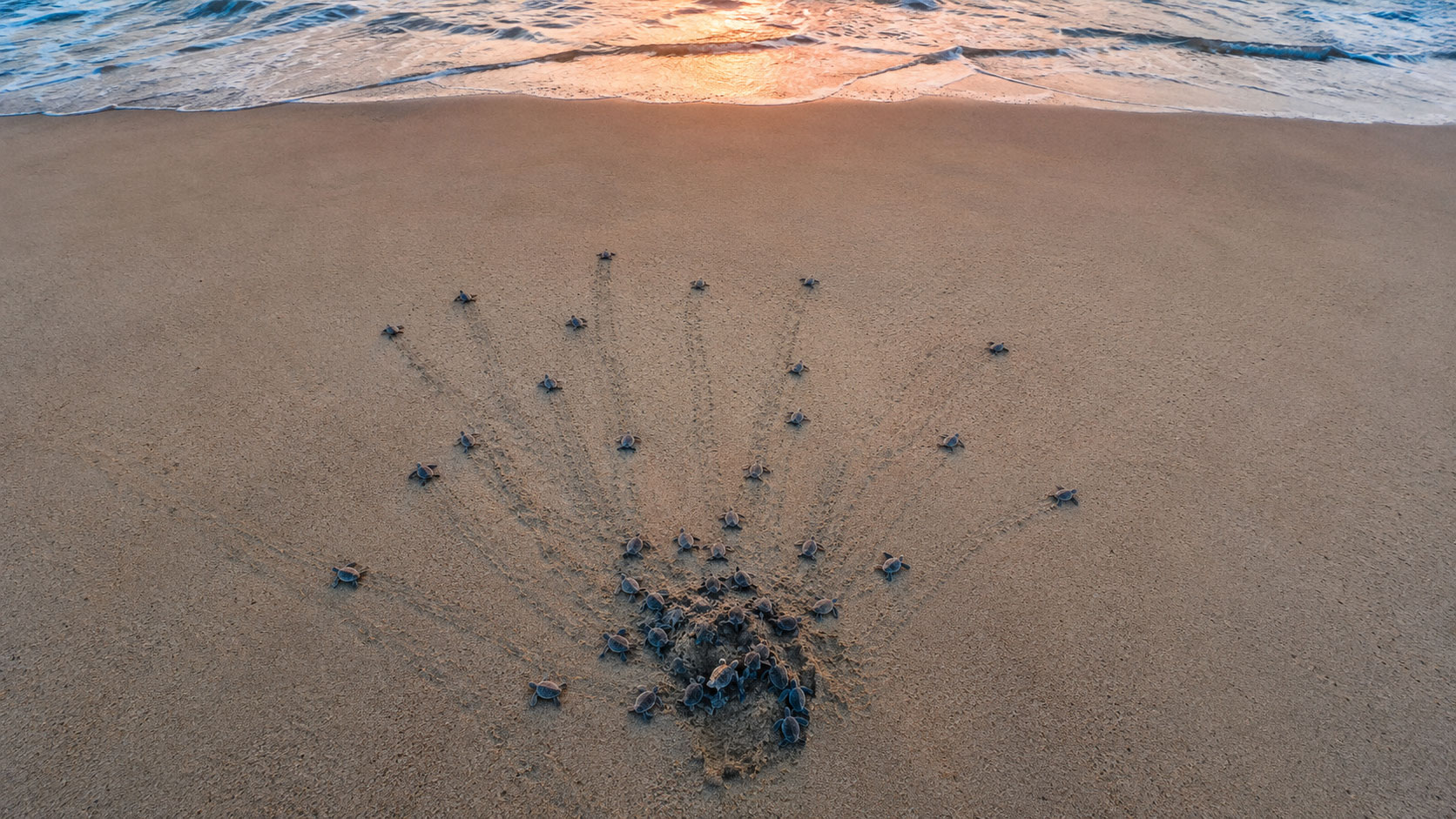
Since they hatch as a group, you might wonder if the babies at least stick together. They do not. Once the hatchlings reach the water and begin their frantic swim away from shore, they scatter in all directions and go their separate ways. There is no lasting bond between siblings any more than there is between parent and child. Each little turtle is soon a solitary traveler in a vast ocean. The brief teamwork of digging out of the nest is the only cooperation they will ever share.
What This Means for How We See Them
Understanding that sea turtles survive completely alone gives every adult turtle you see a new kind of significance. That calm honu gliding past you on a Hawaiian reef hatched on some distant beach, dug itself out, ran a gauntlet of predators, and survived years in the open ocean without a single moment of parental help. It beat odds of roughly a thousand to one purely on instinct. That is why protecting turtles at every stage matters so much, since each survivor is precious and irreplaceable. Knowing their story makes a quiet turtle encounter feel a lot more profound.
Watch: A Turtle Mother Lays Her Eggs
Alone, but Built to Survive
So, do baby sea turtles stay with their mothers? No. They never meet them at all. A mother lays her eggs and returns to the sea for good, and her hatchlings emerge weeks later to face the world entirely on their own, guided only by instinct. It is a lonely start by human standards, but it is exactly how sea turtles have thrived for over 100 million years, betting on hundreds of eggs so that a lucky few survive. The next time you watch a honu drift peacefully through Hawaii’s water, remember it has been a survivor since the very first second of its life, and it made that whole incredible journey alone.