The Lost Years: Where Baby Sea Turtles Disappear For Decades
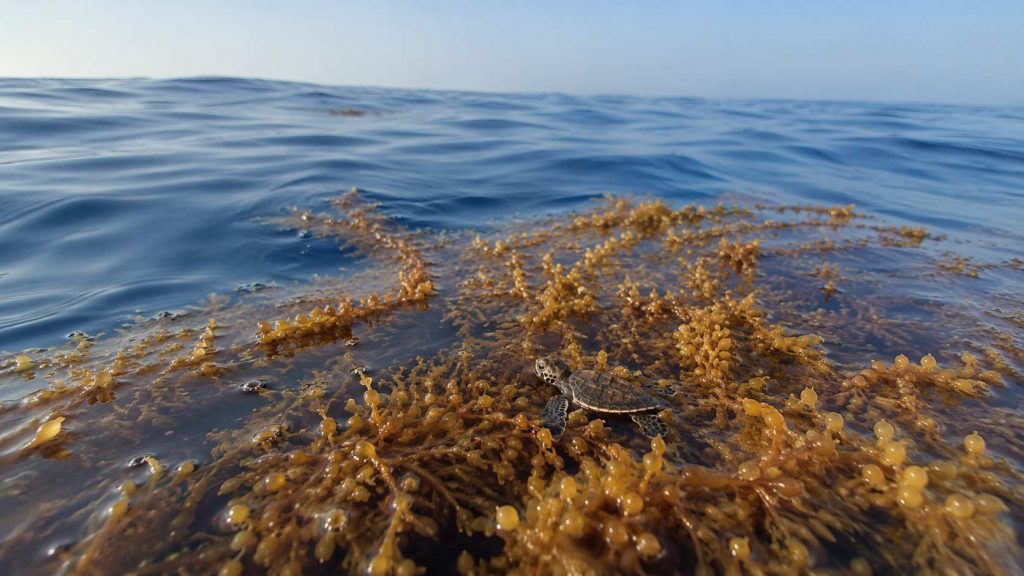
Hatchling sea turtles spend their first night on Earth scrambling across the sand, dodging crabs and birds, and finally vanishing into the surf. For a long time, that was the end of the story anyone could tell. The next time scientists saw those turtles, they were the size of a dinner plate and showing up at coral reefs years later. The years in between were a complete mystery. Researchers started calling that gap the lost years. Today, drifting tags, genetic studies, and citizen science are slowly filling in the picture, and the answers are stranger than anyone expected.
What The Lost Years Actually Are
The lost years describe the period between when a sea turtle hatchling enters the ocean and when it returns to coastal feeding grounds as a juvenile. Depending on the species, this gap can last anywhere from three to twelve years. During that time, the turtles are far from shore, too small to be easily spotted, and not big enough to wear most of the tracking devices used on adults. They essentially disappear from human view. For the Hawaiian green sea turtle, this missing chapter takes up nearly half of the journey to adulthood. A honu that finally shows up grazing on the reefs of Oahu may have spent five to ten years somewhere out in the Pacific before anyone ever laid eyes on it.
The Frenzy: Leaving The Beach Behind
Once a hatchling breaks free of its nest, it does not stop moving. The first run from sand to surf is just the beginning. After hitting the water, hatchlings enter what biologists call the swimming frenzy. For roughly twenty-four to forty-eight hours straight, they swim away from shore without rest. This burst of nonstop activity is powered by leftover yolk reserves still in their bodies. The goal is simple: get as far from land as possible. Beaches and shallow reefs are dangerous places for something the size of a cookie. Crabs, fish, and seabirds all hunt hatchlings near shore, so the safest move is to push out into deep water as fast as possible. By the time the frenzy ends, the young turtle is often several miles offshore, well past the reef edge, drifting into the open Pacific.
Riding The Currents
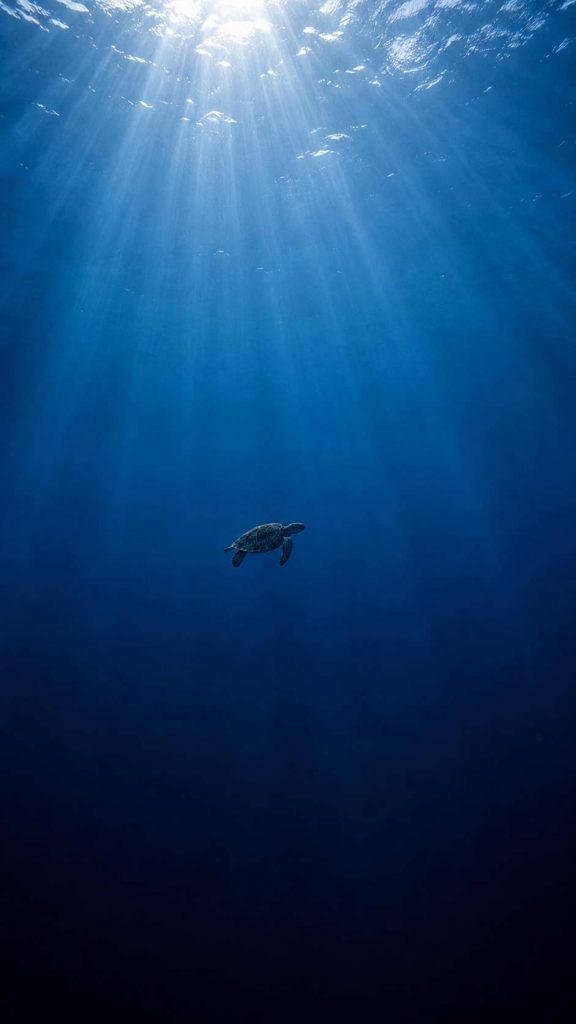
Once the swimming frenzy fades, hatchlings switch strategies. Instead of fighting the ocean, they ride it. Young sea turtles passively drift along major ocean currents, letting the moving water carry them across vast distances. Researchers using small satellite tags and drift modeling have shown that hatchlings can travel thousands of miles in their first few years. Pacific green sea turtles born in the Northwestern Hawaiian Islands may end up far out in the North Pacific gyre before slowly working their way back toward the main Hawaiian Islands. This current-driven travel is not aimless. Drifting on the right current keeps a young turtle in productive waters where food and shelter exist, while drifting on the wrong one can be fatal.
The Sargassum Connection
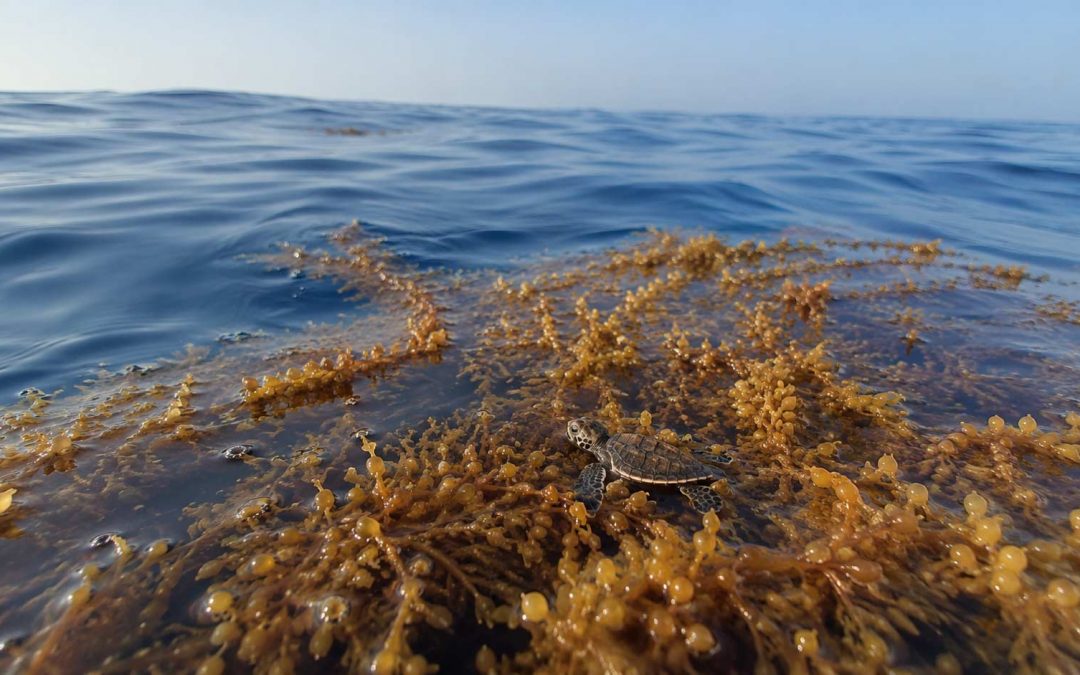
For many sea turtle species, the lost years happen in floating mats of seaweed. The most famous of these is sargassum, a brown seaweed that drifts on the surface in long lines or thick rafts. To a juvenile sea turtle, a sargassum mat is everything. It is a hiding spot from predators, a hunting ground full of small crustaceans, snails, and fish larvae, and a piece of warm shelter on an otherwise empty ocean. In the Atlantic, biologists have documented juvenile loggerheads and green sea turtles spending years tucked under these floating rafts. In the Pacific, similar floating debris lines made of natural drift wood, kelp, and seaweed do the same job. Hatchlings tuck themselves under or beside the mat, picking off tiny prey and using the seaweed for cover. From below, a small turtle in a sargassum tangle is almost invisible to predators looking up at the bright surface.
What They Eat Out There
The diet of a lost-years sea turtle looks nothing like the diet of an adult. Hawaiian green sea turtles, as grown adults, are strict herbivores grazing on algae and seagrass along the reef. But during the lost years, the same animals are opportunistic carnivores. They eat tiny shrimp, jellyfish, fish eggs, plankton, and almost anything small enough to fit in their mouths. This early carnivorous phase gives them the protein and energy needed for rapid growth. Once they are large enough to handle inshore predators, they migrate back toward shallow coastal waters and slowly shift over to the plant-based adult diet. That shift is one of the most dramatic dietary changes in the animal world, and it happens quietly out in the open ocean where no one is watching.
The Predators They Avoid
The open ocean is not safe, but it is safer than the reef for something so small. The biggest threats during the lost years are large predatory fish like tuna, mahi-mahi, and various sharks that patrol the same drifting lines. Seabirds also pluck hatchlings from the surface when they spot them. To survive, young turtles rely on three main tricks. First, they hide in floating debris and seaweed. Second, their dark backs help them blend into the deep blue when viewed from above by birds. Third, their light bellies blend into the bright surface when viewed from below by predatory fish. This two-tone coloring, known as countershading, is one of the oldest survival tools in the ocean and works because the eye of a predator gets fooled by the lighting from each angle.
The Modern Mystery: Why We Are Still Learning
For most of the twentieth century, no one could track a small turtle once it left the beach. Satellite tags were too heavy for a hatchling-sized shell, and visual surveys in the open ocean were almost useless. Things have changed. In the last fifteen years, researchers have built tiny solar-assisted tags light enough to attach to juvenile turtles. They have combined those tags with ocean current models, genetic testing of stranded juveniles, and citizen reports from offshore fishing boats. Slowly, the picture is filling in. Scientists now believe that Pacific juvenile honu spend much of their lost years in waters far north of the main Hawaiian Islands, possibly along productive convergence zones where currents pile up floating material. Once they reach roughly thirty to forty-five centimeters in shell length, often called the dinner-plate stage, they shift toward coastal habitats and begin showing up at familiar reefs around Oahu, Maui, and the other Hawaiian islands.
Why Survival Rates Are So Low
Out of roughly one thousand hatchlings, only one is expected to survive to breeding age. The lost years are when most of those losses happen. A hatchling that makes it across the sand, past the inshore predators, and out into the open ocean still has to dodge years of threats. Many drift into the wrong currents and starve. Others get caught in floating plastic that mimics food. Some die from temperature shifts during marine heatwaves. The few that make it back to coastal water as juveniles have already beaten incredible odds, which is part of why every adult turtle seen at places like Turtle Canyon represents a long history of survival.
When The Lost Years End
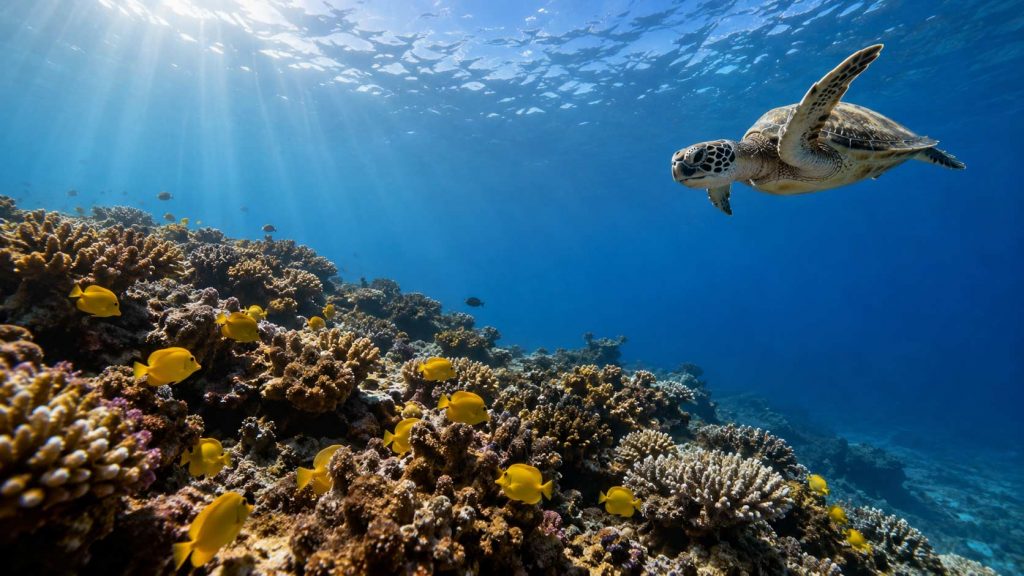
The end of the lost years is just as quiet as the beginning. A juvenile turtle slowly works its way out of open-ocean drifting and begins testing shallower coastal waters. These first inshore visits are often short, with the young turtle moving back out to deeper water for a while before returning. Over months, the visits get longer. The turtle starts grazing on reef algae. It learns the layout of the underwater landscape. Eventually, it commits, taking up residence in shallow reef habitats where it will grow for many more years before it ever attempts to nest. By the time a juvenile honu is fully settled at an Oahu reef, it has already lived through more open-ocean travel than most fish ever see.
What Snorkelers See On A Tour
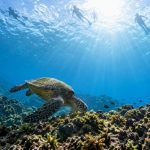
When guests on the Turtle Canyon tour spot a smaller honu drifting near the reef, they may be looking at an animal that recently came in from years of open-ocean drifting. These younger turtles often have cleaner shells, brighter scute patterns, and more curious behavior than the older adults. Larger resident turtles tend to be calmer, more familiar with snorkelers, and more focused on grazing. Knowing the backstory of a small honu adds a layer most visitors never realize. That dinner-plate-sized turtle peeking out from the reef has likely traveled thousands of miles to get there.
Why The Lost Years Matter For Conservation
Understanding the lost years matters because conservation efforts depend on knowing where animals spend their time. Protecting nesting beaches is critical, but if young turtles are dying out in open-ocean trash lines, beach protection alone will not save the population. Recent research into the open-ocean phase has helped shape policies on fishing gear, longline rules, and protected zones in convergence areas where juvenile turtles are likely to gather. Hawaiian honu have benefited from decades of nesting protection on places like East Island and Lalo, but their long-term recovery still depends on what happens out where no one can see them. The lost years are not just an interesting science puzzle. They are a missing piece in the bigger work of keeping Pacific sea turtles around for future generations.
Watch: The Mystery of Sea Turtles’ Lost Years
The Quiet Decade That Makes A Honu
Every adult sea turtle gliding through the reef at Turtle Canyon has lived through a decade most humans will never witness. The lost years are not lost to the turtles themselves. To them, those open-ocean drifting days are simply the long road home. Each one survives a journey that begins in the sand, runs through deep water and floating seaweed, and ends quietly on a Hawaiian reef. The next time a young honu surfaces near a snorkeler, it is worth remembering that small turtle is already a survivor of one of the longest, strangest journeys in the animal world.