How Far Can Sea Turtles See?
Overview
Sea turtles spend almost their whole lives in the ocean, so good eyesight is essential for finding food, avoiding danger, and navigating the reef. But just how far can a sea turtle actually see, and how does its vision change between the water and the land? This guide breaks down a sea turtle’s eyesight, how far it can see underwater, whether it can see at night, and how its vision compares to other ocean animals, including Hawaii’s honu.
The Short Answer: Sharp Underwater, Blurry on Land
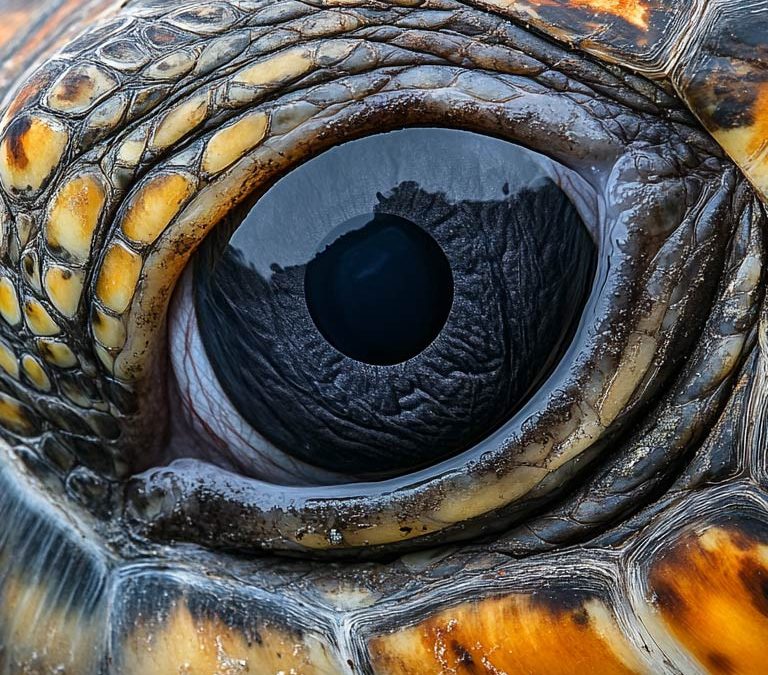
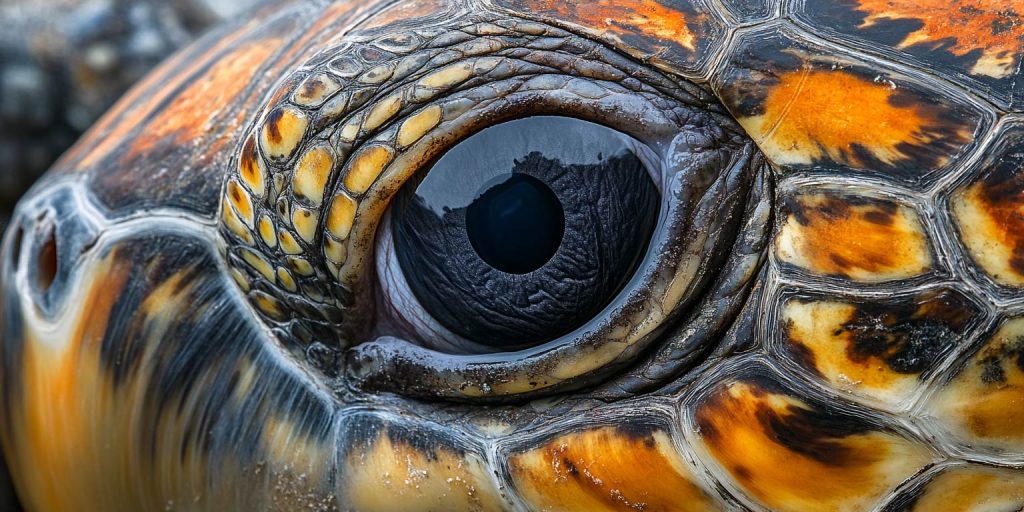
Sea turtles have keen eyesight that is beautifully suited to life underwater. Their eyes evolved to see well in the dim, shifting light of the ocean, helping them spot food, predators, and their way through the reef. On land, though, it is a different story, since a sea turtle’s vision becomes noticeably less sharp out of the water. Their eyes are built for the sea, tuned to detect light patterns and movement beneath the surface rather than crisp detail in the air.
How Far Can They See Underwater?
In clear water, a sea turtle can see quite a distance, often up to around 30 feet or more depending on how clean and bright the water is. In clear, open ocean their vision reaches even farther, letting them notice food or a possible threat well before it gets close. Water clarity makes a big difference, so a turtle in murky water sees less than one gliding through the crystal-clear blue of a place like Turtle Canyon. Either way, their underwater eyesight is a key tool for survival.
What Colors Can Sea Turtles See?
Sea turtles do see in color, though a little differently than we do. They are especially sensitive to the blues and greens that dominate the ocean, which makes perfect sense for an animal living in that world, helping it navigate and find food. Their color vision even extends into ranges people cannot see. If you want the full picture, we cover it in our guide on whether sea turtles see in color, which explains just how rich a turtle’s underwater world really is.
Can Sea Turtles See at Night?
Yes, sea turtles can see at night, though their night vision is not as powerful as animals truly built for the dark. They can detect some light in low-visibility conditions, which helps them move around during the dim hours of dusk and dawn and in deeper, darker water. This ability is part of why turtles can stay active in changing light, and it plays a role in behaviors like hatchlings finding their way to the sea and females nesting under the cover of night.
More to a Turtle’s Eyes Than Meets the Eye
A sea turtle’s eyes come with a few extra tricks. Each eye has a clear third eyelid that sweeps across like built-in goggles, protecting the eye from saltwater and debris without blocking vision. Turtles also rely on more than sight to find their way, using an incredible sense of the Earth’s magnetic field to navigate across whole oceans. So while eyesight is important, it is just one part of a remarkable sensory toolkit that keeps a turtle oriented far from shore.
Who Has the Best Eyesight in the Ocean?
As impressive as a sea turtle’s vision is, it does not top the charts. That honor likely belongs to the mantis shrimp, a small creature with some of the most complex eyes in the entire animal kingdom. Mantis shrimp can see ultraviolet and polarized light and distinguish an astonishing range of colors, giving them a kind of super-vision no turtle can match. Still, a sea turtle’s eyesight is perfectly tuned to its own needs, and that is what really matters. It can spot food and danger from a distance and read the underwater world with ease.
Watch: Meet the Sea Turtle
Eyes Built for the Ocean
So how far can sea turtles see? In clear water, up to around 30 feet or more, with sharp, color-aware vision tuned to the blues and greens of the sea, though their eyesight softens on land. They can even see in dim light and carry clever adaptations like a clear third eyelid. A sea turtle may not have the best eyes in the ocean, but its vision is perfectly matched to the world it lives in. The next time you watch a honu glide across a Hawaiian reef, you will know it is seeing that beautiful blue world clearly, in its own remarkable way.