Green Sea Turtle vs Hawksbill: How to Tell Hawaii’s Two Turtles Apart
Overview
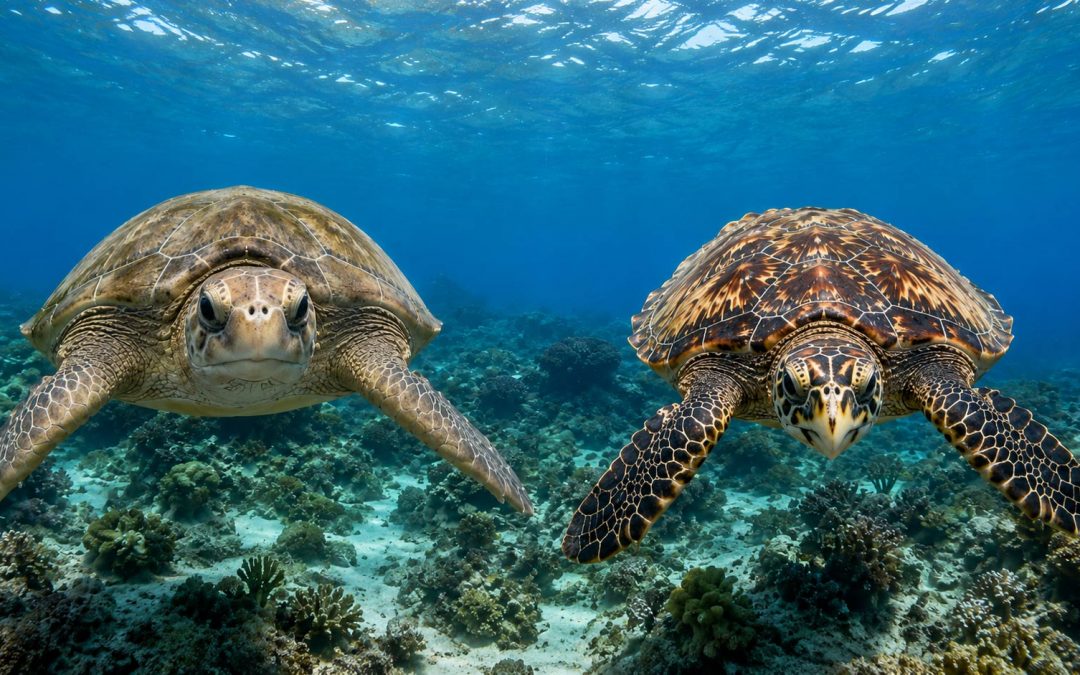
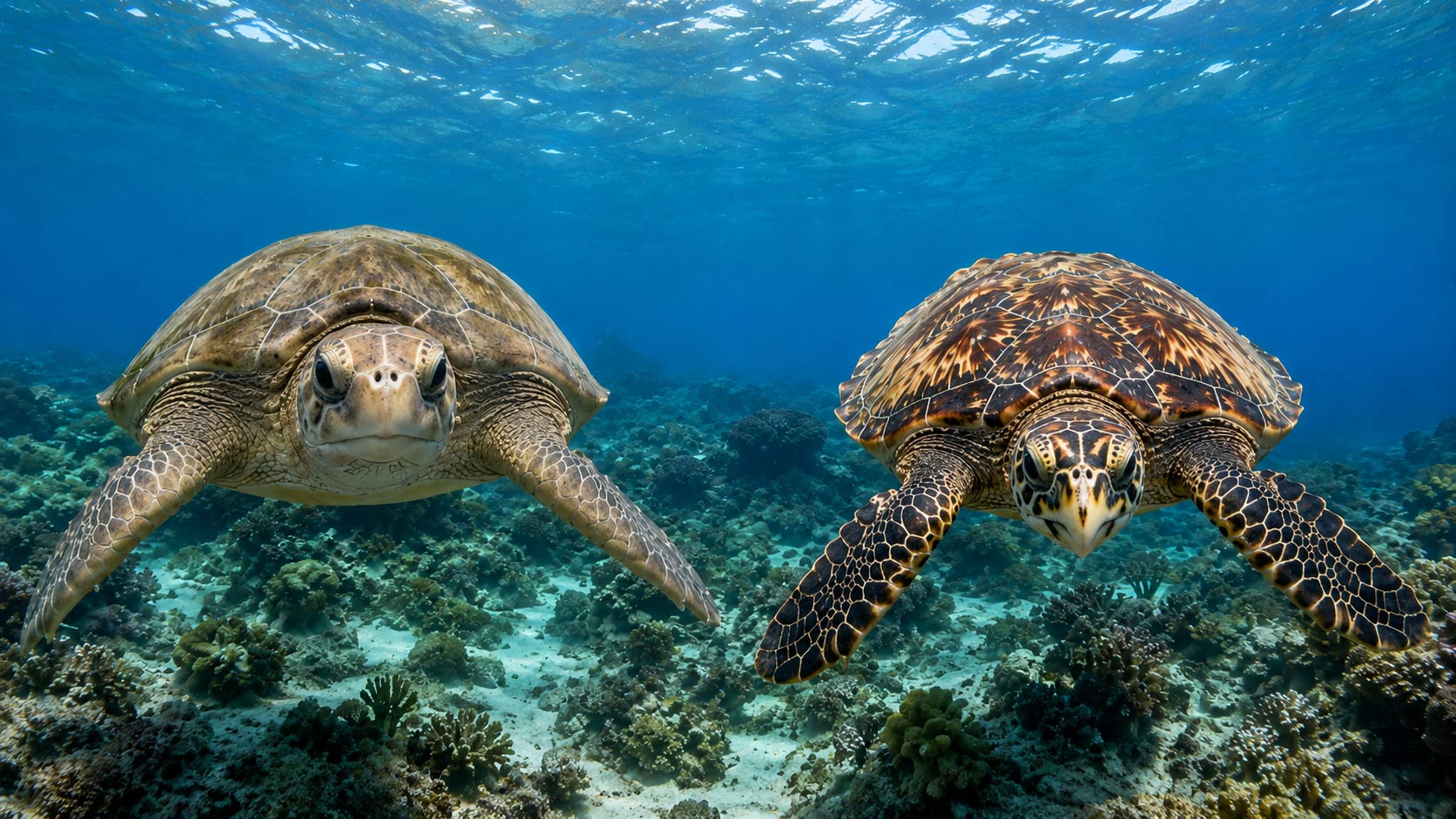
You are floating over a bright Hawaiian reef when a sea turtle cruises past, and a fun question pops into your head. What kind of turtle was that? In Hawaii, there are two sea turtles you might meet, the common green sea turtle and the much rarer hawksbill. At a quick glance they can look similar, but once you know a few key features, telling them apart becomes surprisingly easy. This guide is a simple side by side comparison of the green sea turtle and the hawksbill, covering the shell, head, size, color, diet, and behavior, so the next time a turtle swims by you can confidently say exactly which one you saw.
The Two Sea Turtles of Hawaii
Hawaii is home to two sea turtles you are most likely to encounter. The first is the green sea turtle, known in Hawaiian as the honu. It is by far the most common, the one you will almost always see basking on beaches and grazing on reefs, including at popular snorkeling spots off Oahu. The second is the hawksbill sea turtle, called honuea in Hawaiian. Hawksbills are much rarer in the islands and are considered critically endangered, so spotting one is a special treat. There are other sea turtle species in the wider Pacific, but around Hawaii these are the two you will realistically be trying to tell apart. So when you see a turtle here, the odds are strong it is a honu, but it always pays to look closer.
The Shell: Smooth Versus Overlapping
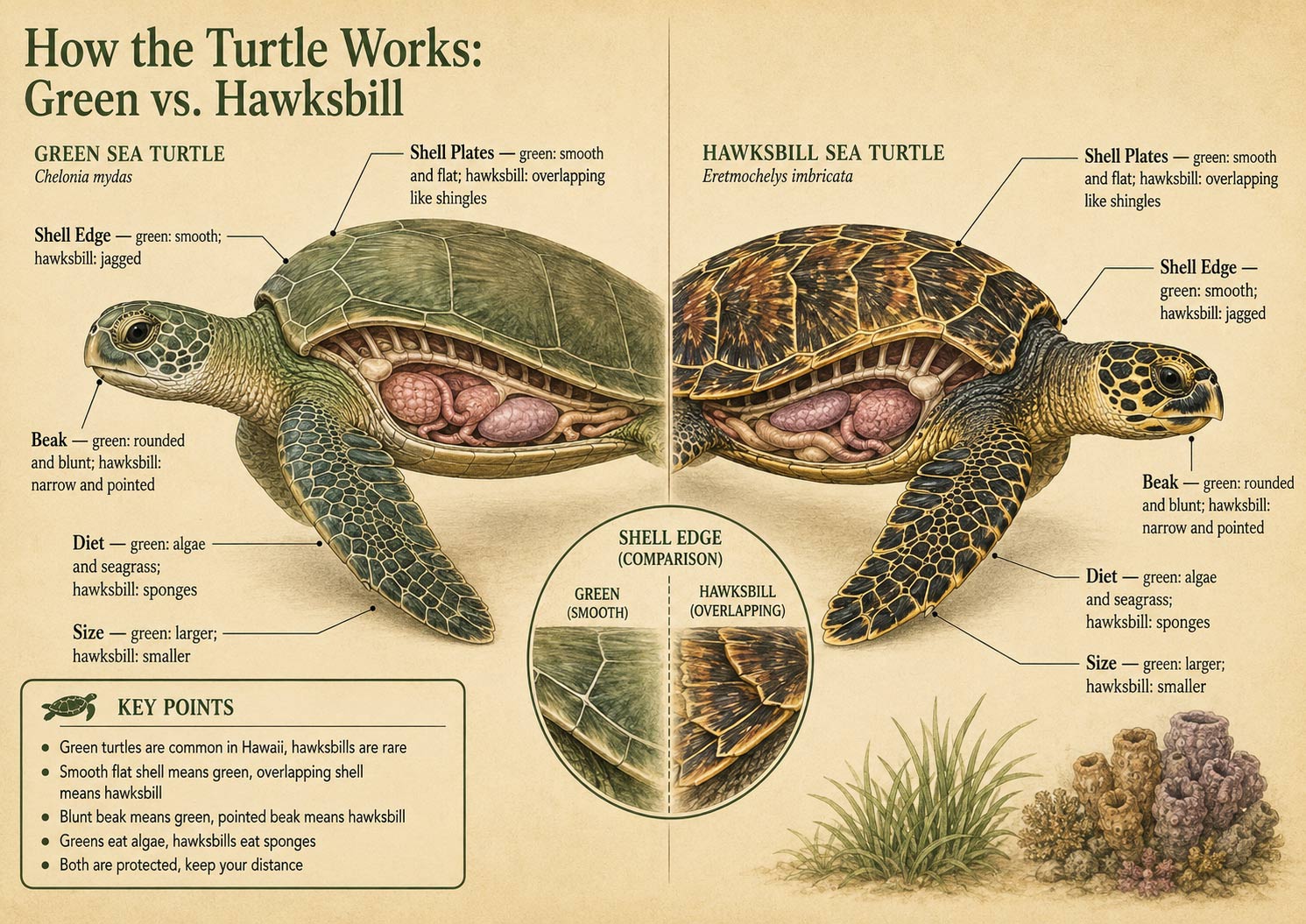
The single fastest way to tell these two turtles apart is to look at the shell. A green sea turtle has smooth scutes, the individual plates on its shell, that lie flat and fit together neatly like tiles on a floor, edge to edge without overlapping. A hawksbill is different. Its scutes overlap each other like shingles on a roof, giving the shell a layered, slightly rough look. On top of that, the back edge of a hawksbill’s shell is often jagged or saw toothed, while a green sea turtle’s shell edge is smooth and rounded. If you can get a clear look at whether the shell plates overlap or lie flat, you have your answer most of the time.
The Head and Beak: Blunt Versus Pointed
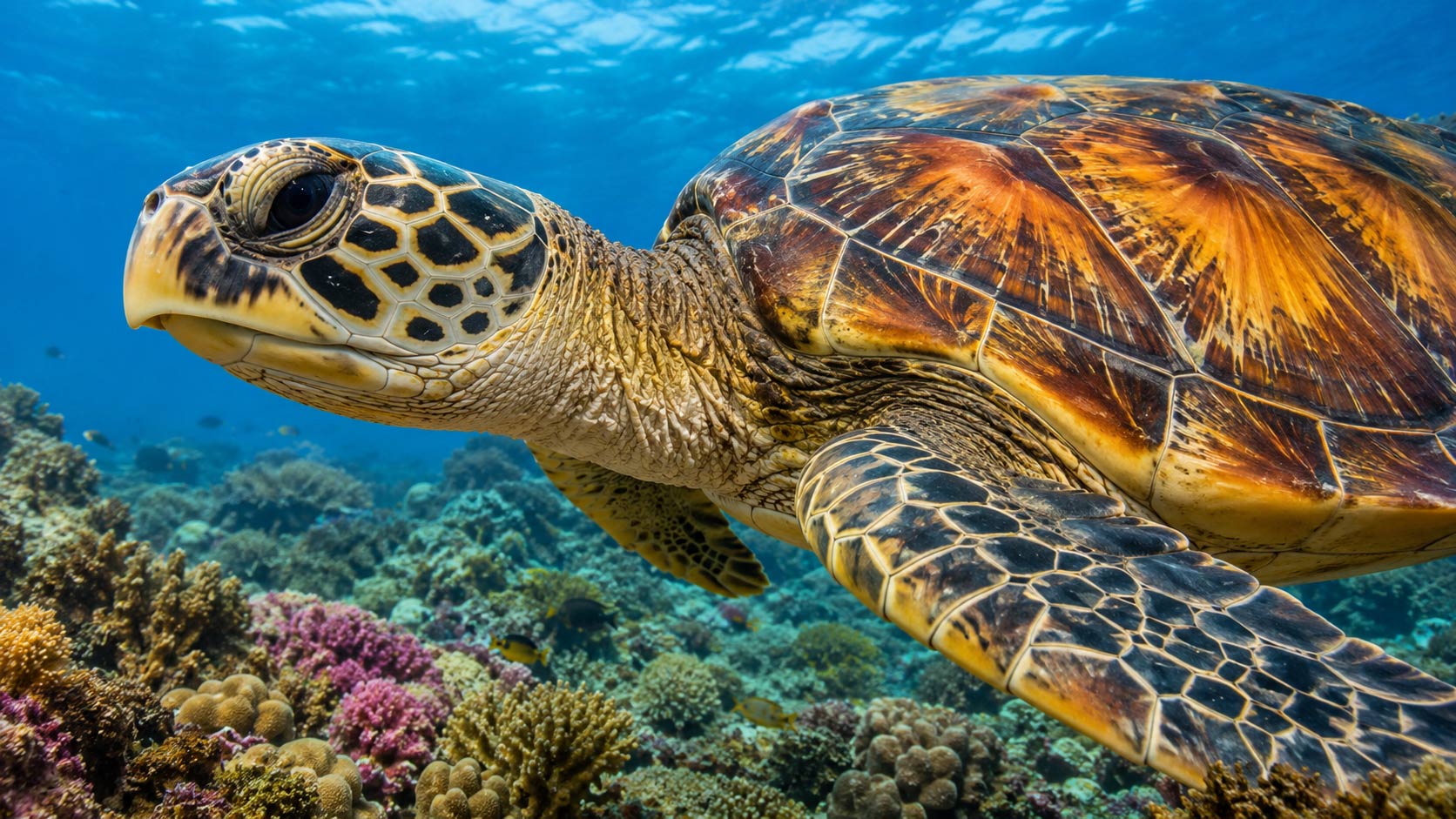
The next place to look is the head, and this is where the hawksbill gets its name. A hawksbill has a narrow, pointed beak that curves to a sharp tip, looking very much like the beak of a bird of prey such as a hawk. This pointed beak is a tool, perfect for reaching into tight cracks in the reef to pull out food. A green sea turtle has a very different head, rounder and blunter, with a short beak that has a finely serrated edge for cropping plants. So if the turtle has a sharp, bird like beak, you are almost certainly looking at a hawksbill, while a rounded, gentle looking face points to a green sea turtle.
Size and Color
Size and color offer more clues, especially once you have seen a few turtles. Green sea turtles are the larger of the two, with adults commonly reaching a couple hundred pounds and a few feet in length. Their shells tend toward olive, brown, and darker earthy tones. Hawksbills are noticeably smaller, and their shells are their showpiece. A hawksbill shell is beautifully patterned in rich ambers, oranges, browns, and golds, streaked and marbled in a way that is genuinely striking. Sadly, this gorgeous shell is exactly why hawksbills were hunted for so long to make tortoiseshell items, which is part of why they are so rare today. In short, a big turtle with a plainer shell is likely a green, while a smaller turtle with a stunning, colorful, layered shell is likely a hawksbill.
What They Eat
The two turtles also make their living in completely different ways, and their diets match their tools. Adult green sea turtles are herbivores, grazing on the algae and seagrass that carpet the reef, which is even part of how the species earned its name. The hawksbill is a specialist, feeding mainly on sponges that it digs out of reef crevices with that pointed beak. This difference is not just trivia, because by eating sponges that would otherwise overgrow the reef, hawksbills help keep coral reefs healthy, while grazing greens help control algae. Each turtle plays its own important role in keeping the reef in balance.
Behavior and Where You Will See Them
Behavior and location can also tip you off. Green sea turtles are the ones you will most often see around Oahu, cruising the reef, resting at cleaning stations, and famously hauling out to bask in the sun on the beach, a habit that makes them easy to spot. Hawksbills tend to be more solitary and are more closely tied to coral rich areas, and in Hawaii they are seen more often around the Big Island and Maui than Oahu. Because hawksbills are so rare, simply seeing a turtle in the usual Oahu snorkeling spots makes a green sea turtle the far more likely answer. Still, keeping an eye out for that pointed beak and layered shell means you will not miss a hawksbill if you are lucky enough to cross paths with one.
Quick ID Cheat Sheet
When a turtle swims by, run through these quick checks:
- Shell plates: smooth and flat means green, overlapping like shingles means hawksbill
- Shell edge: smooth and rounded means green, jagged or saw toothed means hawksbill
- Beak: rounded and blunt means green, narrow and pointed like a hawk means hawksbill
- Color: plainer olive or brown means green, colorful amber and gold pattern means hawksbill
- Size: larger usually means green, smaller often means hawksbill
Why This Matters
Learning to tell these turtles apart is more than a fun game. It deepens your appreciation for what you are seeing and helps with conservation too. Hawksbills are critically endangered, so every verified sighting matters, and knowing the difference means you can report a rare hawksbill to local wildlife groups if you spot one. It also reminds us that both of Hawaii’s sea turtles are protected by law and deserve the same respect and distance. Whether you are watching a common honu or a rare honuea, you are witnessing an ancient animal that has earned its place on the reef.
What This Means for Snorkelers
The good news for snorkelers is that both turtles behave the same way around respectful people, going calmly about their day as long as you give them space. When you snorkel at a spot like Turtle Canyon off Waikiki, you are almost certainly meeting green sea turtles, the gentle grazers of the reef. But now you have the eye to catch something special, because if a smaller turtle with a pointed beak and a glowing, layered shell ever glides by, you will know you are looking at a rare hawksbill. Either way, keep your distance, move slowly, and enjoy the moment. Knowing exactly which turtle you are watching only makes the encounter more memorable.
Watch: Meet the Sea Turtle
Know Your Honu
So the next time a sea turtle cruises past you in Hawaii, you will not have to wonder. Check the shell for smooth versus overlapping plates, look at the beak for blunt versus pointed, and take in the size and color. Most of the time you will be greeting a green sea turtle, the beloved honu of the islands, and every so often you might be treated to the rare and beautiful hawksbill. Both are remarkable survivors and vital parts of the reef, and learning to tell them apart turns every turtle sighting into a little moment of discovery. Now you know your honu, and your snorkeling trips will never look quite the same.