Riding Out the Storm: What Sea Turtles Do When a Hurricane Hits
Overview
Every summer and fall, the Pacific stirs up storms that track toward the Hawaiian Islands, and every year people ask the same question about the animals living just offshore. When a hurricane rolls through, where do the sea turtles go? It is a fair thing to wonder. A honu weighs a couple hundred pounds and breathes air, and a hurricane can turn a calm reef into a washing machine for days at a time. What actually happens is a story of two very different outcomes. Grown turtles usually come through just fine, sometimes without much drama at all. The eggs and hatchlings buried on the beach are the ones that pay the price.
Hurricane Season Lasts Longer Than Most Visitors Realize
The Central Pacific hurricane season officially runs from June 1 through November 30, which covers a huge slice of the year and includes some of the most popular months to visit the islands. That does not mean six months of bad weather. Hawaii is often spared a direct hit because of cooler surrounding water and upper level winds that tear storms apart as they approach. Most systems weaken into tropical storms or pass well to the south. Still, a storm does not need to make landfall to change the ocean. A system tracking a few hundred miles away can send long period swells marching toward the islands, and those swells reach the reef days before any rain does.
Sea Turtles Often Know a Storm Is Coming
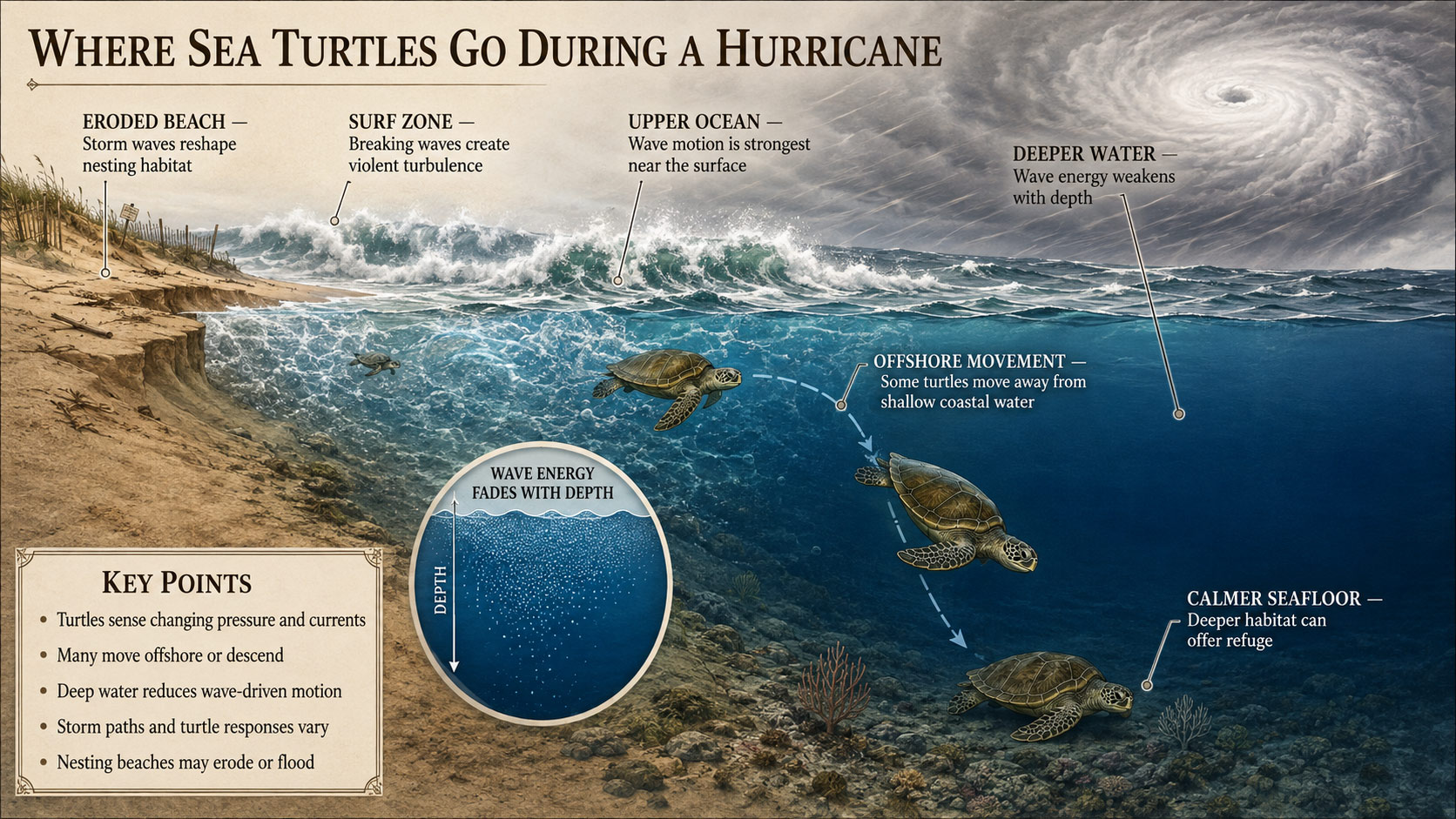
Marine animals are far more sensitive to changing conditions than we are, and a drop in barometric pressure is one of the earliest signals a storm sends. Researchers studying tagged sea turtles have noticed that some animals shift their behavior ahead of major weather, moving away from shallow areas and into deeper, calmer water before conditions get rough at the surface. This is not a mystical sixth sense. It is a practical response to real physical cues, including pressure changes, water temperature shifts, and the rising energy of swell that arrives long before the wind. Turtles have been living through Pacific storms for millions of years, and the ones that survived long enough to reproduce were the ones that read those signals correctly.
Why Deep Water Is the Safest Place to Be
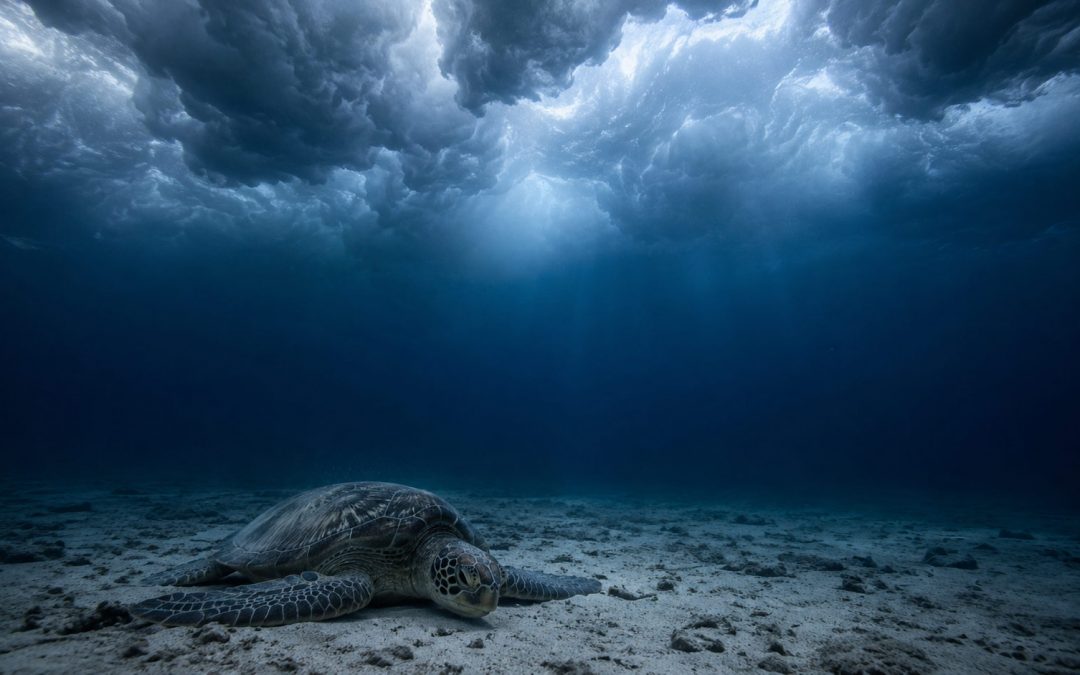
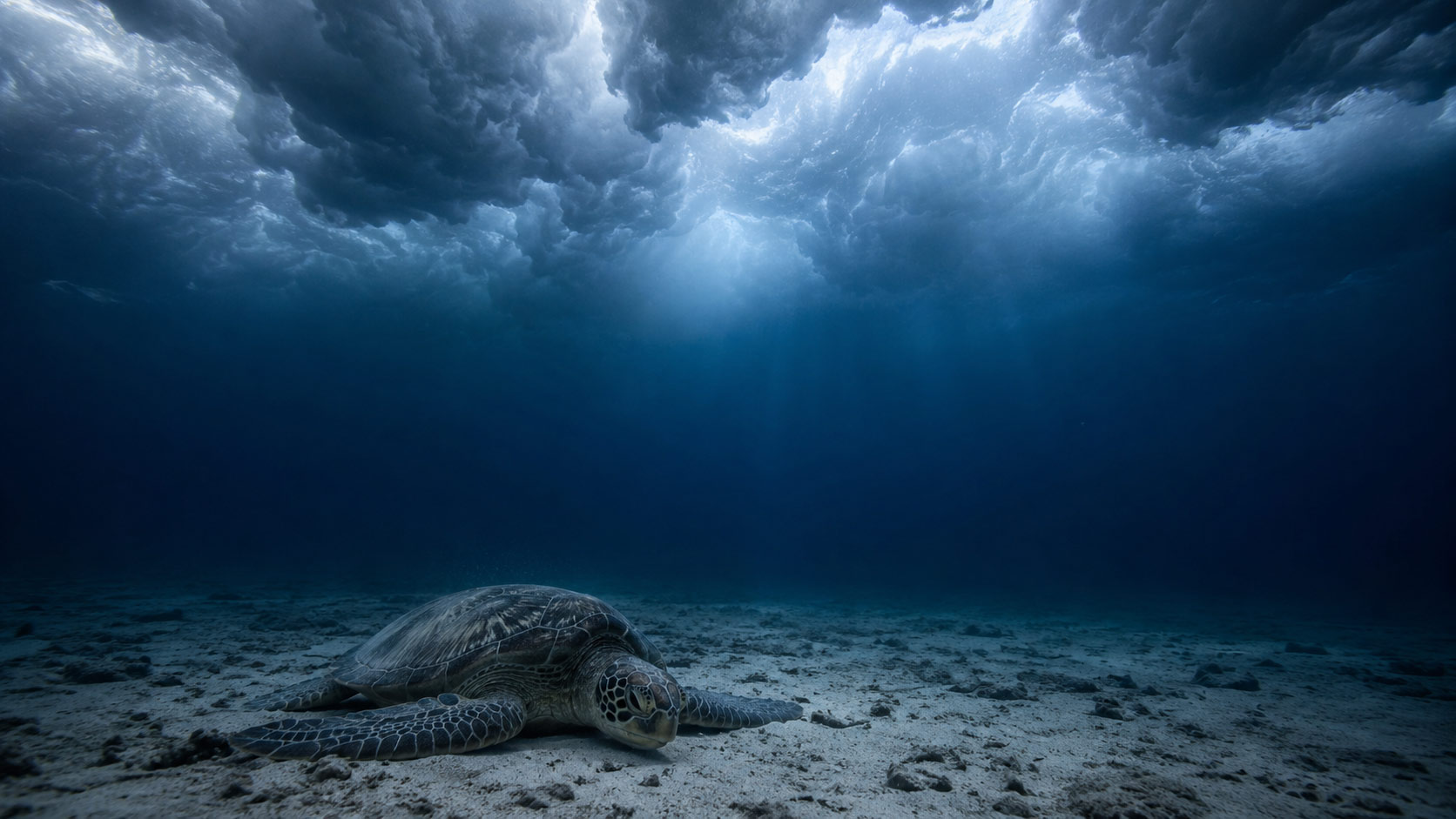
It seems backward at first. If a storm is coming, why would an animal swim toward the open ocean instead of hiding near land? The answer is that almost all of a wave’s violence happens at the top. Wave energy fades quickly as you go deeper, so while the surface is chaos, water 60 or 100 feet down stays comparatively calm. Shallow reefs are the dangerous place during a hurricane, because that is where waves break, where surge slams into rock, and where a turtle can be thrown against coral or dragged across the bottom.
- Deeper water means less wave energy and far less risk of being battered
- Shallow reefs and shorelines take the worst of the breaking surf and surge
- Open ocean offers room to move rather than obstacles to be thrown into
- Turtles displaced far from home can navigate back once conditions settle
They Still Have to Come Up for Air
Here is the part people forget. Sea turtles are reptiles, not fish, and they breathe air just like we do. No matter how bad the surface gets, a turtle has to return to it. During a storm that means surfacing into breaking whitewater, blowing spray, and heavy chop, grabbing a breath, and dropping back down. Turtles handle this better than you might guess. A resting honu can hold its breath for hours at a time, and lowering its heart rate lets it stay down far longer than an active animal would. That ability buys enormous flexibility during rough weather. Rather than surfacing every few minutes into a violent sea, a turtle can settle onto the bottom, slow everything down, and simply wait out the worst of it.
The Nests Are Where the Real Damage Happens
If adult turtles mostly ride out storms, the nests do not. This is the quiet tragedy of a hurricane season that overlaps with nesting season, and in Hawaii those two calendars overlap almost perfectly. A sea turtle nest is a hole in the sand holding roughly a hundred eggs, buried and left alone to develop for about two months. Everything about that arrangement assumes the beach stays where it is.
- Storm surge can wash straight over a nest and flood it
- Eggs need to exchange gases through the sand, so prolonged flooding suffocates them
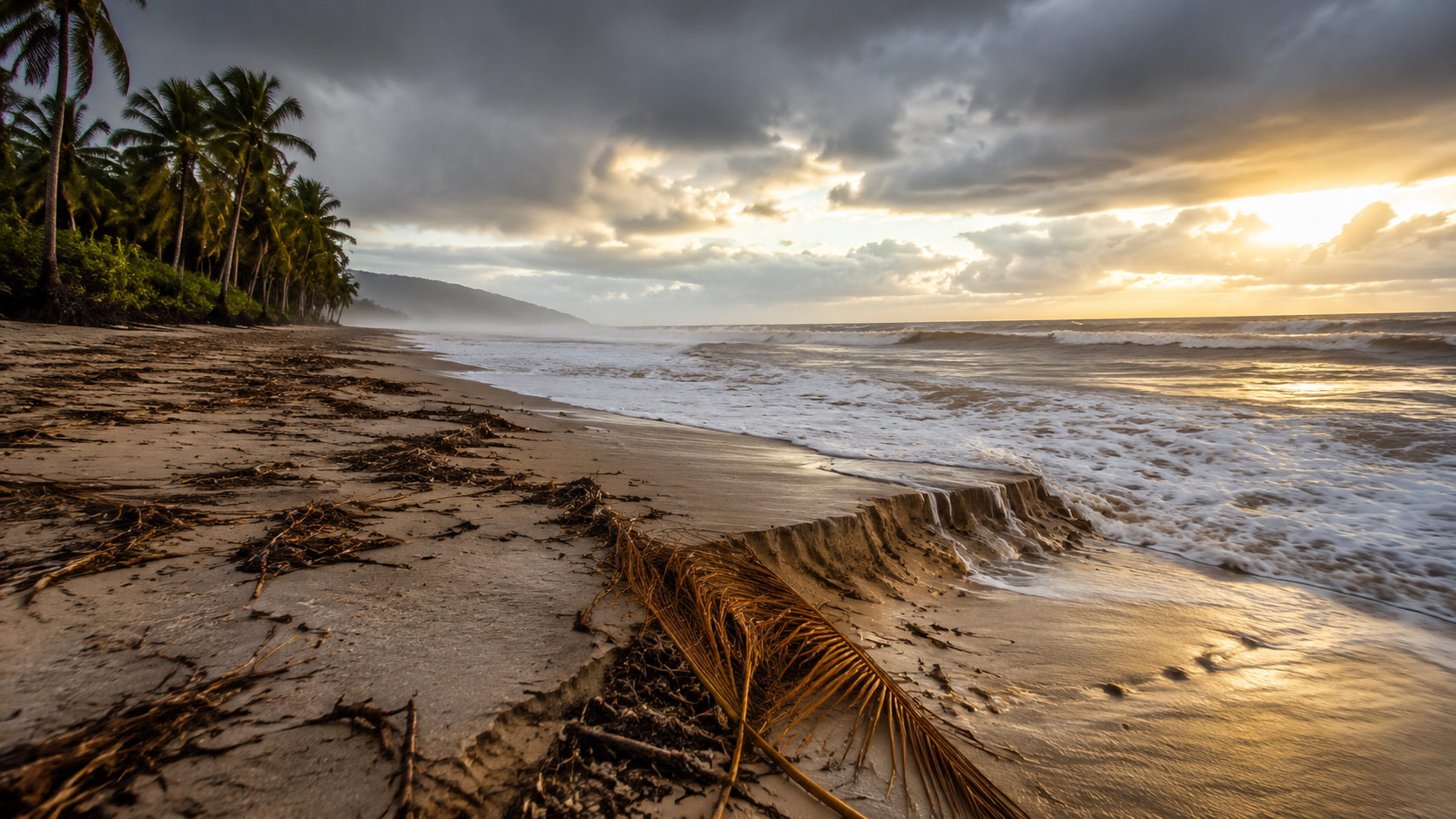
- Beach erosion can strip away the sand above a nest or carry the whole clutch out to sea
- Debris pushed onto the beach can block hatchlings trying to reach the water
- Heavy rain can compact or waterlog sand, making it harder for hatchlings to dig out
A nest can sometimes survive a brief wash over. What it cannot survive is sitting underwater for hours. This is one reason a single strong storm at the wrong moment in the season can wipe out an entire stretch of beach production, even though the adult turtles offshore come through untouched.
Hatchlings Face the Longest Odds of All
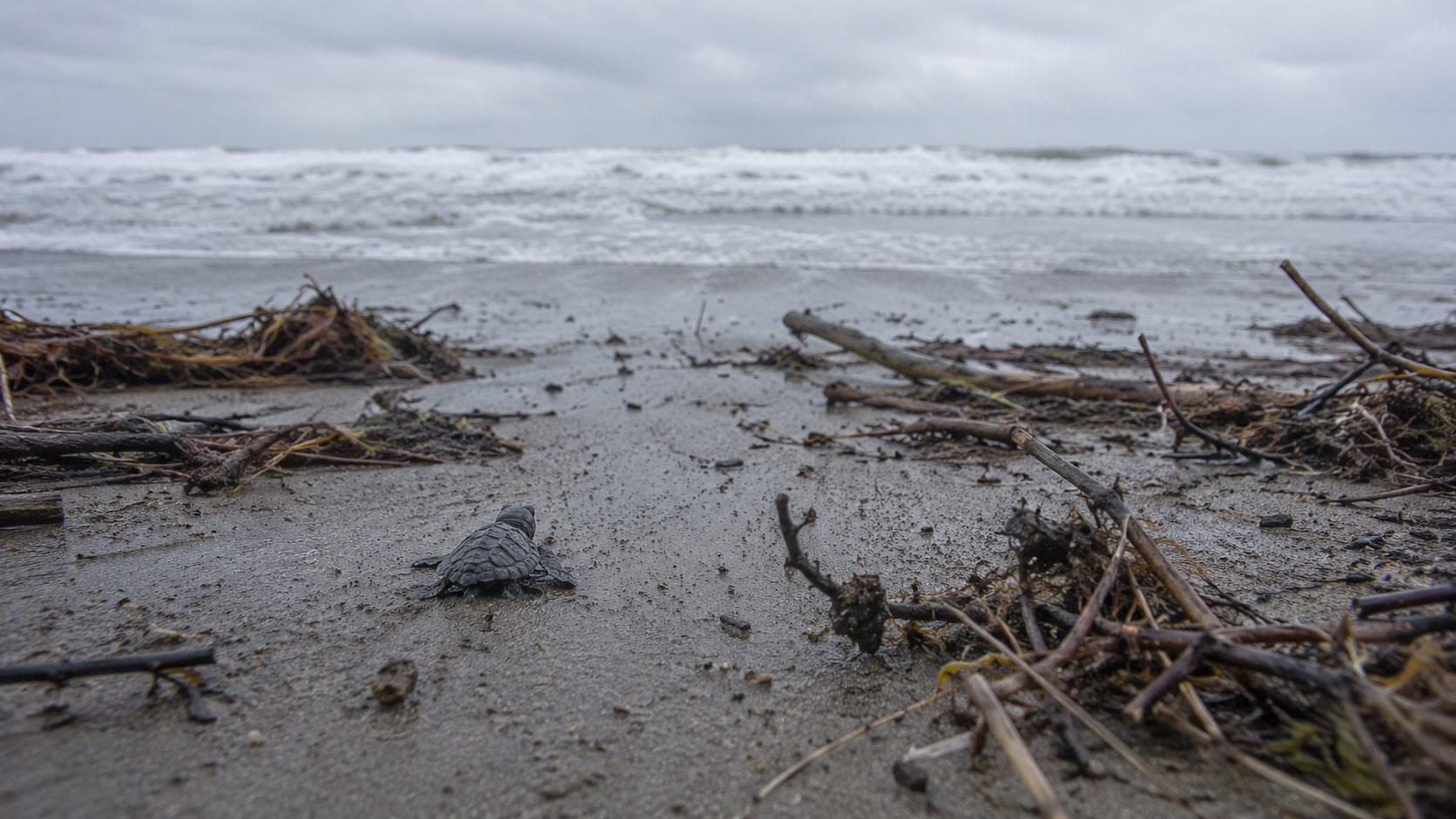
Baby turtles have a hard enough time in perfect conditions. Only a tiny fraction of hatchlings ever reach adulthood, and a storm stacks the deck even further. Hatchlings find the ocean by crawling toward the brightest, most open horizon, a cue that works beautifully on a calm night and falls apart when a storm has rearranged the beach, scattered debris across the sand, and filled the sky with clouds. Those that do reach the water face surf far stronger than their swimming ability, and currents that can push them somewhere they were never meant to go. Some are thrown back onto the sand repeatedly. The strange upside is that storms also stir and move the floating mats of seaweed where young turtles spend their early years, so the same weather that scatters them also shifts the habitat they depend on.
What the Ocean Looks Like After a Storm
The hurricane leaving does not mean the danger has passed. In some ways the days afterward are the messier problem. Heavy rain flushes everything sitting on land into the ocean, including soil, trash, chemicals, and construction debris. Water clarity drops for days. Floating debris fields form offshore, and a curious turtle investigating something that looks like food can end up swallowing plastic or getting tangled in loose line and netting. Reefs themselves take a beating, and coral broken apart by surge means less shelter and less to eat for a while. This is when stranded and injured turtles tend to turn up on beaches, sometimes exhausted, sometimes carrying wounds from being thrown against rock.
Why Tours Do Not Run in Heavy Weather
When ocean conditions turn, boat trips stop, and that is exactly how it should be. A captain watching an approaching swell is making the same call the turtles are making, which is that the shallow water near shore is no place to be. Rough seas make it harder to see anything below the surface anyway, and crowding wildlife during a stressful stretch of weather is the opposite of responsible. If a storm is anywhere near the islands during your trip, expect schedules to move, and take the change as a good sign rather than a frustration. It means somebody is paying attention to the ocean instead of the calendar. Conditions in Hawaii often bounce back quickly, and the water can be beautifully clear again within a few days of a system passing.
If You Find a Turtle After a Storm
Post storm beach walks sometimes turn up a honu that has been washed ashore or is resting in an odd spot. Hawaiian green sea turtles are protected by law, and the right response is to keep your distance and let trained responders handle it.
- Stay back and give the animal room, and keep dogs and children away
- Do not drag, push, or carry a turtle back into the water, since an injured animal may drown
- Do not pour water on it or try to feed it
- Note the exact location and call the NOAA marine wildlife hotline
- Take a photo from a distance if you can, since it helps responders prepare
A turtle resting on shore is not automatically in trouble, because Hawaiian green sea turtles bask on land normally. After a big storm, though, it is always worth a call rather than an assumption.
Built for Weather We Would Never Survive
Sea turtles have been swimming through hurricanes since long before there was anyone around to name them. Their answer to the worst weather on earth is not to fight it and not to flee it, but to go deep, slow down, and let it pass overhead. The adults almost always win that contest. It is the eggs in the sand and the hatchlings scrambling toward a rearranged shoreline that carry the real cost of a storm season, which is exactly why protecting nesting beaches matters so much in a warming ocean where storms are getting stronger. The next time you float above a honu on a calm, clear morning off Oahu, it is worth remembering that the animal below you has almost certainly waited out storms that would have sunk a boat, and simply carried on afterward as though nothing happened.