Are You Seeing the Same Turtles Every Trip? Inside Honu Site Fidelity at Oahu Turtle Canyon
Overview
Most people climb back on the boat feeling lucky. The assumption is that sea turtles roam the whole island, and that a few of them happened to drift through that morning while you were in the water. It is a nice thought, and it is wrong in an interesting way. Green sea turtles do not wander at random. They choose a feeding reef and they keep it, often for years, coming back to the same ledges and the same patches of algae with the kind of consistency you would expect from a creature of habit. The honu you floated above was almost certainly a local. Scientists have a name for this, and once you know it, a snorkel trip stops feeling like a lottery ticket and starts feeling like a visit to a neighborhood.
The Short Answer
Yes. There is a very good chance you are seeing the same individual turtles that other guests saw last week, and a reasonable chance some of them were there last year.
The behavior is called site fidelity, and it is strong in green sea turtles. An adult honu will settle on a stretch of reef that meets its needs and then use that same stretch over and over, with a short list of favorite spots inside it. They are not territorial about it the way a bird defends a nest. They simply have no reason to leave something that works.
What Site Fidelity Actually Means
Site fidelity is the habit of returning to the same specific place rather than using whatever happens to be nearby. In sea turtles it shows up in two separate ways, and it helps to keep them apart.
The first is fidelity to a nesting beach, which is the famous one. A female hatched on a particular beach will, decades later, return to that same area to lay her own eggs.
The second is fidelity to a foraging ground, and that is the one that matters for snorkeling. A foraging ground is simply where a turtle lives and eats for most of its adult life. These are completely different places, often hundreds of miles apart, and a turtle keeps loyalty to both.
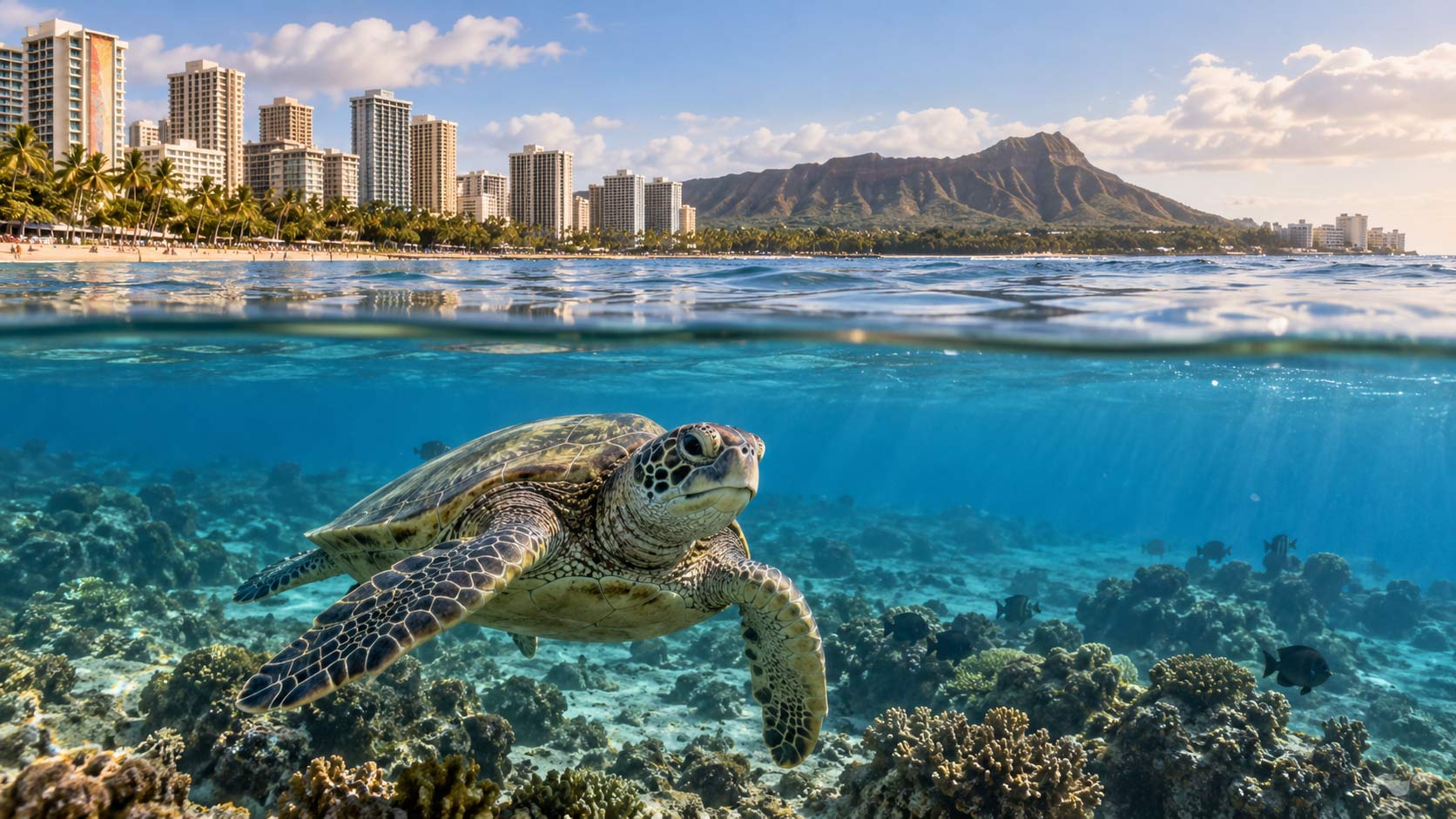
When you are looking down at a reef off Waikiki, you are looking at a foraging ground. You are looking at somebody’s home.
Why a Stretch of Reef Becomes an Address
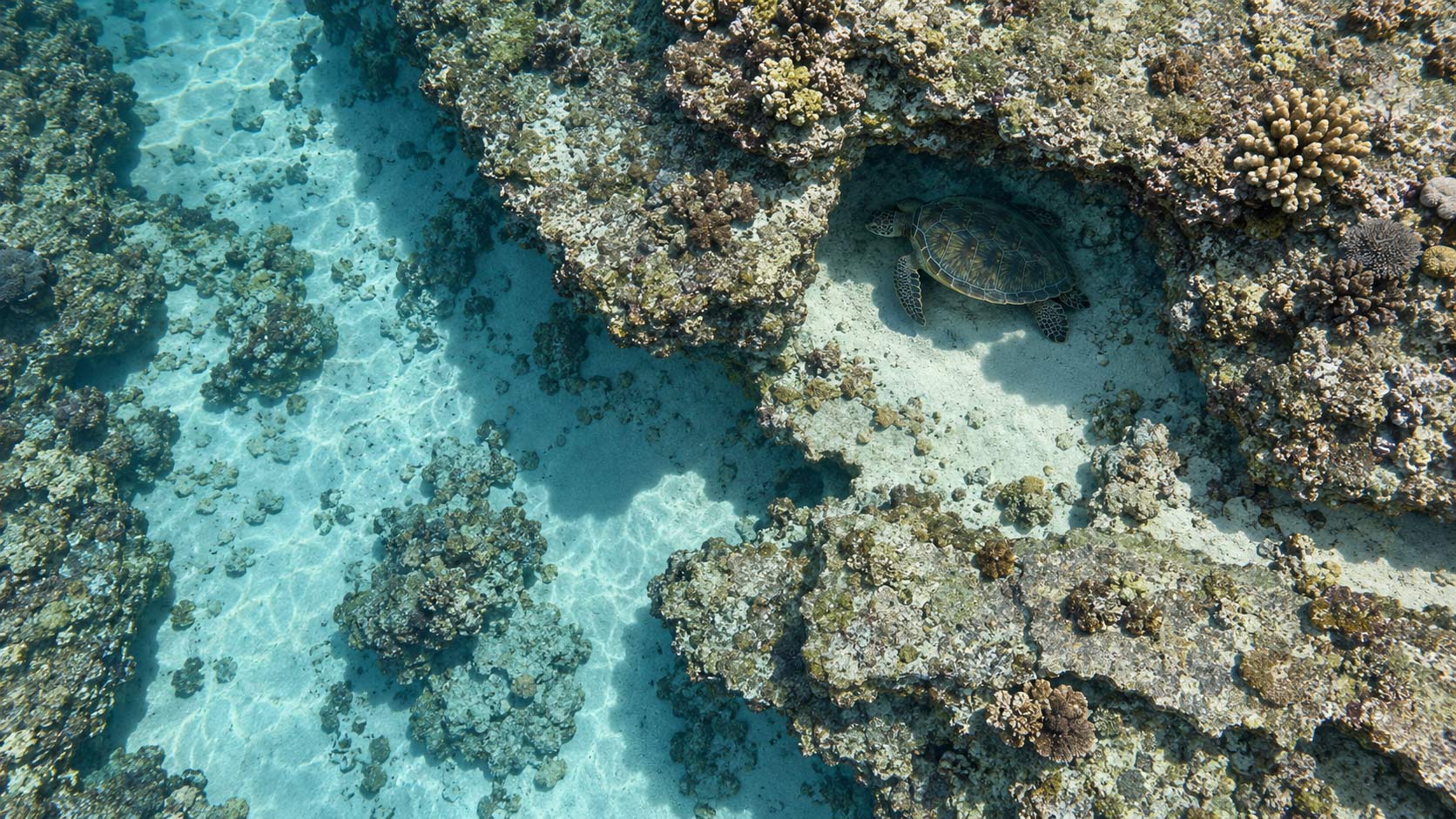
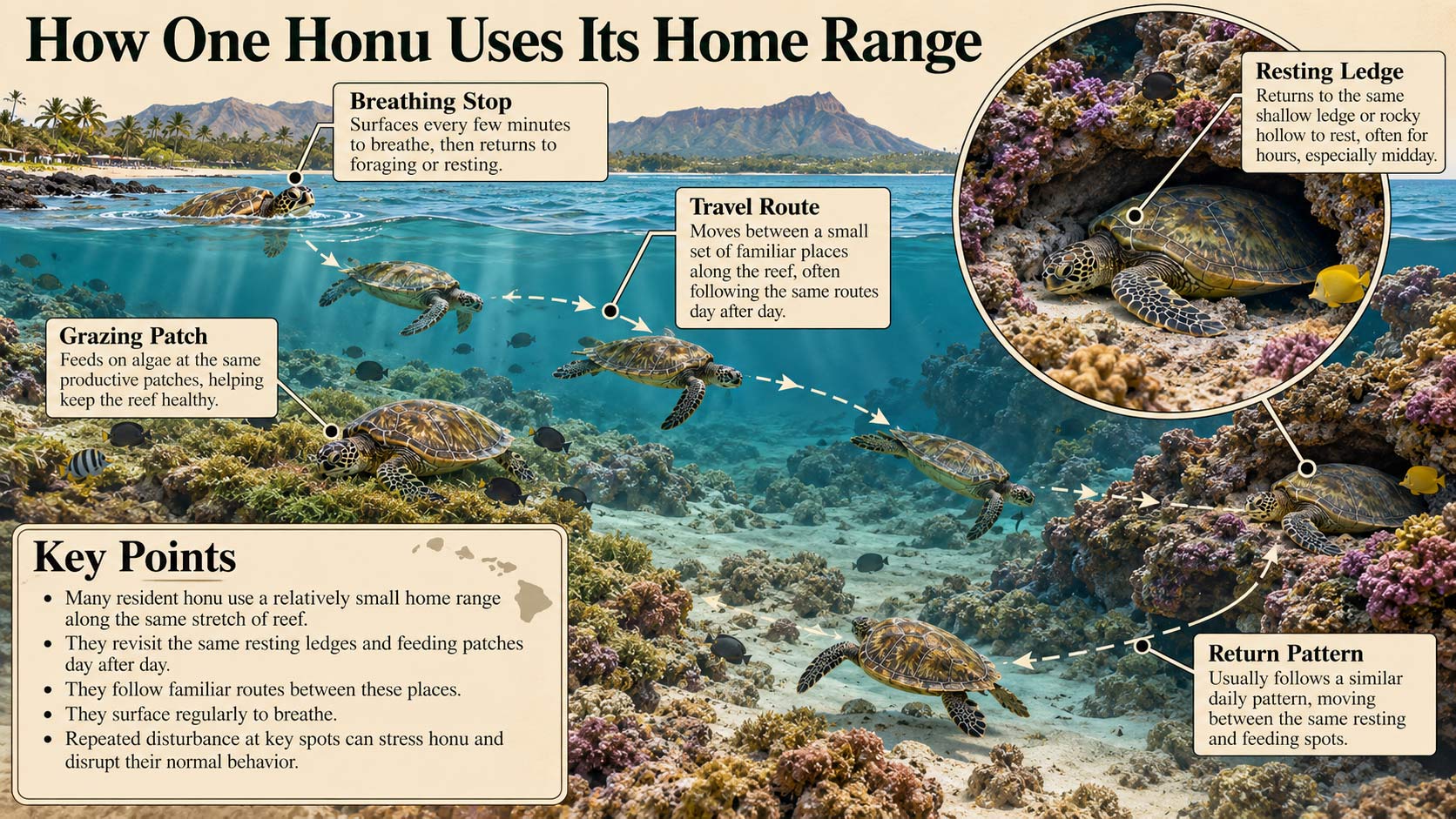
A honu is not picking a reef for the view. It is running a quiet checklist, and a good spot ticks every box at once.
- Reliable food, meaning steady growth of algae and limu that regrows faster than it gets eaten
- Resting structure, the ledges and hollows where a turtle can tuck in and hold a long breath undisturbed
- A cleaning station, where reef fish pick algae and parasites off a shell and skin
- An easy route to the surface, since every turtle has to breathe and does not want obstacles in the way
- Predictable water, where currents and conditions behave the same way most days
Find all five in one place and there is no reason to go looking. That is the whole explanation. Turtles stay because staying works, and a reef that keeps delivering gets a permanent tenant.
The Face Is a Fingerprint
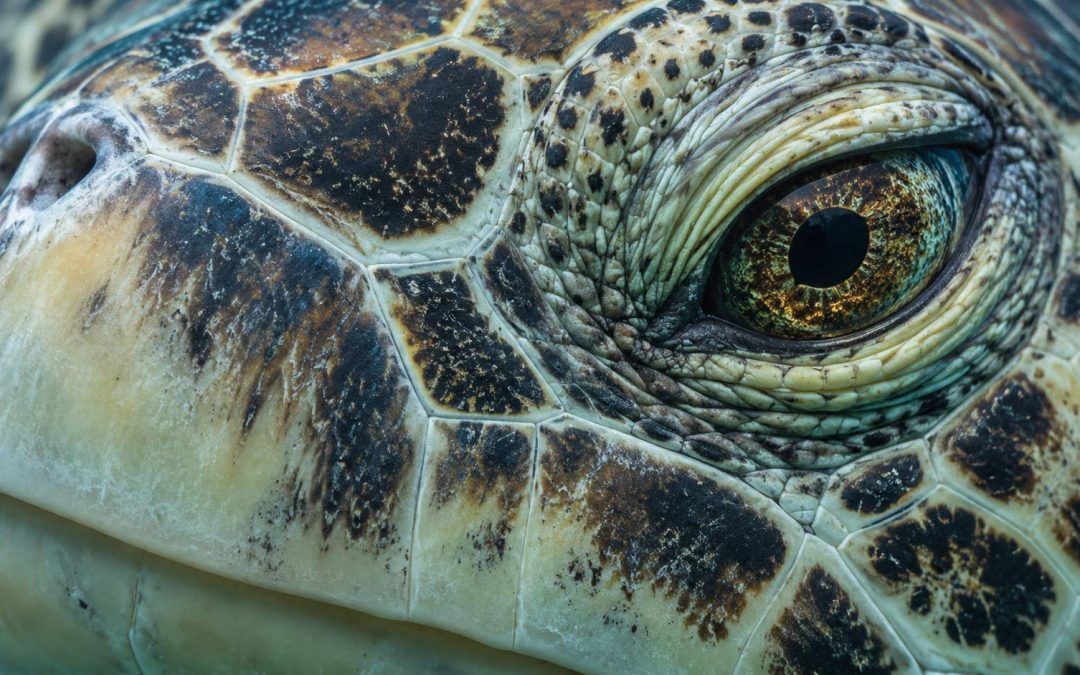
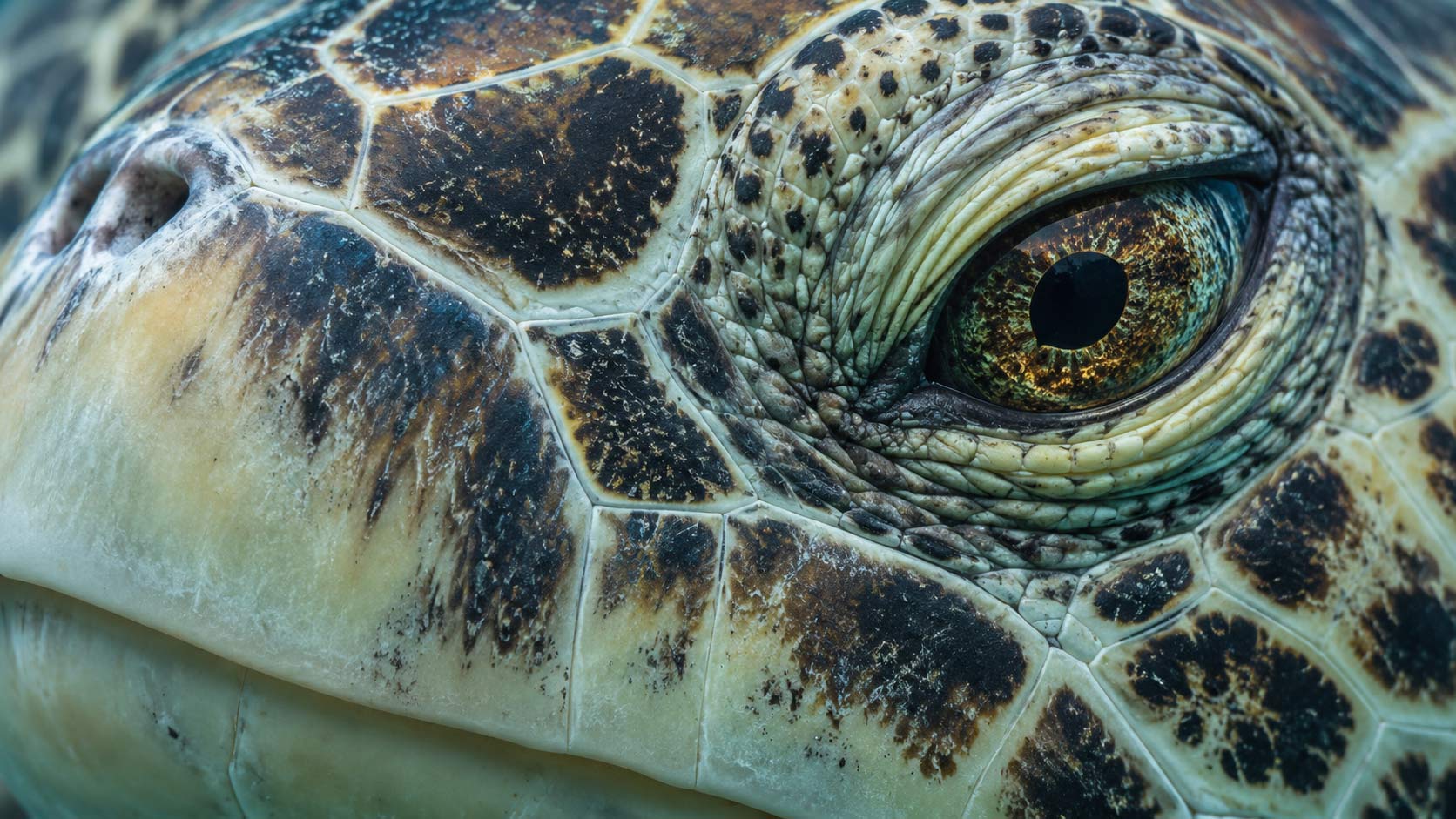
Here is the part that makes all of this provable rather than just a nice theory. The hard scales on the side of a sea turtle’s head form an irregular mosaic, and that pattern is unique to the individual. It is also stable, meaning it does not change as the animal grows older.
That makes a photograph of the side of a turtle’s face the equivalent of a fingerprint. Researchers using photo identification can recognize the same animal again years later without ever touching it, tagging it, or disturbing it. Take a clear side-on photo, compare it to a catalog, and you know exactly who you are looking at.
This technique is why we can say with confidence that turtles return to the same reefs. It is not an assumption from watching a few animals. It is the same identified individuals turning up in the same places across many years. Automated tools now handle a lot of the matching, which has made the catalogs much larger and the pattern much clearer.
They Do Leave, and Then They Come Straight Back
There is one big exception to all this homebody behavior, and it is worth knowing because it sounds like a contradiction.
Adult Hawaiian green sea turtles do take a long trip to nest. The large majority of them head to Lalo, also known as French Frigate Shoals, far up in the Northwestern Hawaiian Islands. That is a serious journey, and nesting females make it only every few years rather than annually.
Then they come back. Not to the general area, but to the same foraging reef they left. The long migration does not break the pattern, it proves it, because the turtle crosses open ocean and returns to a specific place it could easily have replaced with any of a thousand similar reefs.
What This Means for Your Snorkel Trip
Practically speaking, it changes how you should think about the whole experience.
It means sightings are not a coin flip. A spot like Turtle Canyon is not a place turtles sometimes pass through, it is a place where a group of them actually live, which is why it has been dependable for so long.
It also means the animal below you has a history at that exact reef. It has a preferred ledge. It knows where the cleaning station is. It has been doing a version of the same day for years, and you dropped in on one of them.
And since guests float at the surface in life jackets looking down, you are watching that routine happen without interrupting it. The turtle is not performing for a boat. It is just going about its business in its own front yard.
How to Tell if You Have Met This Honu Before
If you come back, or if you snorkel more than once, you can genuinely start recognizing individuals. It is easier than people expect.
- Photograph the side of the head, not the shell, since the face scales are the reliable identifier
- Get the shot square on rather than at an angle, so the pattern is readable later
- Note any missing or shortened flipper, which is unfortunately common and very distinctive
- Look for notches, chips or old healed scars along the edge of the shell
- Note heavy barnacle growth and roughly where it sits, keeping in mind this can change over time
- Keep the photo with the date and the general location so a comparison means something
Face scales are the one feature that will not let you down. Everything else on the list helps, but shells change and barnacles come and go.
Why Residency Changes the Conservation Math
There is a serious side to this, and it is the reason researchers care about site fidelity at all.
If turtles wandered freely, a damaged reef would be an inconvenience and they would move on. Because they do not wander, local damage lands on specific animals that are unlikely to relocate. Runoff, a careless anchor, a bleaching event or a spike in boat traffic in one small area hits the same individuals over and over.
The flip side is the encouraging part. Protecting one reef well protects a known group of turtles that genuinely depend on it. Local care produces local results, which is not true of every conservation problem.
The Reef Is a Neighborhood, Not a Lottery
So here is the reframe worth taking home. You did not get lucky and catch a turtle passing by. You visited a place where turtles live, and one of the residents let you watch for a few minutes.
That honu has an address. It has a ledge it prefers, a route to the surface it takes without thinking, and a patch of algae it has been working on for a long time. Next week someone else will float over the same animal in roughly the same spot, and neither of them will know they have met the same turtle.
Unless, of course, somebody took a good photo of the side of its face.