What Is A Group Of Turtles Called? Meet The Bale
The English language loves a good collective noun. We say a pack of wolves, a pod of dolphins, and a flock of birds, but some animal groups get far stranger names. There is a murder of crows, a parliament of owls, and a tower of giraffes. Turtles fit right into this odd and delightful tradition, because a group of turtles has its own special word, and most people have never heard it. So what is a group of turtles called? The most common answer is a bale. It is a word that makes people smile and ask if you are making it up. You are not. But the question gets even more interesting when you realize that sea turtles, including Hawaii’s beloved honu, are not really group animals at all. They live most of their lives completely alone. This guide covers the fun answer and the deeper story behind it.
The Short Answer: A Bale Of Turtles
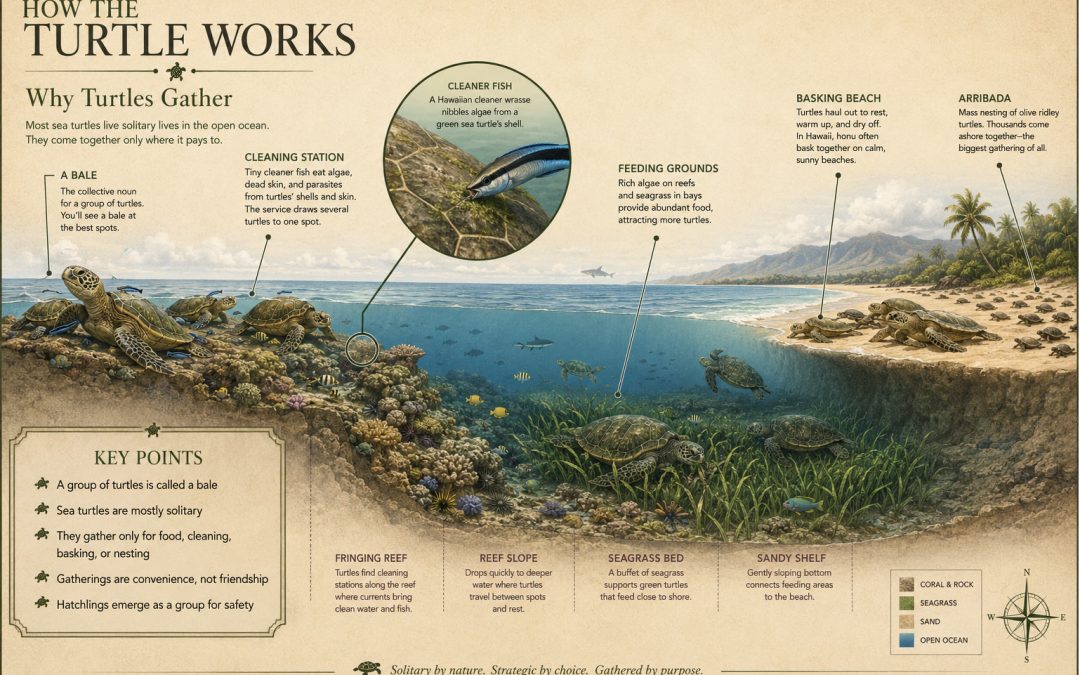
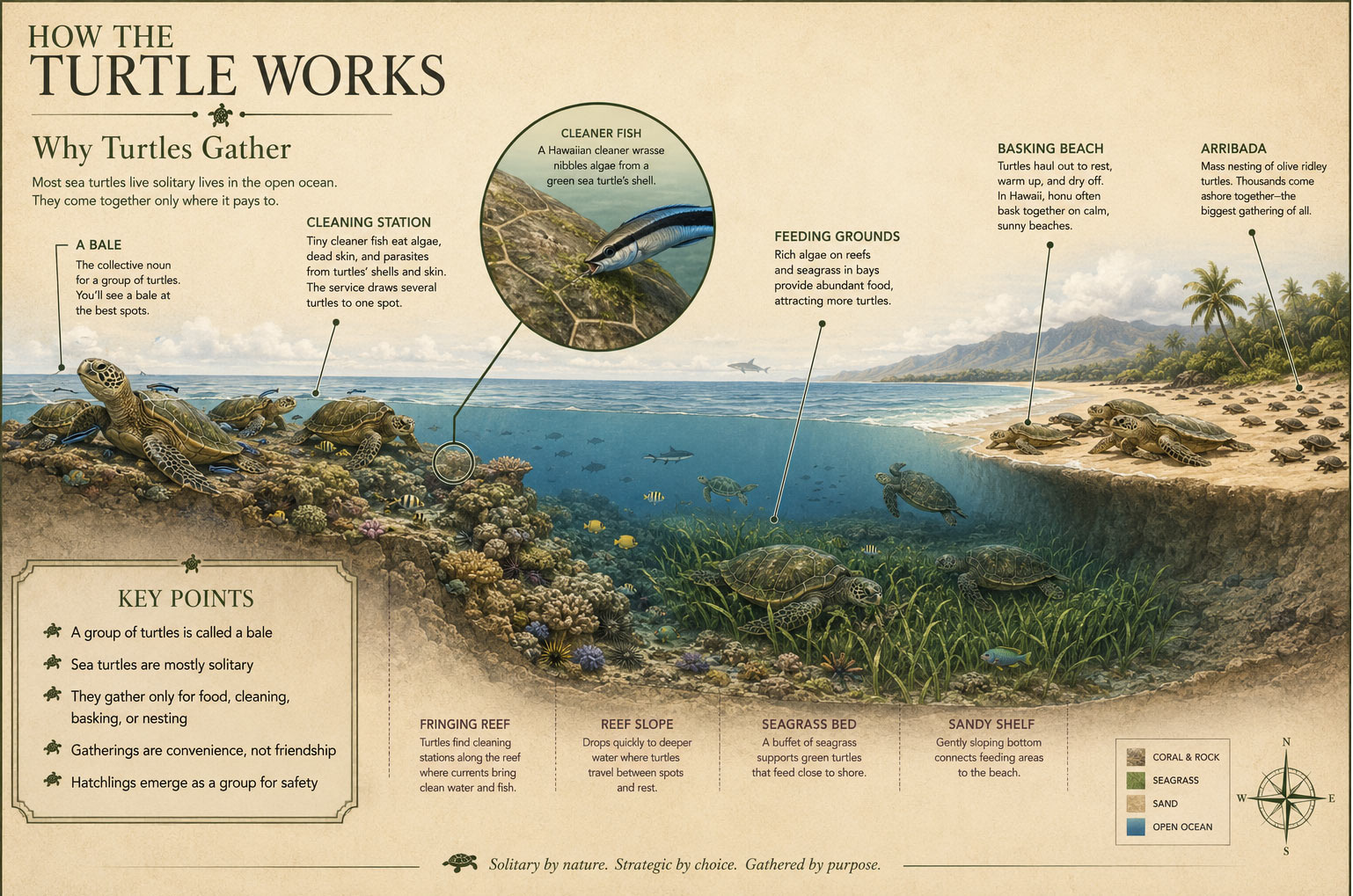
A group of turtles is most commonly called a bale. So if you ever saw a cluster of turtles together, you could correctly say you spotted a bale of turtles, and you would sound like you know your turtle trivia. A few other words pop up here and there, since collective nouns are loose and playful by nature. Some people use a nest of turtles, especially for hatchlings, and you may occasionally hear a dole or a turn of turtles. But bale is the one that shows up most often and the one worth remembering. It is the kind of fun fact that livens up a conversation and that almost no one expects to be true. Here are the words you might run into:
- Bale, by far the most common term for a group of turtles
- Nest, often used for a group of eggs or hatchlings
- Dole or turn, older and rarer alternatives you may occasionally see
Where The Word Bale Comes From
Part of the charm of the word bale is that no one is entirely certain where it came from. Many English collective nouns date back centuries to old hunting and nature traditions, and a lot of them were invented more for fun and poetry than for science. The word bale may be tied to the idea of a bundle, the way you would bale up hay or goods into a tight package, which paints a nice picture of turtles bundled together. Whatever its true origin, the important thing to know is that these collective nouns are colorful language, not strict scientific terms. Scientists studying turtles would simply call a group a group or an aggregation. The fanciful names like bale belong to the playful side of English, which is exactly why they are so fun to know.
But Sea Turtles Are Mostly Loners
Here is the twist that makes this question so interesting. While there is a word for a group of turtles, sea turtles do not actually live in groups the way dolphins live in pods or fish swim in schools. A sea turtle is, for the most part, a solitary animal. It hatches, scrambles to the sea, and from then on spends the vast majority of its life traveling, feeding, and resting alone. A honu can cross enormous stretches of open ocean entirely by itself, guided by its own senses, with no herd or family group to follow. Unlike many social animals, sea turtles do not form lasting bonds, do not raise their young, and do not depend on a group for safety or hunting. So most of the time, the natural unit for a sea turtle is exactly one.
When Sea Turtles Do Gather
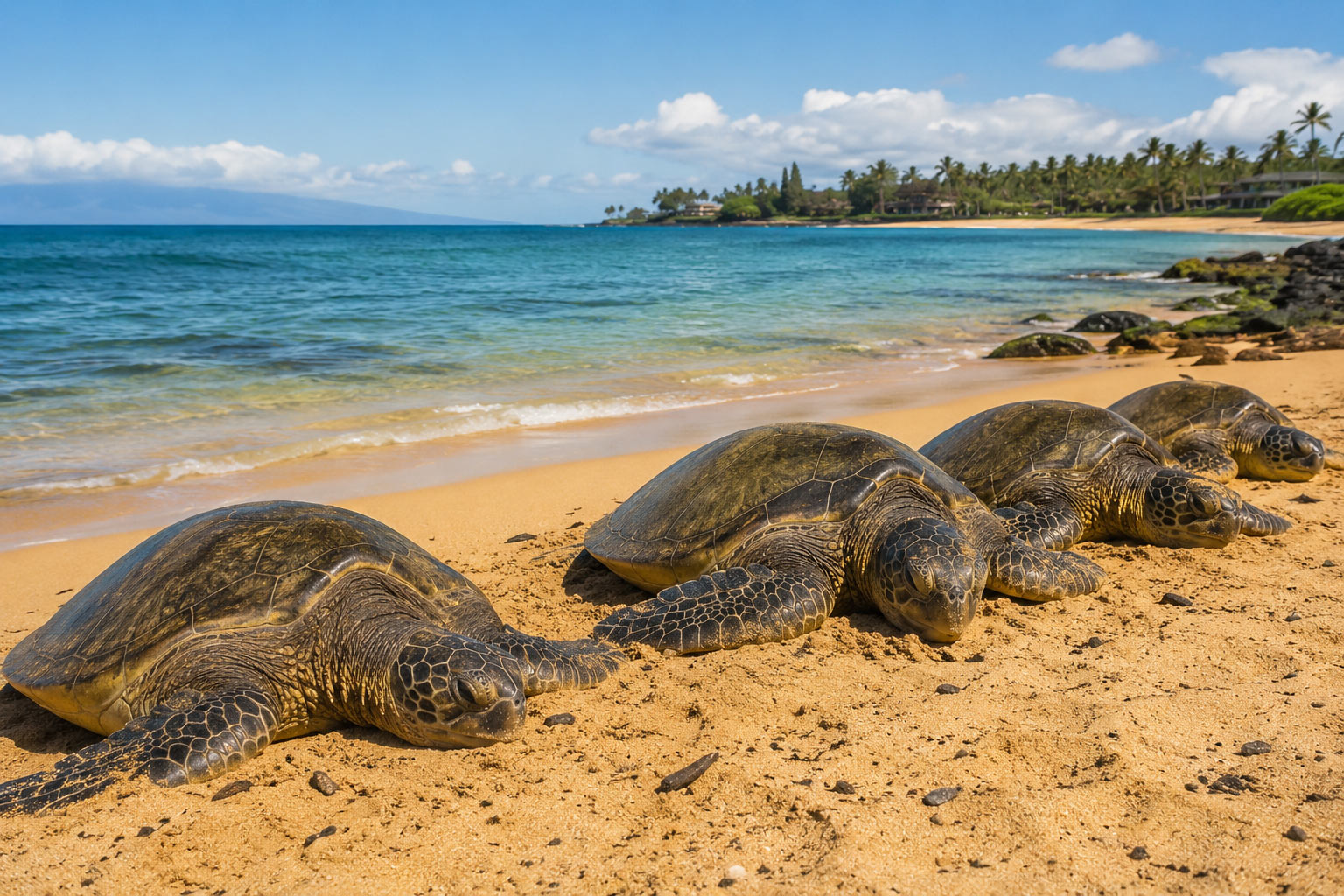
That said, there are real moments when sea turtles come together, and these are the times you might actually witness something close to a bale. The gatherings are not about friendship though. They happen because a particular place or need draws many turtles to the same spot at the same time. Cleaning stations are a great example, where several turtles line up at a reef so small fish can pick algae off their shells. Rich feeding grounds can attract numbers of turtles to the same patch of seagrass or algae. In Hawaii, green sea turtles also gather to bask together on certain beaches, lying side by side in the sun. And during breeding season, turtles congregate near nesting beaches to mate. Each of these is a gathering of convenience, not a true social group, but to a snorkeler it can look like a wonderful crowd of honu.
The Arribada: The Greatest Turtle Gathering On Earth
If you want to see the most jaw dropping turtle gathering in the world, look to the olive ridley sea turtle and its famous mass nesting event called an arribada. The word is Spanish for arrival, and it describes something almost unbelievable. Tens of thousands, sometimes hundreds of thousands, of female olive ridleys come ashore on the same beach over just a few days to lay their eggs all at once. Beaches in places like Costa Rica and Mexico fill with turtles from the waterline to the dunes in one of nature’s greatest spectacles. Scientists believe nesting in such overwhelming numbers helps protect the eggs, since predators simply cannot eat them all. It is the closest thing the turtle world has to a true crowd, and it is a powerful reminder that even mostly solitary animals sometimes come together for a single shared purpose.
Do Sea Turtles Have Friendships Or Social Bonds?
It is tempting to imagine that turtles gathered at a cleaning station or basking beach are friends, but the honest answer is that sea turtles do not form social bonds the way more social animals do. They do not have a leader, they do not look out for one another, and they do not recognize companions in the way a dolphin or an elephant might. A turtle resting next to another turtle is simply in the same good spot, not keeping company on purpose. This is very different from genuinely social ocean animals. While turtles and dolphins sometimes share the same waters, the turtle is doing its own thing, following its own needs. There is something quietly admirable about that independence, an animal perfectly content to make its way through the vast ocean entirely on its own terms.
A Group Dash: Hatchlings Emerge Together
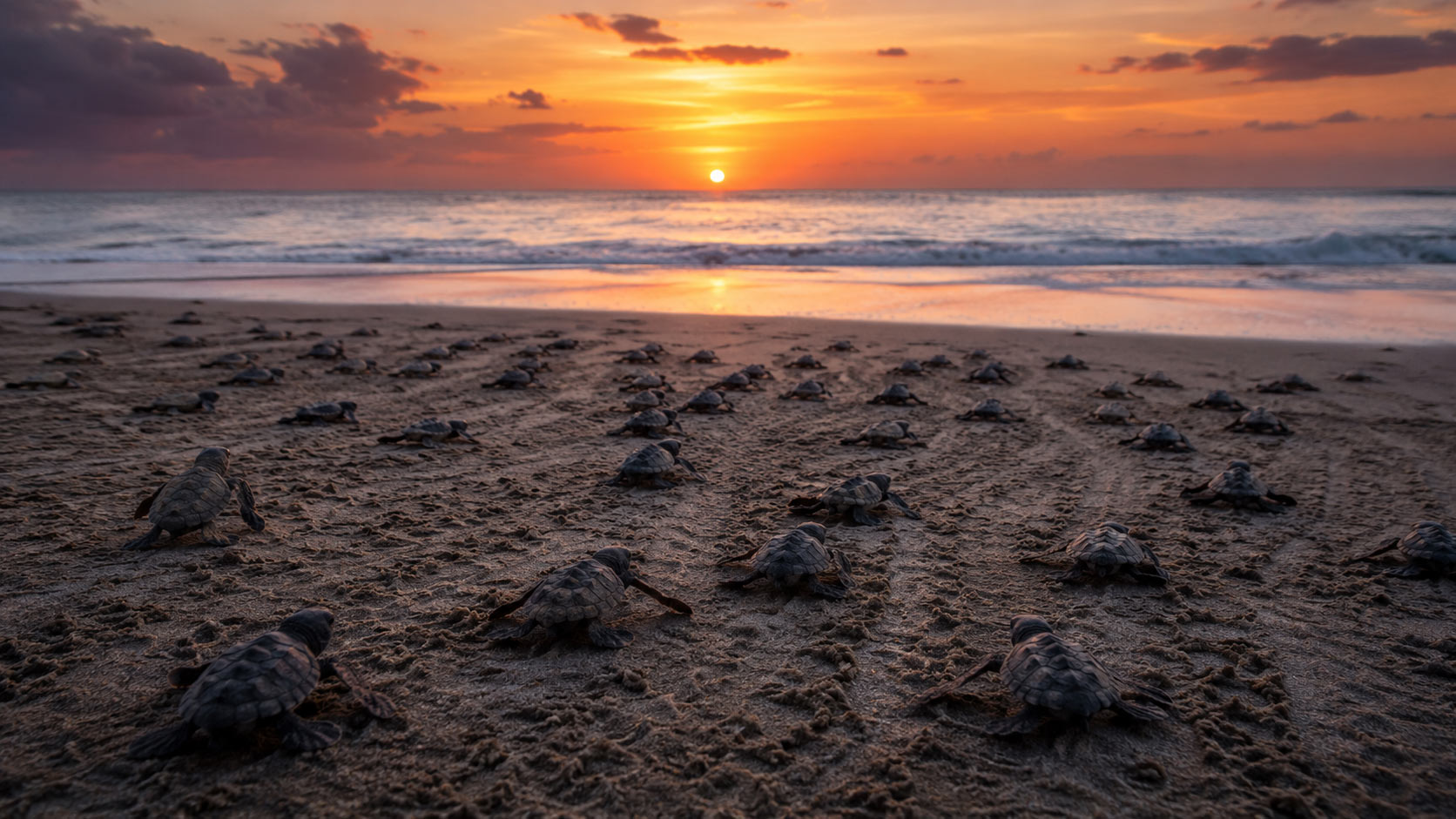
There is one stage of life when sea turtles truly act as a group, even if only briefly. When a nest of eggs hatches, the baby turtles dig their way up through the sand and burst out together, usually at night, in a frantic scramble toward the sea. This sudden flood of hatchlings all at once is no accident. By emerging as a crowd, the tiny turtles overwhelm waiting predators like crabs and birds, giving more of them a chance to reach the water. It is the same survival logic behind the arribada, just on a miniature scale. For those few desperate minutes, a nest full of hatchlings really is a group working, in effect, toward a shared goal. After that mad dash into the waves, though, they scatter, and each little turtle begins its solitary life at sea.
What You See At Turtle Canyon
When you snorkel at a place like Turtle Canyon off Waikiki, you may be lucky enough to see several green sea turtles in the same area at once, and you could absolutely call that a bale of turtles. But now you know the deeper truth behind the scene. Those turtles are gathered because the reef offers something they all want, whether it is a cleaning station where fish tidy their shells or a good spot to rest and feed. Each honu arrived on its own and will leave on its own, living its independent life. Seeing a few together is a treat, a chance to watch multiple turtles at once, but it is a gathering of individuals rather than a tight knit group. That understanding makes the moment even more special, because every turtle you see is its own solo traveler pausing in the same beautiful place.
Why This Fun Fact Matters
A small piece of trivia like the word bale does more than win you points at a quiz night. It opens a window into how sea turtles really live. The fact that we needed to invent a word for a group of turtles, even though they so rarely form one, says a lot about these animals. They are independent wanderers of the open sea, built to survive alone across thousands of miles, coming together only when a beach, a reef, or a season briefly calls them to the same place. So the next time you see more than one honu in the water, you can smile and call it a bale, knowing the charming word and the remarkable, solitary creatures behind it.
Watch: The Largest Turtle Gathering On Earth
A Bale Of Solitary Wanderers
So what is a group of turtles called? A bale, most often, with a few rarer words like nest, dole, and turn floating around the edges. It is a delightful piece of language that surprises almost everyone. But the real story is even better than the trivia, because sea turtles are mostly solitary animals that spend their lives crossing the ocean alone. They gather only in special moments, at cleaning stations, on basking beaches, in the great arribada nesting events, and in the frantic group dash of hatchlings racing to the sea. The word bale exists for those rare times the ocean draws them together. The next time you spot a handful of honu sharing a reef in Hawaii, you will have the perfect word for the moment, and a deeper appreciation for the independent travelers gathered briefly before you.