What Is the Fastest Turtle in the Water?
Overview
Turtles have a reputation for being slow, but that reputation falls apart the moment they hit the water. In the ocean, some sea turtles are surprisingly fast and powerful swimmers. So what is the fastest turtle in the water, and how do the different species stack up? Here is the answer, along with how each sea turtle ranks by speed and why they are built to move.
The Short Answer: The Leatherback
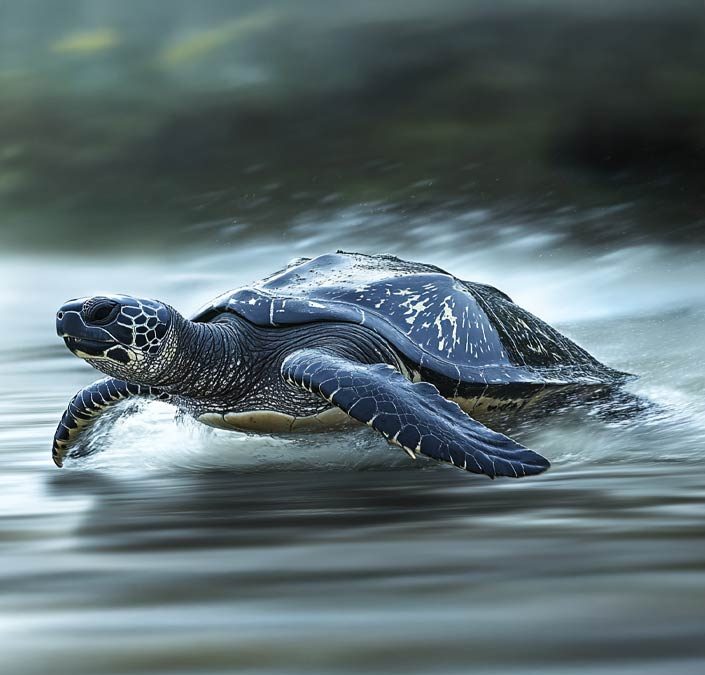
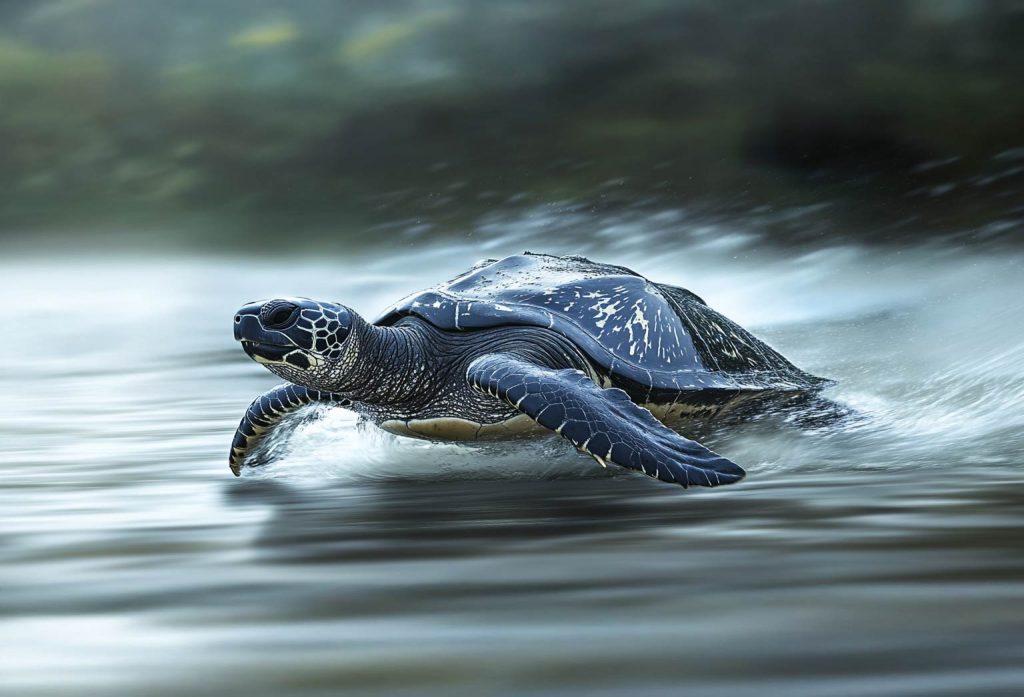
The fastest turtle in the water is the leatherback sea turtle, which can reach impressive speeds of up to 22 miles per hour, about 35 kilometers per hour. That is astonishing for an animal this size, since leatherbacks are the largest of all sea turtles, weighing up to 2,000 pounds and growing up to 6.5 feet long. Their streamlined bodies and powerful front flippers let them slice through ocean currents with real speed and precision.
How Fast Can Each Sea Turtle Swim?
Most sea turtles cruise at a relaxed 1 to 3 miles per hour, but they can burst to much higher speeds when escaping a predator or migrating long distances. Here is how the species compare at their top speeds:
- Leatherback sea turtle: 22 mph (35 km/h)
- Loggerhead sea turtle: 15 mph (24 km/h)
- Hawksbill sea turtle: 14 mph (22.5 km/h)
- Green sea turtle: 1 to 2 mph, with bursts up to 5 mph
Water Speed Versus Land Speed
The contrast between a turtle in water and a turtle on land is dramatic. On land, sea turtles are slow and clumsy, moving at only about 0.2 miles per hour as they haul their heavy bodies across the sand. In the water, that same animal transforms. A leatherback is roughly 10,900 percent faster swimming than walking, and even the gentle green sea turtle is many times quicker in the ocean than on the beach. Turtles are simply built for the sea, not the shore.
What Affects a Turtle’s Speed?
A few things influence how fast a turtle can go:
- Current and environment: turtles swim faster when moving with the current, which saves energy.
- Species: as the numbers show, some species are naturally much faster than others.
- Health and age: younger, healthier turtles tend to swim faster than older ones.
What This Means for Snorkelers
The green sea turtles you meet on a Hawaii snorkel trip are the gentle, slow cruisers of the group, usually gliding along at an easy pace. But do not be fooled, because a startled turtle can put on a quick burst of speed to move away. That is one more reason to stay calm and keep a respectful distance, letting the honu set the pace so it stays relaxed right in front of you.
Watch: Hawaii’s Green Sea Turtles
The Ocean’s Speedy Swimmers
So while turtles will never win a footrace, underwater they can be genuinely fast, and the leatherback stands alone as the fastest turtle in the water at up to 22 miles per hour. These animals are built for the sea, trading clumsy land movement for graceful, powerful swimming. The next time you watch a green sea turtle drift lazily over a Hawaiian reef, remember that beneath that calm cruise is a body perfectly designed to move through the ocean when it needs to.