The Hidden Sense: How Hawaiian Sea Turtles Smell Their Way Through The Ocean
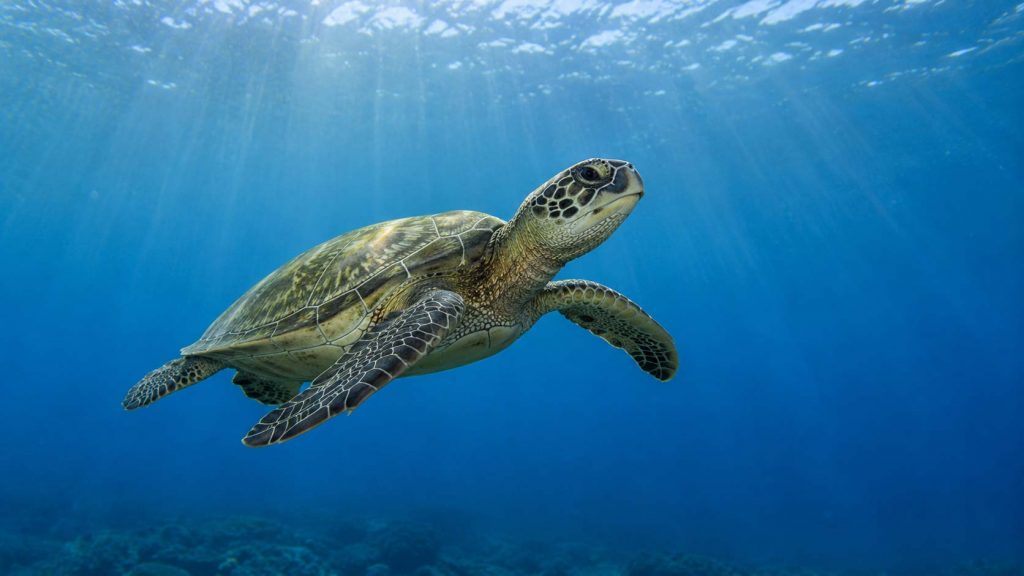
When most people picture a sea turtle gliding over a Hawaiian reef, they think about its big dark eyes and that calm, knowing stare. What they almost never think about is its nose. Yet behind the beak of every Hawaiian green sea turtle sits a quiet, powerful sense of smell that shapes much of what the animal does all day. Sea turtles can absolutely smell, and they are surprisingly good at it. They use scent to find patches of algae, to sense food drifting in the current, to avoid trouble, and even to help find their way across hundreds of miles of open ocean. Once you understand how a honu smells, the slow, head dipping behavior you see on a snorkel tour starts to look a lot more like an animal reading its world through its nose.
The Short Answer: Yes, And Very Well
Sea turtles can smell, and their sense of smell is one of their sharpest tools. While their underwater vision is good at close range and their hearing is tuned to low rumbling sounds, scent is the sense that often does the heavy lifting. Studies on sea turtles have shown that they react strongly to food smells in the water, turning and searching long before they can see the source. For an animal that spends its life in a wide, often murky ocean where you cannot always see very far, a strong nose is not a luxury. It is a survival tool that works in the dark, in cloudy water, and over long distances where the eyes are useless.
How A Sea Turtle Smells Underwater
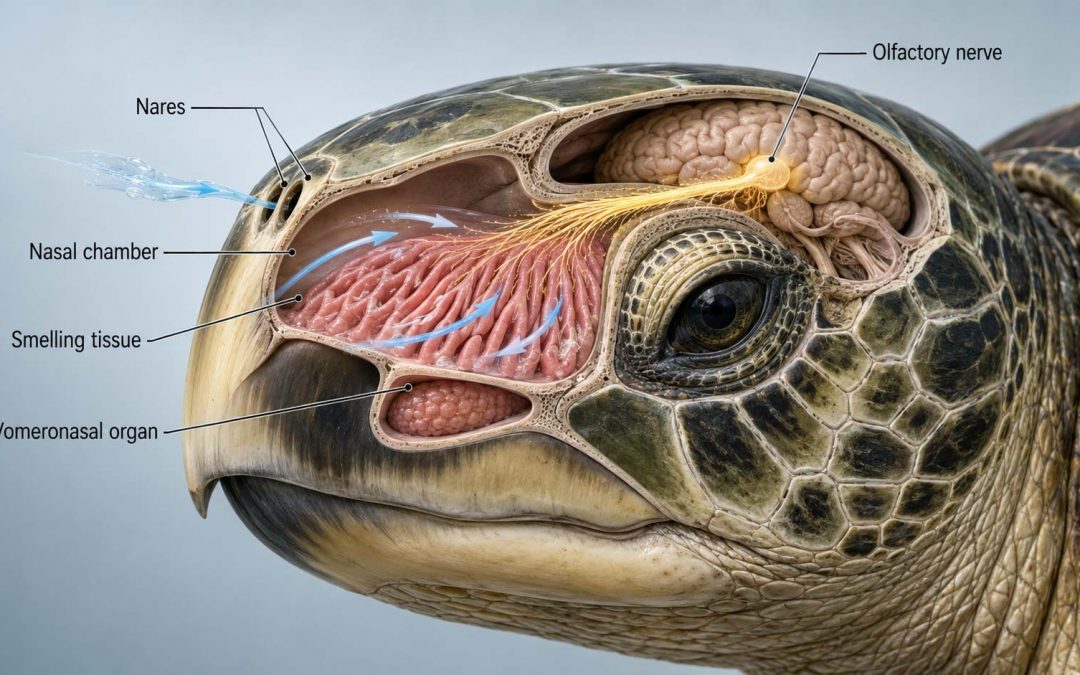
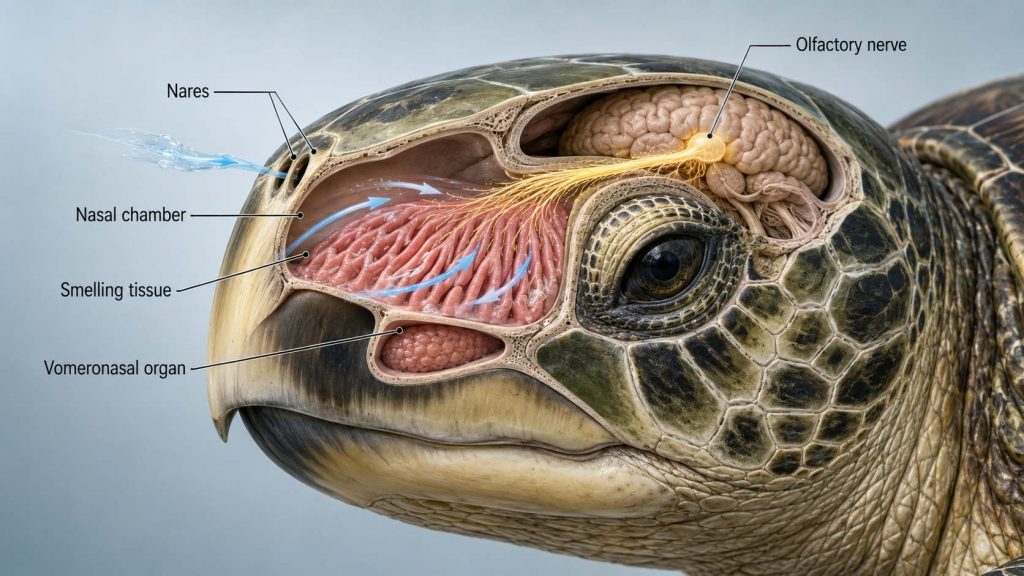
This is where it gets interesting, because smelling underwater is not the same as smelling in the air. A sea turtle does not breathe water, so it cannot just inhale a scent the way we sniff the air. Instead, it gently pulls a small amount of water in through its nostrils, lets that water pass over the smelling tissue inside its nose, and then pushes the water back out without ever sending it down to the lungs. This slow in and out motion lets the turtle sample the chemicals floating in the water around it. Scientists sometimes call these floating chemical signals odorants, and they are basically the underwater version of the smells we notice in the air. By reading those odorants, a honu can tell whether food, another turtle, or something to avoid is nearby.
The Nose Behind The Beak
A sea turtle’s nose is simple on the outside but clever on the inside. The two small openings on the top of the snout are called the nares, and they lead to a chamber lined with sensitive smelling tissue. That tissue connects to the part of the brain that handles the sense of smell, often called the olfactory system. Sea turtles also have a second smelling region inside the nose, related to the vomeronasal organ found in many reptiles, which helps them detect heavier chemical signals that do not travel as easily through water or air. Together these two systems give the turtle a detailed chemical picture of its surroundings. It is a lot of smelling power packed into a head that, from the outside, looks like it is mostly beak and eyes.
Smelling Food On The Reef
For a Hawaiian green sea turtle, smell and food go hand in hand. Adult honu graze mostly on algae growing across the reef, and scent helps them locate the freshest, richest patches even when the water is stirred up or the light is low. Younger turtles, which eat a wider mix of foods including jellyfish and small drifting animals, rely on smell even more, since their meals are often scattered and hard to spot. A turtle that catches the scent of food on the current will frequently turn straight into the flow and follow it, the same way a dog follows a trail across a field. That quiet, purposeful swimming you sometimes see, where a turtle suddenly changes direction for no obvious reason, is often a honu following its nose toward something you cannot see.
Following A Scent Trail Across The Ocean
Smell does not just help with the next meal. It may also play a part in one of the greatest feats in the animal world, which is the way sea turtles cross vast stretches of open ocean and still arrive where they intend to go. Scientists believe honu mainly use the Earth’s geomagnetic field as a kind of built in compass and map, sensing magnetic signals to figure out roughly where they are. But magnetism alone may not be precise enough to find a single small island or beach. That is where smell likely steps in. Once a turtle gets close to its target using magnetic cues, the scent of that particular stretch of coast, reef, or water can help guide it the final distance. In other words, the magnetic sense gets the turtle into the neighborhood, and the nose helps it find the right doorstep. You can read more about that journey in our guide to how sea turtles navigate the open ocean.
The Smell Of Home: Natal Beach Imprinting
One of the most amazing ideas in sea turtle science involves smell and memory working together. Female sea turtles famously return to the same general area where they were born to lay their own eggs, a behavior known as natal homing. Researchers think that part of how they manage this incredible trip is by remembering the unique scent of their home beach from when they were hatchlings. This early learning is called imprinting, and it means a tiny turtle may lock in the chemical signature of its birthplace before it ever crawls into the sea. Years later, after thousands of miles of travel, that remembered smell may help a grown female confirm she has found the right beach. It is one of the reasons protecting Hawaii’s nesting beaches matters so much, since those beaches are quite literally the scent of home for the next generation of honu.
Can Sea Turtles Smell In The Air Too?
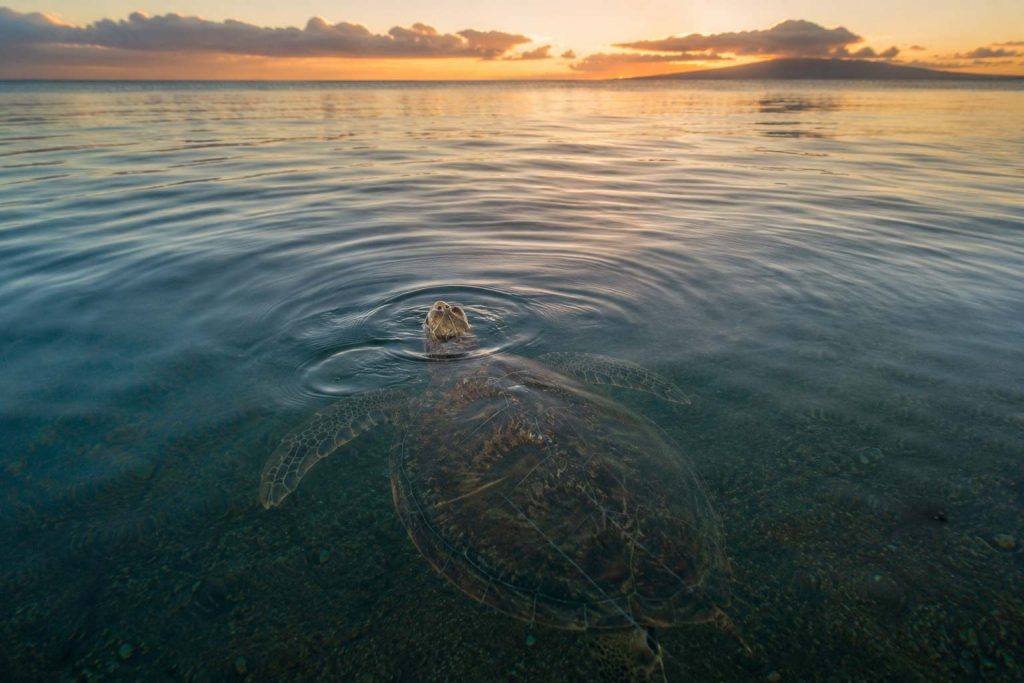
Smelling underwater is the main event, but sea turtles can also smell in the air, and this matters at a few key moments in their lives. When a turtle surfaces to breathe, it gets a quick sample of airborne smells. Nesting females hauling onto the beach at night, and hatchlings emerging from the sand, are thought to use air smells along with other senses to read their surroundings. Some scientists believe airborne scents drifting off the land and shallows help guide turtles during that final approach toward a coastline. So while a honu spends almost its whole life underwater, its nose is built to switch between the two worlds, picking up chemical clues from both the water and the air above it.
What Smell Means For Snorkelers At Turtle Canyon
Knowing that honu have a strong sense of smell changes how you should think about sharing the water with them. It is one more reason never to bring food into the water or try to feed a wild sea turtle. A honu can smell food from a surprising distance, and a turtle that learns to associate people with an easy meal can become bold, stressed, or put in danger around boats and crowds. Feeding sea turtles is also illegal in Hawaii. It is also a good reminder to use reef safe sunscreen and to avoid heavy perfumes or strong smelling products before a snorkel, since you are entering the home of an animal that reads its world partly through scent. The best experience for everyone, turtle included, is to float quietly, keep a respectful distance, and let the honu go about its day undisturbed at Turtle Canyon.
Why The Honu Nose Is Easy To Miss
Part of what makes the sea turtle’s sense of smell so fascinating is how invisible it is. There is no dramatic sniffing, no twitching nose, no obvious sign that anything is happening. A honu can be gathering a steady stream of information about food, other turtles, and the lay of the ocean, all while looking like it is doing nothing but drifting. That quiet, unhurried style is exactly why so many people underestimate just how sharp these animals really are. The next time you watch a green sea turtle pause, lift its head slightly, and change course, remember that you may be watching a nose at work, reading a chapter of the ocean that is completely closed to us.
Why This Sense Matters
The sense of smell ties together so much of a sea turtle’s life that it is hard to overstate. It helps a hatchling memorize the beach it was born on. It helps a young turtle find scattered food in the open sea. It helps an adult graze the richest algae on the reef. It helps a nesting female find her way back home after years away. And it works hand in hand with the magnetic sense that carries honu across entire oceans. For an animal that looks so simple and peaceful from the surface, the sea turtle is running on a rich and powerful set of senses, and smell may be the most underrated one of all.
Watch: How Sea Turtles Navigate The Ocean
The Quiet Nose That Reads The Ocean
Sea turtles can smell, and they do it far better than most people would ever guess. Behind that calm face and famous beak sits a nose built to sample chemicals in both water and air, helping a Hawaiian green sea turtle find food, dodge danger, and locate the exact beach where its life began. Smell works alongside the turtle’s magnetic sense to guide it across the open ocean, and it shapes everyday choices on the reef in ways we can barely see. The next time a honu glides past you at Turtle Canyon and quietly changes direction, take a moment to appreciate the hidden sense steering the whole performance. You are sharing the water with an animal that is smelling its way through a world far richer than it looks.