How Big Do Hawaiian Green Sea Turtles Really Get?
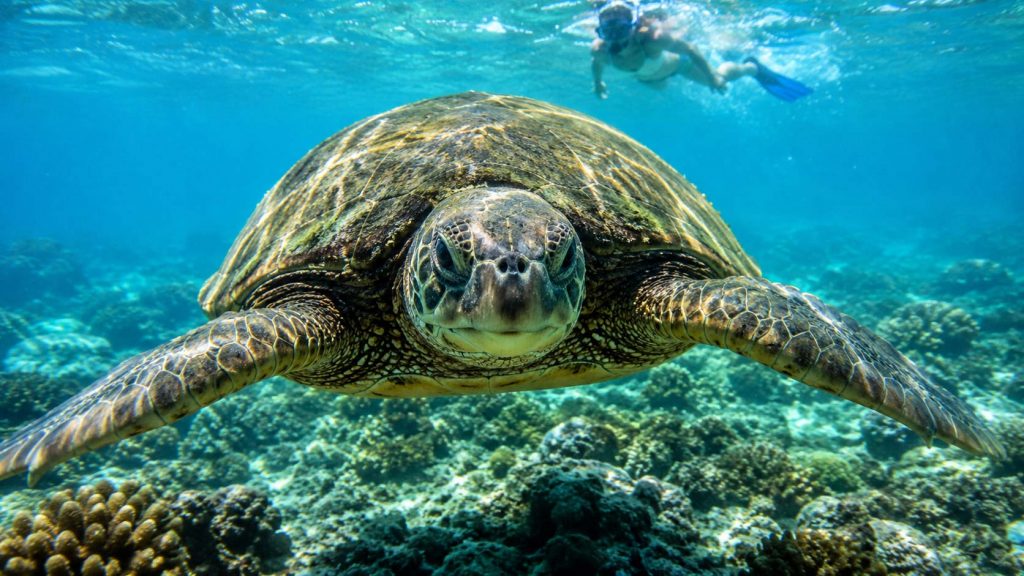
There is a moment on almost every turtle snorkel tour when a guest pops their head out of the water and says the same thing: “I had no idea they were that big.” It happens because most people picture sea turtles as small, pet-store creatures. Then a Hawaiian green sea turtle glides up from the reef, calm and unbothered, and it turns out to be the size of a coffee table. The green sea turtle is the largest hard-shelled sea turtle on the planet, and the honu cruising the reefs off Oahu are full, healthy examples of just how large these animals get. But size is only half the story. The journey from a hatchling that fits in your palm to a three-foot adult takes decades, and understanding that timeline changes how you see every turtle you meet in the water.
How Big Is A Full-Grown Hawaiian Green Sea Turtle
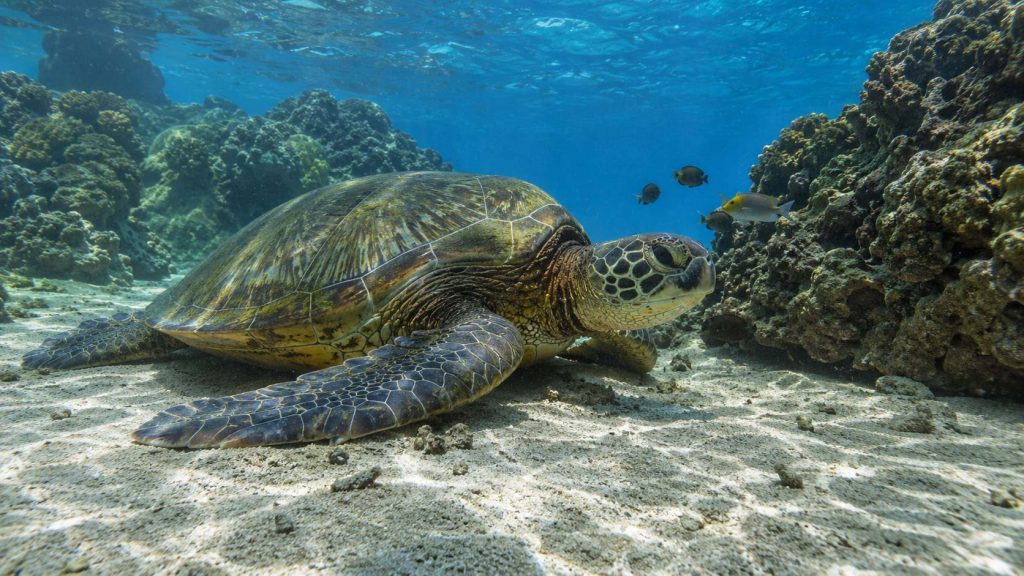
A mature Hawaiian green sea turtle typically measures three to four feet in shell length, measured straight across the top of the carapace. Weight usually lands somewhere between 250 and 400 pounds, with many healthy adults sitting comfortably above the 300-pound mark. The largest individuals can push even higher. That makes the green sea turtle the heavyweight champion among hard-shelled sea turtles. Only the leatherback, which has a soft, leathery shell instead of a hard one, grows larger.
For a sense of scale, picture an animal as wide as a bicycle is long and as heavy as two grown adults standing on a scale together. When one of these turtles surfaces beside a snorkeler for a breath of air, the difference between the picture in your head and the animal in front of you is impossible to ignore.
It Started The Size Of A Golf Ball
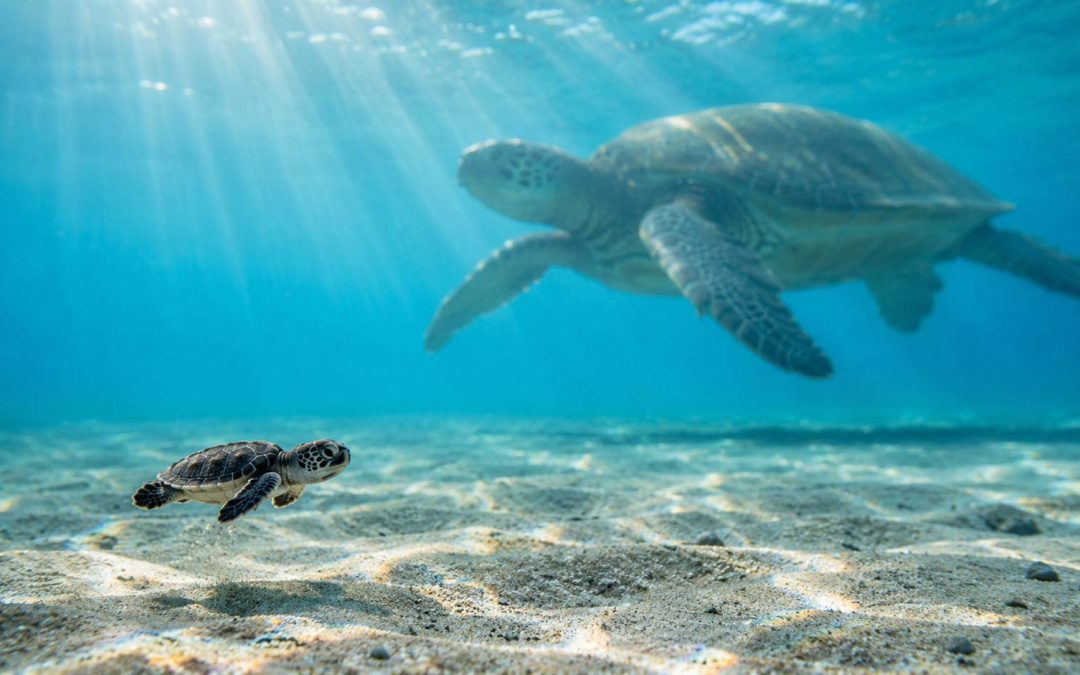
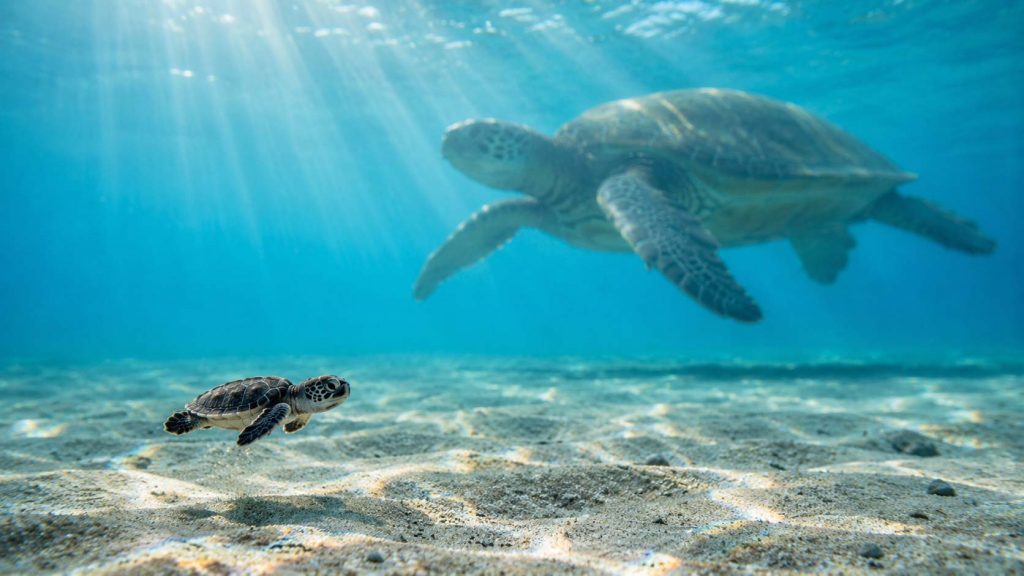
Every giant honu at Turtle Canyon began life almost unbelievably small. A green sea turtle hatchling breaks out of an egg about the size of a ping pong ball and emerges with a shell only around two inches long. The whole animal weighs roughly 25 grams, less than a slice of bread. These tiny hatchlings scramble across the sand, slip into the surf, and vanish into the open ocean. From that two-inch starting point, the turtle has to grow more than twenty times longer and thousands of times heavier before it reaches adult size. There are few animals in the ocean that change so dramatically in scale over the course of a single lifetime, and the honu does it slowly, quietly, and almost entirely out of human sight.
Why Hawaiian Green Turtles Grow So Slowly
Sea turtles are famous for taking their time, and the green sea turtle is one of the slowest growers of all. A few things explain the unhurried pace:
- Their adult diet is plant-based. Grown honu graze on algae and limu rather than high-energy prey, so growth fuel comes in slowly.
- They are cold-tolerant reptiles with a low metabolic rate, which means energy goes a long way but builds body mass gradually.
- They invest energy into surviving rather than rushing. A long, slow build produces a tough, well-armored adult.
Because of this slow pace, a Hawaiian green sea turtle can take anywhere from 25 to 35 years or more to reach breeding maturity. That is one of the longest childhoods in the animal kingdom. The dinner-plate-sized turtle a snorkeler spots near the reef may already be ten or fifteen years old, even though it is nowhere near full size.
The Growth Timeline From Hatchling To Adult
The honu passes through clear size stages on its way to becoming a reef giant. Each stage looks and behaves a little differently:
- Hatchling: about two inches long, racing offshore into the open Pacific.
- Open-ocean juvenile: small and rarely seen, drifting and feeding far from shore for years.
- Dinner-plate juvenile: roughly twelve to eighteen inches across, returning to coastal reefs to graze.
- Subadult: growing steadily larger and spending most of its time at familiar reef and feeding sites.
- Adult: three to four feet of shell and often 300 pounds or more, fully mature and ready to migrate and nest.
A turtle can spend decades moving through these stages, and growth does not stop neatly at adulthood. Older honu continue to add size and bulk well into their senior years.
How Honu Compare To Other Sea Turtles
Size is one of the easiest ways to tell sea turtle species apart, and the green sea turtle sits near the top of the chart. Among the hard-shelled species, the green is the largest. The loggerhead is heavy and powerful but generally shorter in shell length. The hawksbill is noticeably smaller and more delicate, with a narrow head built for reef crevices. The olive ridley and Kemp’s ridley are the smallest sea turtles in the world, often weighing under 100 pounds. The flatback sits in the middle and lives only in Australian waters.
Towering over all of them is the leatherback, the one species that outgrows the green sea turtle, reaching lengths beyond six feet and weights over a thousand pounds thanks to its soft, flexible shell. So while the honu is not the single largest sea turtle alive, it confidently holds the title of largest hard-shelled sea turtle, and that is the giant you meet on an Oahu reef.
Are Hawaiian Honu Bigger Than Green Turtles Elsewhere
Green sea turtles live in warm waters around the world, and their size varies by region and food supply. Hawaiian honu are a healthy, robust population, and the protected reefs around the islands give them steady access to the algae and limu they need to bulk up over the decades. Years of federal protection, combined with rich coastal feeding grounds, have allowed Hawaii’s green sea turtles to reach full, impressive adult sizes. Visitors often remark that the turtles here look especially stout and well-fed compared to what they expected, and that is no accident. A well-protected reef with plenty of food grows a bigger, healthier turtle.
How To Estimate A Turtle’s Size While Snorkeling
Judging size underwater is tricky because water magnifies everything by roughly a third, making objects look larger and closer than they are. A turtle that appears to be four feet across may actually be closer to three. A few simple tricks help guests get a more honest read on the honu they are watching:
- Compare the turtle to a nearby snorkeler or a known feature on the reef rather than guessing in open water.
- Look at the head-to-shell ratio. Younger turtles have proportionally larger heads and eyes, while big adults look blockier and more solid.
- Watch the behavior. Large resident adults tend to move slowly and confidently, while smaller juveniles dart and stay alert.
Knowing that water inflates apparent size keeps the memory honest, though even with the correction, a full-grown honu is a genuinely large animal.
How Long Honu Live At Their Full Size
A green sea turtle that reaches adulthood can live a very long life, with estimates commonly reaching 60 to 70 years and likely beyond in many cases. Once a honu hits full adult size, it spends decades cruising the same network of feeding reefs and resting spots, returning again and again to familiar waters. That means the largest turtles a snorkeler sees at Turtle Canyon may be older than the snorkeler watching them. These are not just big animals. They are old, experienced residents that have lived through decades of tides, storms, and seasons along the same stretch of Hawaiian coastline.
What This Means For Your Tour
The size of a Hawaiian green sea turtle is one of the things people remember most about a snorkel tour, and now the full picture comes with it. The honu drifting past at Turtle Canyon is the largest hard-shelled sea turtle in the ocean, an animal that started life the size of a golf ball and spent decades growing into the calm giant in front of you. Some are full-grown adults pushing past 300 pounds. Others are younger juveniles still working their way up the size chart. Either way, every turtle you see is a snapshot of a long, slow, remarkable journey. The next time one rises beside you for a breath, you will know exactly how far that animal has come to reach the size it is now.
The Gentle Giant Of The Hawaiian Reef
Size is the first thing that surprises people about the honu, and it is also the last thing they forget. From a two-inch hatchling to a 300-pound adult spanning more than three feet, the Hawaiian green sea turtle spends decades growing into the largest hard-shelled sea turtle in the sea. The turtles gliding through the reefs off Waikiki are the finished product of that slow, patient climb, protected, well-fed, and fully grown. Meeting one in the water is not just seeing a big turtle. It is seeing the end of a thirty-year story written across the open Pacific and finished quietly on a Hawaiian reef.