Can a Sea Turtle’s Cracked Shell Heal?
Overview
Seeing a sea turtle with a cracked or damaged shell is heartbreaking, and it raises an urgent question. Can that shell actually heal, or is the injury a death sentence? The answer is more hopeful than you might expect. Because a turtle’s shell is a living part of its body, not a lifeless helmet, it can heal from cracks and breaks, though it takes time, care, and often the help of skilled rehabilitators. Sadly, these injuries are common, especially from boat strikes, but survival rates with proper treatment are encouraging. This guide explains why a shell can heal, what causes the damage, how experts repair it, how long recovery takes, and what you should do if you ever come across an injured honu.
The Short Answer: Yes, Slowly and With Help
A sea turtle’s cracked shell can heal, but it is a slow process that usually needs expert care. The shell is made of living bone covered by hard plates, and like any bone it can mend over time. A minor crack may knit back together on its own, while a serious break often requires a wildlife rehabilitation team to clean, stabilize, and support the shell while the turtle’s body does the healing. With that kind of help, many turtles recover and are eventually released back into the ocean. So a damaged shell is serious, but it is very often survivable.
Why a Shell Can Heal at All
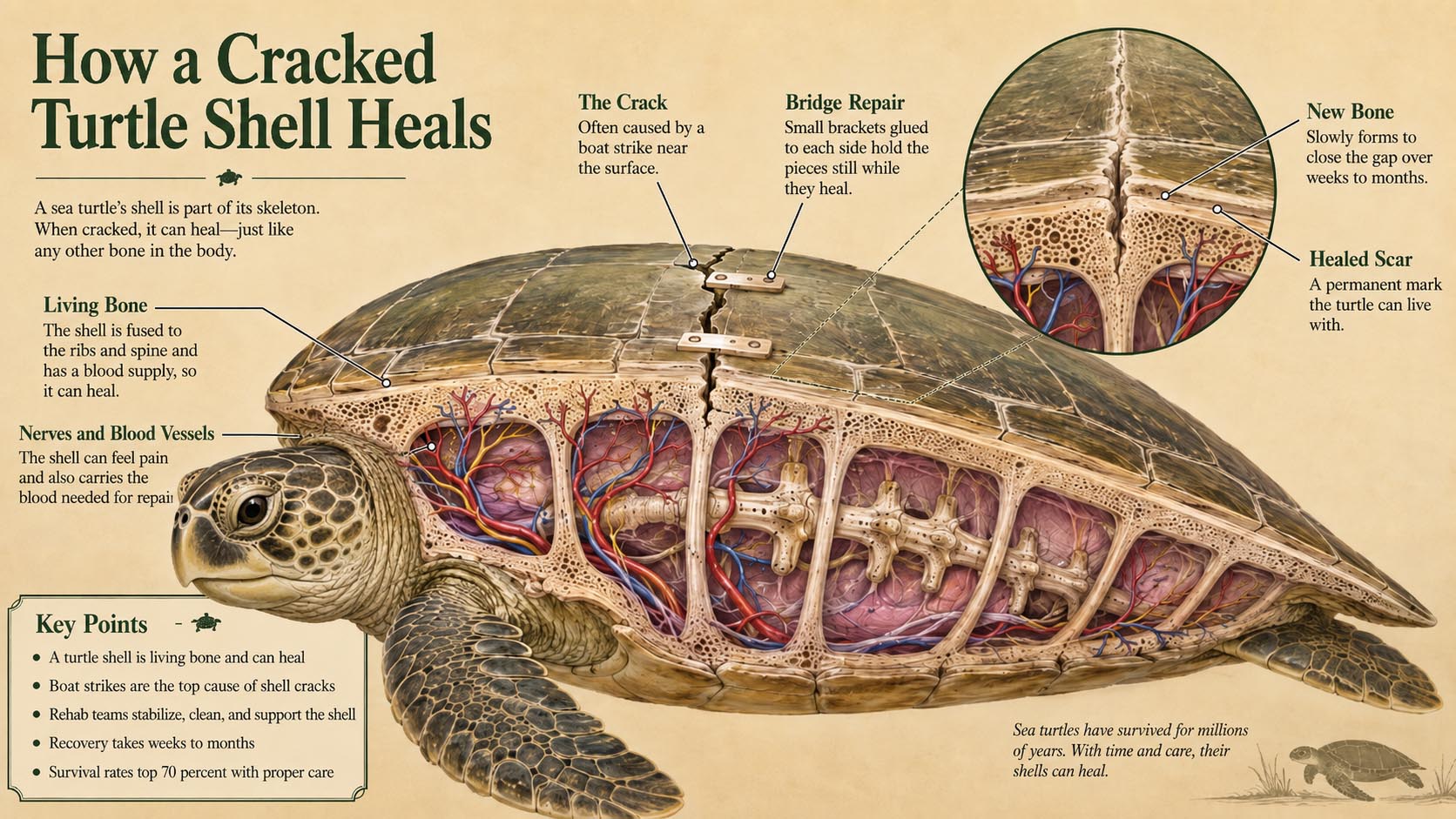
To understand how a shell heals, it helps to know what it actually is. A turtle’s shell is not a separate case the animal wears. It is a living part of its skeleton, made of bone that is fused to the turtle’s ribs and spine, and it is full of blood vessels and nerve endings. Because the shell is living tissue with a blood supply, it can do what other bones do, which is slowly repair itself. New bone can form to bridge a crack, and the outer plates can regrow over time. This is exactly why a turtle can feel pain through its shell, and also why that same shell has the ability to mend. A truly dead, detached shell could never heal, but a living one can.
What Cracks a Turtle’s Shell?
Sadly, most serious shell injuries in sea turtles come from people. The leading cause is boat strikes, where a hull or spinning propeller hits a turtle near the surface, leaving deep cuts or cracks in the shell. Because turtles must come up to breathe, they are especially vulnerable to fast-moving boats. Other causes include entanglement in fishing gear, attacks from predators like sharks, and getting struck by debris. Whatever the source, a cracked shell is a genuine emergency, since the wound can become infected and the injury can expose the turtle’s insides to the environment. This is why quick, expert help makes such a difference.
How Rehab Experts Repair a Shell
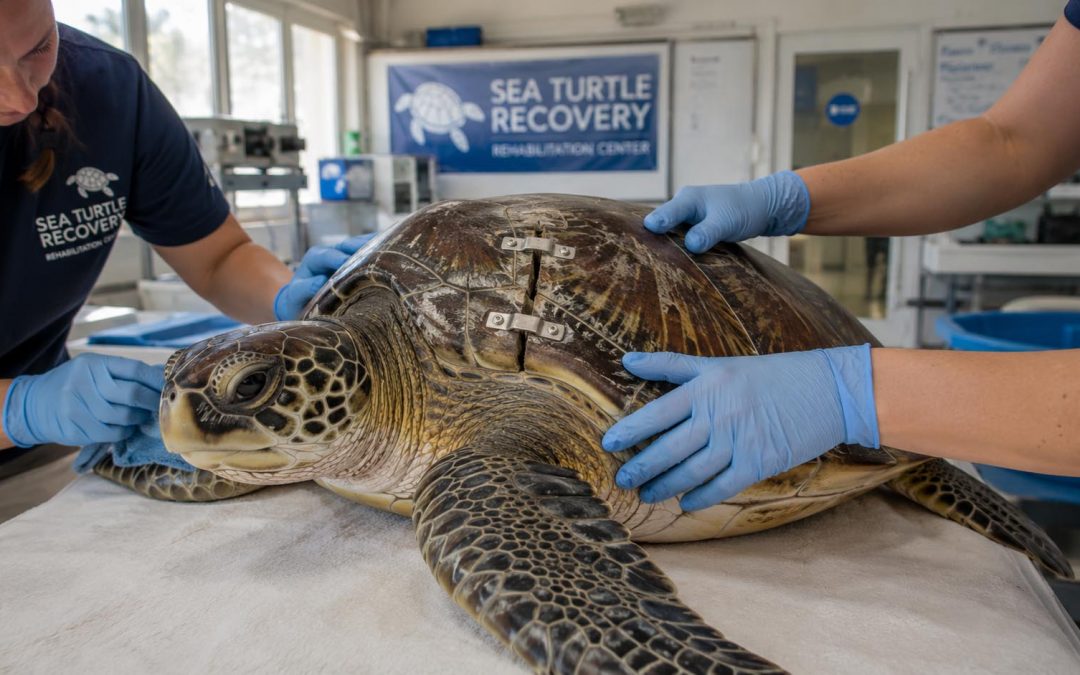
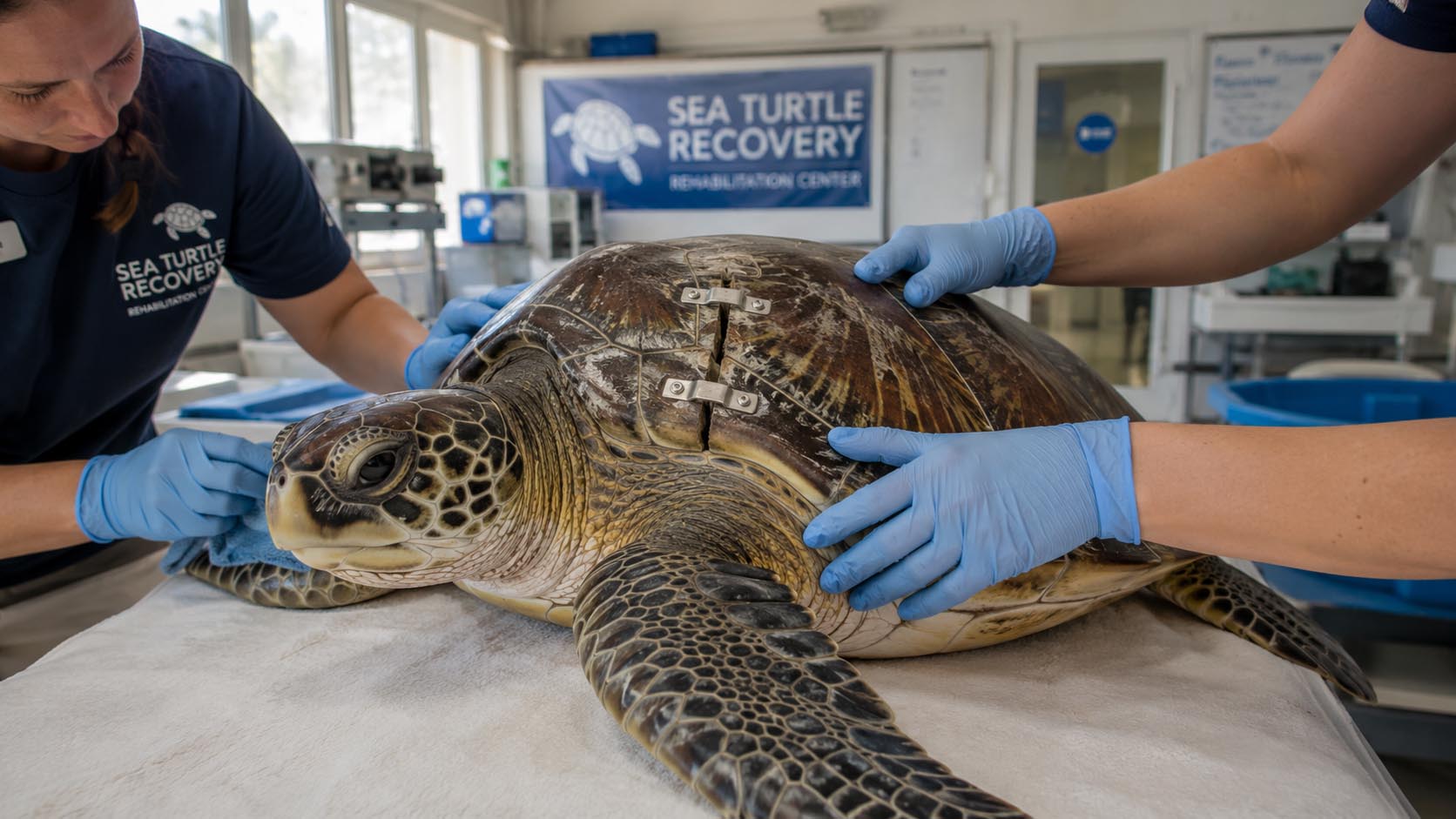
When an injured turtle reaches a rehabilitation center, the team follows a careful process to give it the best chance. The first goals are to stabilize the animal with pain relief, fluids, and antibiotics, and to clean the wound thoroughly to prevent infection. Next comes stabilizing the shell itself. For years, teams used fiberglass patches, but modern rehabbers increasingly use a bridge technique, attaching small brackets or fasteners to either side of the crack and connecting them so the pieces cannot shift while they heal, a bit like a cast for the shell. Loose fragments are secured, the wound is kept clean and often allowed to heal from the inside out, and the turtle is usually kept out of deep water while it recovers. For the most severe crush injuries, some centers even use special vacuum-assisted therapy to help wounds close. It is patient, painstaking work.
How Long Does Recovery Take?
Healing a shell is not quick. Depending on the severity of the injury, recovery can take weeks, months, or in serious cases even longer, since bone mends slowly. A turtle undergoing shell repair typically stays at a rehabilitation facility for the duration, monitored closely until the wound has closed and the shell is stable enough for life back in the ocean. The good news is that the results are encouraging. With modern care, rehabilitation specialists report survival rates well above 70 percent for turtles that reach treatment, a huge improvement over the past. Many turtles with severe shell fractures, given rest, care, and time, go on to recover and swim free again.
Can Turtles Live With Permanent Damage?
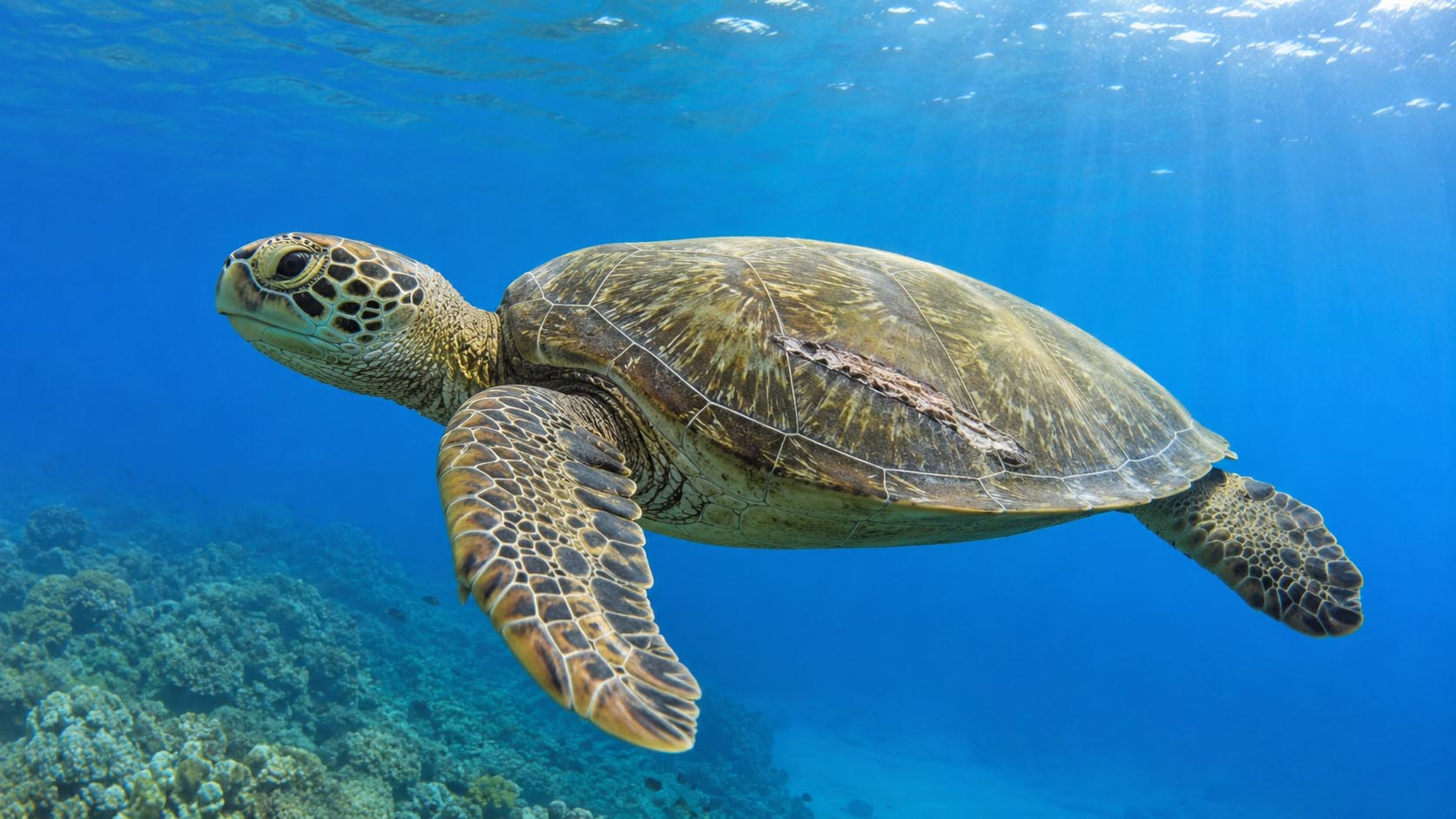
Yes, and many do. Even after a shell heals, a turtle may carry a permanent scar, dent, or irregular patch where the break was. As long as the wound has closed, the infection is gone, and the turtle can swim, dive, and feed normally, it can live a full life with a less-than-perfect shell. In fact, if you look closely at wild sea turtles, you will sometimes notice old marks and healed scars on their shells, and even barnacles along the edges, quiet evidence of the lives they have lived. A healed shell does not have to be flawless. It just has to protect the turtle and let it get on with life.
What to Do if You Find an Injured Turtle
This is important. If you ever come across a sea turtle with a cracked shell or any injury, do not try to help it yourself and never attempt to fix or move it. Shell repair is delicate, medical work, and well-meaning but improper handling can make things worse or cause more pain. Instead, keep your distance, note the location, and contact the proper authorities right away. In Hawaii, that means reaching out to local sea turtle rescue and stranding responders, who are trained and equipped to help. Our guide on what to do with an injured turtle in Oahu has the details. The single best thing you can do is get expert help on the way quickly.
How to Help Prevent Shell Injuries
Since so many shell injuries come from boats, prevention really matters. Boaters can help by slowing down in areas where turtles are known to gather, keeping a sharp lookout near the surface, and giving any turtle they spot a wide berth. As a snorkeler or beachgoer, you help simply by respecting turtles, keeping a safe distance, and never chasing or crowding them, which keeps them calm and predictable in the water. Supporting the reef through reef-safe habits and reducing ocean trash helps too, since healthy, undisturbed turtles are less likely to end up in harm’s way. Every careful choice on the water is a small act of protection.
Watch: Hawaii’s Green Sea Turtles
Living Shells, Second Chances
So can a sea turtle’s cracked shell heal? Yes, because that shell is living bone, capable of mending given time, care, and often the skilled hands of a rehabilitation team. Cracks and breaks, most often caused by boat strikes, are serious injuries, but they are frequently survivable, and modern rehab gives injured turtles a real second chance at life in the ocean. Even a healed shell may carry scars, worn like a badge of survival. If you ever find an injured turtle, the kindest thing is to call in the experts rather than intervene yourself. With a little help from people, these living shells can heal, and the turtles that wear them can swim free once more.