Turtle Beach Done Right: The Real Guide to Laniakea on Oahu’s North Shore
Overview
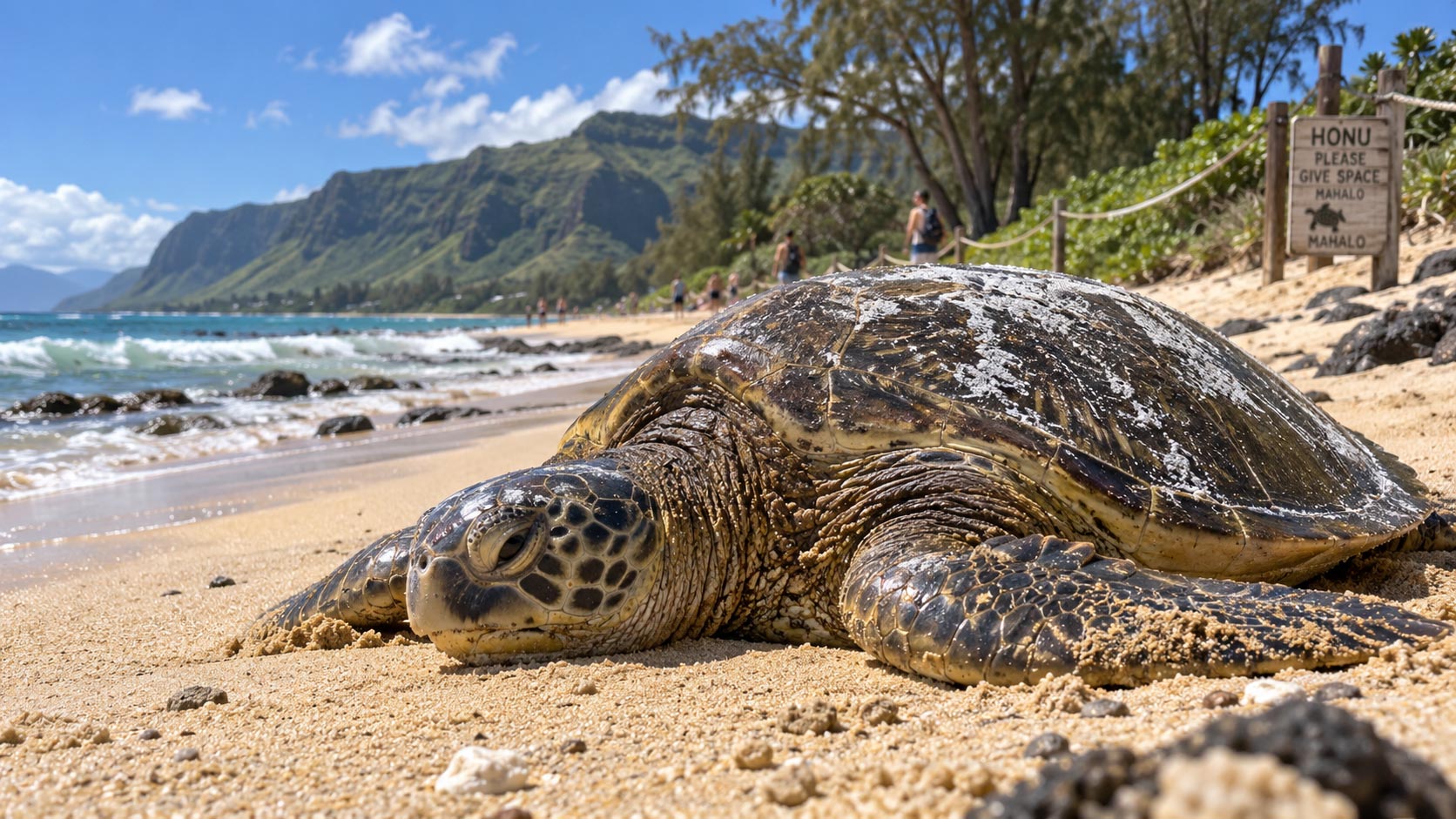
Somewhere between Haleiwa and Waimea, on a curve of Kamehameha Highway that was never built to handle this many cars, there is a small beach where Hawaiian green sea turtles come out of the water to rest. They pull themselves onto the sand, settle in near the waterline, and stay there for hours. No fence, no ticket, no aquarium glass. Just wild animals doing something almost no other sea turtle population on the planet does. Locals call the spot Turtle Beach. Its real name is Laniakea, and it has become one of the most visited and most misunderstood pieces of shoreline on Oahu. This is a guide to what actually happens there, what your odds of seeing a honu are on any given day, why the parking situation is the way it is, and the one rule that matters more than all the others combined.
Where Laniakea Beach Actually Is
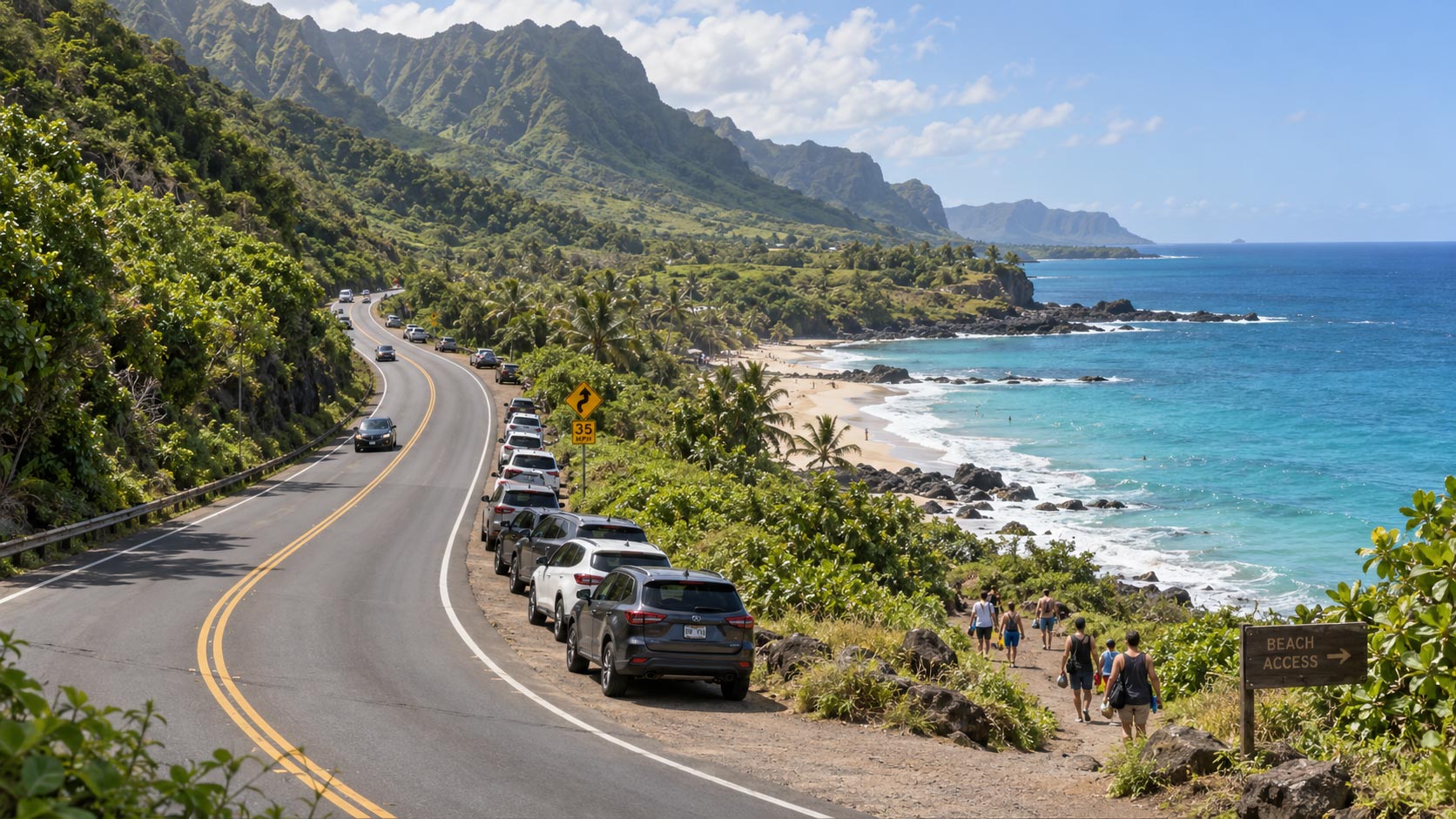
Laniakea sits on the North Shore, on the ocean side of Kamehameha Highway a few minutes north of Haleiwa town. There is no big sign, no visitor center, and no official entrance. What you will notice first is the cars. A line of parked vehicles on the inland shoulder, people crossing a two lane highway on foot, and a narrow path down to a strip of sand that is much smaller than the crowd suggests. The beach itself is a modest one, backed by low rock and shifting with the seasons the way North Shore beaches do. In summer it widens out. In winter the surf claws it back. That seasonal swing matters more than most visitors expect, and we will come back to it.
Why Honu Come Ashore Here
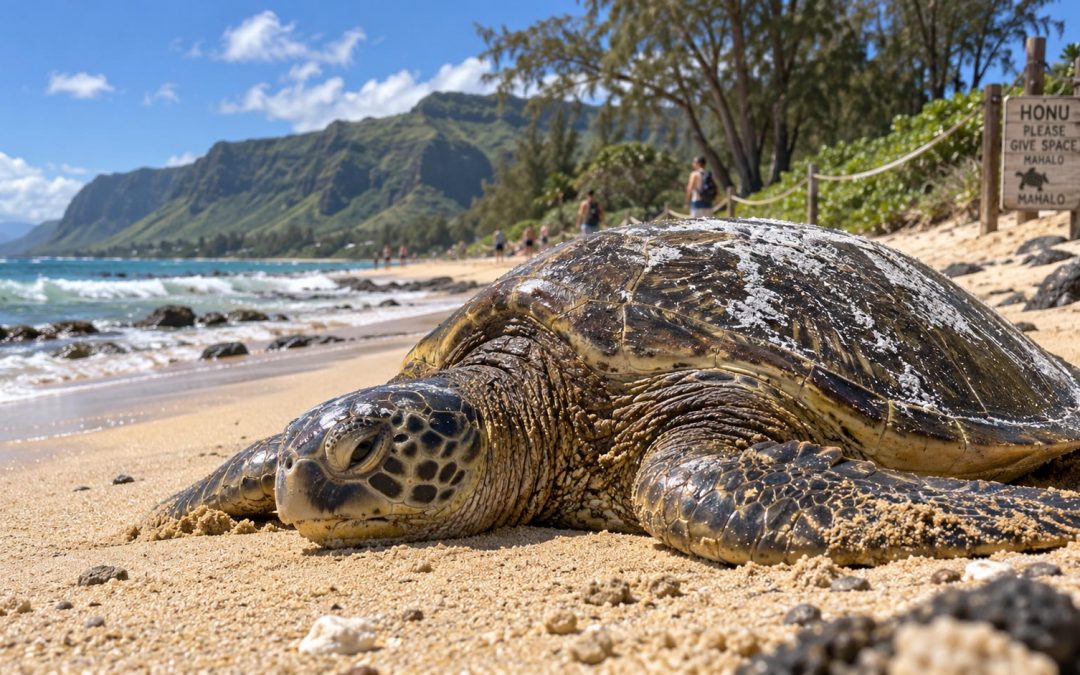
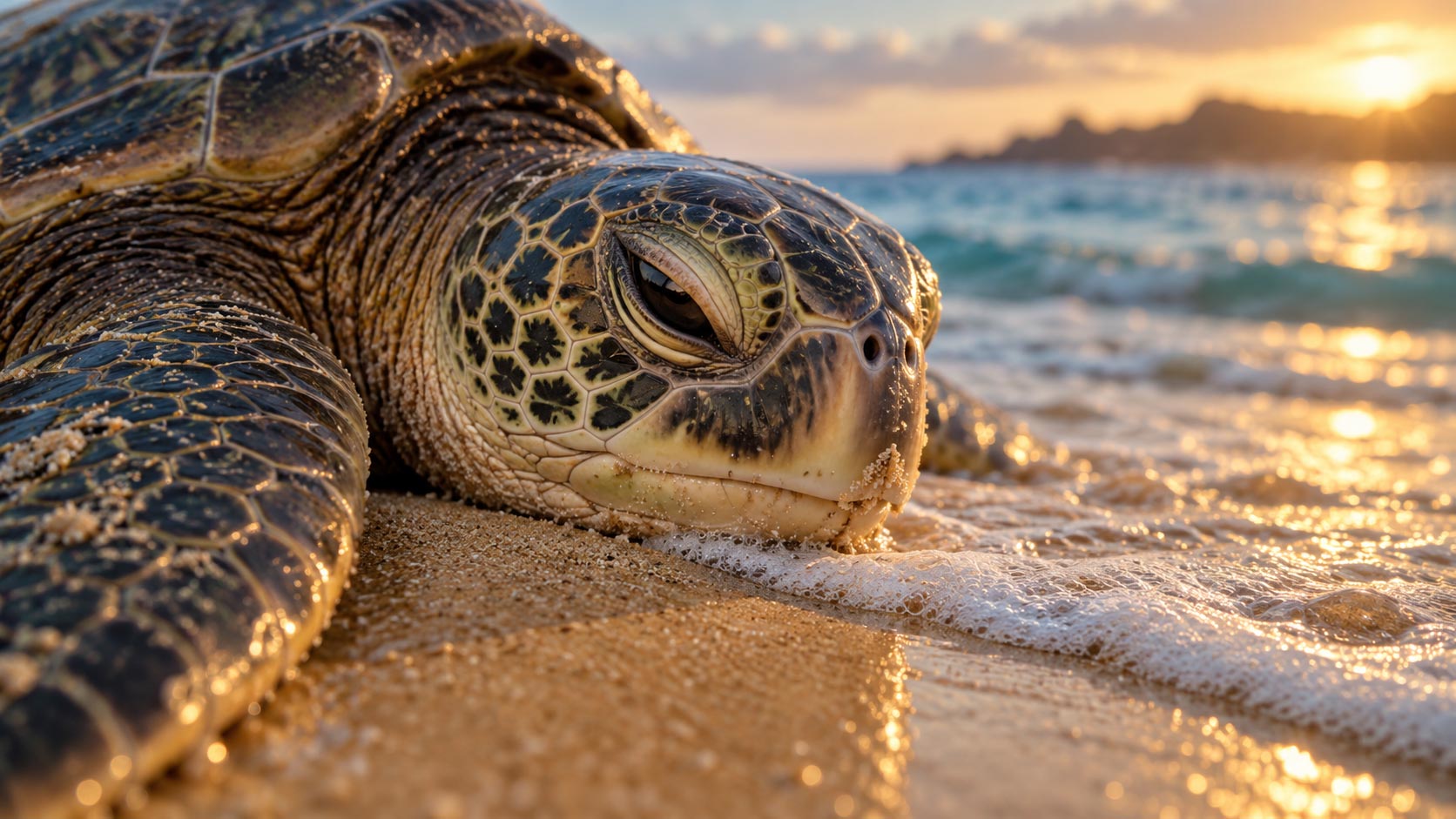
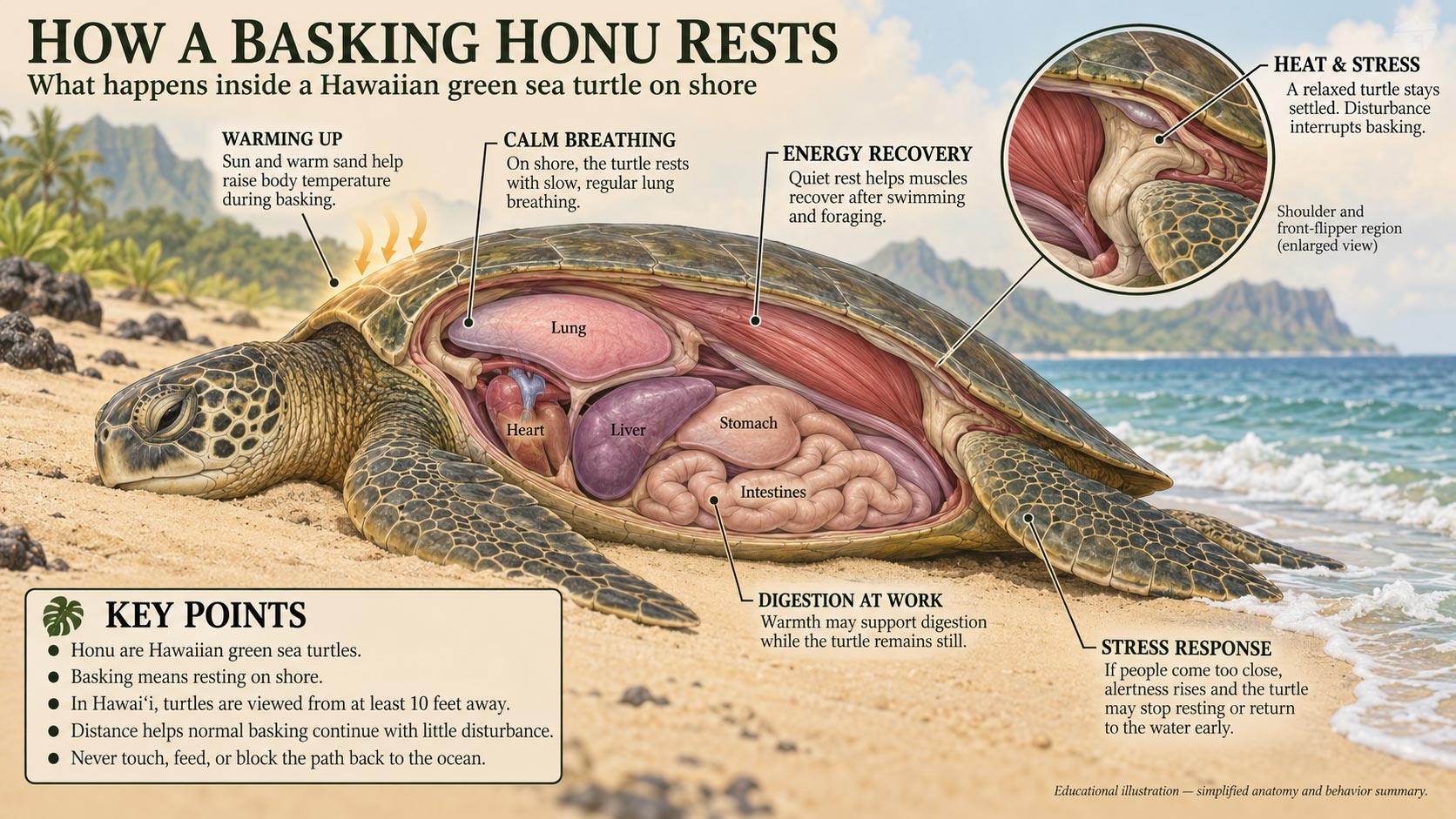
Sea turtles are built for water, so a turtle lying on a beach in the middle of the day looks like something has gone wrong. It has not. Hawaiian green sea turtles are one of the very few populations in the world that regularly come ashore to rest during daylight hours, a behavior called basking, and Laniakea is one of the best known places on Oahu to see it happen. Scientists think basking helps turtles warm up, digest their food, save energy, and get a break from predators in the water. A resting honu on the sand is not stranded, not sick, and not in need of rescue. It is doing exactly what it means to do. Reports of turtles basking at Laniakea go back to 1999, and turtle watching at the beach took off shortly after.
- Basking is normal daytime behavior for Hawaii’s green sea turtles, not a sign of trouble
- Warming up in the sun likely helps with digestion and energy conservation
- Time on land is time away from tiger sharks and other threats in the water
- A honu may stay ashore for hours before returning to the ocean on its own
The Turtles Are Regulars, and People Know Them by Name
This is the part that surprises people. The honu at Laniakea are not a random rotating cast. Researchers and volunteers have identified individual turtles at the beach by the unique pattern of scales on their faces, the same way you might recognize a fingerprint. Since 1999, roughly 35 individual turtles have been documented visiting the beach, and today there are somewhere around 18 to 20 honu considered regulars. They come back again and again, sometimes for years. Volunteers know their names, their habits, and which ones prefer which stretch of sand. When you stand at the rope line at Laniakea, you are not looking at a generic sea turtle. You are looking at a specific animal with a history at that beach that probably predates your trip by a decade.
Your Odds on Any Given Day
Here is the honest answer that most travel articles skip. The turtles are wild, and wild animals do not run on a schedule. On a typical day, the number of honu basking at Laniakea ranges from zero to about four. Some days the beach is empty. Some days there are three turtles asleep in a row with a crowd gathered behind the ropes. Nobody feeds them, nobody calls them in, and nobody can promise you anything. Volunteers generally point to the late morning through early afternoon window as the most reliable stretch, and summer months tend to be better than winter. If seeing a turtle is the entire point of your day, build in a backup plan, because Laniakea can absolutely come up empty.
The Ten Foot Rule Is Not a Suggestion
Federal and state guidance asks people to stay at least ten feet away from a sea turtle, on land or in the water, and this is where a lot of visitors get themselves in trouble without meaning to. Hawaii’s green sea turtles are protected under the Endangered Species Act as part of the Central North Pacific green sea turtle population, and they are protected by Hawaii state law on top of that. Touching, chasing, feeding, blocking, or crowding a turtle is not a minor etiquette slip. It is harassment under the law, and it can bring serious fines and even jail time. The encouraging part is that the research is clear on why the distance works. When people actually keep ten feet of space, a basking or feeding turtle shows little to no change in its behavior. Give it room and it simply carries on being a turtle.
- Stay at least ten feet back, and give more space if the animal seems alert
- Never touch, ride, pour water on, or feed a honu
- Do not get between a turtle and the ocean, ever
- Keep dogs off the sand and keep children close and calm
- Use zoom rather than walking closer for a photo, and skip the flash
Meet the Honu Guardians
You will probably notice people in matching shirts standing near the turtles with a rope line and a few signs. Those are volunteers with Malama i na Honu, the nonprofit that has been looking after the turtles at Laniakea for years. They are on the beach year round, generally from mid morning until sunset. They rope off a respectful buffer around any resting turtle, answer questions, explain the rules to people who have never heard them, record behavior data, and keep track of which individual turtles show up. NOAA Fisheries has supported their education work since 2007. Worth understanding clearly: they are educators, not police and not traffic control. They cannot write citations and they cannot make anyone do anything. The whole system runs on visitors choosing to cooperate, which is a good reason to be one of the people who makes their day easier instead of harder.
The Parking and Traffic Reality
Nobody enjoys this part. Laniakea has no real parking lot, and the roadside space that exists is small, informal, and often full. Visitors park on the inland shoulder and cross Kamehameha Highway on foot, which creates exactly the mix of stopped traffic, sudden turns, and pedestrians in the road that you would expect. On busy days the backup can stretch a long way in both directions and turn a short North Shore drive into a slow crawl. State transportation officials have been working on the pedestrian safety and congestion problem for years, and access arrangements at the site have changed before and may change again. Do not trust an old map pin or a video from three years ago. Follow the signs, barriers, and any personnel actually on site the day you go.
- Arrive early in the day if you can, since both parking and crowds get worse as the morning goes on
- Never stop or slow in the traffic lane to look, because that is how collisions happen
- Cross the highway with real caution and only where you can see clearly in both directions
- Consider parking in Haleiwa and building the stop into a wider North Shore day
This Is a Viewing Beach, Not a Snorkeling Beach
Here is the point that saves people the most disappointment. Laniakea is a place to watch turtles from the sand, not a place to swim with them. The bottom is rocky and uneven, currents run through the area, and the North Shore’s winter swell season turns this coast into some of the most powerful surf in the world. Between roughly November and March, the water here can be genuinely dangerous, and even in calmer months the visibility and conditions are nothing like a protected snorkel site. Plenty of visitors show up with a mask expecting a turtle swim and end up standing on the beach instead. Come to Laniakea for the sight of a wild honu asleep on the sand a few feet from a rope line. That is the experience it does better than anywhere else, and it is worth the stop on its own terms.
If You Want to Snorkel With Honu Instead
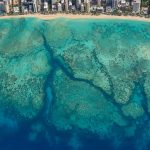
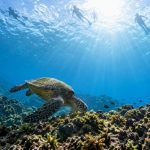
Watching a turtle rest on the beach and floating above one in open water are two completely different experiences, and there is no reason to choose only one. For actually getting in the water with honu, the south side of the island is a far better bet than the North Shore, especially in winter when the swell flips the equation. Turtle Canyon sits off the Waikiki coastline, a reef the turtles visit regularly to feed and get cleaned by reef fish, sitting roughly 15 to 25 feet below the surface in calm, clear water. It is reached by boat out of Kewalo Basin rather than from shore, which is a large part of why the conditions stay so much more consistent than an exposed beach entry. The same ten foot rule applies out there too. You float, you watch, and you let the turtle decide how the encounter goes.
The Beach That Taught Oahu How to Watch
What makes Laniakea remarkable is not really the turtles. Honu are all over Oahu, on reefs and in bays and off the Waikiki coastline. What makes Laniakea remarkable is that it is one of the few places where a wild, federally protected animal chooses to lie down in the middle of a crowd of people and go to sleep. That only keeps working as long as the crowd holds up its end. Every visitor who stays behind the rope, keeps the ten feet, resists the selfie, and walks away without a story about how close they got is the reason those 18 or 20 regulars keep coming back to that particular strip of sand. Get it right and you leave with something better than a photo of your hand on a turtle. You leave having watched a wild animal ignore you completely, which is the highest compliment a honu can pay.