How Many Hearts Do Sea Turtles Have?
Overview
It is a question that stumps a lot of people, and the phrasing alone makes you wonder if the answer is something strange. How many hearts do sea turtles have? The short answer is just one, but that single heart is far more interesting than it sounds, because it is built a little differently than ours and is perfectly designed for a life of long dives and cold ocean water. This guide explains exactly how a sea turtle’s heart works, why it has three chambers instead of four, and how that clever design helps the honu thrive beneath the waves.
The Short Answer: One Heart, Three Chambers
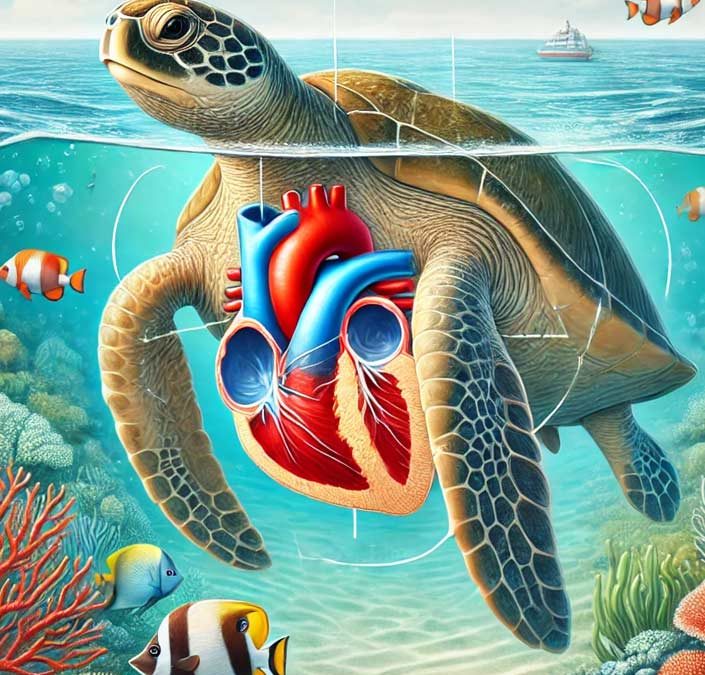
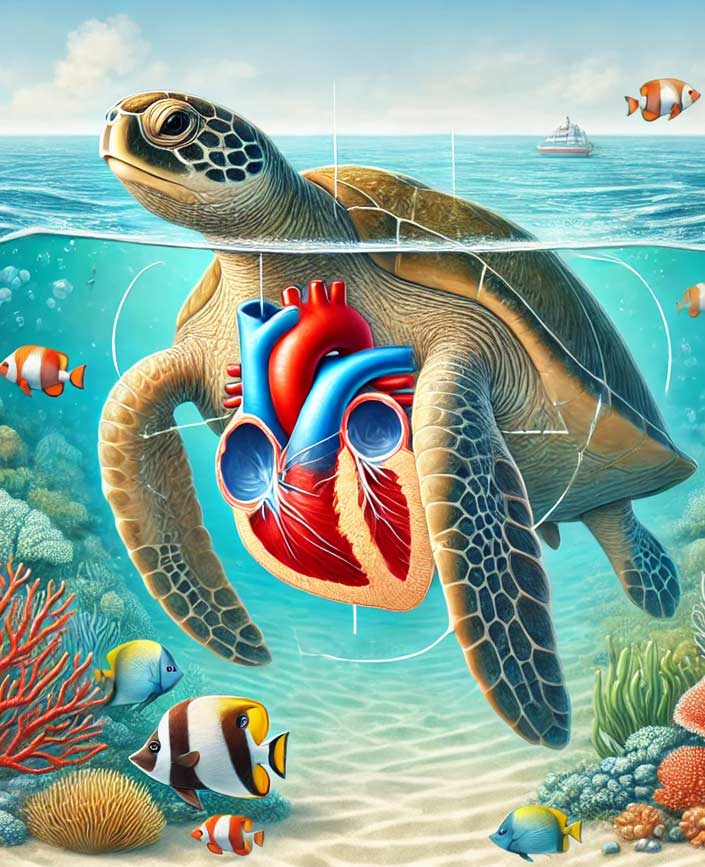
Sea turtles have one heart, not several, but it has three chambers rather than the four found in a human heart. Those three chambers are two upper chambers called atria and one lower chamber called the ventricle. This three-chambered design is typical of reptiles, and it plays a big role in how sea turtles manage oxygen, especially during the long dives that fill their lives. So while the answer to the question is simply one, the real story is in how that one remarkable heart is built.
Why a Three-Chambered Heart?
A three-chambered heart might sound like a downgrade from our four-chambered one, but for a sea turtle it is exactly right. The design lets the turtle direct oxygen-rich blood to its body and oxygen-poor blood toward its lungs in a flexible, controlled way. That flexibility is a huge advantage for an animal that holds its breath for long stretches underwater, because it can manage its oxygen supply far more efficiently than a rigid system would allow. It also suits the turtle’s amphibious life, helping it handle oxygen well whether it is cruising the reef or resting on a beach.
A Clever Upgrade Over Other Reptiles
Here is where it gets impressive. Sea turtles share the three-chambered heart with other reptiles like snakes and lizards, and with amphibians like frogs. In many of those animals, oxygen-rich and oxygen-poor blood mix together inside the heart. Sea turtles have a partial wall, called a septum, inside their ventricle that helps keep the two blood supplies more separated. This reduces the mixing and makes their system more efficient, almost like a built-in upgrade that gives them better control over their oxygen in the demanding ocean environment.
Built for Long Dives and Cold Water
This heart design ties directly into two of the sea turtle’s superpowers. First, it supports those famously long dives, since a turtle that can carefully manage its oxygen can stay underwater far longer between breaths. Second, it fits the turtle’s cold-blooded nature. Like all reptiles, sea turtles rely on their surroundings for warmth rather than generating much heat internally, and their slower, adaptable heart works smoothly within that cold-blooded system, even slowing dramatically during a deep, restful dive to conserve energy.
What This Means for the Honu
When you watch a green sea turtle glide effortlessly over a Hawaiian reef, that calm, unhurried movement is powered by this quietly brilliant heart. It is a big part of how the honu can rest on the bottom for long stretches, travel great distances, and live such long lives. For more on how these animals are put together, see our sea turtle anatomy guide. The next time you meet a honu in the water, remember that behind its peaceful glide beats a single, three-chambered heart perfectly tuned for the sea.
Watch: Meet the Sea Turtle
One Remarkable Heart
So how many hearts do sea turtles have? Just one, but it is a marvel of evolution, with three chambers and a clever partial septum that let the turtle rule its oxygen supply on long dives and in cold water. It is not the number of hearts that makes a sea turtle special, but the elegant design of the one it has. That steady, efficient heartbeat is part of what has carried these ancient animals through millions of years and thousands of miles of open ocean.