Kauai’s Best Sea Turtle Spots: North Shore to South Shore
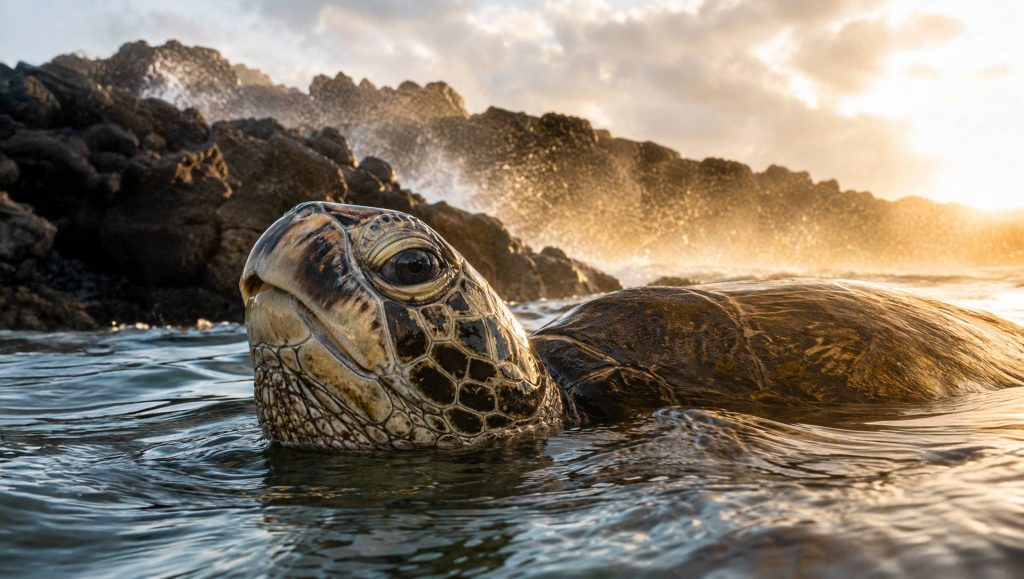
Kauai earns its nickname. The Garden Isle wraps around you with waterfalls spilling off emerald ridgelines, valleys carved by millions of years of rain, and a coastline that shifts from white-sand beaches to black lava cliffs without warning. But there is a living wonder here that does not ask for a hike or a helicopter ride. It is waiting in the water, drifting along the reef, surfacing for a breath, and settling into the sand as the sun drops low. Hawaiian green sea turtles, known in the islands as honu, have been part of Kauai’s story for a very long time. With a little planning, they can be part of yours too.
The Honu of the Garden Isle
Kauai’s waters are home to three species of sea turtle, though you will almost certainly encounter the Hawaiian green sea turtle during any visit to the island. Hawksbill turtles do appear from time to time, particularly around reef-heavy areas, and leatherback turtles pass through offshore waters on rare occasions during their long open-ocean migrations. For most visitors, the green sea turtle is the one they will remember.
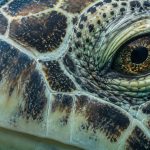
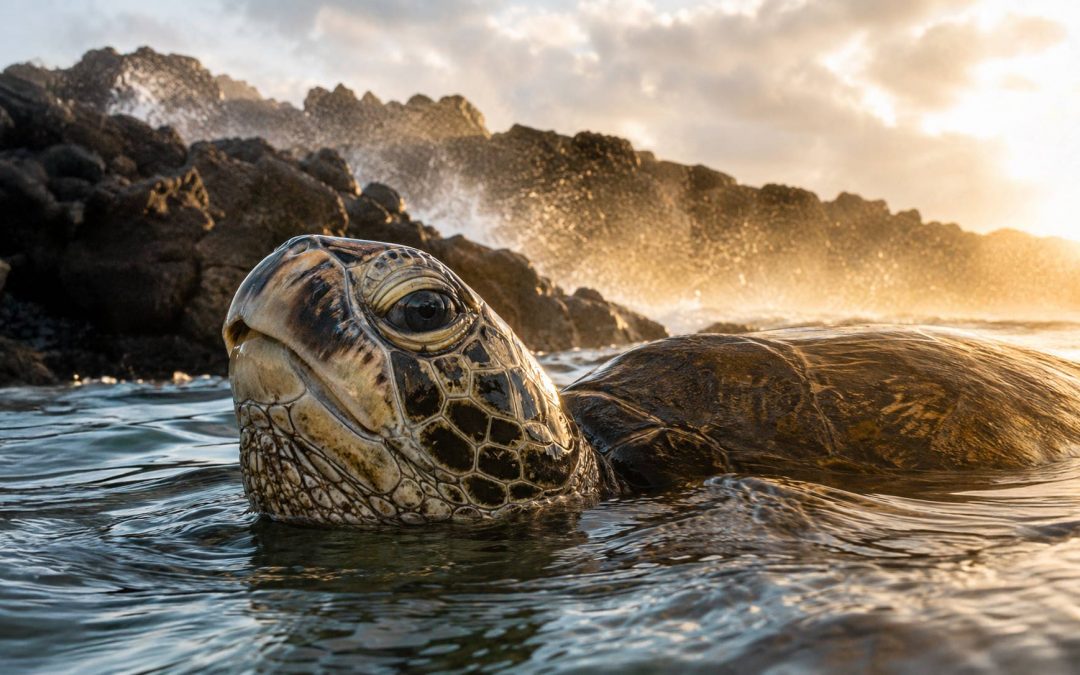
Despite the name, these animals are not especially green on the outside. Their shells tend toward shades of dark brown and olive, sometimes streaked with amber. The “green” in their name comes from the color of the fat stored beneath their shell, which takes on that tint from the algae and seagrass they spend their lives eating. A fully grown adult can reach three to four feet in length and weigh anywhere between 200 and 400 pounds. They move through the water with a calm, unhurried grace that makes the ocean around them feel quieter somehow.
Green sea turtles in Hawaii are listed as threatened under federal law, and that protection has made a real difference. Populations that were in serious decline through much of the 20th century have rebounded steadily in recent decades, and Kauai’s waters reflect that recovery. You are more likely to encounter a honu in the wild here now than at almost any other point in living memory.
South Shore: Where the Turtles Rest and Roam
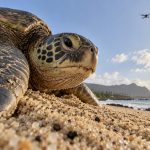
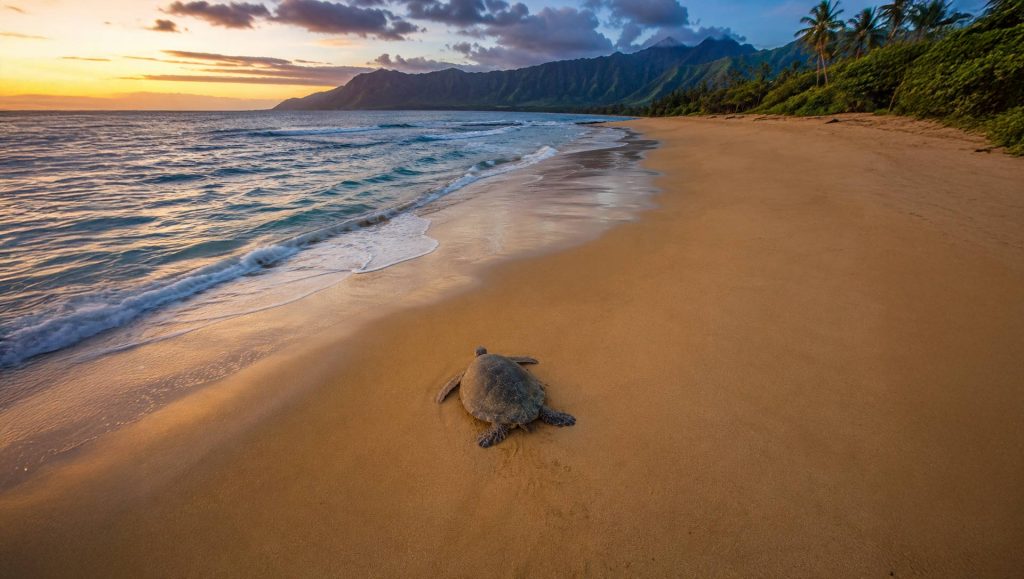
The south shore of Kauai is your best bet for a reliable turtle encounter, and it requires very little effort. The area around Poipu Beach Park draws honu throughout the day, but the late afternoon and early evening hours are when things get especially interesting. As the sun angles lower over the ocean, turtles begin pulling themselves up onto the sand to rest for the night. It happens gradually, then suddenly, and before long there may be a dozen animals stretched out along the shoreline.
Brennecke’s Beach, just a short walk from the main park area, is one of the best spots on the south shore to watch from shore without getting in the water at all. The grassy overlook area gives you a clear sightline to where the turtles tend to gather near the rocks. Whalers Cove, just past the Sheraton toward the west end of Poipu, offers a similar experience from an elevated vantage point above the water.
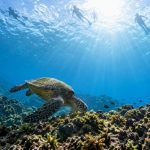
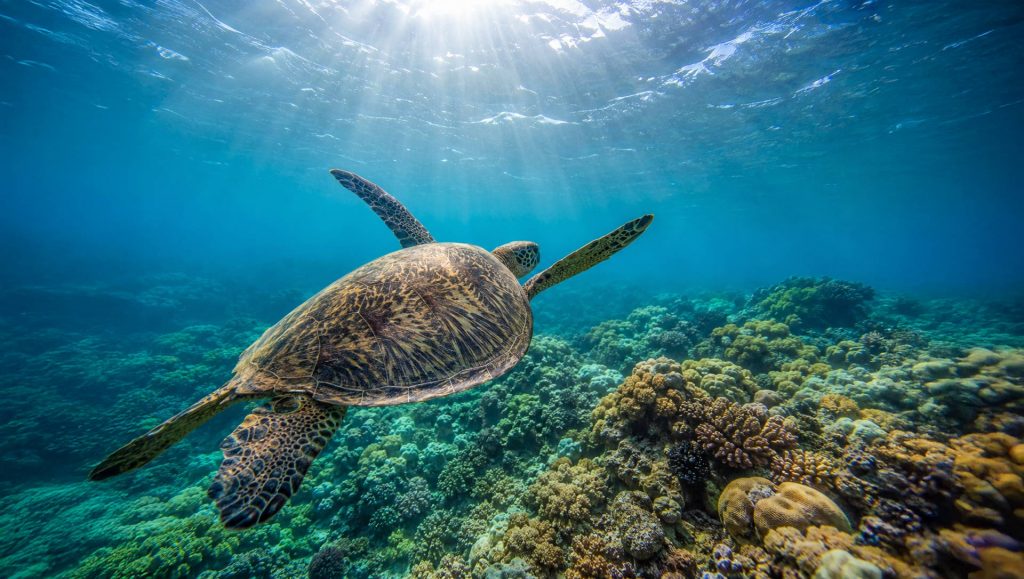
For those who want to snorkel, Lawai Beach and Koloa Landing are the two spots that consistently deliver. Lawai Beach sits inside a sheltered cove with good coral growth and calm conditions for much of the year. Koloa Landing, a few minutes’ drive away, is technically a shore dive site but works well for snorkeling too. The turtles here are accustomed to snorkelers and often feed slowly along the reef within easy viewing distance.
Reliable south shore turtle spots:
- Poipu Beach Park (beach resting, afternoon and evening)
- Brennecke’s Beach (shoreline viewing)
- Whalers Cove (elevated overlook near the Sheraton)
- Lawai Beach (snorkeling, sheltered cove)
- Koloa Landing (snorkeling and shore diving)
North Shore: Wilder Reefs and Bigger Rewards
The north shore of Kauai operates on its own schedule. Conditions can be rougher here, especially in winter, but from late spring through summer the water calms down and the snorkeling at a few specific spots becomes genuinely remarkable.
Tunnels Beach, also known as Makua Beach, sits near the end of the road on the north shore and is one of the most impressive snorkeling destinations in all of Hawaii. A large fringing reef runs parallel to the shore, and the inner lagoon it creates is home to a wide variety of reef fish, eels, and regularly visiting green sea turtles. On a calm day with good visibility, the experience feels more like drifting through a living painting than anything else.
Anini Beach is worth knowing about for anyone who is new to snorkeling or traveling with younger kids. Its fringing reef creates an exceptionally sheltered strip of shallow water that runs for more than two miles along the north shore. The water is often just waist to chest deep in many sections, currents are minimal, and green sea turtles are regularly spotted feeding along the reef here. It is one of the more beginner-friendly turtle snorkeling spots anywhere in Hawaii.
Ke’e Beach, at the very end of the north shore road before it turns to trail, can also be productive for turtle sightings. When surf conditions cooperate and visibility is good, it is a beautiful place to be in the water.
Na Pali Coast: Sea Turtles in Their Most Untouched Territory
There is one part of Kauai’s coastline that cannot be reached by car. The Na Pali Coast stretches for sixteen miles along the northwest shore, defined by thousand-foot sea cliffs, hanging valleys, and sea caves carved by the Pacific over millions of years. The only ways in are by foot, by kayak, or by boat.
Sea turtles thrive along Na Pali. The water is clear, the reefs below the cliffs are largely undisturbed, and there is very little human traffic compared to the south and north shore beaches. Boat tours and kayak guides who work this coastline regularly encounter honu in the water, and a sea turtle sighting here carries a different quality than one on a crowded beach. It feels earned.
If you are visiting Kauai and want the fullest possible version of a Hawaiian sea turtle encounter, the Na Pali Coast is worth planning around. A guided boat tour or kayak excursion gives you access to snorkeling stops along the way, and the turtles you find there are sharing the water with almost no one else.
When to Go and What to Expect
Green sea turtles can be found in Kauai’s waters throughout the year. That said, May through September is when conditions align most reliably. Ocean swells calm down, visibility improves, and nesting season draws more turtles toward shore as females make their way to Kauai’s sandy beaches. More turtles near shore means more opportunities to see them, whether from the beach or from underwater.
The best time of day for water encounters tends to be mid-morning through late afternoon, when turtles are actively feeding along the reef. By late afternoon and into the evening, many move toward shore to rest for the night. Both windows give you something worth watching, just different things.
Water clarity in Hawaii is weather-dependent, so it helps to check conditions the morning of any planned snorkeling. Flat, calm water almost always means good visibility, and good visibility means better turtle encounters.
Rules That Protect the Honu
Hawaiian green sea turtles are protected under the Endangered Species Act as a threatened species, and that protection extends to every beach and reef on Kauai. The rules are straightforward:
- Stay at least ten feet away from any sea turtle, whether in the water or on land
- Never touch, chase, feed, or attempt to ride a sea turtle
- Do not position yourself between a resting turtle and the ocean
- Avoid sudden movements or loud noises near resting animals
- Use reef-safe sunscreen to protect the coral habitat these animals depend on
If you encounter a turtle that appears injured, distressed, or entangled in anything, do not attempt to help it yourself. Report it to the NOAA Fisheries hotline at 1-888-256-9840. Marine conservation teams based on Kauai and across Hawaii are trained for exactly these situations.
Watch: Sea Turtles 101
Before your next snorkel, take a few minutes to learn what makes these ancient animals so remarkable. National Geographic’s primer covers sea turtle biology, migration, and the conservation work keeping them in our oceans.
From Kauai to Oahu: A Different Kind of Turtle Encounter
If your Hawaii itinerary includes Oahu, you do not have to search for your own spot on the reef. Turtle Canyon, located about a mile offshore from Waikiki, is one of the most consistent green sea turtle feeding grounds in the state. Our two-hour guided snorkel tour departs twice daily from Kewalo Basin Harbor and puts you in the water alongside resident honu in their natural habitat. Transportation from your Waikiki hotel is included, all snorkel gear is provided, and the experience is led by a crew that has spent years in these waters.
Not every turtle experience is the same. Some find their honu on a sandy beach at sunset. Others share a reef with one at Tunnels or Anini. And some float above Turtle Canyon a mile off Waikiki while a green sea turtle the size of a coffee table glides directly beneath them. They are all worth having.
When the Garden Isle Shows Its Quiet Side
Kauai keeps the sea turtles to itself a little. The beaches are less crowded than Oahu, the reefs feel less visited, and when you come across a honu resting in the sand or drifting along a north shore reef, it tends to feel like something you discovered rather than something arranged for you. That is the reward for the extra flight and the extra bit of planning. The Garden Isle delivers a lot of extraordinary things. The turtles are among the most ordinary of them and the most remarkable at the same time.