Big Island Sea Turtles: Hawaii’s Most Surprising Places to See Honu Up Close
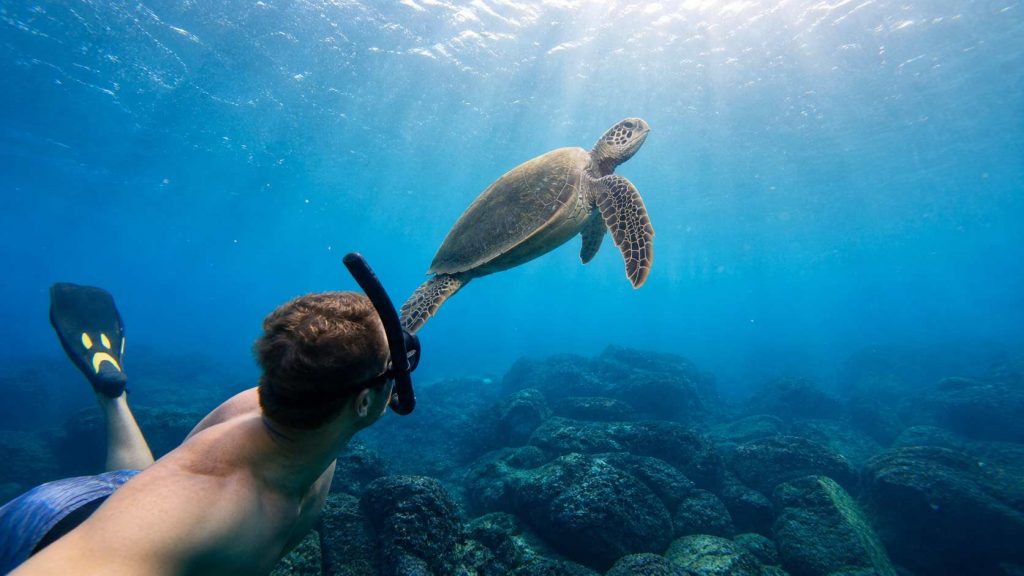
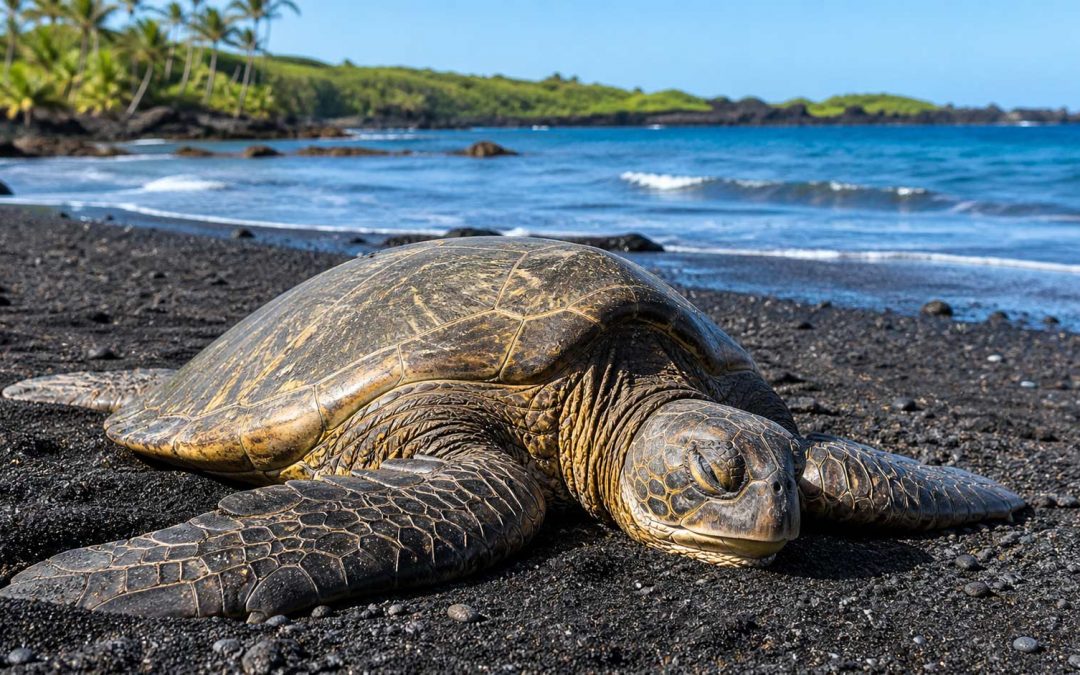
The Big Island of Hawaii is unlike any other island in the chain. Volcanic peaks rise over lava fields that spill all the way to the sea. Black sand beaches line portions of the southeastern coast, formed from centuries of molten rock cooling at the water’s edge. And right in the middle of this raw, dramatic landscape, Hawaiian green sea turtles have carved out a home. Seeing a honu resting on volcanic black sand with the open Pacific stretching out behind it is one of those sights that stays with you long after you leave. This guide covers the best places to find sea turtles on the Big Island and what every visitor should know before getting close.
The Honu and the Big Island
Hawaiian green sea turtles are a genetically distinct population found only in the Hawaiian archipelago. They share a species name with green sea turtles found around the world, but Hawaii’s honu have evolved alongside these islands for thousands of years and behave in ways that set them apart. They nest primarily at French Frigate Shoals, a remote atoll in the Northwestern Hawaiian Islands more than 500 miles from their feeding grounds in the main islands. That long migration, made by turtles returning to the same beach where they hatched, is one of the most extraordinary feats in the animal kingdom.
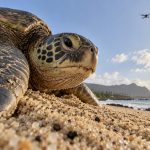
One of the most visible differences between Hawaii’s honu and green sea turtles found elsewhere in the world is their habit of hauling out onto beaches to bask in the sun. Most green sea turtle populations stay in the water unless they are nesting females. Hawaii’s honu, both male and female, routinely come ashore just to warm up and rest. They are cold-blooded animals, meaning they rely on their environment to regulate body temperature. The warmth from the land helps them recover energy and supports healthy digestion. The Big Island has several spots where you can witness this behavior in one of the most visually stunning settings in the Pacific.
Punaluu Black Sand Beach
If there is one beach on the Big Island that nearly every visitor makes a point to see, it is Punaluu Black Sand Beach on the island’s southeastern coast. The sand here is made from volcanic basalt, ground down by wave action into fine, dark grains that absorb heat from the sun far more effectively than white sand. That warmth is exactly what draws honu to this beach. On most sunny mornings, you will find at least a few turtles resting here, sometimes tucked against the rocks at the water’s edge, sometimes stretched out in full view on the open beach.
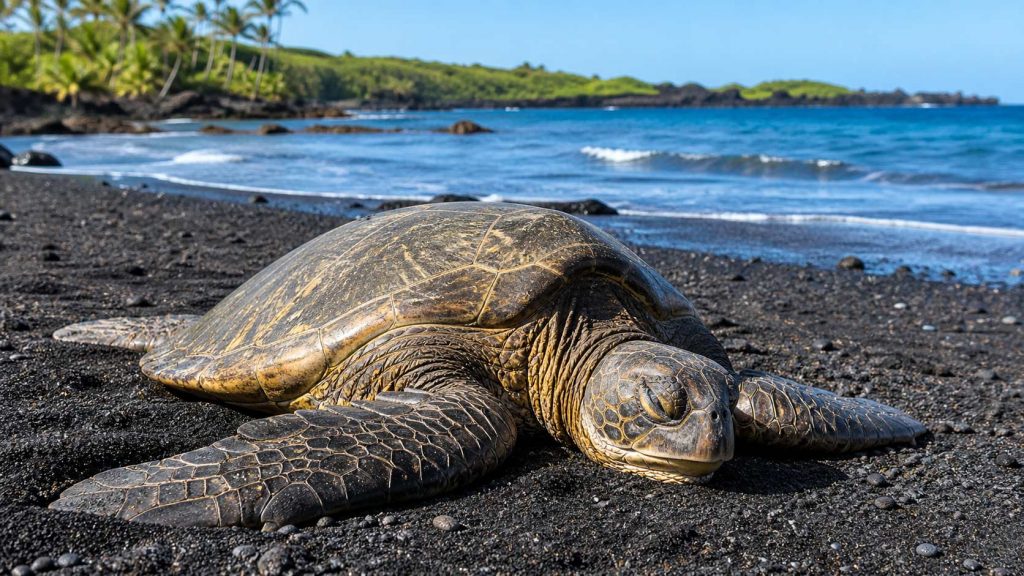
The turtles at Punaluu are accustomed to visitors, but they are still wild animals protected under federal law. Staying at least ten feet away and never touching, feeding, or blocking a turtle’s path to the water is required under the Endangered Species Act. Rangers and community volunteers are often present to help guests observe safely and respectfully.
- Punaluu is located on the Kau coast, about 55 miles from Kailua-Kona
- The beach has a small parking lot, restrooms, and a food truck area nearby
- Swimming is possible but ocean currents can be unpredictable, so caution is advised
- Morning visits tend to offer better turtle sightings before afternoon crowds arrive
Kahaluu Beach Park
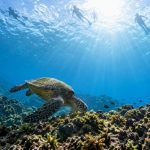
Just a few miles south of Kailua-Kona, Kahaluu Beach Park is widely considered one of the best beginner snorkeling spots in all of Hawaii. A natural lava breakwater at the mouth of the bay keeps wave action calm, and the reef begins just a few feet from shore. That combination of easy access and clear water makes it one of the most reliable places on the Big Island to see honu in their natural feeding environment.
Sea turtles at Kahaluu are typically searching for the algae and sea grass that grow across the reef. Watching a large turtle methodically working its way along the coral, relaxed and unhurried, is one of the most peaceful things you can experience in the ocean. The shallowness of the reef also means strong natural light filters down, making visibility excellent and underwater photography especially rewarding.
- Snorkel gear rentals are available at shops near the beach entrance
- Kahaluu has lifeguards during posted hours, making it the most family-friendly snorkeling site on this list
- Turtles most commonly appear in the mid-reef area, roughly 20 to 40 feet from shore
- Weekday mornings offer the calmest water and the fewest people
Two Step at Honaunau Bay
South of Kailua-Kona, tucked alongside Pu’uhonua o Honaunau National Historical Park, is one of the Big Island’s most beloved snorkeling spots known locally as Two Step. The name comes from two natural ledges of lava rock that drop directly into the water, giving snorkelers an easy entry point into open ocean. There is no sandy beach here. Just volcanic rock, deep blue water, and an underwater reef system considered among the healthiest on the island.
Two Step consistently surprises first-time visitors. The water is strikingly clear, with visibility that often reaches 60 feet or more, and marine life is dense. Honu are a regular presence, gliding along the reef below and occasionally hauling out onto the rocky shoreline to rest. The adjacent historical park carries deep cultural significance as a place of refuge in ancient Hawaiian society, and the honu have long been woven into Hawaiian spiritual tradition. Visiting this site alongside the park adds a layer of meaning that goes beyond wildlife spotting.
- Two Step has no lifeguard and is best suited for confident swimmers
- Entry and exit on lava rock can be slippery, so water shoes are strongly recommended
- Mornings offer the calmest conditions before afternoon trade winds pick up
- Parking is limited, so arriving early makes a real difference
What to Know Before You Go
The Big Island offers genuinely wild sea turtle encounters. All three of these locations are self-guided, which means there is no crew watching the water or helping you spot turtles from above. That raw experience has real appeal. It also means being prepared and knowing the rules before you arrive.
Federal law protects all sea turtles in Hawaii. Getting within ten feet of a turtle, touching one, or doing anything that disrupts its natural behavior can result in serious fines. If a turtle swims toward you in the water, that is fine. You simply cannot initiate the approach. The ten-foot rule applies on land as well, so give resting turtles plenty of space and never position yourself between a turtle and the ocean.
For basking turtles at Punaluu, mid-morning on calm, sunny days tends to produce the best sightings. For snorkeling at Kahaluu and Two Step, arriving before 10 AM usually means clearer water, better light, and fewer visitors. Pack reef-safe sunscreen, a mask that fits well, and a willingness to move slowly once you are in the water. Turtles move on their own schedule, and patience almost always pays off.
Why Oahu Offers Something Different
If you are planning time on Oahu and want a sea turtle experience without the unpredictability of a self-guided beach visit, there is a reason Turtle Canyon off the coast of Waikiki has the reputation it does. The Turtles and You snorkeling tour takes guests directly to one of the most active sea turtle feeding grounds in the main Hawaiian Islands. A trained crew watches the water, points out turtles, and makes sure every guest has a genuine encounter rather than just the hope of one.
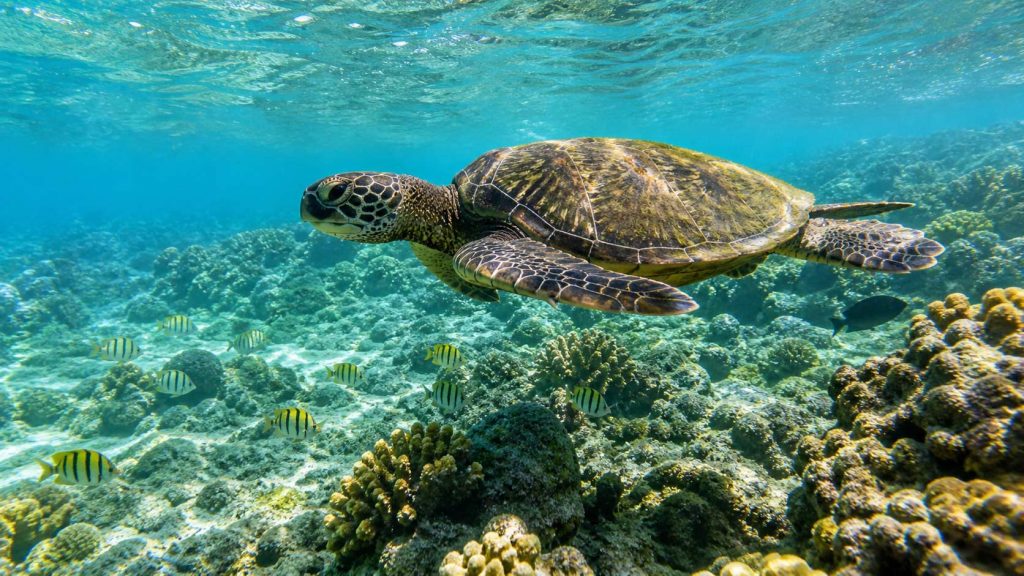
The tour departs from Kewalo Basin Harbor with morning and afternoon options, includes all snorkel gear and a life vest, and offers a complimentary hotel trolley pickup from Waikiki. No experience is required, there is no parking to figure out, and there is no guesswork about whether the turtles will show up. At Turtle Canyon, they almost always do.
The Honu Choose Their Island; You Choose How Close You Get
The Big Island of Hawaii is one of the few places on earth where you can stand on a black sand beach and watch a sea turtle bask in the sun just a short distance away. That is something genuinely rare. The turtles at Punaluu, Kahaluu, and Two Step are thriving because the habitat is healthy, the water is clean, and the reef systems remain intact. Giving them space is not just a legal requirement. It is how those conditions stay that way for the next generation of visitors.
Whether you are exploring the Big Island on your own or looking for a guided snorkel adventure on Oahu, the honu have a way of making every trip to Hawaii feel like something much more than a vacation.