How Long Can Sea Turtles Hold Their Breath?
Overview
One of the first things people notice when they snorkel with a Hawaiian green sea turtle is that it keeps coming up for air. That makes sense once you remember these ocean reptiles breathe with lungs, just like we do. So it raises a natural question. How long can a sea turtle actually hold its breath before it has to surface? The answer is more surprising than most people expect, because it depends entirely on what the turtle is doing. An active, swimming turtle surfaces every few minutes, but a resting honu can stay underwater for hours at a time. This guide breaks down exactly how long sea turtles hold their breath, the clever tricks that make it possible, and what it means when you are watching one on the reef.
The Short Answer: Minutes When Active, Hours When Resting
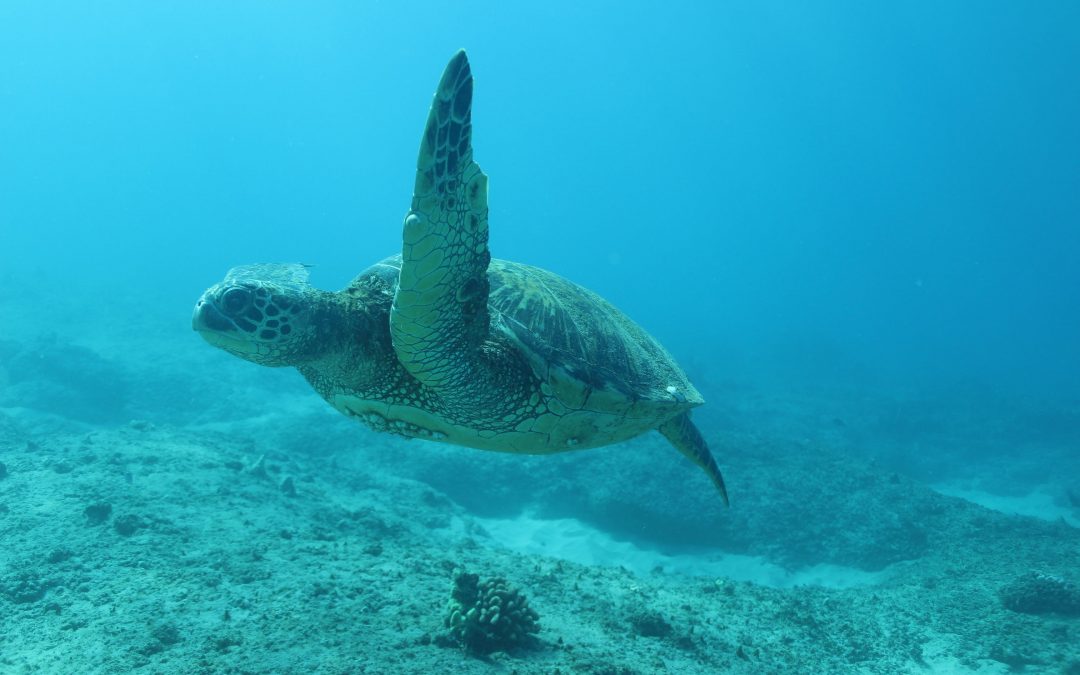
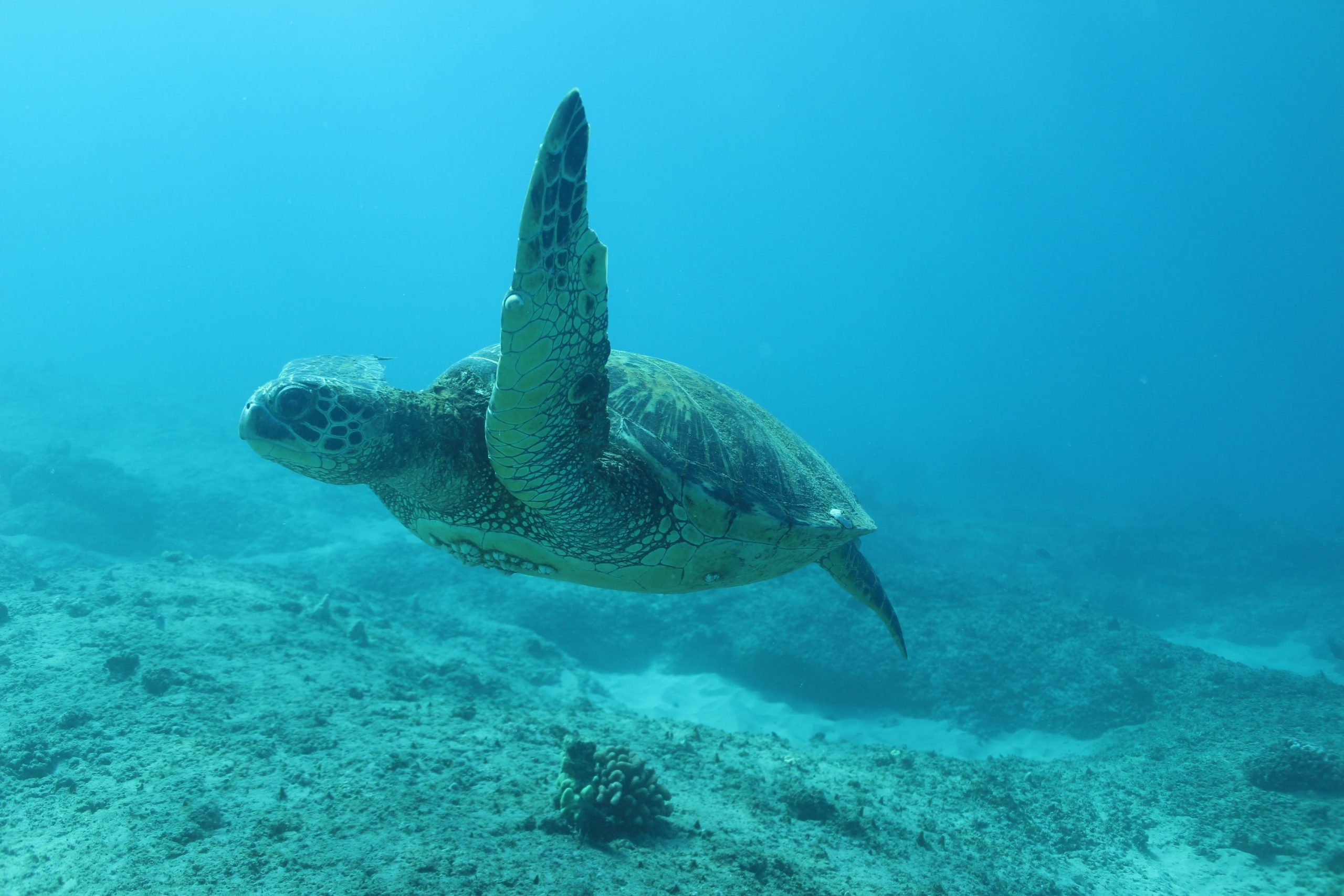
When a sea turtle is swimming, feeding, or otherwise active, it typically holds its breath for about 4 to 7 minutes before surfacing for air. That is the version most snorkelers see, a turtle cruising the reef and then gliding up for a quick breath. But when a turtle settles down to rest or sleep on the bottom, everything changes. With its body relaxed and using very little energy, a resting sea turtle can remain submerged for hours, with green sea turtles often cited as staying down for several hours at a stretch. So the honest answer to how long a sea turtle can hold its breath is not a single number. It is a few minutes when busy and a remarkably long time when still.
How a Sea Turtle Holds Its Breath So Long
A sea turtle’s body is built for a life spent mostly underwater, and several adaptations work together to stretch a single breath. When a turtle dives, its heart rate slows dramatically, which conserves energy and oxygen. Blood flow is redirected away from less essential organs and toward the heart, brain, and muscles that need it most. Sea turtles also store oxygen very efficiently, holding it not just in their lungs but in their blood and muscle tissue, which lets them keep functioning long after they last took a breath. On top of that, they can tolerate low oxygen levels far better than a person could. Here are the main tricks a honu uses:
- A slowed heart rate that saves energy during a dive
- Redirecting blood to the organs that need oxygen most
- Storing oxygen in the blood and muscles, not just the lungs
- A slow, gliding swimming style that burns very little energy
Active Dives Versus Resting Dives
The reason the numbers vary so much comes down to effort. Oxygen gets used up faster when a turtle is working hard, so an active turtle swimming against a current or feeding will need to surface sooner, often within those 4 to 7 minutes. A turtle that is simply resting, tucked under a ledge or lying calmly on the sandy bottom, burns oxygen at a fraction of that rate and can go far longer between breaths. This is why you might watch one turtle surface again and again while another seems to sit on the reef without moving for a very long time. Both are perfectly normal. The turtle is just balancing how hard it is working against how much oxygen it has stored.
Wait, They Cannot Breathe Underwater?
Correct, and this surprises a lot of people. Despite spending almost their whole lives in the ocean, sea turtles do not have gills like fish. They breathe air with lungs and must return to the surface to get it. What makes them so good at ocean life is not an ability to breathe water, but an incredible ability to make one lungful of air last. A turtle can also refresh a large share of the air in its lungs in a single quick breath at the surface, so it does not need to linger up top. That is why a surfacing turtle often takes just one or two breaths and then slips back down to the reef.
Sleeping Underwater
Some of the longest breath holds happen while a sea turtle is asleep. At night, and sometimes during the day, a honu will find a safe spot to rest, often wedging itself under a rock ledge or coral overhang so it does not drift. In this deep resting state its metabolism slows even further, letting it stay submerged for hours before rising for a breath. If you are curious about this, we cover it in more detail in our guide to where sea turtles sleep. It is a big part of why these animals can thrive in the ocean while still needing air, since their downtime costs them almost nothing in oxygen.
What This Means for Snorkelers at Turtle Canyon
Understanding a turtle’s breathing rhythm makes for a better and more respectful encounter. When you snorkel at a spot like Turtle Canyon off Waikiki, you will often see a honu resting on the bottom and then slowly rising to the surface for air. That trip up to breathe is a completely natural and important moment, so the kindest thing you can do is give the turtle a clear, open path to the surface and never block its way or crowd it. Keeping a respectful distance lets the turtle breathe on its own schedule, which is exactly what you want to see. Watching a turtle glide up, take a quiet breath, and sink back to the reef is one of the most peaceful sights in the ocean.
Watch: How Sea Turtles Breathe and Dive
One Breath, Made to Last
So how long can Hawaiian sea turtles hold their breath? A few minutes when they are active and swimming, and several hours when they are resting or asleep on the reef. They pull this off with a slowed heart rate, smart oxygen storage, and an energy saving, gliding lifestyle, all while still needing to surface for air because they breathe with lungs. The next time you float above a honu at Turtle Canyon and watch it drift up for a quiet breath, you will know just how remarkable that simple moment really is. That single lungful of air is doing far more work than you ever would have guessed.