Do Sea Turtles Get Cold? How Hawaiian Honu Stay Warm
Sea turtles spend their whole lives in the water, and water has a way of pulling heat right out of a body. That raises a question a lot of curious snorkelers ask once they start thinking about it. Do sea turtles ever get cold, and if they do, how do they handle it without fur, feathers, or a thick layer of blubber like a seal or a whale? The short answer is that yes, sea turtles can absolutely get cold, and unlike us they cannot simply warm themselves up from the inside. Instead they rely on clever behavior, a big sturdy body, and the temperature of the ocean around them. In a warm place like Hawaii, that arrangement works beautifully, which is one of the quiet reasons the honu thrive here year round. This guide explains how sea turtles manage their body heat, what happens when they get too cold, and why Hawaii’s warm water makes it one of the best homes a turtle could ask for.
Are Sea Turtles Cold Blooded?
To understand how a turtle deals with temperature, you first have to know that sea turtles are reptiles, and reptiles are cold blooded. That phrase sounds a little dramatic, but all it really means is that a turtle does not make much of its own body heat the way you and I do. Our bodies burn energy around the clock to hold us at a steady warm temperature, which is why we feel hot or cold but stay roughly the same on the inside. A sea turtle works differently. Its body temperature mostly follows the temperature of the water it is swimming in. Warm water means a warm turtle, and cold water means a cold turtle. Because of this, sea turtles cannot just crank up an internal furnace when the ocean gets chilly. They have to be smart about where they go and what they do, using the world around them to stay in a comfortable range.
How Honu Warm Up Without Fur Or Blubber
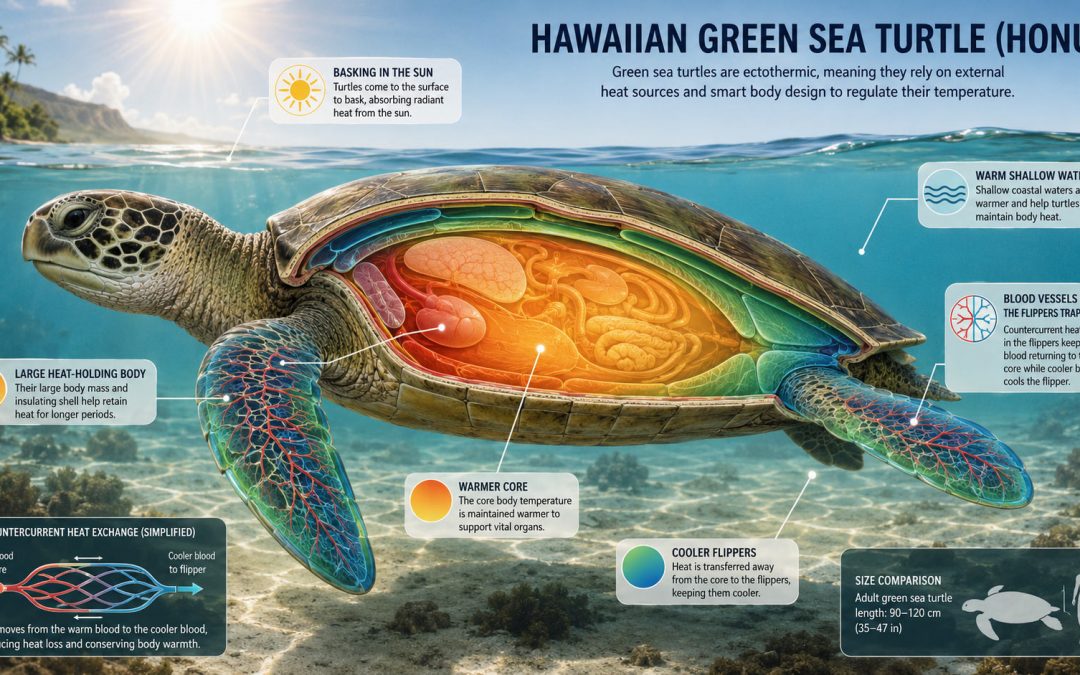
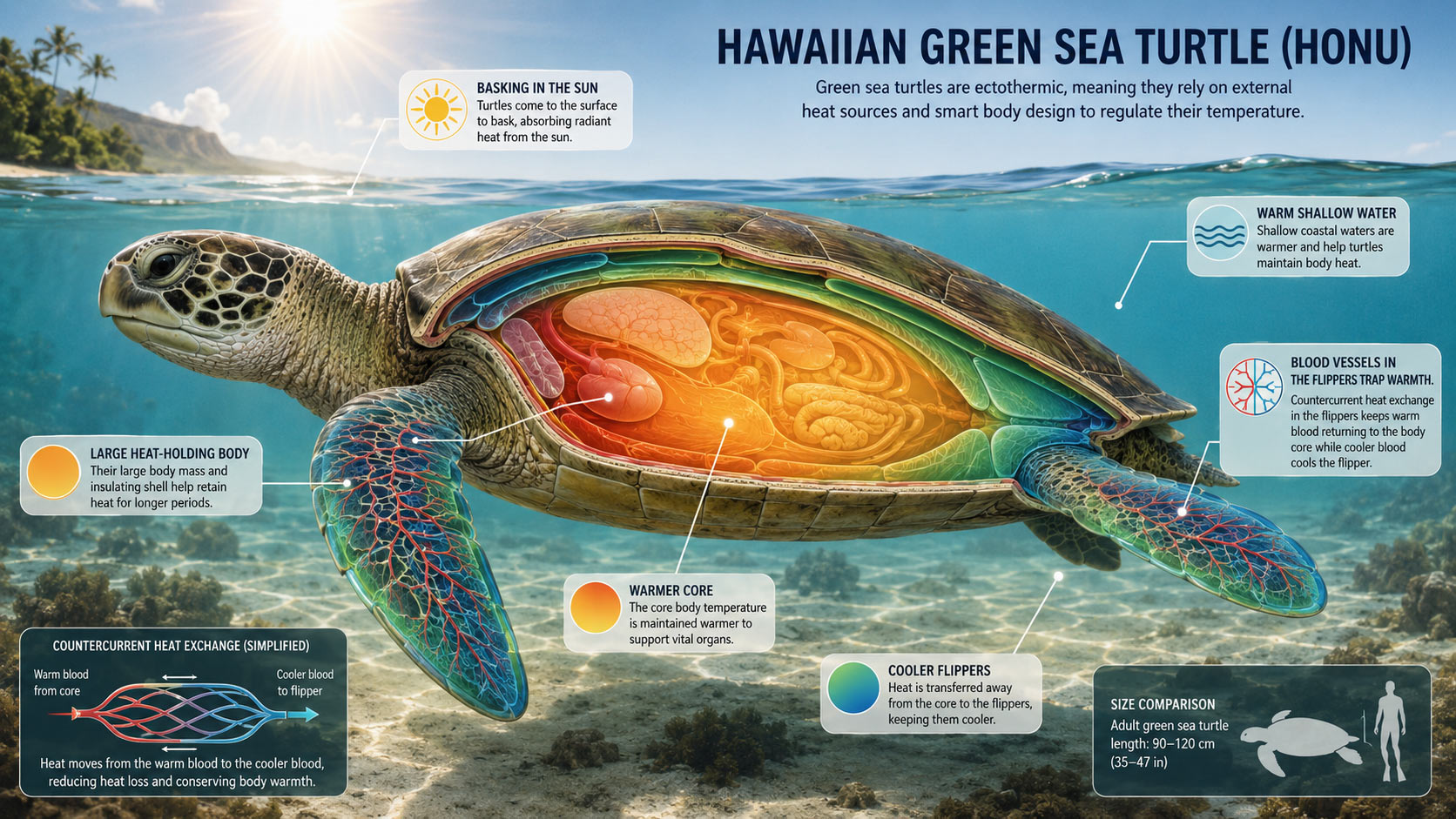
Since a turtle cannot heat itself from within very well, it leans on a few natural tricks to keep its temperature where it needs to be. The most important one is simple behavior. When a turtle wants to warm up, it moves toward warmth, drifting into sunlit shallows where the water is toasty or floating near the surface to soak up the heat of the sun. When it wants to cool off, it slips into deeper, cooler water. In a way the whole ocean becomes the turtle’s thermostat, and it adjusts by changing where it spends its time. A turtle’s metabolism also slows down in cooler water, which helps it ride out a chilly stretch without burning through energy. On top of all that, a big adult green sea turtle has size on its side. Here are the main ways honu manage their heat:
- Moving into warm, shallow, sunny water to heat up and into deeper water to cool down
- Floating at the surface to catch direct sunlight on a calm day
- Slowing the body down so it needs less energy when the water turns cool
- Using a large, heavy body that holds onto warmth far longer than a small one
Why A Big Body Helps
That last point is worth a closer look, because size matters a great deal for a cold blooded animal. A large body holds heat much better than a small one, the same way a big pot of soup stays warm long after a small cup has gone cold. Scientists call this thermal inertia, and it gives adult sea turtles a real advantage. A full grown Hawaiian green sea turtle can weigh a couple hundred pounds, and all that bulk acts like a heat bank. Once the turtle is warm, it stays warm for a long time, even if it dips into slightly cooler water for a while. An active turtle that is swimming hard also generates a little extra heat from its working muscles, so a busy honu can actually run a few degrees warmer than the water around it. This is why the smallest, youngest turtles are the most sensitive to cold, while the big adults you see gliding around Hawaii’s reefs are far better equipped to shrug off a cool spell.
Basking In The Sun, Hawaii Style
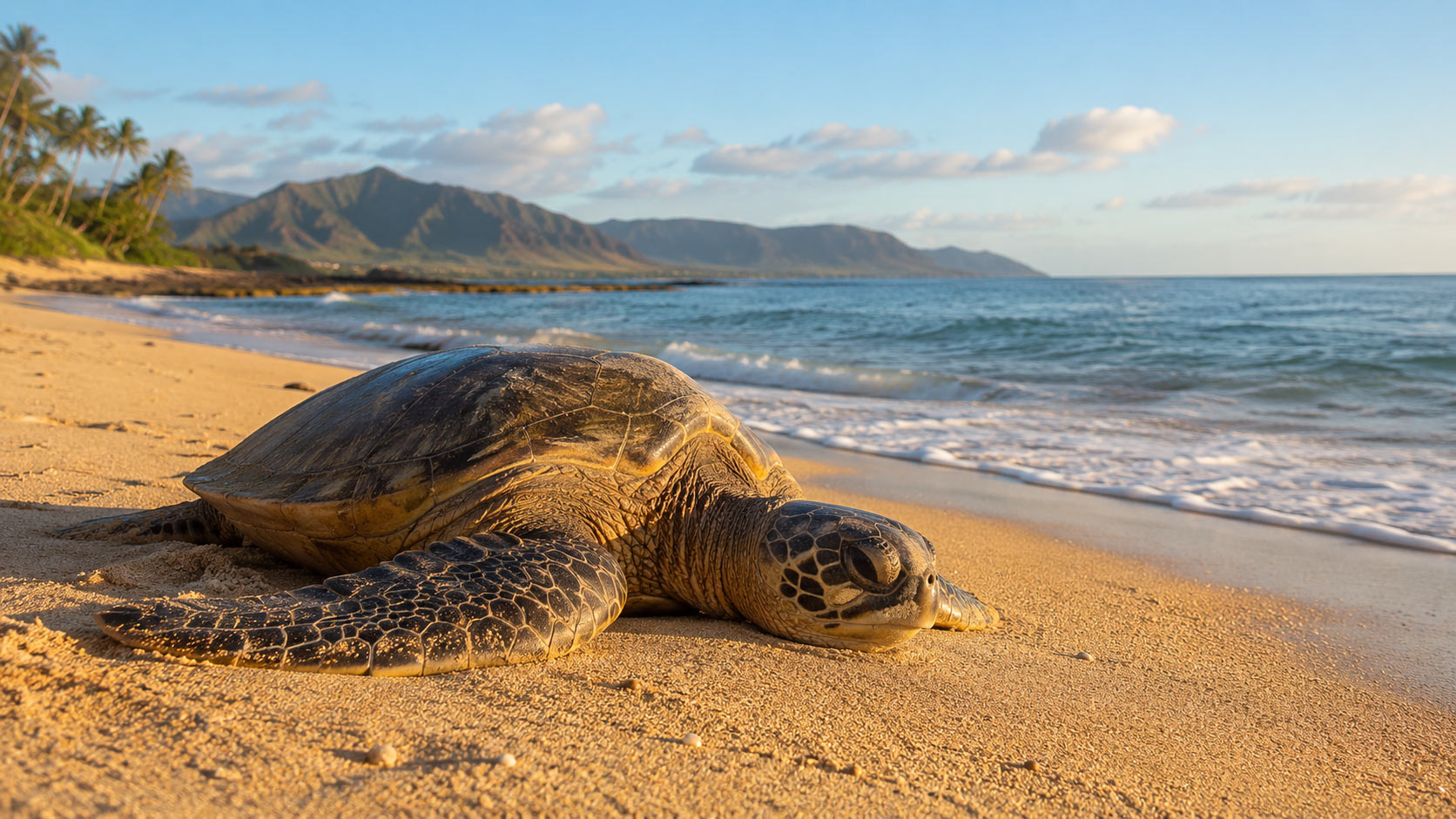
One of the most charming sights in Hawaii is a sea turtle hauled out on the sand, lying perfectly still in the sunshine like a happy beachgoer. This behavior is called basking, and Hawaiian green sea turtles are famous for it. While turtles bask on the shore for several reasons, including rest and safety from predators, soaking up warmth is part of the picture. Lying in the sun lets a turtle raise its body temperature more quickly than the water alone could, giving it a pleasant boost of heat that helps with digestion and energy. It is the turtle version of stretching out on a warm rock. If you ever come across a basking honu on an Oahu beach, the kindest thing you can do is keep your distance and let it enjoy its sunbath in peace. That resting turtle is doing important work for its body, and crowding it only forces it back into the water before it is ready.
What Happens When A Turtle Gets Too Cold
So what happens if a sea turtle cannot escape cold water in time? The result is a dangerous condition called cold stunning, and it is exactly as serious as it sounds. When the water drops too low, a turtle’s already slow body slows down even further. It stops eating, its heart rate falls, it grows weak and sluggish, and its immune system begins to shut down. A badly cold stunned turtle may be unable to swim or even lift its head, leaving it to float helplessly at the surface where it can wash ashore. This happens on the mainland in places like the chilly coasts of Texas and New England, where sudden cold snaps can leave hundreds of stranded turtles needing rescue. Wildlife teams warm those turtles back up slowly and nurse them to health before releasing them, which is delicate work. The good news for Hawaii is that this kind of emergency almost never happens here, and the reason comes down to one simple thing.
Hawaii’s Warm Water Advantage
The reason Hawaii’s honu rarely face the danger of cold stunning is that the water around the islands stays warm all year. Even in the cooler months, the ocean off Oahu hovers in a comfortable range that never approaches the dangerous lows seen on the mainland. There is no harsh winter freeze, no sudden plunge into near icy water, just a gentle, steady warmth that suits a cold blooded reptile perfectly. This is a big part of why sea turtles can be spotted around Oahu in every season, and why winter turtle snorkeling here is just as rewarding as a summer trip. While turtles on colder coastlines have to migrate or risk getting trapped by the cold, Hawaii’s honu enjoy a tropical home that keeps them active and healthy through every month of the calendar. For the turtles, the islands are a year round comfort zone. For visitors, it means a great chance to see honu no matter when you come.
The Leatherback, A Warm Blooded Exception
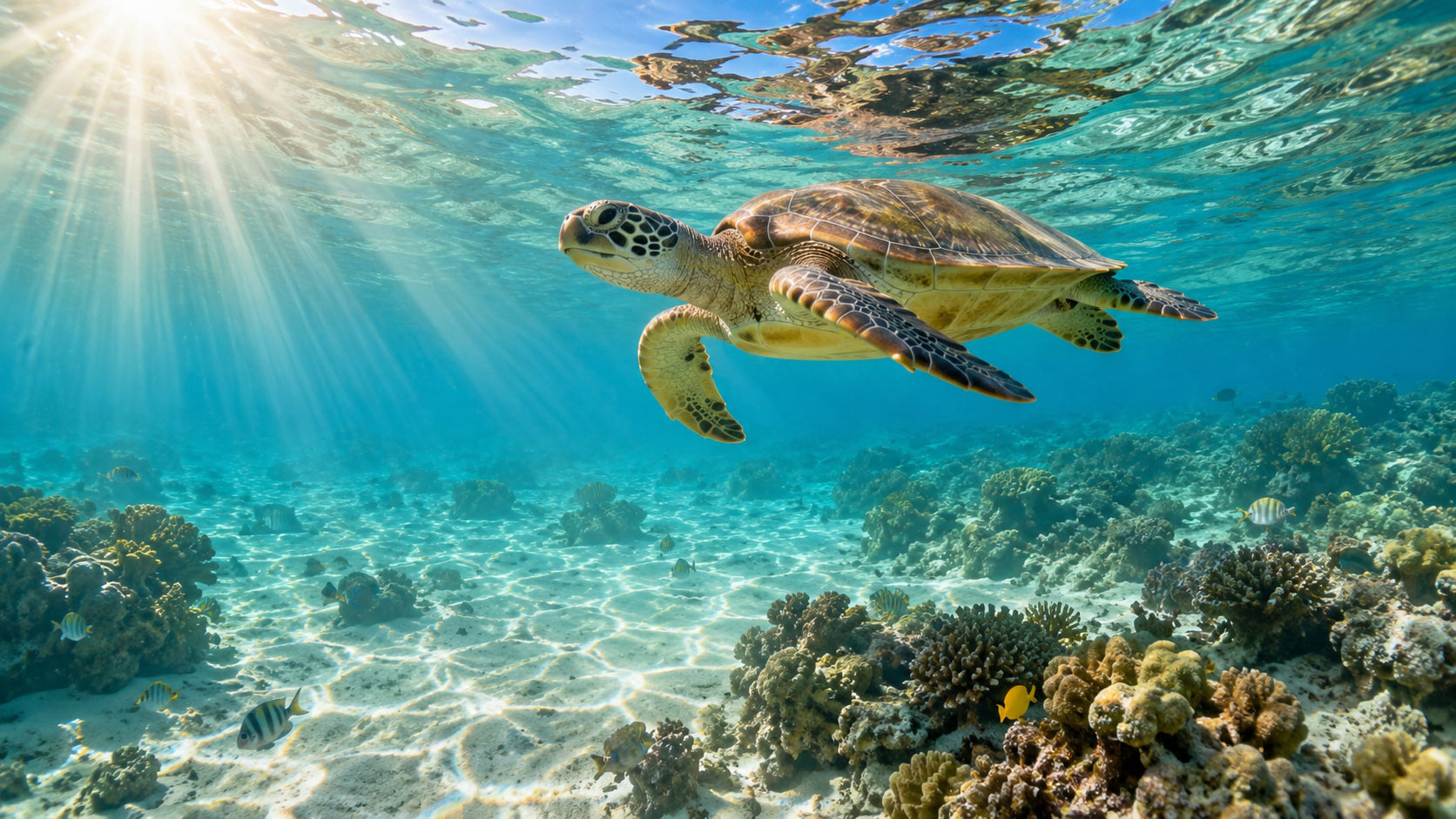
There is one sea turtle that breaks the cold blooded mold in a remarkable way. The leatherback is the largest sea turtle on earth, and it can keep its core much warmer than the water around it. This lets it swim into cold northern seas that would quickly cold stun any other species. The leatherback pulls this off thanks to its enormous size, a layer of insulating fat, and a special arrangement of blood vessels called countercurrent heat exchange, which traps body heat instead of letting it leak out through the flippers. The result is a reptile that behaves almost like a warm blooded animal. Leatherbacks are deep ocean travelers and are not the turtle you will meet on a Hawaii snorkel trip, but they are a fascinating reminder that nature finds more than one way to solve the puzzle of staying warm in the sea.
What This Means For Snorkelers
For anyone planning to slip into the water with a honu, all of this is good news. The same warm, gentle conditions that keep Hawaii’s turtles comfortable are the conditions that make snorkeling here so pleasant for people too. At a spot like Turtle Canyon just off Waikiki, the water is calm and warm enough that turtles gather to rest and feed throughout the year, which gives visitors a reliable shot at seeing them. Knowing that turtles seek out warm, sunlit water also helps you understand their behavior when you spot one. A honu cruising slowly through a bright, shallow patch of reef is doing exactly what its body wants, soaking up warmth while it grazes. When you watch a turtle in Hawaii’s clear blue water, you are seeing an animal that is perfectly matched to its surroundings, never too hot and never too cold, living in one of the friendliest stretches of ocean a sea turtle could find.
Warm Water, Warm Turtles, Happy Snorkeling
Sea turtles really can get cold, because their bodies follow the temperature of the sea instead of running their own private heater. They make up for it with smart behavior, basking in the sun, slipping between warm and cool water, and carrying big bodies that hold heat like a charm. When the water turns too cold, the result can be a dangerous case of cold stunning, but that is a worry for turtles on chilly mainland coasts, not for the honu of Hawaii. Wrapped in warm tropical water every month of the year, Hawaii’s green sea turtles stay active, healthy, and easy to find, which is wonderful news whether you are a turtle or a snorkeler hoping to meet one. So the next time you float above a honu drifting lazily through a sunny patch of reef, you will know the simple secret behind that peaceful scene. It is a perfectly warmed turtle, right at home in the gentle waters of Oahu.