What Is FP Disease and Why Are Hawaii’s Honu Getting Sick?
If you have ever watched a sea turtle glide through the water off Waikiki and noticed strange bumps or growths on its skin, you were looking at one of the most puzzling health challenges facing Hawaii’s ocean wildlife. The condition is called fibropapillomatosis, and it has been showing up on green sea turtles across the Hawaiian Islands for decades. Scientists have linked it to a herpesvirus, but the full story is far more complicated and far more connected to the health of the ocean itself. Understanding this disease is not just important for conservation. It tells us something critical about the relationship between humans and the sea.
A Disease With a Name Most People Cannot Pronounce
Fibropapillomatosis, often shortened to FP, is a disease that causes tumor-like growths to develop on and inside sea turtles. The tumors can look like cauliflower or dense clusters of smooth nodules, appearing on the skin, flippers, neck, and around the eyes. In more serious cases, they can also grow inside the body on organs like the lungs, kidneys, and heart. Scientists first documented FP in green sea turtles back in the 1930s, but the disease became far more widespread in Hawaii and Florida starting in the 1980s and 1990s.
The growths are not cancerous in the way human tumors typically are, but they can become so large and so numerous that they interfere with a turtle’s ability to swim, eat, see, and breathe. A turtle with tumors covering its eyes cannot spot food or avoid predators. A turtle with growths inside its throat struggles to eat. Without intervention, severe cases are often fatal.
What Is Actually Behind the Tumors
Researchers have identified a herpesvirus called Chelonid Herpesvirus 5 as the infectious agent associated with fibropapillomatosis. But finding the virus was only the beginning. The presence of the virus alone does not fully explain why some turtles develop tumors and others do not, or why certain areas of the ocean seem to produce more FP cases than others.
That is where the environment comes in. Research out of the University of Hawaii at Manoa found a potential connection between nitrogen runoff from land and the severity of FP in Hawaiian waters. Nitrogen from fertilizers, sewage, and urban development flows into coastal areas and fuels the growth of invasive algae. Turtles eat this algae because it is abundant in nearshore reef areas. The problem is that nitrogen-enriched algae contains higher levels of an amino acid called arginine, and arginine appears to encourage the herpesvirus to become active and trigger tumor growth.
In other words, what ends up on land does not stay on land. The chemicals that wash into the ocean can change the health of the animals swimming in it.
How Does FP Spread Between Turtles
This is one of the questions that still keeps researchers searching for answers. The exact route of transmission is not fully understood. Scientists have found the herpesvirus in marine leeches that feed on sea turtles, which suggests parasites may play a role in spreading it from one turtle to another. Cleaner fish that pick parasites off turtle skin have also been identified as potential carriers. The virus can survive in seawater, which means turtles sharing the same foraging or resting areas may be exposed through the water itself.
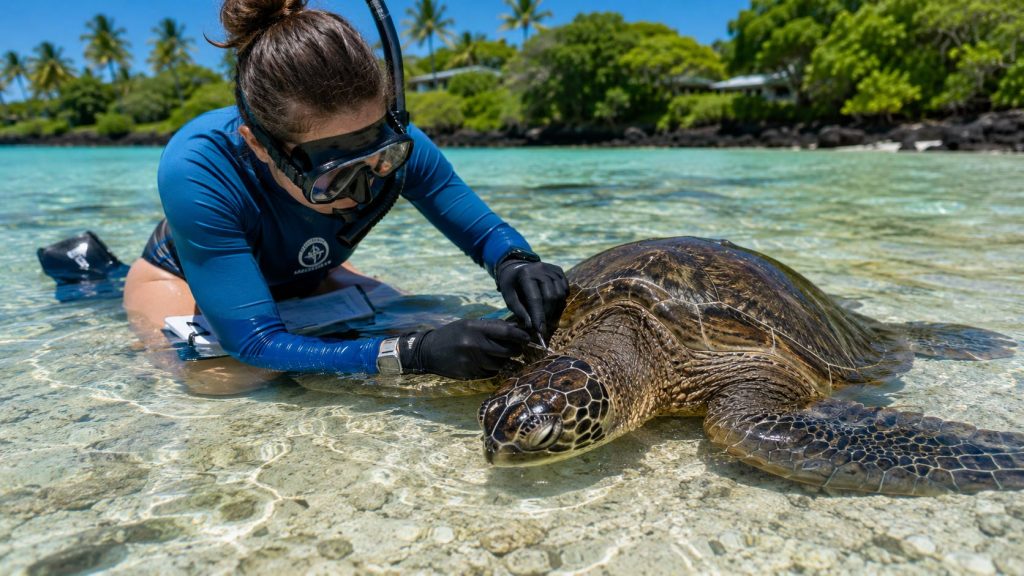
Young green sea turtles appear to be especially vulnerable when they first arrive in nearshore feeding grounds. The combination of a new environment, unfamiliar algae, and potential leech exposure during this formative stage may leave them more susceptible than older turtles. Researchers take this seriously during tagging and research activities, carefully cleaning equipment between turtle contacts to avoid any possible transfer between individual animals.
Which Turtles Are Most Affected
All seven species of sea turtles have shown documented cases of fibropapillomatosis at some point. But green sea turtles are hit the hardest. In certain study areas, more than half of all examined green turtles showed signs of the disease. Hawaiian green sea turtles, known in Hawaiian as honu, are no exception.
Florida and Hawaii have both seen significant FP rates in their green turtle populations since the 1980s. The disease is now considered one of the most serious health threats to green sea turtle populations worldwide. While honu numbers have recovered substantially since Hawaii’s sea turtles gained federal protection under the Endangered Species Act in 1978, FP continues to limit what that recovery could look like in a healthier ocean.
What FP Looks Like From the Water
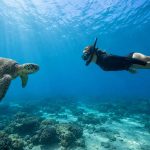
If you are snorkeling at Turtle Canyon off Waikiki and you spot a turtle with unusual bumps around its neck or flipper joints, that turtle may be living with FP. The growths vary widely in appearance. Some look like small smooth nodules roughly the size of a grape. Others grow into dense clusters that can reach the size of a grapefruit or larger. They often appear around soft tissue areas like the eyes, armpits, and the base of the flippers, though they can show up anywhere on the body.
A turtle with mild FP can still live and function relatively normally. A turtle with severe FP may appear lethargic, swim awkwardly, or rest on the seafloor longer than usual. If you spot a turtle that seems injured or distressed during your snorkel, the right move is to keep your distance and contact the Hawaii Marine Animal Response hotline so trained responders can assess the animal. Here is a quick guide to what to look for:
- Smooth, rounded growths around the neck, eyes, and flipper joints are the most common signs
- Severe cases may show clusters large enough to affect swimming or vision
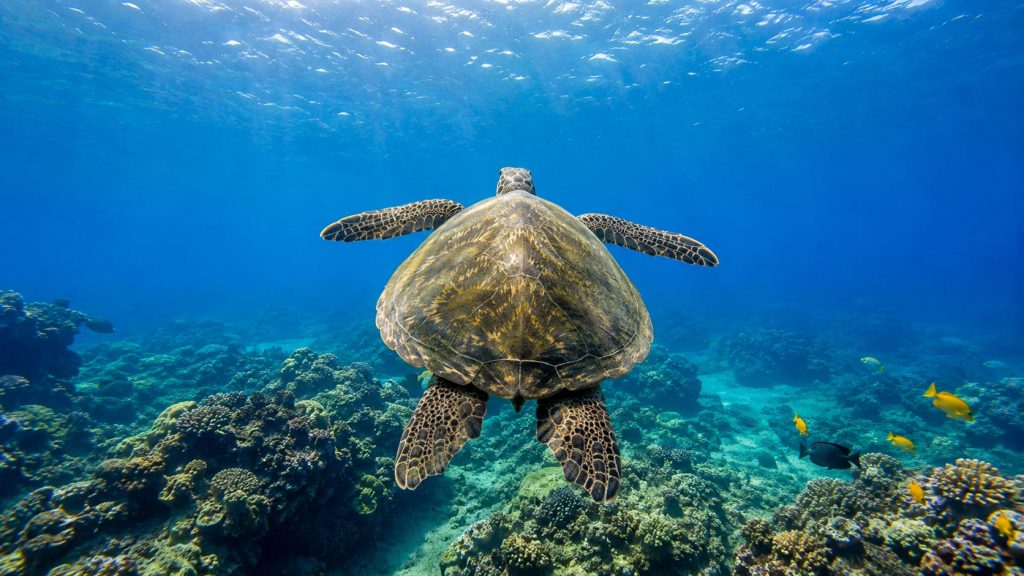
- A healthy honu typically has smooth, unblemished skin and moves through the water with ease
- Never touch or disturb a turtle, even one that appears to need help
What Is Being Done
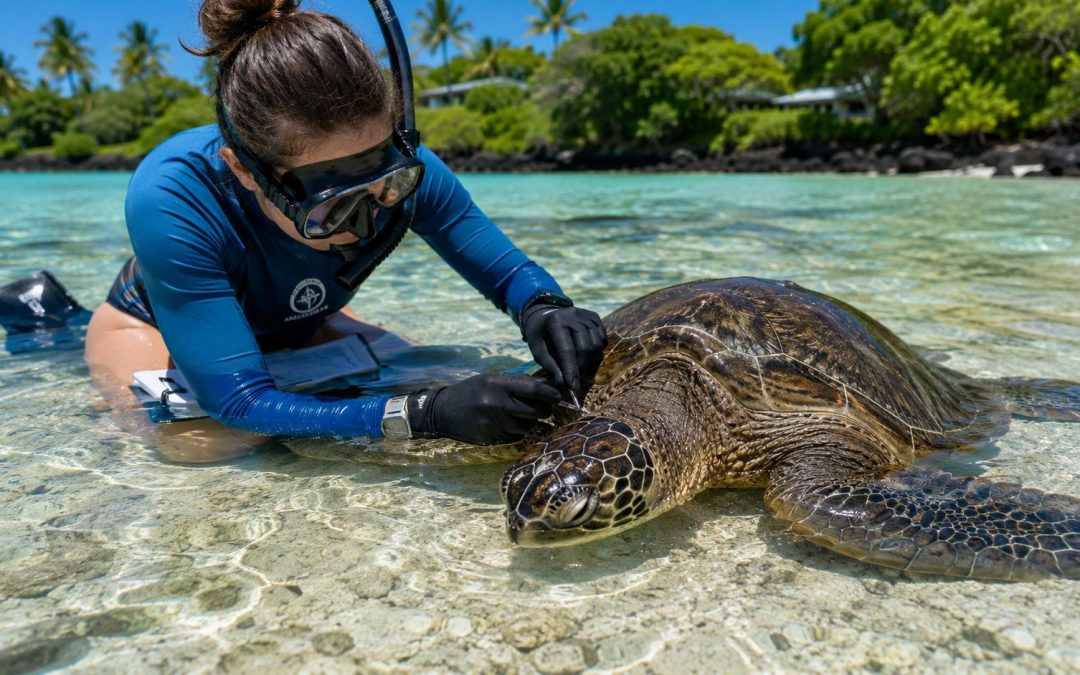
No method currently exists to eliminate FP from wild populations. The disease is too widespread and the ocean too vast for any direct treatment to reach the turtles that need it most. What rehabilitation facilities supported by NOAA and local wildlife organizations can do is take in stranded turtles with severe tumors, surgically remove the growths under veterinary care, nurse the animals back to health, and release them when they are ready. For the individual turtle, this intervention can be lifesaving.
For the bigger picture, the research continues. Scientists are working to better understand the relationship between pollution and FP, with the hope that reducing nitrogen runoff into coastal waters could lower the disease burden on turtles over time. Studies are also examining whether certain turtle populations carry genetic traits that make them more resistant to FP. The connections between human cancer research and FP research are growing too, since the tumor biology in both cases shares some remarkable similarities that scientists believe could benefit both fields of study.
Supporting Hawaii’s clean water initiatives and choosing reef-safe sunscreen when you snorkel are small but meaningful ways that visitors and residents alike can contribute to the health of the nearshore ecosystem that honu depend on.
The Bigger Picture
Fibropapillomatosis is not just a sea turtle problem. Scientists increasingly view FP rates in local turtle populations as a kind of report card for the health of the coastal environment. When nitrogen levels rise in the water, when invasive algae spreads across the reef, when pollution concentrations climb in nearshore areas, FP tends to follow. The turtle becomes a living indicator of what is happening in the water around it.
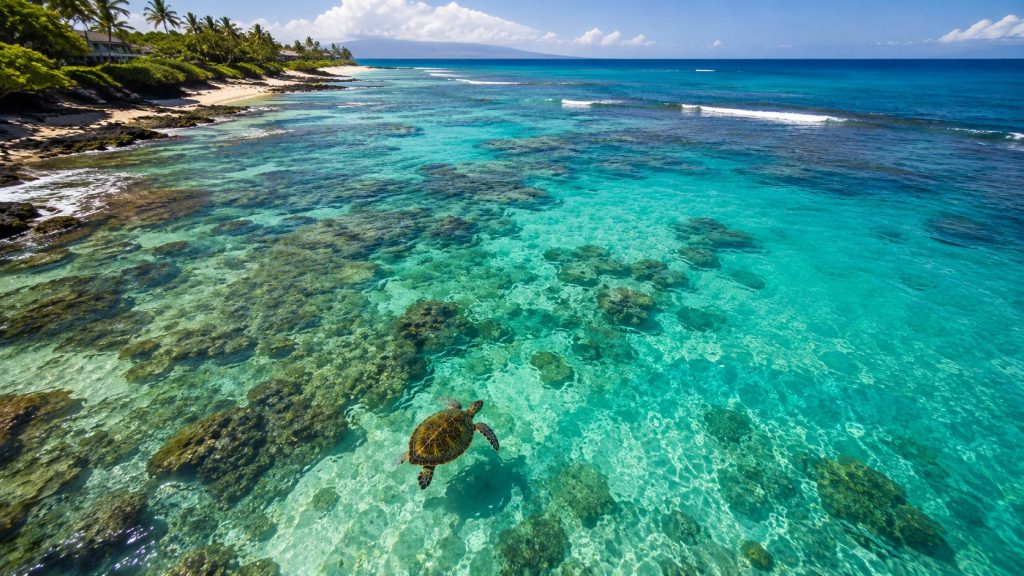
That gives extra meaning to every snorkeling trip off Waikiki. When you slide beneath the surface at Turtle Canyon and a honu glides past you with clean skin and smooth flippers, that turtle is telling you something important about the ocean’s health. And when conservation efforts help keep the water clean and the ecosystem balanced, healthy turtles are part of the result. The honu that greet you in the water are not just a wonder to witness. They are a sign of everything that is working.
Healthy Turtles Begin With a Healthy Ocean
Green sea turtles in Hawaii have come back from the brink in the decades since federal protection changed their fate. But fibropapillomatosis is a reminder that protection from hunting is only one part of the equation. The health of the water, the land that drains into it, and the ecosystem these animals navigate every day matter just as much. Every effort to keep Hawaii’s nearshore reefs clean and reduce land-based pollution gives honu a better shot at living long, healthy lives in the waters they have called home for millions of years. If you are heading out to Turtle Canyon, look closely at the turtles you encounter. More often than not, you will see just how remarkable a healthy honu really is.