From 67 Nesting Females to Nearly 500: The Remarkable Recovery of Hawaii’s Honu
Fifty years ago, Hawaii’s green sea turtle was in serious trouble. Overharvesting had pushed the species to the edge, and the future looked grim for the animal Hawaiians call the honu. Today the picture looks very different. Nesting females have climbed from just 67 counted individuals in 1973 to nearly 500 a year, and NOAA researchers wrapped a 2024 field season that identified more than 1,260 green sea turtles at a single remote atoll in the Northwestern Hawaiian Islands. The honu is not out of danger, but the numbers are telling a story of real, hard-won progress. Here is where things stand in 2026.
When the Honu Was Nearly Gone
The Hawaiian green sea turtle, known scientifically as Chelonia mydas, has called the Pacific home for millions of years. But by the mid-20th century, decades of hunting had taken a serious toll. Sea turtles were harvested for their meat and shells, and by 1973, researchers monitoring a remote atoll in the Northwestern Hawaiian Islands counted only 67 nesting females. For a species that takes 25 to 35 years to reach reproductive maturity, losing adult females meant the damage would echo through generations.
What made the situation harder to reverse was how slowly that kind of recovery happens. You cannot simply protect an ocean and expect turtle numbers to bounce back overnight. It took years of monitoring, strict enforcement, and a great deal of patience before any real progress showed up in the data. In the 1950s and 1960s, the honu had been hunted so heavily in some parts of Hawaii that local populations were nearly wiped out entirely. By the early 1970s, the question was no longer just how to help the species. It was whether a recovery was even still possible.
The Law That Changed Everything
If you want the full breakdown of what laws protect the honu today, including Hawaii state rules, federal legal status, and what the IUCN reclassification in 2025 actually means, we covered all of that in Are Oahu’s Green Sea Turtles Still Protected? The short version: yes, they are, and have been since the State of Hawaii acted in 1974 and NOAA listed the species as threatened under the Endangered Species Act in 1978. Those two protections are the foundation on which everything else in this post was built. Without them, the numbers you are about to read would not exist.
French Frigate Shoals: The Heart of Honu Recovery
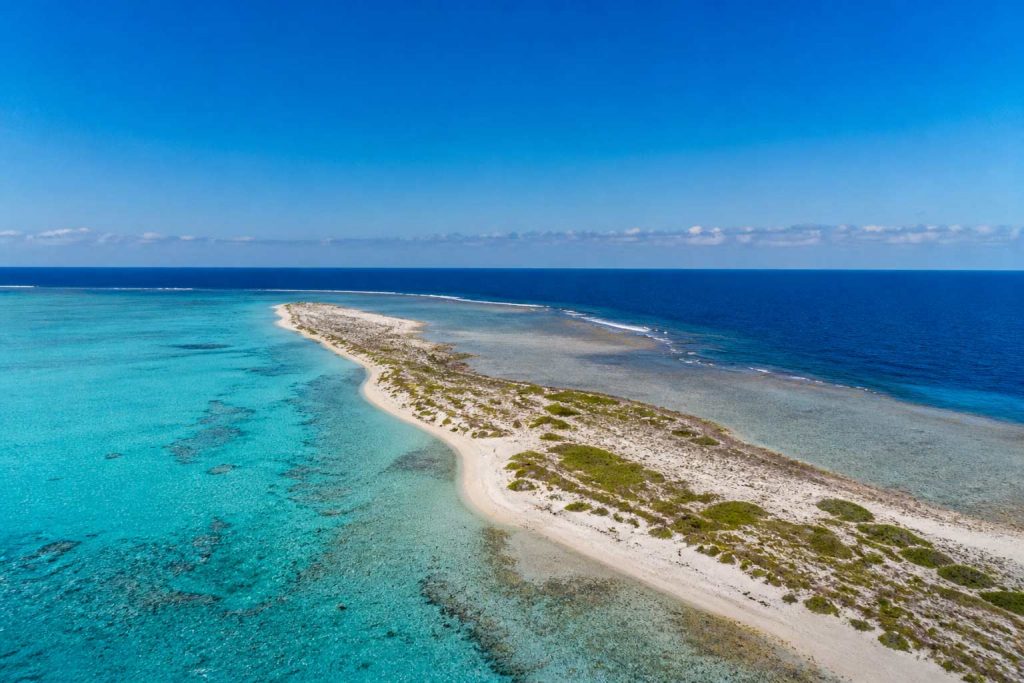
Nearly 96 percent of all Hawaiian green sea turtles trace their nesting back to one place: French Frigate Shoals, known in Hawaiian as Lalo. This remote atoll sits about 560 miles northwest of Honolulu inside the Papahānaumokuākea Marine National Monument, far from any human settlement. That remoteness is part of what makes it so critical. When female sea turtles are ready to nest, they return to the same beaches where they were born. For the vast majority of Hawaii’s honu, that beach is Lalo.
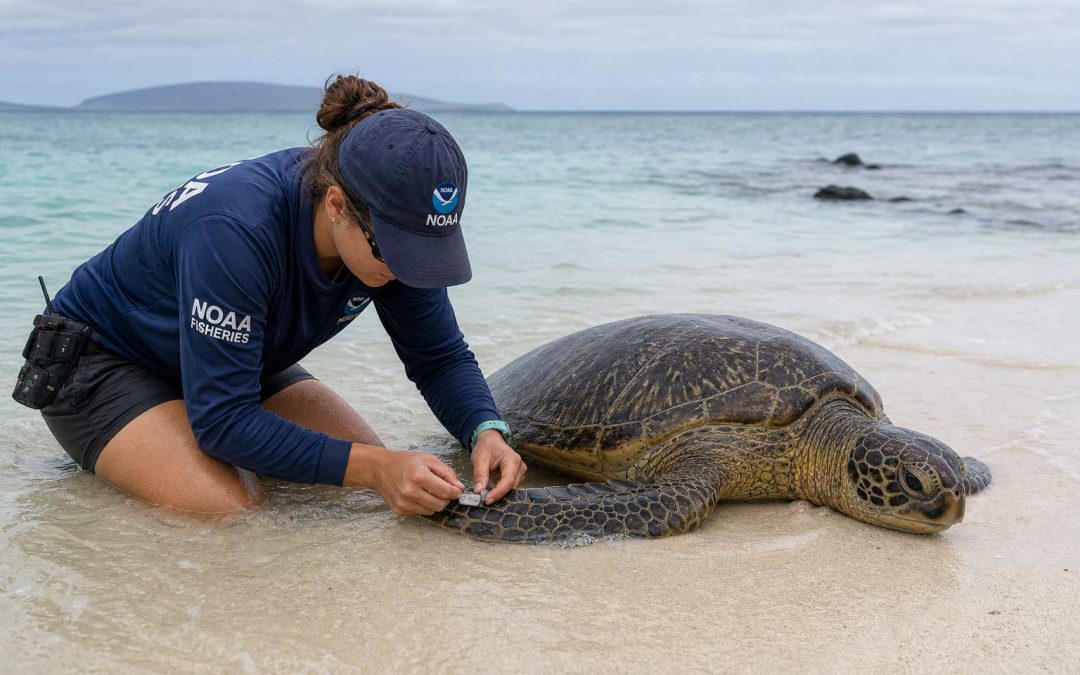
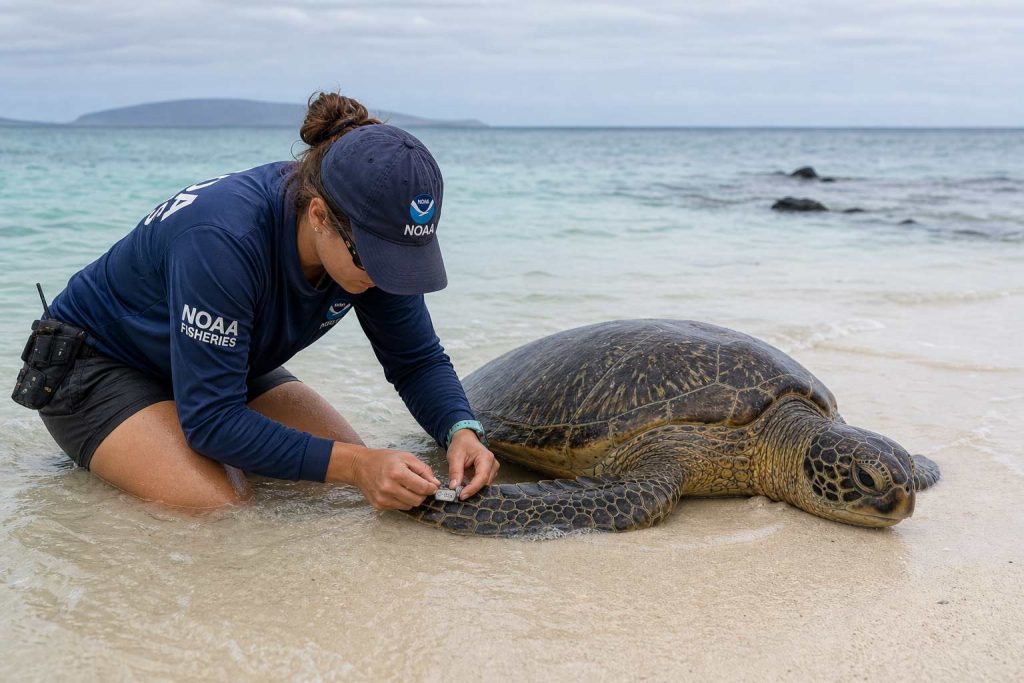
NOAA’s Pacific Island Fisheries Science Center has sent field biologists to French Frigate Shoals every year since 1973. These researchers work mostly at night through the summer months, counting nests, tagging nesting females, and tracking how many hatchlings emerge from each nest. More than five decades of continuous data have made this one of the most complete sea turtle population records anywhere on Earth. It is also the baseline against which every recovery milestone gets measured.
What the 2024 Field Season Found
The most recent published data from NOAA’s annual survey at French Frigate Shoals puts the population numbers in striking perspective. During the 2024 field season, researchers identified 1,260 green sea turtles at the atoll, including 512 females on Tern Island and 223 females on East Island. The team also aided more than 450 green sea turtles on Tern Island during daily entrapment walks, helping adults, juveniles, and hatchlings that had become caught in human-made hazards on the island.
Compare that to 67 nesting females in 1973, and the recovery becomes difficult to argue with. The population has grown at a rate of about 5 percent per year over the past two decades, and today the number of females nesting annually has climbed to nearly 500. That is a meaningful outcome for a species that many researchers feared was on a path toward extinction not long ago.
- Approximately 1,260 green sea turtles were identified at French Frigate Shoals during the 2024 field season
- 512 females were recorded on Tern Island and 223 on East Island
- More than 450 turtles were helped by field teams during daily entrapment walks
- Nesting females have grown from 67 in 1973 to nearly 500 today, a rate of roughly 5 percent per year
The Disease That Refuses to Leave
Even as the population grows, one problem has proven stubbornly difficult to address: fibropapillomatosis. FP, as it is commonly called, is a disease caused by a herpesvirus that triggers the growth of cauliflower-like tumors on the skin, flippers, eyes, and mouths of sea turtles. In some parts of Hawaii, researchers estimate that FP affects as many as 60 percent of the turtles they encounter.
The disease ranges widely from mild to severe. Some turtles carry small tumors their entire lives without serious problems. Others develop growths large enough to impair their ability to swim, eat, or see, and those animals rarely survive without veterinary intervention. Wildlife specialists working with sea turtles in Hawaii have made real progress developing techniques including laser surgery to remove tumors. Photo-identification programs have also made it easier to track individual turtles over time and monitor how disease progresses or resolves in specific animals.
The scientific community still does not have a strategy for eliminating FP from wild populations. What researchers do know is that certain water quality conditions, including elevated nitrogen levels from coastal runoff, appear to be connected to higher rates of the disease. That link gives conservationists a concrete target: cleaner coastal water could mean healthier turtles. Despite FP, Hawaiian green sea turtle populations have continued to grow, which suggests that protection from hunting and bycatch has been strong enough to outpace the toll the disease takes on the population each year.
A New Kind of Threat on the Horizon
Fishing pressure and disease are not the only challenges the honu faces in 2026. Climate change is beginning to show up in ways that concern researchers who have spent their careers watching this population recover. Sea level rise and increasingly severe storms are already causing erosion along the low-lying islets of French Frigate Shoals, which sit only a few feet above sea level at most. The same nesting beaches that sheltered 50 years of recovery are physically shrinking.
Each year, roughly 52 tons of derelict fishing gear and ocean debris washes ashore across Papahānaumokuākea Marine National Monument. NOAA teams work each field season to remove as much of that material as possible. In 2014 alone, a team pulled 57 tons of nets and plastic from the monument and freed a green sea turtle entangled in debris. The scale of that effort shows how much active maintenance the recovery depends on.
Warming sand temperatures are also a concern that researchers are watching carefully. In sea turtles, the temperature at which a nest incubates determines the sex of the hatchlings. Warmer nests produce more females. As ocean temperatures rise, scientists are watching whether the ratio of males to females in Hawaii’s turtle population shifts in ways that could put long-term breeding success at risk. The recovery so far has happened under relatively stable climate conditions. The next 50 years will look different.
How You Can Be Part of the Recovery
One of the more creative tools NOAA has developed to track the honu’s recovery is the Honu Count program, launched in 2017. Residents and visitors who spot a sea turtle wearing a numbered flipper tag can report the sighting to NOAA, adding real-time data to the population survey without requiring expensive fieldwork. Since the program began, nearly 600 people have submitted 688 sightings documenting 253 individual turtles. Every sighting adds another data point to a record that researchers use to understand migration routes, foraging habits, and population health.
The most helpful thing most people can do for sea turtles, though, is simply watch them without interfering. Hawaiian law requires people to stay at least six feet away from any sea turtle in the water and 10 feet away on land. At Turtle Canyon, just off the coast of Waikiki, guests on our snorkeling tours encounter green sea turtles regularly, and every crew member emphasizes responsible observation each time someone enters the water. Turtles that feel safe around people are more likely to continue using their foraging habitat, which benefits the population and everyone who wants to see them.
If you see a honu in distress anywhere on Oahu, you can report it to NOAA’s Marine Wildlife Hotline at 1-888-256-9840. The same number connects you to response teams for injured monk seals and other protected species. Knowing that number matters more than most people realize.
The Numbers Tell a Story Worth Protecting
Fifty years of dedicated fieldwork, legal protection, and citizen science have pulled Hawaii’s green sea turtle back from the edge. The data from 2024 confirms what researchers have been watching build slowly for decades: the honu is making a real comeback. That comeback is not guaranteed. It depends on clean water, intact nesting beaches, reduced ocean debris, and people who understand why giving these animals space is not just a rule but the reason the species is still here.
When you see a honu gliding through the water at Turtle Canyon, you are looking at one of conservation’s quiet success stories. From 67 nesting females counted on a remote atoll in 1973 to nearly 500 today, the honu has shown what is possible when a species gets the protection it needs at the right moment. That story is still being written, and what happens next depends on what all of us choose to do with the next 50 years.