From Sand to Sea: The Incredible First Journey of a Sea Turtle Hatchling
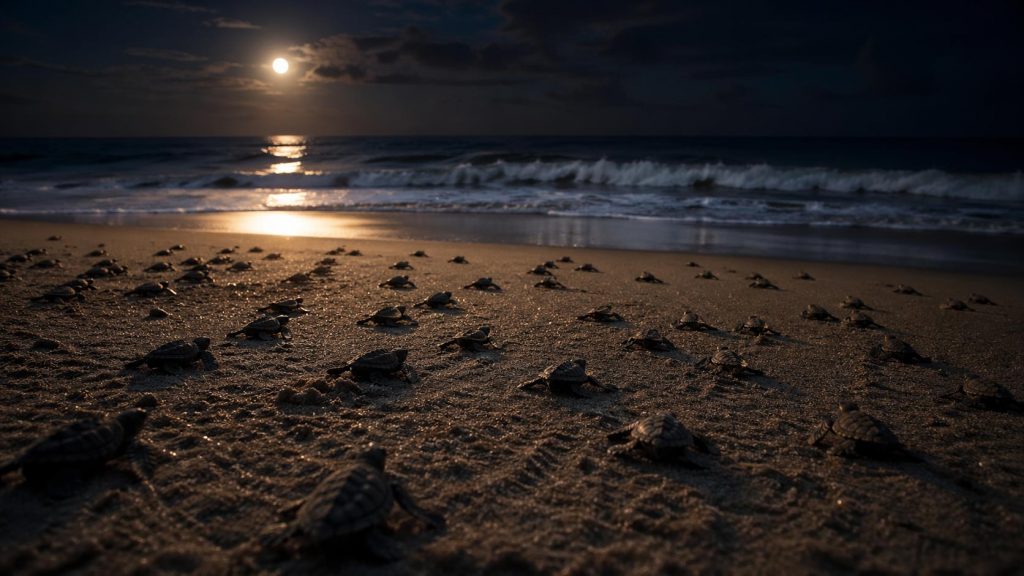
The moment sea turtle eggs begin to crack open is one of nature’s most dramatic events. Inside a sandy nest, dozens of hatchlings emerge at nearly the same time, and within hours they are scrambling across the beach toward the open ocean. But getting to the water is only the beginning. Baby sea turtles face one of the most dangerous journeys in the animal kingdom, and the ones that make it carry a secret that will guide them home decades later.
The Hatching Begins: All at Once
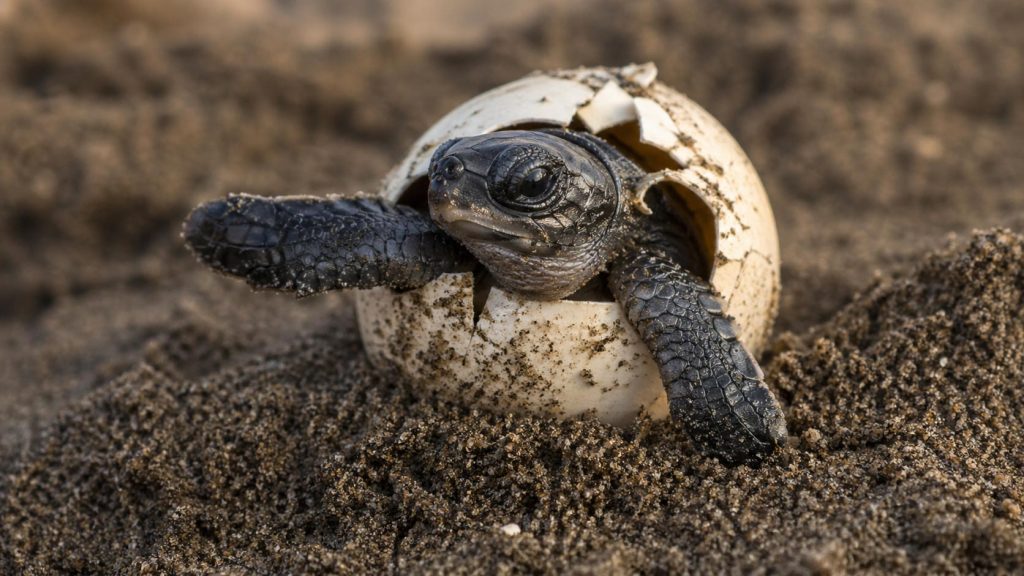
Sixty days or so after a female sea turtle buries her eggs in warm sand, something remarkable happens beneath the surface. The eggs do not hatch one by one. When one hatchling starts to chip through its shell, the movement and vibration travel through the nest and trigger the surrounding eggs to crack open as well. The result is a synchronized burst. Dozens of tiny turtles break through their shells within minutes of each other, and together they begin digging upward through the sand above them.
This group timing is not accidental. By emerging all at once, the hatchlings create a flood of moving targets that overwhelms the predators waiting on the beach. Crabs, birds, and other animals would make quick work of a single hatchling crossing the sand alone. In a group, the odds shift.
Sand temperature during those 60 days also shapes the hatchlings before they ever emerge. Warmer nests produce more females, and cooler nests produce more males. It is called temperature-dependent sex determination, and it is one of the reasons warming ocean temperatures have conservation researchers paying close attention to nesting beach conditions across Hawaii.
Before they break through the surface, each hatchling absorbs what remains of its yolk sac, a built-in fuel pack that will power them through the first critical days in open water. They will not eat anything else until they have reached deeper ocean. That small reserve of energy is everything.
Finding the Water in the Dark
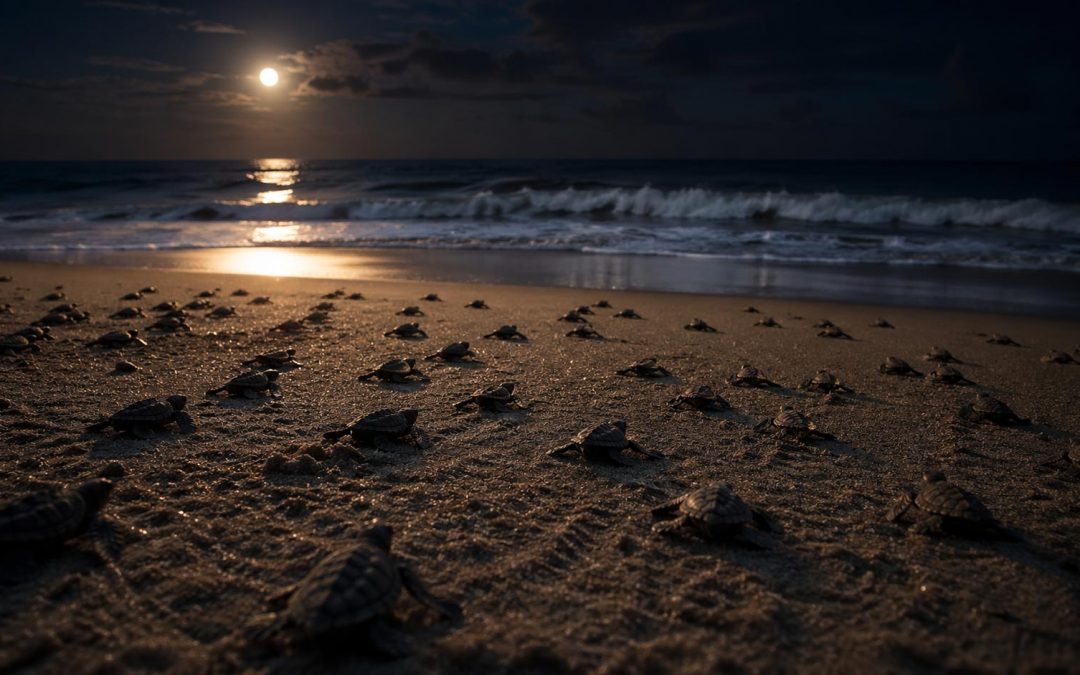
Hatchlings do most of their beach crossing at night. Cooler sand temperatures make the sprint less exhausting, and darkness gives them some cover from the birds that hunt them during the day. But how do they know which way to go the moment they break the surface?
Sea turtle hatchlings are born with the ability to read the horizon. They orient toward the lowest and brightest point in their field of vision. At night, that is the ocean, where moonlight and starlight reflect off the water’s surface. The open sea glows just slightly compared to the dark silhouette of dunes and beach vegetation behind them, and that contrast is enough to point them in the right direction.
Artificial light near nesting beaches is one of the most common threats to hatchlings making this run. When streetlights, resort lights, or bonfires compete with the natural brightness of the ocean horizon, young turtles lose their compass and crawl inland instead of toward the sea. It is one of the reasons many coastal communities near nesting beaches now use shielded or amber-colored lighting during nesting season. Light sources that commonly confuse hatchlings include:
- Streetlights and highway lighting near the beach
- Resort balcony and pool lighting left on overnight
- Bonfires and open-flame gatherings on the sand
- Flashlights and phone screens used by nighttime beachgoers
The Frenzy: Days of Non-Stop Swimming
The moment hatchlings hit the water, they do not slow down. Researchers call this the frenzy phase. It is a period of near-constant swimming that can last several days, driven entirely by the yolk sac energy reserve absorbed before hatching. The goal is to push through the shallow coastal zone and reach deeper water where large predators have a harder time getting to them.
During the frenzy phase, hatchlings are not stopping to sleep or eat. They swim with an urgency that is hardwired into them, catching whatever currents are moving offshore and riding them out to sea. In Hawaiian waters, young green sea turtles follow ocean current patterns that have carried their ancestors across the Pacific for thousands of years.
The transition from beach to open ocean is the most dangerous stretch of a sea turtle’s life. What keeps them going through it is a combination of instinct, timing, and that last bit of yolk.
The Lost Years in Open Ocean
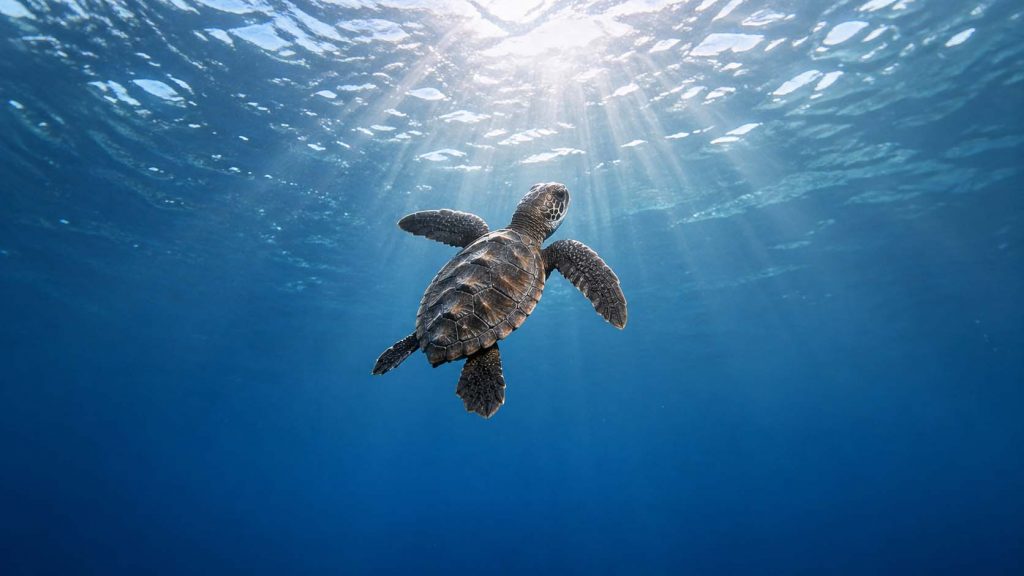
Once hatchlings reach the open ocean, they vanish. Scientists call this stretch the lost years because for a long time, researchers simply did not know where baby sea turtles went after leaving the coast. The tracking technology needed to follow something so small into such a vast body of water did not exist, and the turtles themselves left almost no trace.
Research has since revealed that many hatchlings drift with ocean currents and find shelter in large floating mats of Sargassum, a type of brown seaweed that gathers in patches across the open Pacific and Atlantic. These mats become the hatchling’s entire world for months or even years. The seaweed provides cover from predators above and below, and within the tangled growth, the hatchlings find small crabs, tiny jellyfish, fish eggs, and other invertebrates to feed on. Common food sources inside a Sargassum mat include:
- Small crabs and amphipods
- Tiny jellyfish and salps
- Fish eggs and zooplankton
- Invertebrates sheltering in the floating seaweed
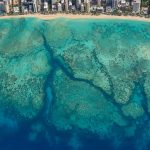
For Hawaiian green sea turtles, this open-ocean stage eventually gives way to a return to coastal reef systems. Young turtles move back to shallow water when they have grown large enough, typically a few years into life when they reach roughly 8 to 10 inches in shell length. The reefs around Oahu and the other Hawaiian islands become the feeding grounds where they will spend most of their adult lives.
A Compass Built Into the Brain
One of the most remarkable things about a sea turtle hatchling happens in those first frantic minutes on the beach. As it crosses the sand and enters the water, it is recording something it will carry for the rest of its life: the unique magnetic signature of the beach where it was born.
Tiny crystals of a mineral called magnetite are embedded in the brain tissue of sea turtles. These crystals respond to the Earth’s magnetic field and give sea turtles the ability to detect their location on the planet with extraordinary precision. Every region of ocean has a slightly different magnetic profile, and sea turtles can sense those differences.
This biological GPS is how female sea turtles navigate back to the same stretch of beach where they hatched, sometimes 20 or 30 years later, after spending decades traveling thousands of miles through the open Pacific. It is one of the most sophisticated navigation systems found in any animal on Earth, and it all begins on that first run across the sand.
Seeing the Result of That Journey in Oahu
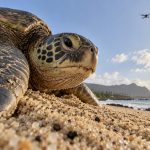
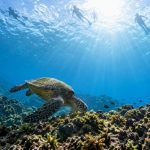
When you snorkel at Turtle Canyon off Waikiki, you are face to face with animals that survived every stage of this journey. The green sea turtles you see grazing on the reef or drifting through the water column were once hatchlings that scrambled down a beach in the Northwestern Hawaiian Islands, pushed through the surf, drifted across the open Pacific, and eventually found their way to the reefs around Oahu.
Hawaii’s honu nest primarily at the French Frigate Shoals, a remote atoll in the Northwestern Hawaiian Islands that is one of the most important sea turtle nesting sites in the entire Pacific. The turtles swimming through Turtle Canyon began their lives there, and the magnetic map they built on their very first night is part of what keeps them tied to Hawaiian waters.
At Turtles and You, our Turtle Canyon snorkeling tour departs from Kewalo Basin Harbor twice a day, with morning and afternoon trips available. Snorkel gear is included, the crew walks you through a safety briefing, and you will have around 45 minutes in the water alongside the turtles. Come meet the survivors.
Small Creatures, Impossible Journey
What a sea turtle hatchling accomplishes in its first 72 hours is something worth sitting with. It cracks through a shell, digs out of a buried nest, reads the light of the sky like a map, outruns crabs and birds across open sand, crashes through breaking surf, and then swims almost without stopping for days on nothing but yolk. And while all of that is happening, it is quietly recording the magnetic address of its birthplace, a coordinate it will carry in its brain for decades.
The green sea turtles waiting for you at Turtle Canyon all started exactly the same way.