From 40,000 to Near Zero: The Shocking Story of the Kemp’s Ridley Sea Turtle
Of all the sea turtles swimming through Earth’s oceans today, none have a story quite as gripping as the Kemp’s ridley. It is the smallest sea turtle in the world. It is also the most endangered. For decades, its population fell so fast and so far that scientists openly wondered if there was any way to save it. What happened next is one of the most remarkable conservation recoveries in ocean history, though the turtle’s future is still not guaranteed.
You won’t find Kemp’s ridley sea turtles in Hawaii. Their range is limited to the Gulf of Mexico and the Atlantic Ocean, far from the warm Pacific waters where Hawaiian green sea turtles thrive. But understanding every sea turtle species matters, because the ocean connects all of them. What threatens one species often threatens others, and the lessons learned from saving the Kemp’s ridley have helped protect sea turtles worldwide, including the honu you see gliding through Turtle Canyon off the coast of Waikiki.
A Turtle Unlike Any Other
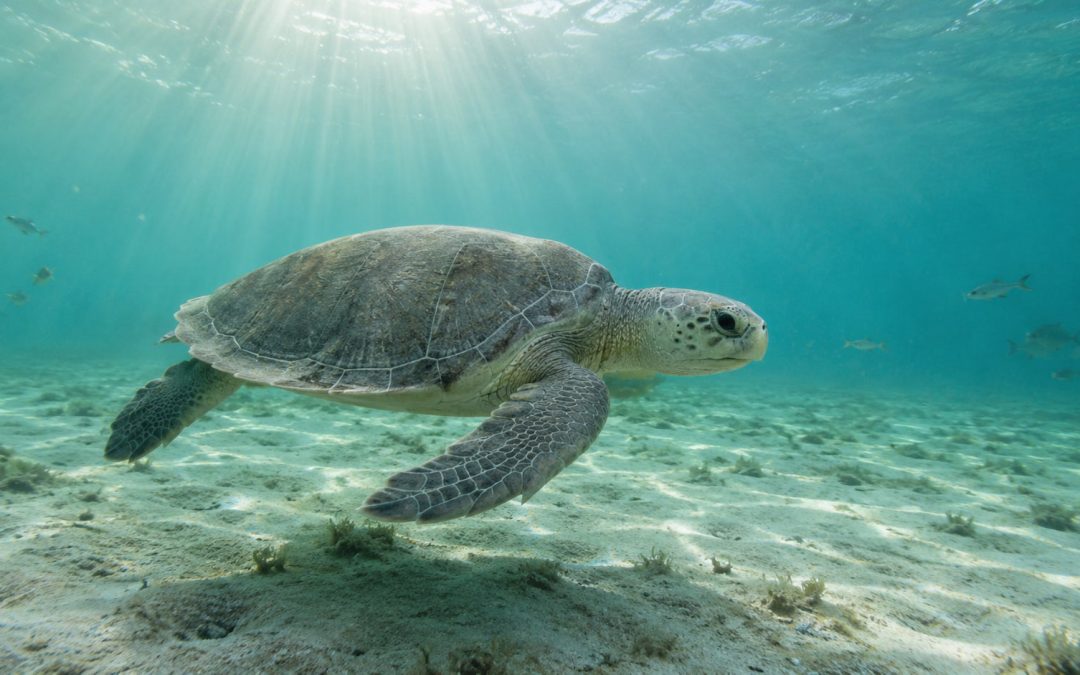
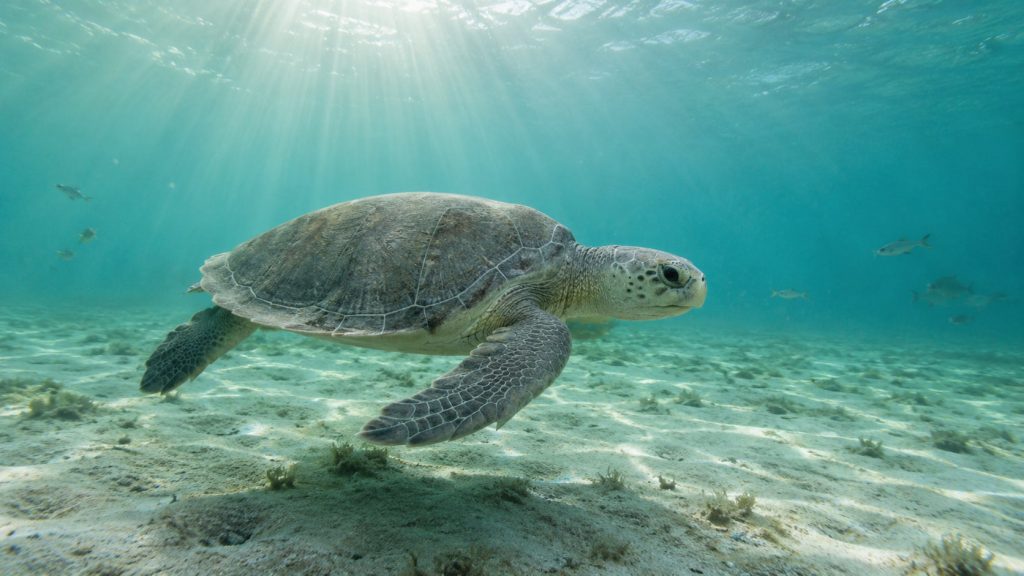
The Kemp’s ridley goes by the scientific name Lepidochelys kempii. Compared to other sea turtles, it is compact and almost round in shape. Adults typically reach about 24 to 28 inches in length and weigh around 100 pounds, making them significantly smaller than the green sea turtle, which can weigh 300 pounds or more. Their shell, called the carapace, is usually olive gray or grayish green, and it has a shape that looks almost circular from above rather than the more oval or elongated shape seen in other species.
The turtle was named after Richard Kemp, a Florida fisherman who collected specimens and brought them to the attention of scientists in the early 1900s. For years after that, marine biologists were puzzled about where this animal lived, where it nested, and just how many of them were out there. The answers, when they finally came, were both thrilling and alarming.
What Kemp’s Ridleys Eat
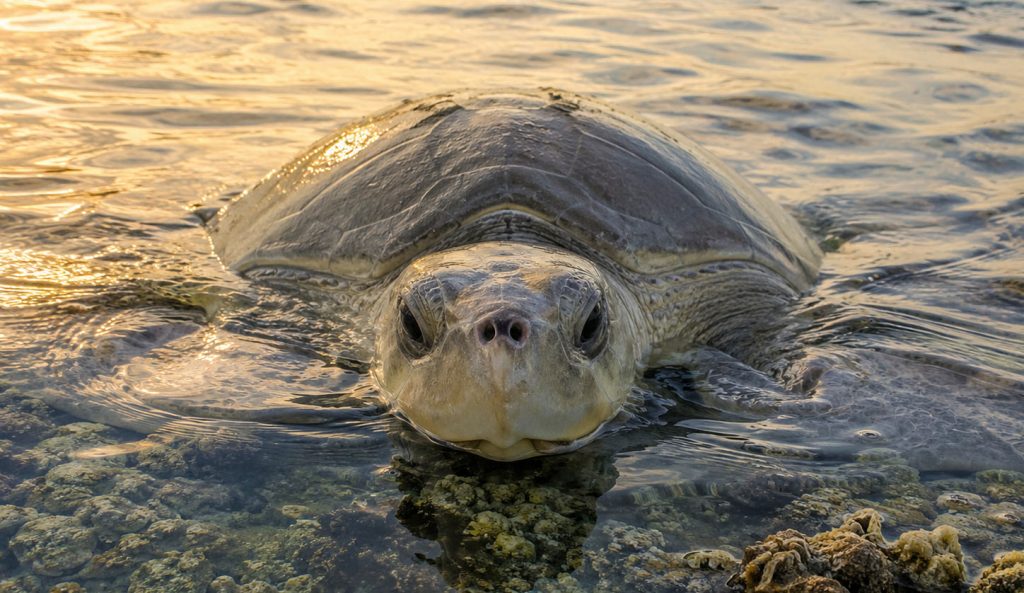
Kemp’s ridleys are not picky eaters, but they do have a strong preference. Crabs make up the bulk of their diet, especially swimming crabs that drift in the currents of the Gulf of Mexico. They also eat shrimp, snails, clams, jellyfish, and occasionally small fish. Their powerful jaws are built for crushing hard-shelled prey, and they use them constantly as they forage through shallow coastal waters and sandy seafloor habitats.
Their preference for coastal feeding areas is one reason they interact so often with commercial fishing operations, which has historically made them one of the most vulnerable sea turtle species to accidental capture.
The Arrival: Witnessing an Arribada
The most extraordinary thing about the Kemp’s ridley is the way it nests. Most sea turtles come ashore alone, quietly, under cover of darkness. The Kemp’s ridley does things differently. In an event known as an arribada, the Spanish word for “arrival,” thousands of females gather offshore and then swarm the beach together, nesting in waves during the daytime hours. It is the only sea turtle species that regularly nests in daylight, and the scale of these events is unlike anything else in the natural world.
Nearly all Kemp’s ridley nesting happens at a single beach: Rancho Nuevo, a remote stretch of coastline in the Mexican state of Tamaulipas. In 1947, a Mexican engineer named Andres Herrera filmed an arribada there that stunned scientists when the footage was later discovered. The film showed an estimated 40,000 female Kemp’s ridleys crawling ashore to nest on a single day. Forty thousand turtles. On one beach. On one afternoon. It was a sight that no living person had ever documented before, and no one has seen anything like it since.
The Crash That Almost Ended Everything
By the time marine scientists fully understood what was happening at Rancho Nuevo, the population was already in freefall. For decades, people had been harvesting eggs directly from the beach by the thousands. Adults were being caught in shrimp trawl nets and drowned before they could reproduce. The numbers collapsed faster than anyone thought possible for a species that had so recently numbered in the tens of thousands.
By 1985, researchers counted only 702 nests at Rancho Nuevo. That single number tells the whole story. From an estimated 40,000 females nesting in 1947 to fewer than 702 nests just 38 years later, the Kemp’s ridley was on a path toward extinction, and it was not a slow path. It was a near-vertical drop. The primary threats driving that collapse were:
- Harvesting of eggs directly from the nesting beach over many decades
- Adult turtles drowned as accidental bycatch in commercial shrimp trawl nets
- Loss of coastal habitat along Gulf of Mexico feeding grounds
- Pollution and marine debris in nearshore waters
The Fight to Pull It Back
The Mexican government began sending armed marines to guard Rancho Nuevo against egg poachers as early as the mid-1960s. That protection helped slow the decline, but it was not enough on its own to reverse it. The real turning point came from a series of international conservation efforts between Mexico and the United States that tackled the problem from multiple directions at once.
One of the most significant steps came in 1989, when the United States government required shrimping boats to install Turtle Excluder Devices, known as TEDs, in their nets. A TED is a grid fitted inside a trawl net that allows shrimp to pass through while redirecting sea turtles out through a separate opening and back to sea. The change did not happen without pushback from the fishing industry, but over time the data became clear. TEDs were saving turtles without eliminating the shrimp catch.
On the nesting beach side, a long-term program at Padre Island National Seashore in Texas began transplanting Kemp’s ridley eggs from Rancho Nuevo with the goal of establishing a secondary nesting site in the United States. Hatchlings born at Padre Island were raised in captivity for a period to improve their survival odds, then released into Gulf waters. Year by year, some of those turtles began returning to Padre Island to nest, building what scientists hoped would become a second population stronghold outside of Mexico.
Where Things Stand Today
The Kemp’s ridley remains critically endangered. But the recovery efforts have made a measurable difference. Nesting numbers climbed through the 1990s and into the 2000s, and for a time there was genuine optimism that the worst was behind the species. Then came the Deepwater Horizon oil spill in 2010, which hit the Gulf of Mexico hard and set recovery back significantly. Scientists documented a drop in nesting numbers in the years following the spill, though the turtles did not disappear.
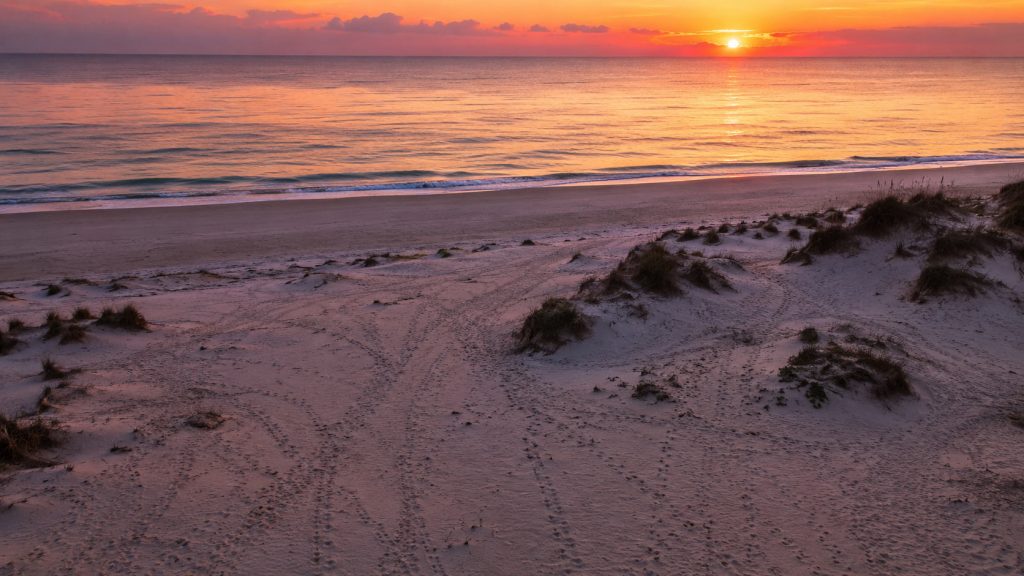
As of the mid-2020s, conservation organizations continue to monitor Kemp’s ridley populations closely. The nesting numbers are far better than the low point of 1985, but the species is still nowhere near the population levels seen in that 1947 film. The threats are ongoing. Bycatch, pollution, coastal development, and climate change all continue to affect both the turtles and the beaches they depend on.
Why One Beach Changes Everything
The Kemp’s ridley’s dependence on a single primary nesting beach creates a unique vulnerability that most sea turtle species do not face in the same way. If something catastrophic were to happen at Rancho Nuevo, whether from a hurricane, an oil spill, or unchecked human activity, the entire global nesting population would be affected. This is why the international partnership between the United States and Mexico, the armed beach protection, the egg monitoring, and the Padre Island secondary nesting program all matter so much. No other sea turtle species puts nearly all of its eggs, almost literally, in one basket the way the Kemp’s ridley does.
What This Means for Sea Turtle Lovers Everywhere
If you care about sea turtles, the Kemp’s ridley is worth knowing about even if you’ll never encounter one in the water. Its story is a direct lesson in how quickly a species can collapse when the right safeguards are not in place, and how much effort it takes to bring one back from the edge. Every sea turtle swimming past your snorkel mask at Turtle Canyon represents a species that has faced similar pressures, and every conservation law on the books today was shaped in part by stories like this one.
When you snorkel with Hawaiian green sea turtles at Turtle Canyon on our tour departing from Kewalo Basin Harbor in Honolulu, you’re swimming alongside animals that are also federally protected, carefully monitored, and the subject of decades of dedicated conservation work. That protection exists because people paid attention to what nearly happened to the Kemp’s ridley and other sea turtle species, and chose to act before it was too late.
The World’s Most Endangered Sea Turtle Still Swims
The Kemp’s ridley is small. It is rare. It is extraordinarily vulnerable. But it is still here. After a population collapse that scientists once feared could not be reversed, this little olive-gray turtle keeps showing up at Rancho Nuevo, crawling up the beach in broad daylight, and laying its eggs in the sand. That is not a guaranteed future. It is a borrowed one, made possible by international cooperation, legal protection, and the work of researchers who refused to give up on a species that looked like it was already lost. The Kemp’s ridley has not won its fight yet. But it is still fighting, and that matters to every ocean on the planet.