Why Do Hawaiian Green Sea Turtles Bask on Shore? The Science Behind the Sunbath
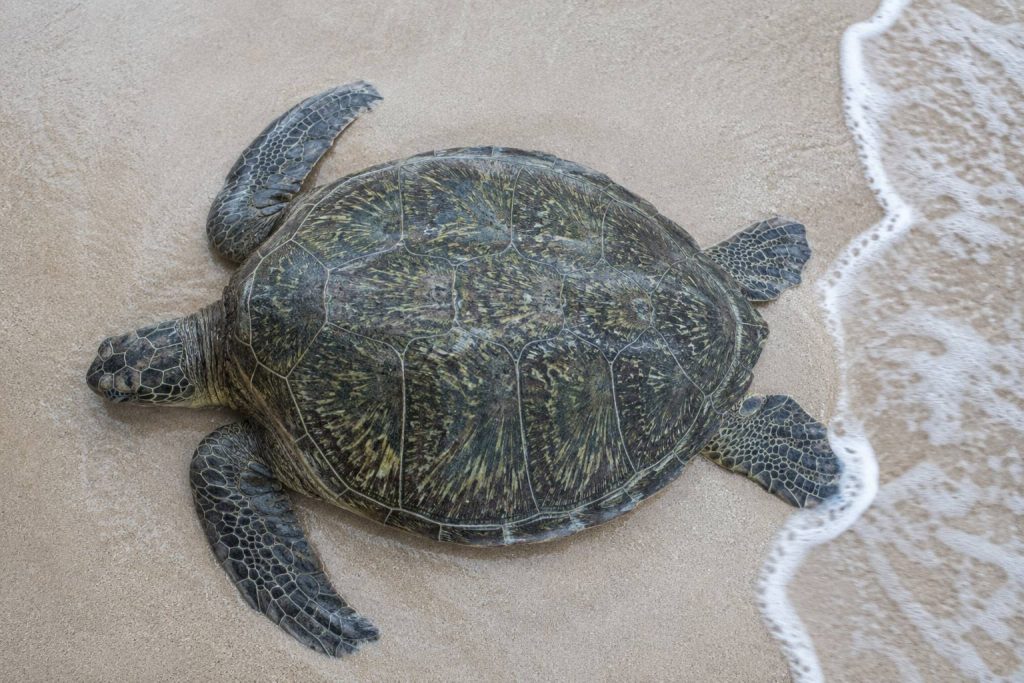
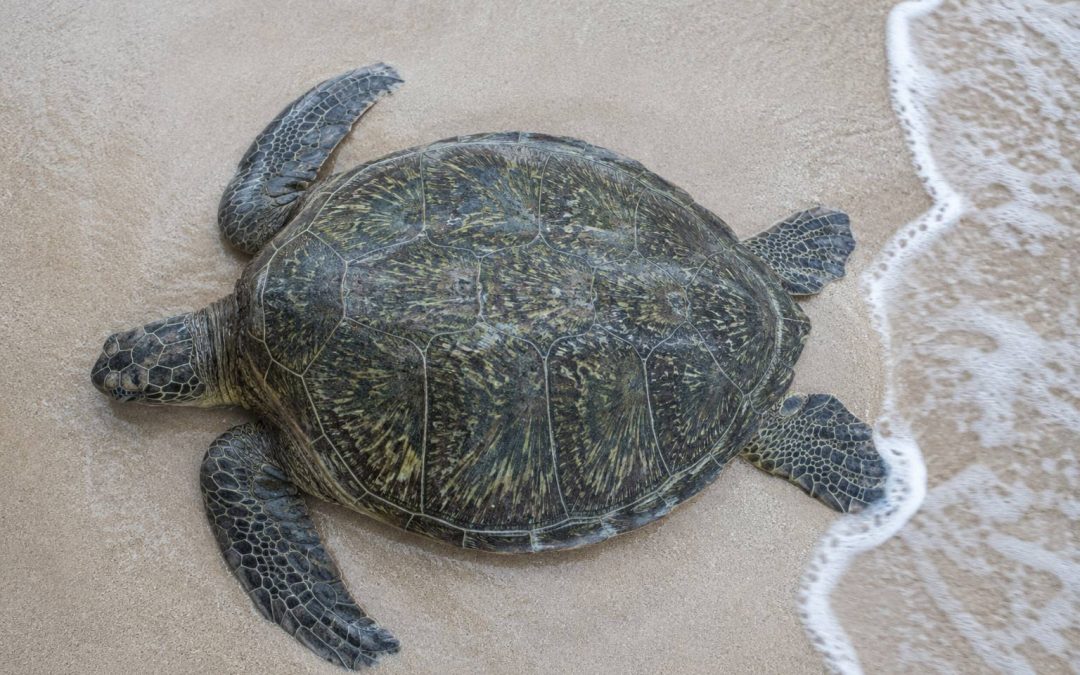
Most people picture sea turtles moving silently through clear blue water, all smooth flippers and unhurried grace. What catches visitors completely off guard is rounding a bend on an Oahu beach and finding one stretched out in the sand, perfectly still, eyes half-closed, soaking up the afternoon sun like it has all the time in the world. This behavior is called basking, and it is almost completely unique to Hawaii’s green sea turtles. There are real, fascinating reasons behind every minute they spend on dry land.
What Basking Means and Why It Looks So Strange
When someone spots a green sea turtle motionless on the beach, the instinct is to worry. But basking is intentional and purposeful. It is the act of a sea turtle voluntarily hauling its body out of the water to rest on land, usually in a spot with good sun exposure, often for several hours at a time.
It looks unusual because sea turtles spend almost their entire lives in the ocean. Unlike tortoises, they cannot fully retract into their shells, and their large front flippers are built for swimming, not walking. Getting onto a beach takes real physical effort. The fact that they choose to do it at all says something important about how much they benefit from the experience.
What makes it even more remarkable is that Hawaiian green sea turtles are among the only sea turtle populations on the planet that bask on land outside of nesting season. This is not behavior you will see routinely in the Caribbean, along Australian coastlines, or off the shores of Mexico. Hawaii is genuinely different.
Hawaii Is One of the Only Places on Earth Where This Happens
Among all the world’s sea turtle populations, only a small number are known to haul out on land outside of nesting activity. In the main Hawaiian Islands, regular basking was rarely documented before the 1990s. The behavior became more common and widespread as turtle populations recovered following the ban on commercial honu harvest in the 1970s. More turtles in the water meant more basking was observed on shore, and researchers began to recognize it as a consistent and meaningful part of Hawaiian green sea turtle life.
Today, basking is documented on beaches across Oahu, Maui, the Big Island, and Kauai. Some individual turtles return to the same stretch of beach repeatedly over the years. Researchers and wildlife volunteers who track them by the unique markings on their faces and shells have come to know certain animals by sight.
The Real Reasons a Honu Leaves the Water
Sea turtles are ectotherms, meaning their body temperature is largely governed by the environment around them. Unlike mammals, they cannot generate their own internal heat. When ocean temperatures drop even slightly, a turtle’s metabolism slows down. Digestion becomes less efficient, immune function weakens, and energy output falls.
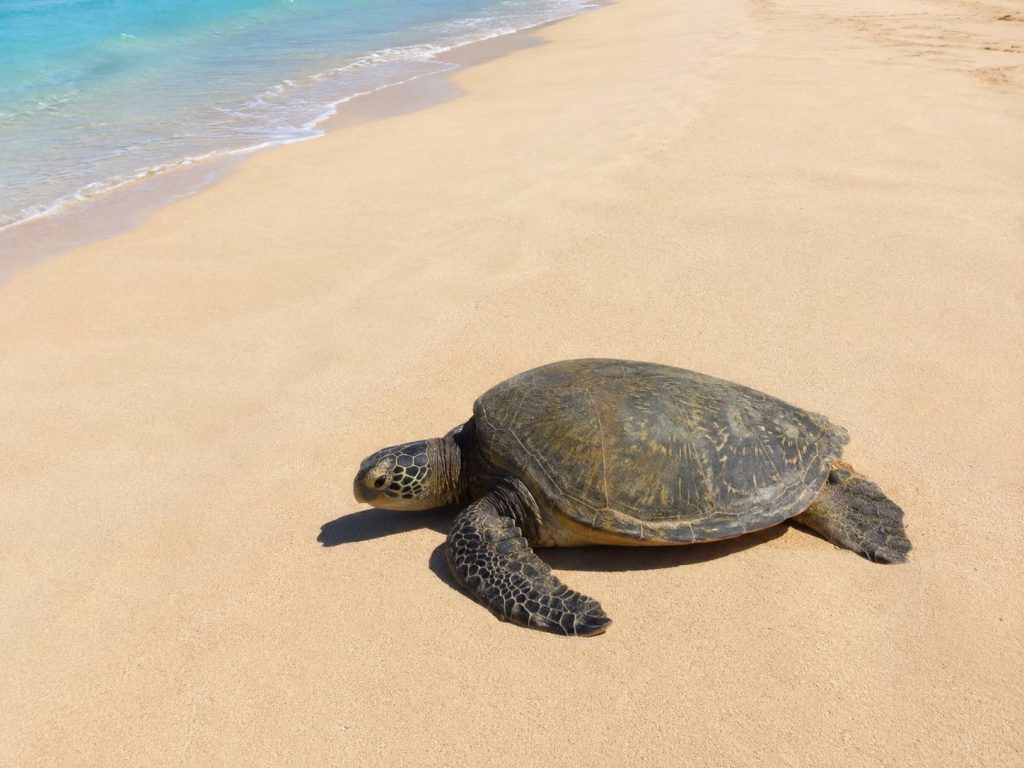
Basking fixes this. Lying on a warm beach in direct sunlight raises a turtle’s core body temperature far more efficiently than floating near the ocean surface. A warmer body digests food more easily, heals wounds and illness more effectively, and generally operates at a higher level. For females, warmer body temperatures during the weeks before nesting may also help with egg development.
There is a safety element as well. Tiger sharks are the primary natural predator of adult green sea turtles in Hawaiian waters. A turtle stretched out on a beach is completely out of reach. Haul out, get genuine rest, warm up, and return to the water ready. It is a strategy that works.
Some researchers have also noted that UV exposure from sunlight may help reduce bacteria and parasites that build up on a turtle’s skin and shell over time. Dry heat and direct sun create conditions that are hard for certain organisms to survive in, giving the turtle a natural way to clean itself that is simply not possible while living entirely underwater.
Watching a Basking Turtle: What You Will Actually See
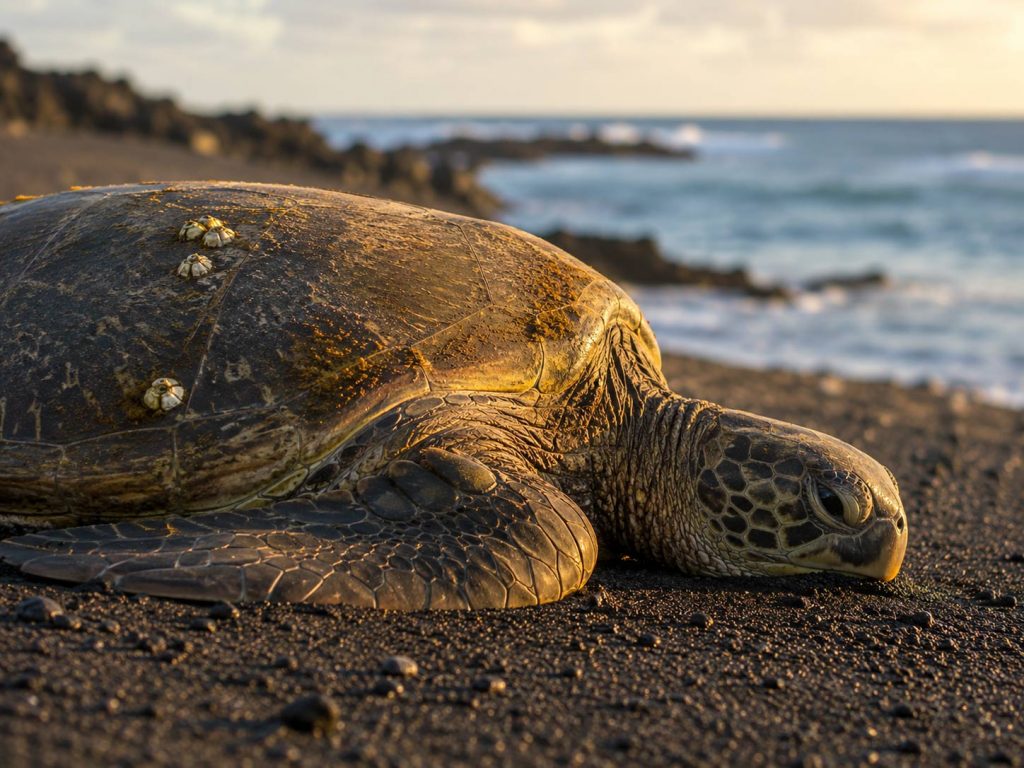
A basking turtle does not look like a turtle in a hurry. They settle into sheltered spots on the beach, often near rocks or low vegetation, and they go low to the ground. Their eyes may be partially or fully closed. Breathing is slow and spaced well apart. They may shift position gradually over several hours to stay facing the sun.
Their flippers rest flat and relaxed. The shell often has algae or small barnacles on it, which is completely normal for an adult turtle spending most of its life in the water. A resting turtle will generally not acknowledge your presence if you maintain a respectful distance. If it lifts its head and looks in your direction, you are almost certainly too close.
Visitors are also often surprised by how large adult green sea turtles actually are when seen on land. Most basking individuals in Hawaii weigh somewhere between 100 and 350 pounds. On the beach, that scale is visible in a way it never quite is from the surface of the water.
Where to Find Basking Turtles on Oahu
Laniakea Beach on Oahu’s North Shore is the most recognized turtle-watching spot in all of Hawaii. Volunteers from local conservation groups are often present to help visitors understand what they are seeing and to ensure turtles get the space they need. Sharks Cove, also on the North Shore, is another location where turtles regularly rest near the water’s edge.
Turtles occasionally haul out at other spots around the island as well, wherever they find calm surf, accessible slope, and good sun. A gradual beach entry, lighter crowds, and a sheltered position away from wind all seem to make a spot more appealing to a turtle looking to rest.
The Rules That Protect Resting Honu
Hawaiian green sea turtles are protected under the federal Endangered Species Act and Hawaii state law. Approaching within six feet of a sea turtle on land is prohibited. It is illegal to touch, feed, or disturb a basking turtle in any way, and that includes positioning yourself between the turtle and the water or blocking its path back to the ocean.
These protections exist because human disturbance directly undermines the reason a turtle came ashore in the first place. A turtle that feels threatened will return to the water before it has had time to warm up and rest properly, burning energy it cannot easily replace. Watching from a distance is also, practically speaking, a better experience. A turtle that feels calm stays put and behaves naturally, giving you far more to observe than one already eyeing an exit.
Is That Turtle Okay? Knowing the Difference
People sometimes see a motionless turtle on the beach and panic, convinced something is seriously wrong. Most of the time, a still turtle is simply resting. There are a few signs that help tell a resting turtle from one that genuinely needs attention. A healthy basking turtle breathes steadily even if its breaths are slow and widely spaced. It shifts positions at least occasionally over several hours. Its flippers are flat and loose, not stiff or held at unusual angles. It is resting in a typical flat beach or rocky alcove area, not stranded somewhere that suggests it was carried in by tide or current.
- It breathes steadily, even if breaths are slow and widely spaced.
- It shifts position at least occasionally over the course of several hours.
- It is in a typical basking spot, not stranded by tide or current.
- Its flippers are flat and relaxed, not stiff or held at unusual angles.
If a turtle has visible injuries, is wrapped in fishing line or rope, has a flipper tangled in debris, or cannot return to the water after an extended period, contact the Hawaii Marine Animal Response hotline right away. They are the trained team for exactly these situations.
Come See Them in the Water, Too
If you want to experience these animals in the environment where they are most at home, the Turtles and You Turtle Canyon snorkel tour departs from Kewalo Basin Harbor in Waikiki twice daily. The Ariya II carries guests out to Turtle Canyon, a natural reef system just off the Waikiki coastline where Hawaiian green sea turtles are encountered year-round. Snorkeling gear, snacks, and beverages are included, along with traditional Hawaiian cultural performances on board. Complimentary hotel trolley pickup from Waikiki is available. The full trip runs about two hours, and because spots are limited, booking ahead is always a good idea.
Rest, Warmth, and the Ancient Habit That Only Hawaii Gets to Witness
Whether you catch a honu stretched out at Laniakea with its eyes closed or gliding past you at the reef, you are sharing space with an animal that has been living in these waters for millions of years. The basking behavior that surprises so many visitors is not random or accidental. It is deliberate, evolved, and deeply practical – a ritual that requires warm sun, calm shores, and the kind of patience that only comes with knowing the ocean as completely as these animals do.