

A Honu not moving on the Shore: What Oʻahu Residents Should Do in 2026

Short Answer: No you should not touch a living or dead sea turtle.
Seeing a sea turtle, known locally as a honu, on the beach can be powerful and emotional. In 2026, a viral moment on Oʻahu showed just how fast confusion can turn into public backlash when people handle a dead turtle. This guide clears things up. It explains what to do, what not to do, and why following the right steps matters for turtles and for people.
This article is written for locals and visitors who want to do the right thing. The facts are simple, but the impact is real.
When You Find a Dead Honu on the Beach
If you come across a honu that appears dead, your role is limited but important.
Do this:
- Keep your distance.
- Keep others away.
- Report it right away using the proper channels.
Do not:
- Touch the turtle.
- Move the turtle.
- Take photos up close or post before reporting.
Even if the turtle is clearly not alive, it is still protected by law in Hawaii. Handling it can damage evidence needed to understand how it died.
Can You Touch a Dead Sea Turtle on Oʻahu?
No. On Oʻahu, you should not touch a dead sea turtle.
Honu are protected, whether alive or dead. Touching them can interfere with investigations that help scientists track disease, boat strikes, fishing injuries, or other causes of death. What looks harmless can erase key clues.
This rule applies to everyone. Locals, visitors, kids, adults, all of us.
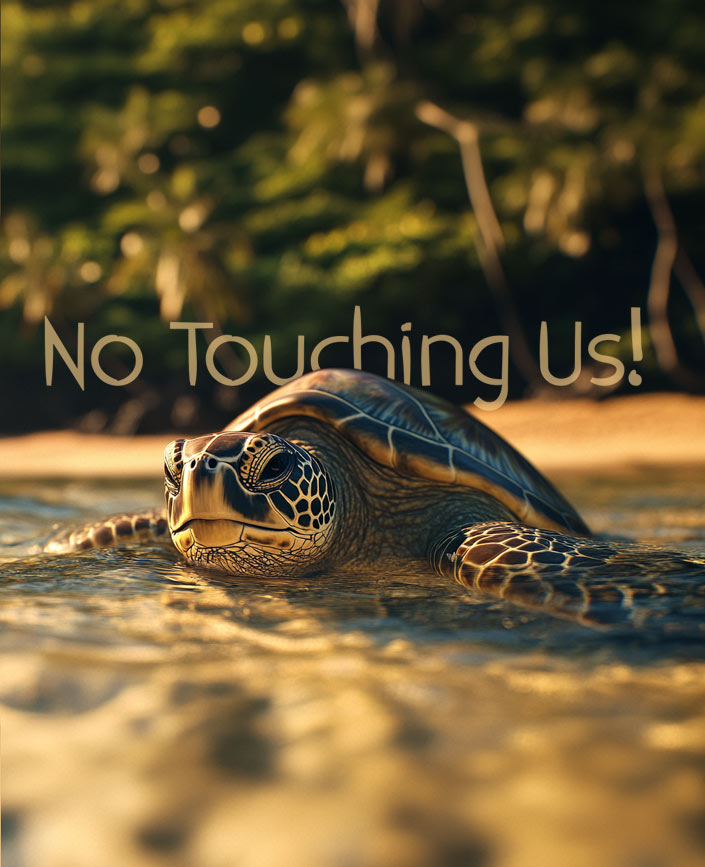
How to Help a Sea Turtle the Right Way
Most people want to help. The safest help is often the simplest.
If the turtle is alive:
- Stay at least 10 feet away.
- Do not pour water on it.
- Let it rest. Turtles often come ashore to recover.
If the turtle appears injured or dead:
- Keep people and pets back.
- Note the location.
- Make a report as soon as possible.
Helping does not mean touching. It means protecting the space until trained responders can step in.
Local Action Box: What to Do and Why It Matters
Report the turtle immediately.
When you report a dead or injured honu, you help:
- Wildlife officers investigate the cause of death.
- Scientists track threats to turtle populations.
- The community respond faster and more safely.
What to share when reporting:
- Exact location.
- Condition of the turtle.
- Time you found it.
- Photos taken from a safe distance, if allowed.
Every report adds to a bigger picture that protects future turtles.
The Bigger Picture for Oʻahu
Honu are a symbol of Hawaii. They connect culture, nature, and responsibility. Each time someone follows the rules, it helps keep that connection strong.
The 2026 incident was a reminder. Not everyone knows what to do. Now you do.