
Do Sea Turtles Make Sounds? The Underwater Voices You Never Knew Existed
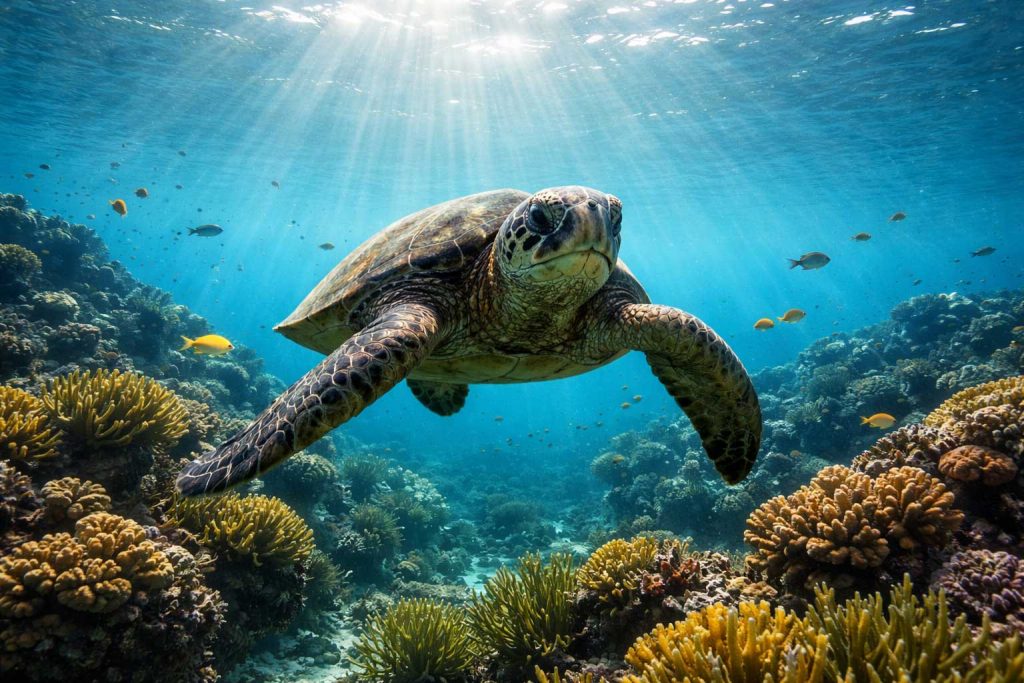
Sea turtles have a reputation for being quiet, slow-moving creatures drifting through the blue. But scientists have discovered something that changes that picture completely. Sea turtles do make sounds. They are low-frequency, often below the range of human hearing, but they are real, they have purpose, and researchers are still working to understand the full story behind them.
For anyone who has ever floated above a Hawaiian green sea turtle at Turtle Canyon and wondered what was going on inside that ancient mind, this one is for you.
The Old Assumption Was Wrong
For most of recorded history, sea turtles were considered silent animals. They lack vocal cords, they do not chirp, bark, or call out the way birds or dolphins do, and they spend most of their lives underwater where humans rarely listened closely. Scientists simply assumed there was nothing to hear. That assumption started to unravel in the early 2000s when researchers began using underwater recording equipment sensitive enough to pick up very low-frequency sounds, and they started finding something unexpected near sea turtle nesting sites and in open water.
Turtles were making noise.
How Sea Turtles Produce Sound Without Vocal Cords
The first question most people ask is how. Turtles have no vocal cords, no throat structure built for sound production the way mammals have. What they do have is a body cavity, internal organs, and the ability to move air and fluid in ways that create vibration. Researchers believe sea turtles generate sound by moving air between their lungs and other internal spaces, producing low-frequency pulses that travel well through water.
The sounds recorded from green sea turtles and other species fall into a range that humans cannot hear without equipment. They are often described as clicks, low rumbles, or pulses. To the naked ear at the surface, a turtle in the water below you would appear completely silent. Underwater, with the right tools, the picture is different.
The Most Surprising Discovery: Hatchlings Communicate Inside the Egg
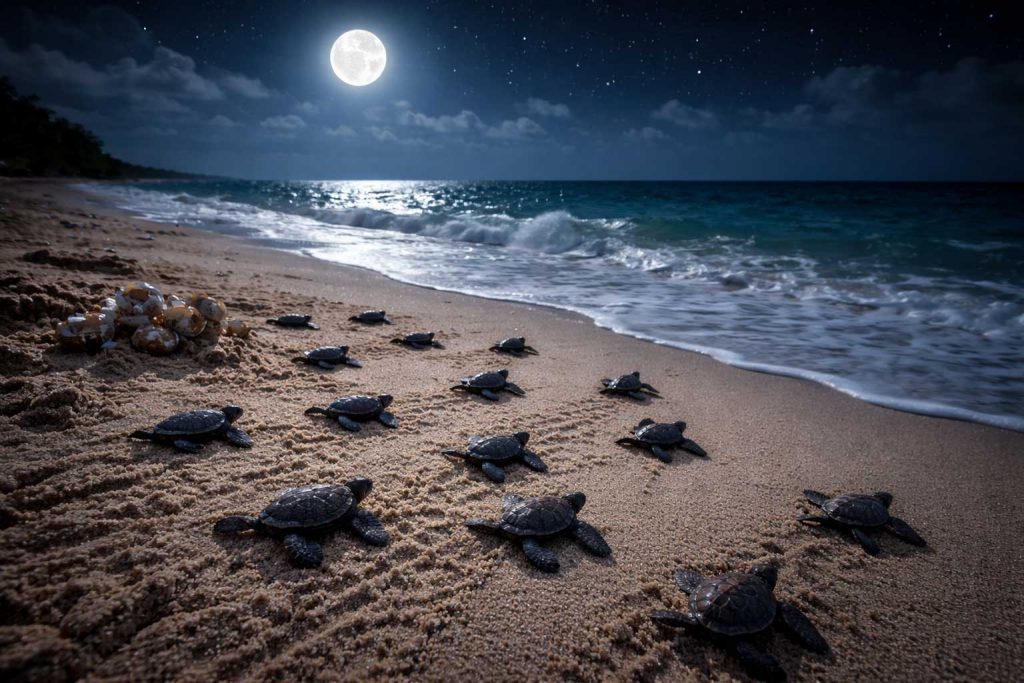
The finding that turned the most heads in the scientific world did not come from the open ocean. It came from the nest. Wildlife biologist Dr. Camila Ferrara and her team at the Wildlife Conservation Society recorded sounds coming from sea turtle eggs before hatching. The hatchlings were vocalizing inside the shell, and the rest of the clutch appeared to respond. What followed was synchronized hatching, with dozens of eggs opening within hours of each other.
This is significant because hatchling turtles are tiny and fragile on their own. A single hatchling trying to dig out of a two-foot-deep sand nest would not make it. But dozens pushing together, all starting at roughly the same time, can work upward through the sand as a group and reach the surface. The coordination is not coincidence. The sounds appear to be the trigger.
- Hatchlings begin vocalizing days before they break through the shell
- Neighboring eggs respond to the sounds and begin the hatching process
- The group digs upward together, conserving energy and improving survival odds
- This same behavior has been observed across multiple sea turtle species, including green sea turtles
What the Sounds Mean for Adults
Beyond hatching, researchers have recorded vocalizations from adult sea turtles, particularly females during nesting. These sounds are harder to study because nesting happens at night, in remote locations, and the turtles are not making sounds for very long. The working theory is that adult vocalizations may play a role in courtship or in maintaining loose contact between animals in the same area. Sea turtles are not social in the way dolphins are, but they do share feeding grounds, rest on the same reefs, and aggregate during nesting season.
Whether adult sea turtles use sound to recognize each other, signal readiness to mate, or simply as a byproduct of physical movement is still being studied. The science is young, and researchers are careful not to overstate what is known. What is clear is that sound plays a more meaningful role in sea turtle life than anyone expected.
What This Looks Like for Hawaiian Green Sea Turtles
The Hawaiian green sea turtle, known in Hawaiian as honu, is the species you encounter at Turtle Canyon off the Waikiki coast. These animals have been navigating Hawaiian waters for millions of years. The same biological traits that produce sound in other green sea turtle populations are present in honu. Whether the Hawaiian population produces sounds with any regional variation, the way some bird species have regional dialects, is not yet documented.
What researchers do know is that honu congregate at cleaning stations, return to the same reefs year after year, and show individual personalities and preferences. An animal that complex communicating through sound is not a stretch. It fits the picture that has been building for decades as scientists spend more time paying close attention to what sea turtles actually do.
Why This Matters for Conservation
Sound pollution is a real threat in ocean environments. Boat engines, sonar, construction, and shipping traffic all introduce noise into the water that can interfere with how marine animals navigate and communicate. Whales and dolphins have long been part of that conversation. Sea turtles are now entering it.
If hatchling synchronization depends on sound, and if adult behavior is influenced by acoustic signals, then noisy coastal environments could create disruptions that are harder to measure than physical threats like fishing lines or plastic bags. Understanding sea turtle communication is not just fascinating biology. It has practical implications for how we protect nesting beaches and the waters around them.
Hearing the Ocean Differently
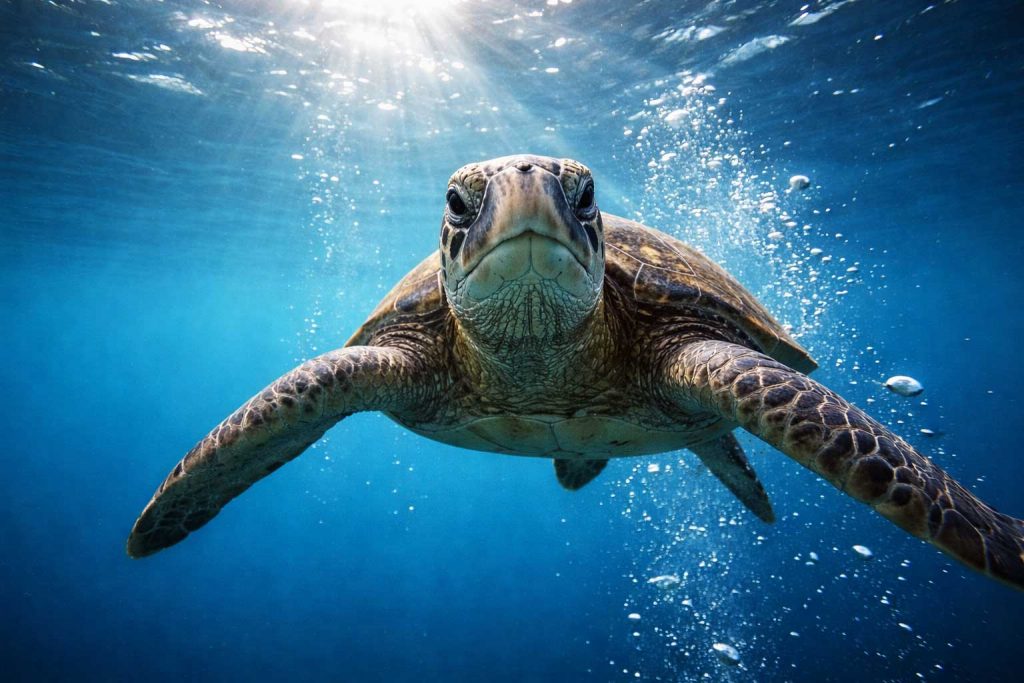
The next time you are at the surface watching a green sea turtle glide along the reef below, consider what might be happening beneath the quiet. That animal has been on this planet in one form or another for over 100 million years. It has outlasted dinosaurs, ice ages, and mass extinction events. Along the way, it developed ways of existing in the ocean that we are still learning about.
Turtle Canyon sits just offshore from Waikiki, a short boat ride from Kewalo Basin Harbor. The green sea turtles that live there have made that reef home for years. On a Turtles and You snorkeling tour, you get close enough to watch them feed, rest, and move through the water with an ease that is hard to describe until you see it in person. Now you also know they may be doing something else entirely that you cannot hear.
The Ocean Has More to Say
Sea turtles are not silent. They never were. We just needed better tools and a willingness to listen before we could understand that. The science of sea turtle communication is still in its early stages, and each new study adds a piece to a picture that keeps getting more interesting.
What makes the honu of Hawaii especially worth knowing is that they are here, accessible, and surrounded by a reef community that researchers continue to study. Every snorkeling trip to Turtle Canyon is a chance to be in the water with animals that science is still working to fully understand. That is not a small thing.