Hawaii Sea Turtle Nesting Season 2026: What to Expect This Summer
Hawaii Sea Turtle Nesting Season 2026 Is Here
Late April marks the start of the countdown in Hawaii. Out in the remote Northwestern Hawaiian Islands, ancient instincts are waking up in female Hawaiian green sea turtles. The honu, as they are called in the Hawaiian language, have spent the past two to four years feeding and building strength in Pacific waters spread across thousands of miles. Now they are preparing for one of the most demanding journeys in the animal kingdom. They will swim hundreds of miles back to the very beach where they were born, and when they arrive, they will drag themselves ashore under cover of darkness to lay their eggs.
The 2026 nesting season in Hawaii runs officially from May through August. Activity builds through June and peaks in July, when the most active nesting nights occur. Then, from August through October, the next generation begins to emerge from the sand. It is a cycle that has been repeating in Hawaiian waters for millions of years, and right now, researchers and conservationists are watching it more closely than ever.
Where Do Hawaiian Sea Turtles Actually Nest?
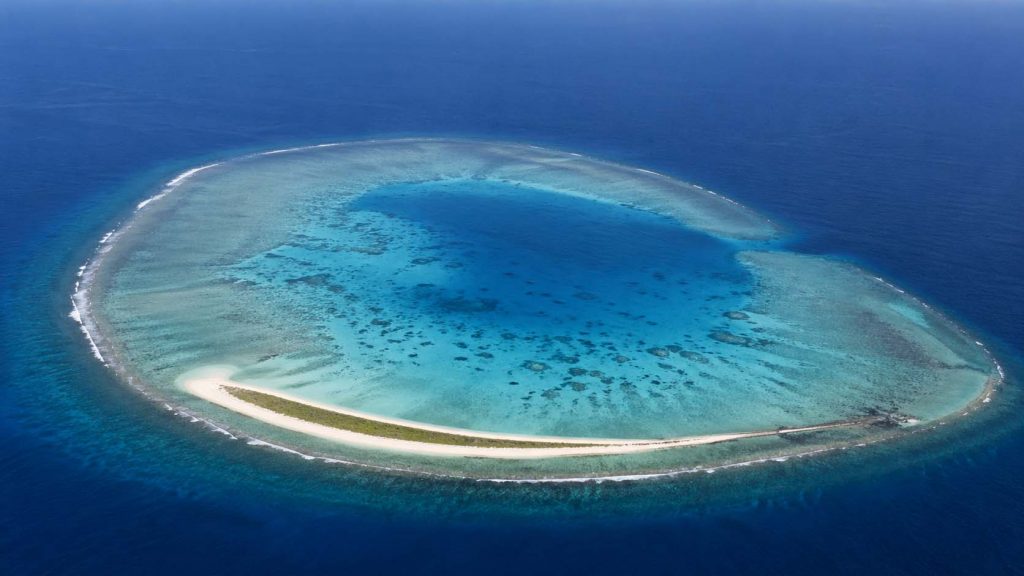
Most people are surprised to learn that the vast majority of Hawaiian green sea turtle nesting does not happen on the beaches of Oahu, Maui, or the Big Island. Roughly 90 percent of all Hawaiian honu nests are laid at the French Frigate Shoals, a remote atoll about 500 miles northwest of Honolulu in the Papahanaumokuakea Marine National Monument. This chain of small, low-lying islands and sandbars is one of the most important sea turtle nesting sites in the entire Pacific Ocean, and access is tightly restricted to protect the animals.
A smaller but growing number of nesting attempts do happen on the main Hawaiian Islands. Isolated beaches on Maui and occasionally along the North Shore of Oahu have seen nesting females in recent years. These sightings are far less frequent, but they are no longer rare enough to ignore. If you ever spot a sea turtle resting on or near a beach in Hawaii, stay back at least 10 feet and give her complete quiet. Hawaiian state and federal law protects nesting sea turtles, and approaching one too closely can cause a female to abandon her nest entirely.
What Happens During a Nesting Night
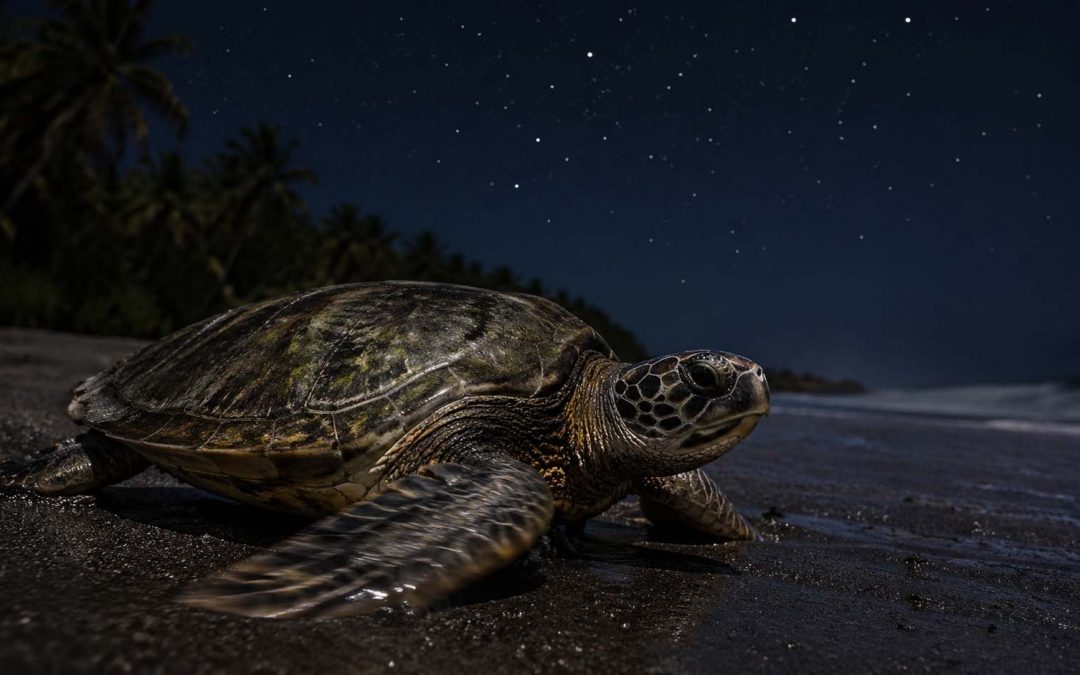
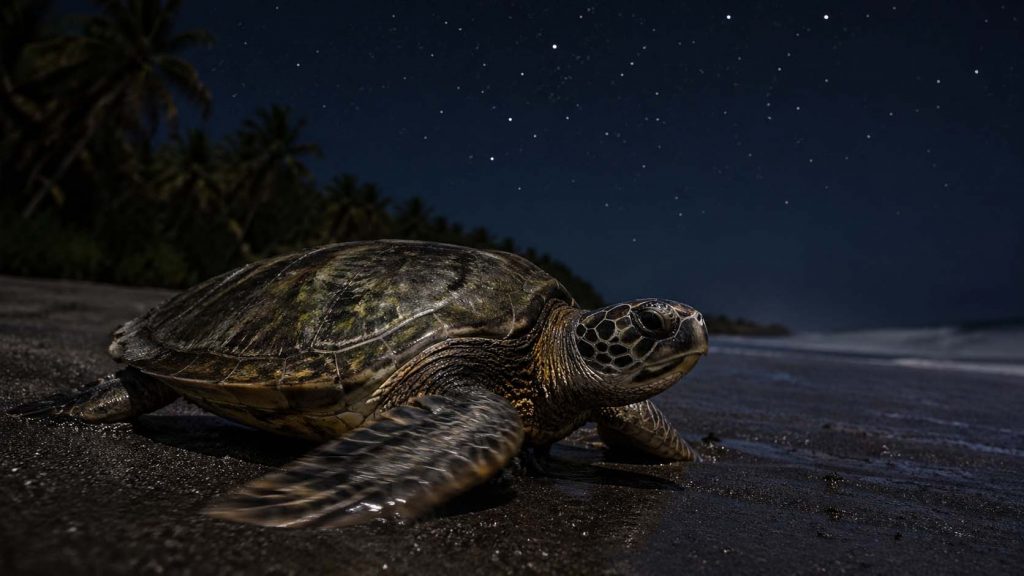
When the time comes, a female honu pulls herself out of the ocean after dark and crawls up the beach using her front flippers as paddles against the sand. This is exhausting work for an animal built entirely for the water. She searches for a spot high enough on the beach that tidal water will not flood her nest during the 60-day incubation period. Then she digs a deep body pit, followed by a carefully shaped egg chamber, using only her rear flippers. A single nest can hold anywhere from 60 to more than 100 eggs.
After laying, she covers the chamber with sand, shapes the surface to blend in, and pulls herself back down to the water. The whole process can take two hours or longer. She will rest offshore for about two weeks, then return to the same beach and do it again. A single female may complete three to five nesting trips in one season before heading back out to sea for another two to four years.
While the female rests offshore, the eggs incubate quietly below the sand. When hatchlings finally break free of their shells, usually between August and October, they work together as a group to slowly dig upward. They time their emergence for nighttime, when temperatures are cooler and risks are lower. Then they race toward the brightest horizon, which on a natural beach is the reflected light off the open water. Those first few hours in the ocean are the most dangerous of their entire lives. The journey from nest to adult looks like this:
Green sea turtles return to Hawaiian feeding reefs as juveniles and remain for decadesmber of nesting attempts do happen on the main Hawaiian Islands. Isolated beaches on Maui and occasionally along the North Shore of Oahu have seen nesting females in recent years. These sightings are far less frequent, but they are no longer rare enough to ignore. If you ever spot a sea turtle resting on or near a beach in Hawaii, stay back at least 10 feet and give her complete quiet. Hawaiian state and federal law protects nesting sea turtles, and approaching one too closely can cause a female to abandon her nest entirely.
- Eggs incubate for roughly 60 days below the sand surface
- Hatchlings break free of their shells and dig upward together as a group
- They emerge at night and orient toward the brightest horizon
- The open ocean years that follow are called the “lost years” because tracking them is nearly impossible
What Is Different About the 2026 Season
Hawaiian green sea turtles received federal protection in 1978 under the Endangered Species Act, and their recovery since then has been one of the better sea turtle success stories in the world. Nesting counts at the French Frigate Shoals were critically low in the 1970s after decades of hunting and egg collection. Since protection, the numbers have climbed steadily, and researchers have documented real, measurable growth in the nesting population over the past four decades.
But 2026 comes with serious new factors to watch. Ocean and beach temperatures across the Pacific have been running above historical averages. For sea turtles, this matters in a way that has no equivalent in human biology. Sea turtle eggs do not have chromosomes that determine the sex of a hatchling. Instead, the temperature of the surrounding sand during incubation decides whether a turtle is born male or female, a process scientists call temperature-dependent sex determination. Cooler nests produce more males. Warmer nests produce more females.
As sand temperatures rise, more Hawaiian sea turtle hatchlings are being born female. The imbalance does not cause immediate problems, but over generations, a severe shortage of males can affect breeding success across the whole population. Researchers are currently monitoring nesting beaches, collecting temperature data, and tracking hatchling sex ratios to understand how fast this shift is happening. The results from this season will add critical data to a conversation that will shape conservation strategy for decades.
The other ongoing concern that follows Hawaiian sea turtles from year to year is fibropapillomatosis, commonly called FP. This disease causes tumors to grow on a turtle’s skin, eyes, and internal organs. It is widespread in Hawaiian green sea turtle populations and can make it difficult for affected turtles to see, eat, and swim normally. Treatment at facilities in Honolulu and wildlife rehabilitation sites has helped individual turtles recover, but FP remains one of the most persistent challenges in Hawaiian sea turtle conservation. Researchers are still working to fully understand why some turtles are affected and others are not.
How to See Sea Turtles in Hawaii This Season
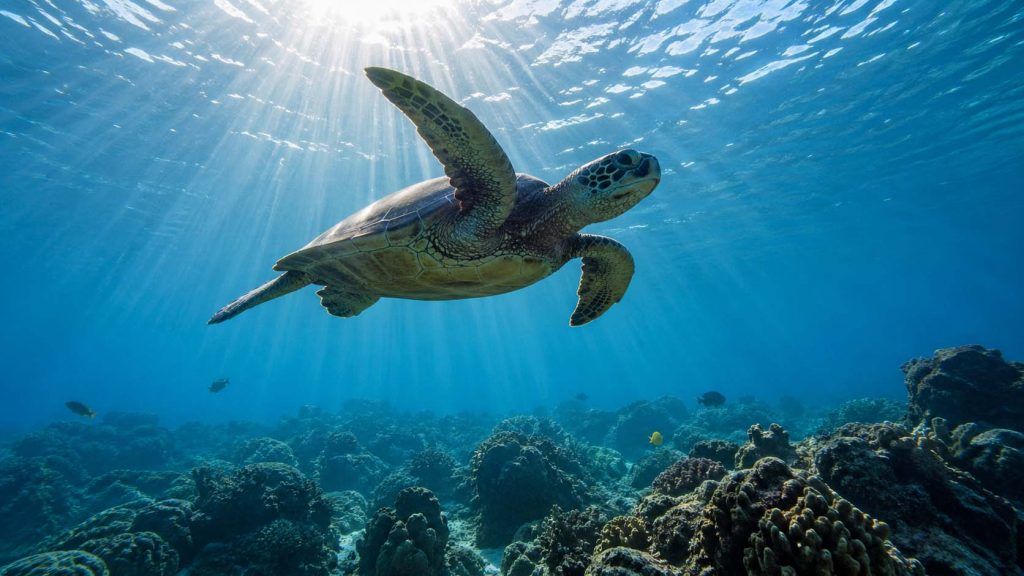
You do not need special access to see Hawaiian green sea turtles this summer. The main Hawaiian Islands have thriving year-round populations of honu at feeding and resting reefs, and the warm summer months of nesting season are also some of the most active water months for turtle encounters in coastal areas.
The best way to get face-to-face with honu on Oahu is a guided snorkel tour out to Turtle Canyon, a reef just 1.5 miles off Waikiki Beach where resident green sea turtles feed and rest throughout the year. Turtles and You runs daily tours aboard the Ariya II, with morning departures at 10:00 AM and afternoon departures at 1:00 PM from Kewalo Basin Harbor at 1125 Ala Moana Blvd. Tours are two hours total and include about 45 minutes of snorkeling time in the water with the turtles. All gear is provided.Waikiki hotel trolley pickup included.
Guides strictly follow all Hawaii wildlife protection rules on every tour. No touching, no chasing, and safe distances are maintained at all times. Turtles and You is eco-certified through the Sustainable Tourism Association of Hawaii for 2025 and 2026. Every tour includes a live Hawaiian hula performance aboard the boat and the traditional Hawaiian chant performed at departure. Here is what is included on every tour:
- About 45 minutes of snorkeling at Turtle Canyon reef
- All snorkeling gear provided including mask, fins, and life vest
- Complimentary snack aboard the Ariya II
- Complimentary Waikiki hotel trolley pickup
- Live Hawaiian hula performance on the boat
- Crew safety briefing and CPR-certified water safety staff
Seeing a turtle naturally, in its own habitat, on its own terms, is a completely different experience from spotting one from a beach. Most guests say it is the single best memory from their entire Hawaii trip. This summer is a great time to be paying attention to the honu. On remote sandbars hundreds of miles from Honolulu, the most important nesting season in years is quietly getting underway. And just 1.5 miles off Waikiki, the adults are in the water waiting to meet you.
A Season Worth Watching
The 2026 Hawaii sea turtle nesting season is a reminder of what decades of real conservation work can accomplish. Hawaiian green sea turtles have survived ice ages, mass extinctions, and centuries of overhunting. Their recovery since 1978 is proof that protection, enforcement, and public awareness all matter. This summer, on dark beaches lit only by stars, the next generation of honu is being born. The nesting season will be over by August. The questions researchers are asking right now about warming sand, shifting sex ratios, and long-term population health will take years to fully answer. What anyone can do right now is show up, stay respectful, and be part of a community that wants to see these animals thriving for another million years.