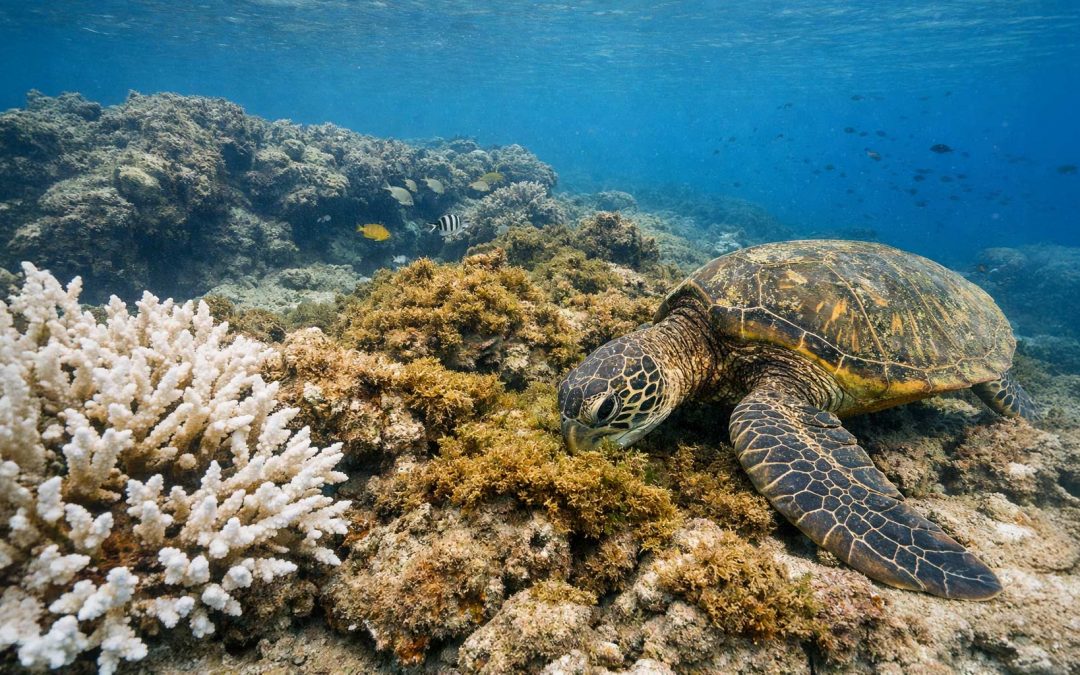
Coral Bleaching in 2026: How Reef Loss Is Changing Turtle Feeding Grounds on Oahu
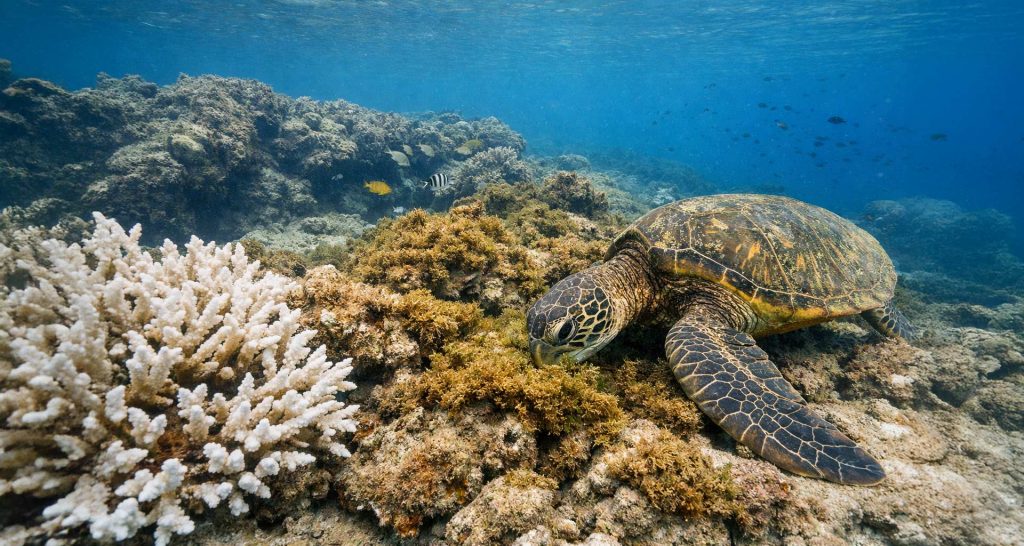
When people hear about coral bleaching, they often think about colorful reefs turning white and brittle. What gets missed is how this change reaches far beyond the coral itself. Around Oahu, reef loss is quietly reshaping the underwater buffet that sea turtles depend on. With NOAA confirming the fourth global coral bleaching event in 2024, extreme heat stress is already changing reef fish behavior, algae growth, and turtle feeding patterns. This isn’t just a coral problem. It’s a turtle story too.
Why Coral Bleaching Matters Right Now
In 2024, NOAA confirmed the planet is experiencing its fourth global coral bleaching event. This means ocean temperatures have stayed high for long periods, pushing corals past what they can handle.
When coral bleaches, it doesn’t always die right away. But even weakened coral changes how a reef works. Over time, these shifts ripple outward, affecting fish, algae, and animals like sea turtles that rely on stable reef systems.
Key reasons this moment matters:
- Heat stress is lasting longer than past events
- Bleaching is happening across wide reef areas at once
- Recovery windows between heat events are getting shorter
What Happens to a Reef After Coral Bleaches
A healthy reef is more than coral heads. It’s a balanced system where coral, algae, fish, and grazers all keep each other in check. Bleaching throws that balance off.
After bleaching:
- Coral growth slows or stops
- Bare reef space opens up
- Fast-growing algae often take over
This shift doesn’t just change how reefs look. It changes who lives there and what food is available.
Reef Fish Shifts Change the Food Web
Reef fish depend on coral for shelter, feeding, and breeding. When coral weakens, many fish species move, decline, or change behavior.
As fish patterns shift:
- Grazing pressure on algae may drop
- Some algae grow thicker and tougher
- The mix of plant life turtles encounter begins to change
This matters because reef fish help shape the very algae turtles feed on.
Algae Growth Isn’t Always Good News for Turtles
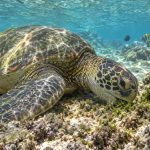
Sea turtles around Oahu often graze on algae found along reefs and nearshore areas. At first glance, more algae might seem like a win. But not all algae are equal.
After bleaching:
- Tough, less nutritious algae can dominate
- Softer, preferred algae may decline
- Algae can grow in ways that trap sediment and reduce water quality
This can make feeding less efficient and force turtles to spend more time searching for suitable food.
How Turtle Foraging Patterns Are Changing
As reef conditions shift, turtles adapt. But adaptation has limits.
Observed and expected changes include:
- Turtles spreading out to new feeding areas
- Longer foraging times to meet energy needs
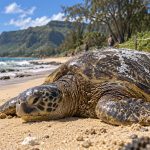
- Increased use of shallow or nearshore zones
These changes can raise risks from boat traffic, pollution, and human activity, even if turtle numbers appear stable.
Why This Story Is Bigger Than One Species
Coral bleaching is often framed as a coral-only crisis. In reality, it’s a full ecosystem issue. When reefs weaken, every species connected to them feels the impact, from tiny reef fish to long-lived sea turtles.
Protecting turtles means:
- Protecting reef resilience
- Reducing local stress like pollution and runoff
- Paying attention to heat-driven changes, not just visible damage
What This Means for Oahu’s Future Reefs
Oahu’s reefs have shown resilience before, but repeated heat stress makes recovery harder each time. Understanding how bleaching affects turtles helps paint a clearer picture of what’s at stake.
Healthy reefs support:
- Stable turtle feeding grounds
- Balanced algae growth
- Strong fish communities
When one part falters, the whole system shifts.