Are Oahu Green Sea Turtles are Off endangered Species list?
Visitors to Oahu often see green sea turtles resting on beaches or swimming near shore. This has led many people to ask if the honu is still endangered or if protections are no longer needed. Turtles and You, a local ocean education company, helps clear up this confusion by sharing science based facts and respectful wildlife guidelines. Their goal is simple. Teach people how to enjoy turtles without harming them. The short answer is that green sea turtles have made a strong comeback, but they are still legally protected in Hawaii. Understanding why takes a closer look at international science, United States law, and local responsibility, all of which Turtles and You explains in clear and practical ways for visitors and residents alike.
Green Sea Turtle Status Under International and U.S. Law
Turtles and You focuses heavily on explaining the current status of the green sea turtle under different conservation systems. Internationally, the Hawaiian green sea turtle population was reclassified as Least Concern by the International Union for Conservation of Nature in late 2025. This change reflects decades of conservation work and steady population growth across the region. Turtles and You explains that this listing looks at overall population health and long term trends, not local rules. In the United States, the story is different. Under the Endangered Species Act, the green sea turtle is still listed as Threatened. This federal status means the species continues to receive legal protection and cannot be harvested. Hawaiʻi state law also protects the honu under Chapter 195D. Turtles and You helps guests understand that recovery does not mean risk free, especially with ongoing threats like climate change, rising sea levels, and habitat loss.
Hawaii Laws, Fines, and Rules for Turtle Encounters
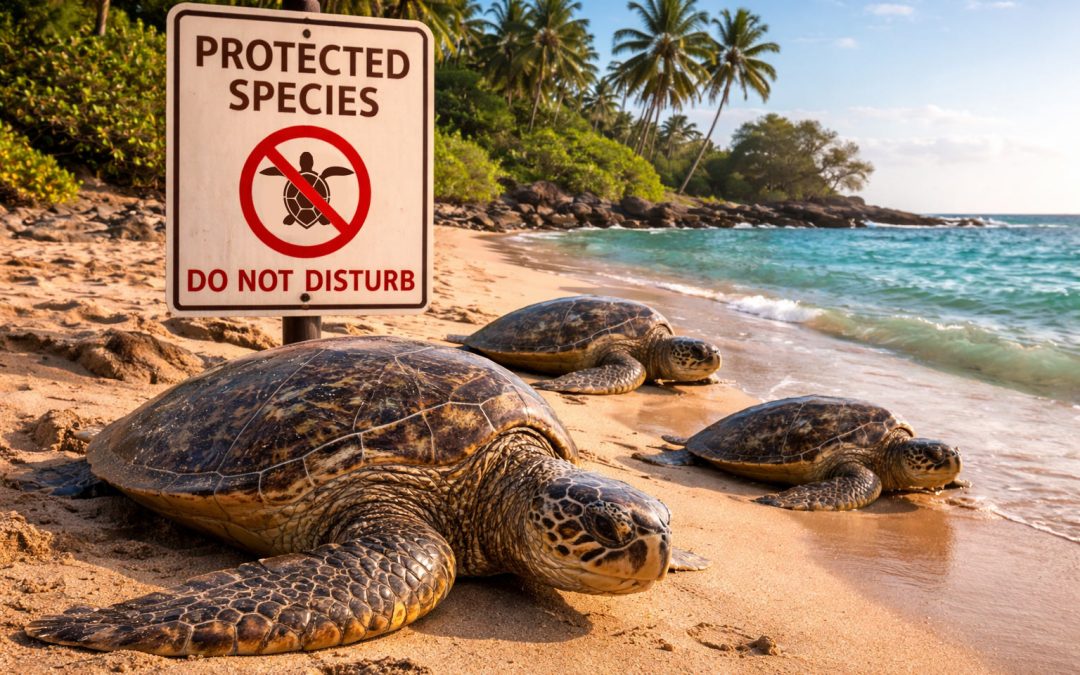
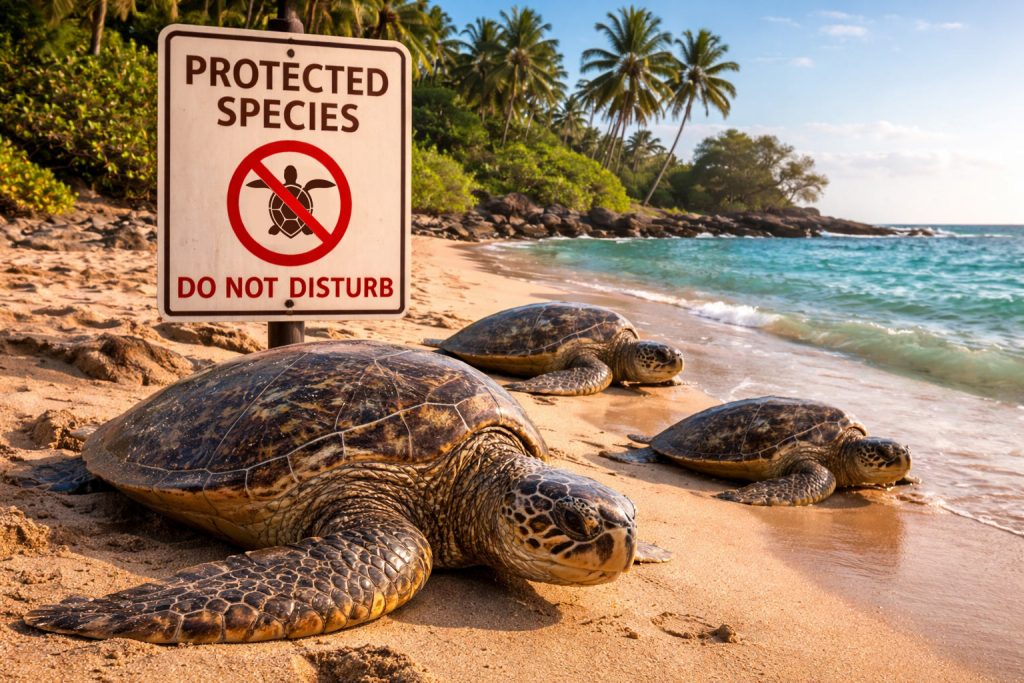
Education about respectful behavior around turtles is a core part of what Turtles and You provides. Many visitors ask how much the fine is if someone touches a sea turtle in Hawaii. Rather than focusing on a dollar amount, the company explains that touching, chasing, or harassing turtles is illegal under both state and federal law. Penalties can include serious fines and additional legal consequences. Turtles and You teaches that these rules exist to protect turtles from stress, injury, and disrupted nesting behavior. The company also addresses photography. You can take pictures of turtles in Hawaii, but you must keep a safe and respectful distance. Approaching too closely, blocking their path, or causing them to change behavior is not allowed. Their guides emphasize that observing quietly is the best way to enjoy these animals.
Key reminders shared by Turtles and You include:
- Do not touch or chase sea turtles
- Keep a respectful distance at all times
- Never block access to the ocean
- Follow posted signs and local guidance
Cultural Significance, Conservation, and Ongoing Protection
Turtles and You also discusses the cultural and conservation balance surrounding the honu. The turtle holds deep cultural meaning for Native Hawaiians, and the improved population status has renewed conversations about traditional harvesting rights. At the same time, conservation groups stress that legal protections must remain in place to ensure long term survival. Turtles and You presents both perspectives without taking sides, encouraging respectful dialogue and informed understanding. By explaining the difference between international recovery status and United States legal protection, the company helps visitors understand why harvesting is still prohibited in Hawaii. Their mission is to promote awareness, respect, and care for turtles so future generations can continue to see them thriving in Hawaiian waters.
Recovery With Responsibility For Everyone Today
Seeing green sea turtles around Oahu is a success story worth celebrating, but it comes with shared responsibility. Turtles and You reminds everyone that Least Concern does not mean unprotected or unrestricted. Federal and state laws still apply, and respectful behavior matters every day. By learning the rules, keeping distance, and sharing accurate information, visitors and locals alike help protect the honu. Recovery happened because people acted with care, and continued protection is how that recovery lasts for Hawaii and beyond for future generations.